 Bradenton
 Palmetto's Exterior Climate Reality
Palmetto sits along the Manatee River corridor in Manatee County, close enough to Tampa Bay and the Gulf that salt air, humidity, and storm exposure are part of daily life for every home in the area. Homes here don't fail because owners neglect them — they wear out because the exterior materials weren't built for this specific combination of stresses. Four factors do most of the damage over time: hurricane-force wind events, intense year-round UV exposure, wind-driven rain that gets pushed sideways into seams and joints, and a steady drift of salt-laden air off the water that accelerates corrosion and finish breakdown on almost anything not rated for it.
None of these factors act alone. A siding panel that handles UV fine but swells with moisture will still fail faster in Palmetto than it would inland, because the wind-driven rain component pushes water into places manufacturers didn't design for. That's why we look at a home's whole exterior system — siding, roofline, window openings, and any exterior structures like decks — rather than treating each component as a separate decision.
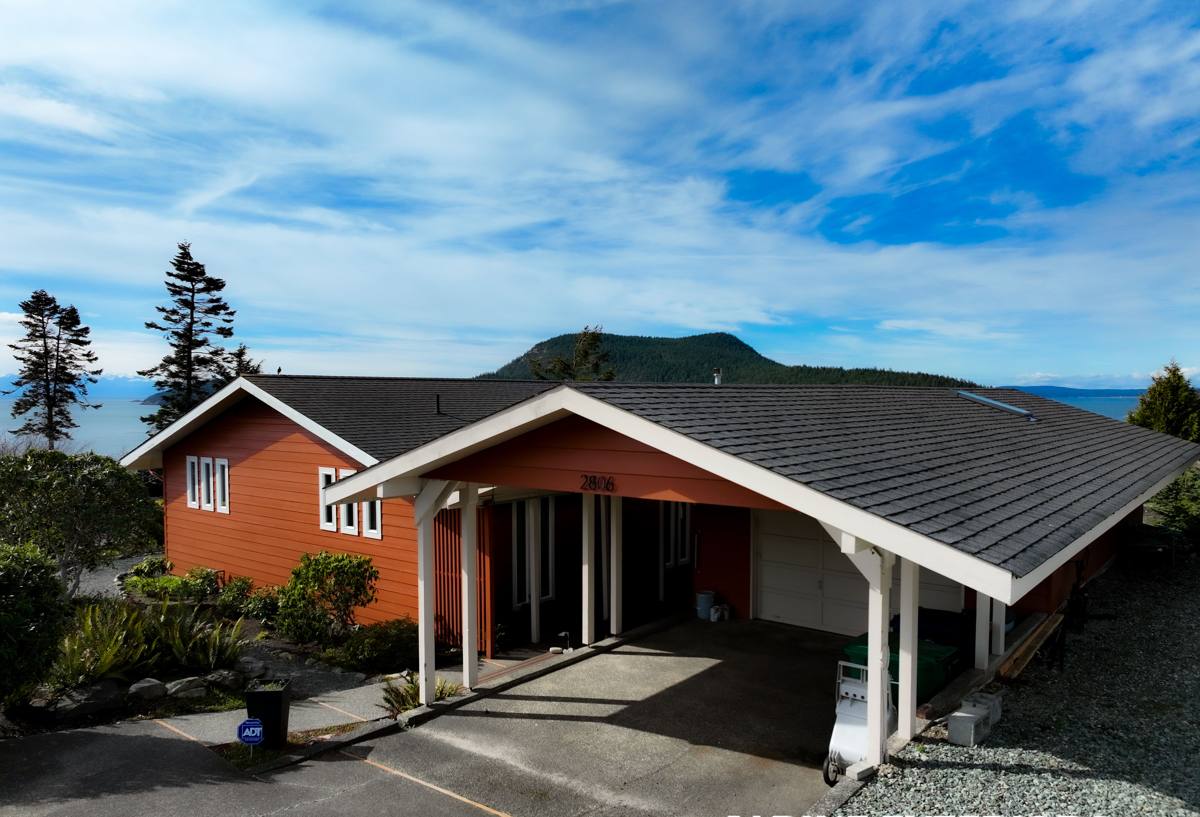
Siding That Can Actually Take It
Why We Don't Install Vinyl or LP SmartSide Here
Vinyl siding is inexpensive and easy to source, which is why it's everywhere. But it's a petroleum-based product that softens and can deform in sustained high heat, and it's rated for a specific wind-speed threshold that many Palmetto-area homes push right up against or exceed during named storms. Once a panel cracks or blows off, matching faded vinyl years later is often impossible, so repairs end up looking patched rather than restored.
LP SmartSide is an engineered wood product — strand-based, resin-treated, and better than old-style hardboard siding, but it is still wood at its core. Wood-based siding depends entirely on an intact factory coating and correctly sealed cut edges and seams to keep moisture out. In a climate where wind-driven rain gets forced into every gap and joint during storm season, any breach in that coating creates an entry point for moisture, and moisture in a wood-based product means swelling and eventual rot — not a cosmetic issue, a structural one. We don't think that's a fair trade-off to ask a Palmetto homeowner to make, so we don't install either product.
James Hardie Fiber Cement — What We Install Instead
James Hardie fiber cement is a cement, sand, and cellulose fiber composite. It doesn't burn, it doesn't absorb moisture the way wood-based products do, and it holds its shape in heat that would soften vinyl. Hardie also engineers specific product lines (HZ5 and similar) for high-humidity, high-UV Gulf Coast climates like ours, which matters more than it sounds — a siding product engineered for a dry Midwest climate and one engineered for coastal Florida are not interchangeable, even if they look similar in a showroom. The factory-applied ColorPlus finish is baked on and warrantied against fading and peeling, which matters under Florida's UV load in a way it might not somewhere with milder sun. This is the entire reason our company standardized on one product line instead of offering several — we'd rather install one system correctly than offer three and let a homeowner unknowingly pick the wrong one for this climate.
Roofing for Coastal Manatee County Homes
A roof in Palmetto has to do two jobs at once: shed wind-driven rain without letting it work backward under shingles or flashing, and survive direct, near-constant UV exposure without the granule loss and brittleness that shortens a roof's life. Wind uplift is the other half of the equation — proper nailing patterns, starter strip installation, and flashing detail around penetrations matter more here than in a low-wind-exposure market, because a roof that's "close enough" to code in a mild climate can be the difference between a roof that survives a storm and one that doesn't.
We pay particular attention to flashing at roof-to-wall transitions and around any roof penetrations, since that's where wind-driven rain most often finds its way into a structure — not through the field of the roof itself, but through the details.
Windows and Wind-Driven Rain
Windows fail in this climate in two ways: air and water infiltration around the frame, and, in older installations, glass and framing that simply weren't rated for the wind loads Manatee County can see. Impact-rated or properly rated windows matter for storm protection, but the installation is just as important as the window itself — a correctly flashed and sealed opening keeps wind-driven rain out even when water is being pushed sideways against the wall, while a poorly sealed opening will leak regardless of how good the window is.
Replacing windows also affects the surrounding siding and trim, which is one more reason we look at exterior projects as a system rather than a list of separate line items.
Decks in a Humid, Salt-Air Environment
Exterior decks in the Palmetto area deal with year-round humidity, direct sun, and — depending on proximity to the water — salt exposure that accelerates corrosion in fasteners and hardware. Material choice and hardware selection both matter: untreated or poorly finished wood weathers fast under this UV load, and standard fasteners can corrode well before the decking itself wears out. We build decks with attention to drainage, ventilation underneath the structure, and corrosion-resistant hardware, since a deck that traps moisture against its framing will develop problems long before the visible boards show any wear.
Cost Factors Worth Understanding
Every exterior project is different, but the factors that move a project's scope and cost are consistent. This isn't a price list — it's meant to help you understand what a contractor is actually pricing when they walk your home.
| Project | What Drives Cost | Why It Matters Here |
|---|---|---|
| Siding | Home size, existing wall condition, trim detail, number of stories | Removal of failing existing siding and moisture-damaged sheathing adds scope |
| Roofing | Roof size and pitch, number of penetrations, decking condition underneath | Flashing detail work at valleys and walls takes more time in storm-prone areas |
| Windows | Number of openings, wind-rating requirements, framing condition | Proper flashing and sealing at each opening is labor-intensive but non-negotiable |
| Decks | Square footage, material selection, structural condition of existing framing | Corrosion-resistant hardware and proper drainage add cost but extend lifespan |
What a Local Bradenton-Area Crew Brings to a Palmetto Project
A crew that works this specific stretch of Gulf Coast Florida regularly sees how materials actually perform here over years, not just how they're rated on a spec sheet. That shows up in small decisions — how flashing is lapped at a roof-to-wall transition, how much clearance is left at the bottom of a siding installation, how fastener spacing is handled on a home with real wind exposure — that a crew unfamiliar with this climate might not think twice about. It also means being reachable for warranty questions and follow-up without a homeowner having to track down a contractor who worked here for one project and moved on.
We also don't sell a homeowner a product mix based on what's cheapest to install. Standardizing on one siding system, for example, means every crew member on a Palmetto job has installed that exact product dozens of times, rather than switching between product lines and relearning installation quirks on each job.
Planning Your Exterior Project
Whether you're dealing with storm damage, aging materials, or you're simply ready to stop patching a home that's telling you it needs more than a patch, a few things are worth having in mind before a contractor walks the property:
- Note which sides of the house take the most direct sun and which take the most wind — it helps explain uneven wear
- Check for soft spots, staining, or bubbling around window and door openings, which often signal moisture intrusion before it's visible elsewhere
- Know the age of your current siding, roof, and windows if you can — it affects whether repair or replacement makes more sense
- Ask any contractor directly what products they install and why, and whether they carry current licensing and insurance for Manatee County work
- Get a written scope, not just a price — the details of flashing, fastening, and moisture management matter more than the sticker number
If your Palmetto home is due for new siding, a roof replacement, updated windows, or deck work, we're glad to walk the property and give you a straightforward, no-pressure estimate — just fill out the form below to get started.