 Bradenton
 Our One-Product Standard, and Why We Set It
Most siding contractors will install whatever a homeowner wants — vinyl on Monday, engineered wood on Tuesday, fiber cement on Wednesday. We don't. Every exterior we put on a home in Bradenton and the rest of Manatee County is James Hardie fiber cement. No vinyl, no LP SmartSide, no Cemplank or Allura, no primed spruce or cedar.
That's not a sales gimmick. It's a standard we set after years of watching which siding systems actually hold up on the Gulf Coast and which ones create callbacks, moisture problems, or premature repainting. This page explains the reasoning in plain terms — what the climate here does to a house, why we ruled out the alternatives, and what James Hardie's product line actually offers in return.
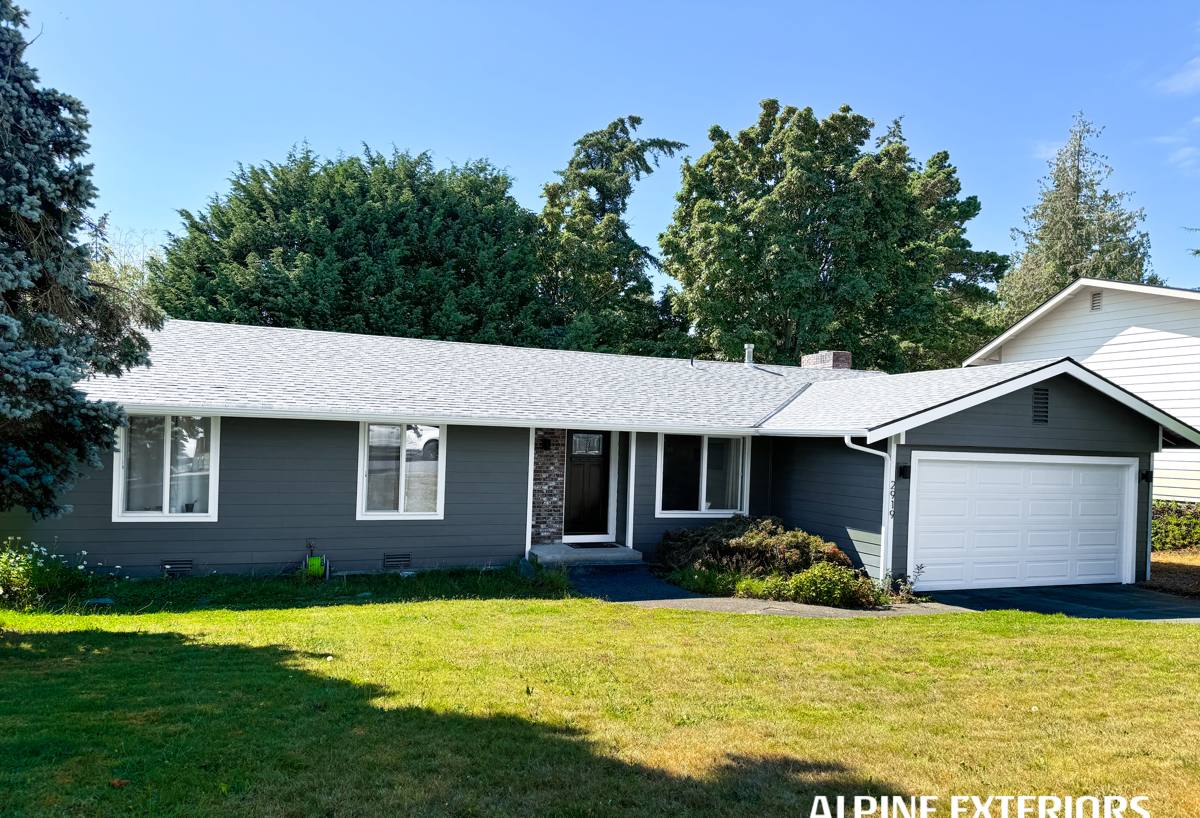
What Bradenton and Manatee County Weather Actually Does to Siding
Siding on the west coast of Florida works harder than siding almost anywhere else in the country. A few specific stresses stack up here:
- Hurricane-force wind: Manatee County sits in a wind-borne debris region, and siding has to stay fastened and intact through direct wind loads and flying debris impact, not just steady breezes.
- Year-round UV exposure: Florida's sun angle and long summers fade and break down paint and plastic surfaces faster than in northern climates, so color retention is a real engineering problem here, not a cosmetic afterthought.
- Wind-driven rain: Storms in this area don't just rain down — rain gets driven sideways into seams, laps, and fastener penetrations under wind pressure, which is a harder test for a siding system's water management than a calm vertical rainfall.
- Salt air: Being close to Tampa Bay and the Gulf means airborne salt is a constant, low-level corrosive presence on fasteners, trim, and any material that isn't built to resist it.
Any siding product can look fine on a spec sheet. What matters is how it behaves after five, ten, or twenty years of this specific combination of stresses. That's the lens we use to evaluate every material.
Why We Don't Install Vinyl, LP SmartSide, or Other Brands
Vinyl siding
Vinyl is inexpensive and easy to install, and it does fine in many parts of the country. In our climate, its weaknesses show up faster: it softens and can distort in sustained high heat, its color is baked into the material so once it fades there's no repainting it back, and in a wind-borne debris zone it's more prone to cracking or blowing off in storm-force gusts than a heavier, mechanically fastened product. We won't put a product on a Bradenton roofline that we don't expect to survive the next serious storm season intact.
LP SmartSide and other engineered wood
Engineered wood siding is a legitimate product with real strengths in drier, more moderate climates. Its core is wood strand material treated with resins and zinc borate for moisture resistance, but wood fiber — treated or not — is still more vulnerable to moisture intrusion than fiber cement. In a market with our humidity, salt air, and wind-driven rain, any breach in the coating or a poorly sealed cut edge gives moisture a foothold that fiber cement simply doesn't offer.
Cemplank, Allura, and other fiber cement brands
Other fiber cement brands are chemically similar to Hardie — they're also cement, sand, and cellulose fiber. Where they differ is in factory finish options, product engineering for specific climates, warranty structure, and the depth of installer training and support behind the product. We standardized on one brand so that every crew member is trained to one spec, every installation follows one set of manufacturer instructions, and every homeowner gets one warranty process — instead of our crews juggling install details and warranty paperwork across multiple competing systems.
Primed spruce and cedar
Natural wood siding has real aesthetic appeal, and painted correctly it can look great. But it requires the most ongoing maintenance of any option here — repainting or resealing on a recurring cycle, vigilance against wood rot and insect damage, and the highest sensitivity to the humidity and rain patterns of a Gulf Coast climate. For homeowners who want that look, we're honest that it's a higher-maintenance choice than fiber cement, not a lower-cost equivalent.
What James Hardie Fiber Cement Actually Is
James Hardie siding is made from a mix of Portland cement, sand, and cellulose fiber, cured into rigid boards and panels. It's non-combustible, doesn't attract termites, and doesn't expand and contract with humidity the way wood-based products do. Because it's a mineral-based product rather than a wood or plastic-based one, it behaves predictably in heat, holds its shape under wind load, and doesn't rot.
The company offers several profiles: lap siding (the classic horizontal board look), vertical panel siding, and shingle-style siding for accent areas. All of them install over a proper water-resistive barrier and drainage plane, which is where a correct installation matters as much as the product itself — more on that below.
The HardieZone HZ5 System — Engineered for This Climate
James Hardie engineers its products for different climate zones across the country, rather than shipping one generic formulation everywhere. Florida falls in the HZ5 zone, which accounts for high humidity, heavy rain, and the risk of moisture cycling that comes with our weather pattern. Boards built to the HZ5 spec are formulated and tested for exactly the humidity and rainfall exposure that Manatee County sees for most of the year, rather than for a drier or colder climate where a generic product might otherwise be installed.
This is one of the clearer, concrete reasons we don't treat "fiber cement" as a single interchangeable category. A board engineered for the Gulf Coast is a different product, in practical terms, from one engineered for the Midwest, even if both are technically fiber cement.
ColorPlus Technology: Factory-Baked Finish vs. Field Paint
One of the most practical differences with Hardie is the ColorPlus finish option — color that's baked onto the board in a factory-controlled process, using a multi-coat, oven-cured application, rather than sprayed or brushed on site after installation. A few things follow from that:
- The finish resists Florida's UV exposure and fading better than field-applied paint, because it's cured under controlled conditions rather than open air.
- Touch-up product is manufactured to match specific ColorPlus colors, so repairs or additions blend rather than mismatch.
- Homeowners can skip the repaint cycle that field-painted siding, wood, and most other materials eventually require.
Homeowners who prefer primed board for custom field-painted color still have that option with Hardie, but most choose ColorPlus specifically to avoid repainting altogether.
The Warranty, and What It Actually Covers
James Hardie backs its siding with a long-term limited warranty on the substrate, and a separate finish warranty on ColorPlus-finished products that covers the factory finish itself against issues like flaking, chipping, and cracking under normal conditions. These warranties are transferable to a subsequent homeowner if the property sells, which matters for resale value — a buyer inspecting the exterior isn't looking at a product with an expired or non-transferable warranty.
We tell every customer plainly: a manufacturer warranty is only as good as the installation underneath it. Hardie's own warranty terms require installation according to their published instructions, which is one more reason we keep our crews trained to a single system rather than spreading that training thin across several brands.
Installation Is Where Most Siding Failures Actually Start
Fiber cement is an unforgiving material to install poorly. Butt joints, flashing details, fastener placement and spacing, clearance from the ground and roofline, and caulking at penetrations all have to be done to spec — not because the material is fragile, but because those details are what keep wind-driven rain out of the wall assembly behind it. A beautiful-looking install with the wrong fastener spacing or a missed flashing detail can fail in ways that don't show up until years later, usually as water damage discovered from the inside.
This is why "who installs it" matters as much as "what gets installed." A correctly engineered board installed incorrectly gives you the failure modes of a bad product with the price tag of a good one.
Comparing the Materials, and What to Ask Before You Buy
| Factor | Vinyl | Engineered Wood | James Hardie Fiber Cement |
|---|---|---|---|
| Core material | PVC plastic | Wood strand + resin | Cement, sand, cellulose fiber |
| Fire behavior | Combustible | Combustible | Non-combustible |
| UV/color stability | Fades, cannot repaint to match | Depends on coating maintenance | ColorPlus factory finish resists fading |
| Moisture vulnerability | Low material risk, seam-dependent | Higher — wood core sensitivity | Low — mineral-based, engineered for HZ5 humidity |
| Wind/impact performance | Lower in high-wind gusts | Moderate | Higher when installed to spec |
| Typical maintenance | Low, but limited repair options | Periodic coating upkeep | Low with ColorPlus finish |
Whatever material a homeowner ultimately chooses — with us or another contractor — a few questions cut through most of the sales noise:
- Is this product engineered for a humid, high-wind coastal climate, or a generic national spec?
- Is the color factory-applied and warrantied, or will it need field painting and repainting over time?
- Is the substrate warranty and finish warranty transferable if the home is sold?
- Will the installation follow the manufacturer's published fastening, flashing, and clearance details, in writing?
- What's the contractor's specific experience with this exact product line, not just "siding" in general?
Get an Honest Look at Your Exterior
If you're weighing a siding replacement in Bradenton or elsewhere in Manatee County, we're glad to walk your exterior with you, point out what your current siding is telling us, and give you a straightforward, no-pressure estimate for a James Hardie install done to spec. No obligation, no pressure to sign anything on the spot — just a clear picture of what your home needs.