 Bradenton
 Why Palmetto Siding Wears Out Faster Than the Instructions Say
Every siding product comes with a manufacturer's expected lifespan, and almost none of those numbers were calculated with a Manatee County summer in mind. Palmetto sits close to the Manatee River and the open water beyond it, which means homes here deal with a combination of stressors that inland Florida towns simply don't see at the same intensity: sustained hurricane-force wind gusts, near-constant UV exposure, wind-driven rain that gets pushed sideways into wall assemblies, and a steady drift of salt air off the Gulf. None of these forces are dramatic on their own, day to day. But siding damage in this part of Florida is almost always a story about accumulation — years of small stresses compounding until a panel finally cracks, buckles, or lets water in.
That's the lens we bring to every siding repair call in Palmetto. We're not just patching what's visible. We're figuring out which of these four forces caused the failure, because that determines whether a repair will actually hold or just buy you another year before the same spot fails again.
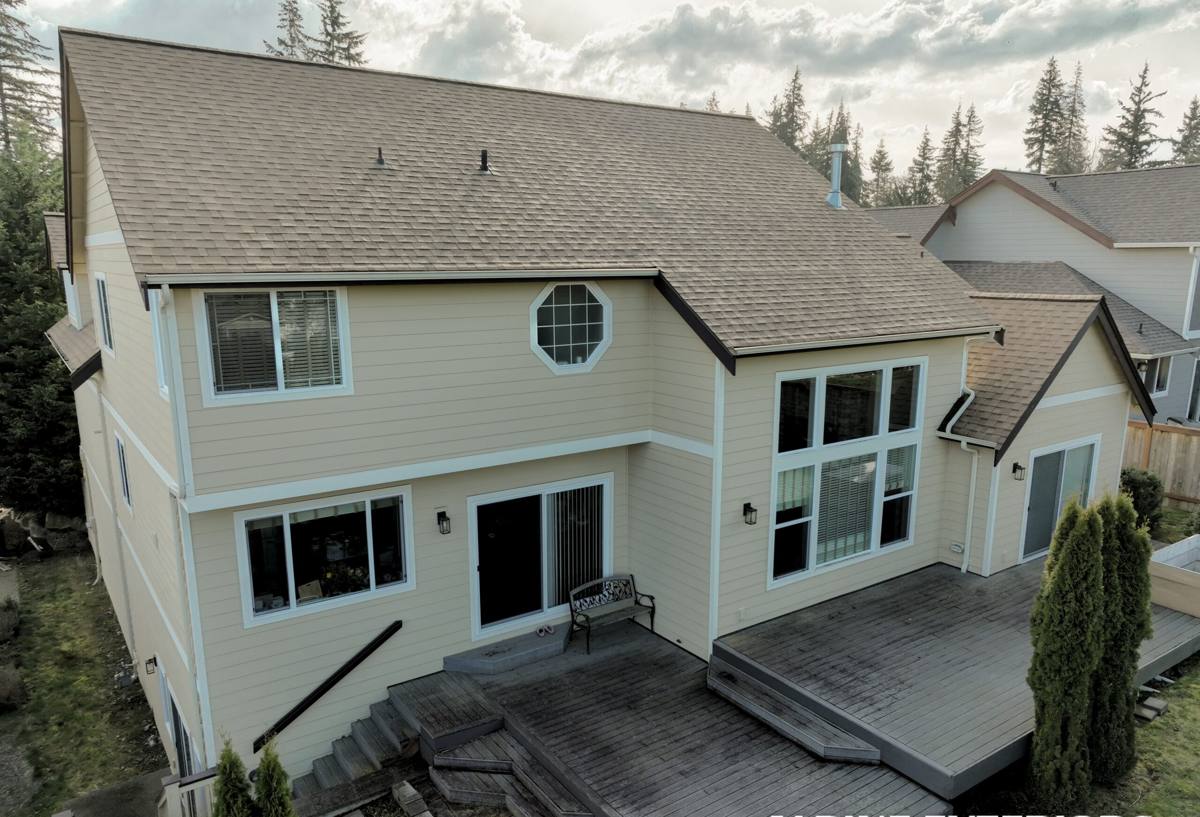
What's Actually Damaging Your Siding
Wind and wind-driven debris
Tropical storm and hurricane season puts sustained wind loads on exterior walls that most siding was never designed to shrug off indefinitely. Repeated flexing loosens fastener holds, pops panels away from the wall plane, and creates gaps at butt joints and corners. Flying debris — even small stuff like palm fronds and roof grit — chips edges and corners, which then become entry points for moisture.
Year-round UV
Florida's sun doesn't take an off-season. UV breaks down pigments and surface coatings on siding steadily, which shows up as chalking, fading, and — on lower-quality or improperly finished products — surface checking and micro-cracking that lets water behind the material.
Wind-driven rain
Rain that falls straight down is rarely the problem. Rain that gets driven sideways under gusts finds its way into laps, seams, and any spot where caulking or flashing has failed. This is usually the real culprit behind soft spots, staining, and interior wall damage that homeowners assume is a roof leak.
Salt air
Palmetto's proximity to the Manatee River and the Gulf beyond it means salt-laden air is a constant, low-grade presence. Salt accelerates corrosion on fasteners and metal trim, and it can degrade certain coatings and adhesives faster than inland weathering alone would.
Signs You're Looking at a Repair, Not Just a Cosmetic Issue
- Cracked, split, or visibly buckled panels, especially near corners and window trim
- Soft or spongy spots when you press on the siding — a strong sign of moisture behind it
- Dark staining, streaking, or a musty smell near exterior walls
- Paint or finish that's peeling or bubbling rather than just fading
- Gaps opening up at seams, butt joints, or where siding meets trim and flashing
- Visible rust bleeding from fastener heads
- Interior drywall or baseboard damage on an exterior-facing wall with no obvious roof leak
Repair or Replace? How We Actually Make That Call
Not every damaged section needs to come down to the studs, and not every crack can be honestly fixed with caulk and paint. The right call depends on how far the damage has spread and what's happening behind the surface.
| Situation | Typical Recommendation | Why |
|---|---|---|
| Isolated cracked or impact-damaged panels, structure and framing dry | Targeted repair | Replace the affected boards, match color and profile, restore water management at the seams |
| Failed caulking or flashing with no wood rot found yet | Repair plus resealing | Catching it early prevents the moisture problem from ever becoming a structural one |
| Soft sheathing or rot discovered behind siding | Repair with sheathing replacement | Patching over rotten substrate just hides the problem — it doesn't fix it |
| Damage scattered across multiple elevations or a wall with a long moisture history | Full replacement of that elevation (or the house) | Repeated spot repairs on chronically wet walls rarely outlast a proper replacement |
We'll always tell you honestly which category your home falls into. A repair that's going to fail again in eighteen months isn't a favor to you, and we won't sell it as one.
What a Correct Siding Repair Actually Involves
Diagnosing before touching anything
Before we replace a single board, we check what's underneath. That means probing for soft sheathing, checking the condition of the house wrap or building paper, and confirming whether flashing at windows, doors, and penetrations is doing its job. Repairing the visible siding while ignoring a compromised water barrier behind it is how the same "fixed" spot fails again a year later.
Matching material and finish
A repair that's structurally sound but visually obvious — mismatched color, wrong plank width, a different reveal — isn't a finished job in our book. We take the time to match profile and color as closely as the existing siding allows, which is far easier with a factory-finished product than with field-painted material that's faded unevenly over years.
Rebuilding the water management, not just the surface
Correct fastening patterns, proper clearances above rooflines and hardscape, correctly lapped house wrap, and sealed (not just caulked-over) penetrations all matter more than the cosmetic patch itself. Caulk is a backup, not a strategy.
Our Repair Process
- Inspection. We walk the exterior, probe suspect areas, and check for moisture intrusion at trim, corners, and penetrations — not just at the spot you called about.
- Diagnosis and honest recommendation. You get a clear explanation of what caused the damage, whether it's contained, and whether repair or replacement of that section makes sense.
- Sourcing matching material. We work exclusively with James Hardie fiber cement, which gives us a consistent factory ColorPlus finish to match against rather than guessing at a field-mixed paint color.
- Removal and substrate check. Damaged panels come off, and anything behind them — house wrap, sheathing, flashing — gets inspected and repaired as needed before new siding goes up.
- Reinstallation to spec. Correct fastener type and spacing, proper clearances, and sealed transitions at every seam and penetration.
- Final walkthrough. We show you what was done and why, including anything we found that's worth keeping an eye on going forward.
Why a Crew That Already Works Palmetto Matters
Siding repair in this part of Manatee County isn't generic exterior work. A crew that regularly works Palmetto and the surrounding area already understands the wind-load expectations local building departments hold repairs to, knows what water intrusion patterns actually look like on homes exposed to Gulf-driven weather, and isn't discovering salt-air corrosion on fasteners for the first time. That familiarity shows up in faster, more accurate diagnosis and fewer surprises mid-repair — and after a storm, it also means a crew that isn't learning the area from scratch while you're waiting for someone to show up.
What Siding Repair Typically Costs
We don't quote firm numbers without seeing the damage, but the factors that move a repair estimate up or down are consistent:
| Cost Factor | Why It Matters |
|---|---|
| Extent of visible damage | A few boards costs far less than damage spread across an elevation |
| Hidden moisture or rot | Sheathing or framing repair adds material and labor beyond the siding itself |
| Accessibility | Second-story work, tight side yards, or landscaping obstructions add time |
| Color and profile match | Older or discontinued colors may need a wider matching area for a seamless look |
| Trim and flashing condition | Failed flashing found during repair often needs replacing alongside the siding |
Keeping Repaired Siding From Failing Again
- Walk the exterior twice a year and after any major storm, looking for new cracks, gaps, or soft spots
- Keep gutters clear so water isn't sheeting down onto siding it wasn't designed to handle
- Trim vegetation back from exterior walls to reduce trapped moisture and physical abrasion
- Re-caulk failing joints promptly rather than waiting for a visible gap to become a leak
- Rinse accumulated salt residue off exterior surfaces periodically, especially after long dry spells
- Address minor damage quickly — small cracks are cheap fixes; the same crack left through a storm season often isn't
Why We Only Repair and Install James Hardie
We standardized on James Hardie fiber cement for a reason directly tied to everything above: it's non-combustible, holds up to sustained coastal UV and moisture exposure better than wood or vinyl alternatives, and its factory-applied ColorPlus finish gives us something consistent to match when a repair is needed years down the road. When a repair on a Hardie wall does require replacing a section, we're matching against an engineered product line, not guessing at how a field-painted board has aged. That consistency is exactly what makes long-term repair work reliable instead of a recurring guessing game.
If your Palmetto home has siding damage — whether it's a couple of cracked panels or something that looks worse the closer you get — we're happy to take a look and give you a straight answer on what it needs. Request a free, no-pressure estimate using the form below.