 Bradenton
 Whitfield Estates Sits Right Where Florida's Climate Gets Serious About Testing a Home
Whitfield Estates is one of Manatee County's older, established neighborhoods, with a housing stock that spans decades of Florida building styles and a tree canopy that's had time to mature. That mix brings a specific set of exterior challenges: homes here sit close enough to Sarasota Bay and the Gulf to catch salt-laden air on a regular basis, they take direct, near-constant UV exposure most of the year, and they're squarely in the path of the wind-driven rain and hurricane-force gusts that come with a Gulf Coast storm season. None of that is unique to Whitfield Estates alone, but the combination of an established neighborhood, mature landscaping, and proximity to open water means the exterior systems on these homes work harder than the marketing brochures for most building products ever account for.
We're a Bradenton-based exterior contractor, and Whitfield Estates is inside our normal service area — not a stretch assignment we drive an hour to reach. That matters more than it sounds like it should, and we'll get into why below. First, it's worth being specific about what this climate actually does to a house.
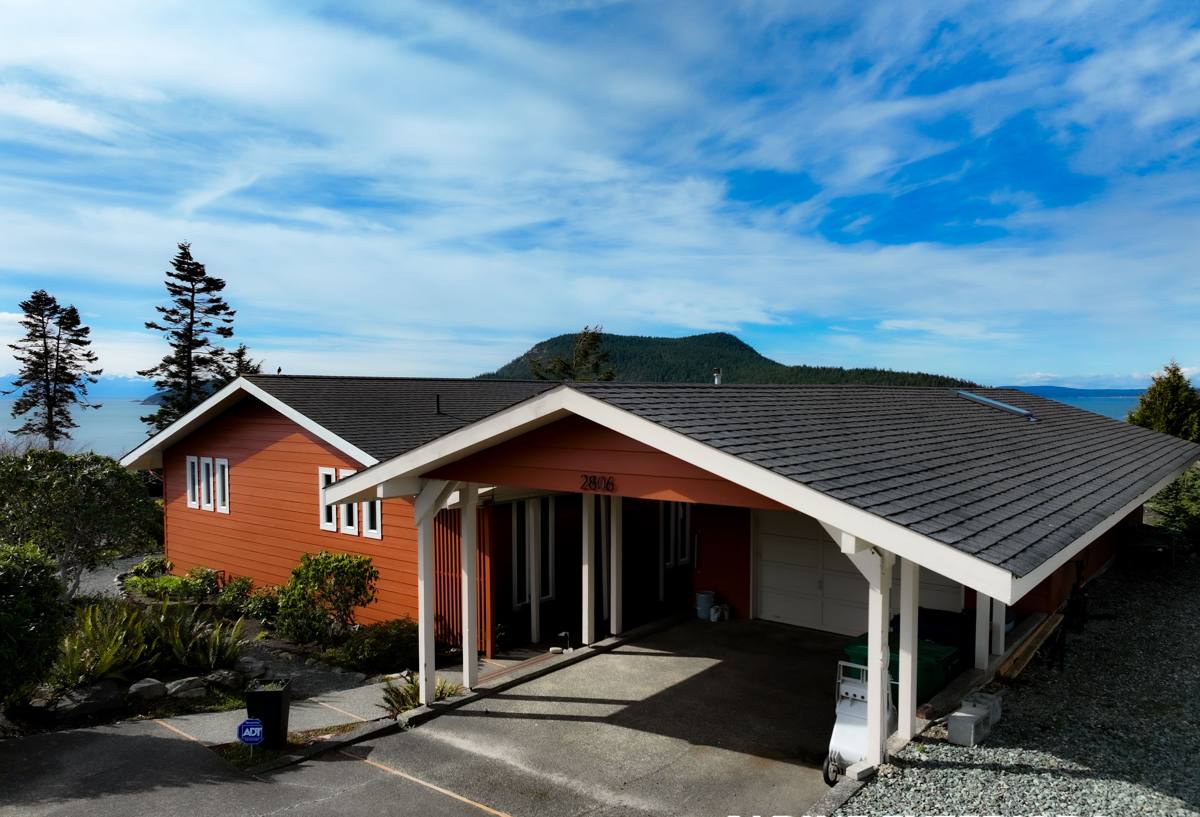
What Coastal Manatee County Conditions Do to a Home's Exterior
Salt Air
Even a mile or two inland from the bay, airborne salt settles on siding, roofing, window frames, and deck fasteners. Over years, it accelerates corrosion on anything metal that isn't rated for coastal exposure — nails, flashing, hinges, hardware — and it degrades paint and coatings faster than the same products would wear in a dry inland climate.
UV Load
Florida sun is intense and it's relentless nearly year-round, not just in summer. UV breaks down pigments and resins in lesser paint and coating systems, which is why so many homes end up needing a full repaint every few years instead of holding color for a decade or more.
Wind-Driven Rain
Bradenton doesn't just get rain — it gets rain pushed sideways by wind, which finds every gap in flashing, every poorly lapped seam, and every weak point in a window or door installation. Water intrusion problems in this region are rarely about the amount of rainfall; they're about wind forcing water into places it was never supposed to reach.
Hurricane-Force Wind
Manatee County sits in a hurricane-exposed part of the state. Exterior products and installation methods that are technically code-compliant in a low-wind region can be marginal here. Wind resistance isn't a bullet point — it's a real, recurring test that this specific area's homes have to pass, sometimes more than once a decade.
Siding: Why We Only Install James Hardie Fiber Cement
We install James Hardie fiber cement siding exclusively. We don't install vinyl, LP SmartSide, Cemplank, Allura, or primed wood siding like spruce or cedar, and that's a deliberate standard, not an oversight. In a climate like this one, the differences between siding materials aren't cosmetic — they show up in how a home performs a decade or two down the road.
- Vinyl can deform or crack under sustained high heat and direct sun, and its wind-load rating depends heavily on fastening and panel quality — a real concern in a storm-exposed area.
- Wood-based composite sidings (like LP SmartSide) use engineered wood with a resin-treated strand core. It performs reasonably well when installation and maintenance are done exactly to spec, but any breach in the factory finish exposes wood fiber to Florida's humidity and rain, and moisture-related swelling or edge deterioration is a known long-term risk in coastal, high-rainfall regions.
- Primed wood siding (spruce, cedar) needs disciplined repainting and caulking on a strict schedule to hold up to UV and salt air — miss a cycle in this climate and you're often looking at rot, not just faded paint.
James Hardie fiber cement is non-combustible, dimensionally stable, and doesn't swell, rot, or feed pests the way wood-based products can. Its ColorPlus factory-applied finish is baked on and engineered to resist UV fade and hold up to coastal weathering far longer than field-applied paint. Hardie also builds region-specific product lines — including an HZ5 formulation engineered for higher humidity, moisture, and hail exposure — which is directly relevant to a bay-adjacent neighborhood like Whitfield Estates. Backed by a strong transferable limited warranty, it's the one siding system we're comfortable standing behind on every home we side in this area.
Roofing in a Wind- and Sun-Exposed Neighborhood
Roofing in Whitfield Estates has to handle the same triple threat as siding: UV breakdown, wind uplift, and wind-driven rain finding weak points in flashing and underlayment. A roof that looks fine from the ground can have flashing that's corroded from salt exposure or underlayment that's degraded from years of heat before a single shingle actually fails. We evaluate the whole system — decking, underlayment, flashing, ventilation, and the roof covering itself — because in this climate, a roof is only as strong as its weakest detail, and wind almost always finds it first.
Windows: Holding the Line Against Wind and Water
Older homes in an established neighborhood like Whitfield Estates often still have original or aging window installations that predate current wind-load and impact standards. Upgrading windows here isn't just about energy efficiency — it's about closing off one of the most common paths for wind-driven rain to get behind exterior walls during a storm. Proper flashing and integration with the surrounding siding matters as much as the window unit itself; a high-rated window installed with poor flashing detail can still leak.
Decks: Built for Sun, Rain, and Salt, Not Just Looks
Outdoor living spaces take a beating in this climate. Decks see direct UV exposure most days of the year, get soaked by wind-driven rain, and — this close to the water — pick up salt air that accelerates corrosion on fasteners and connectors that aren't rated for coastal use. We build and repair decks with hardware and materials sized for this specific exposure, not generic inland specs.
What Working With a Local Bradenton Crew Actually Means
A contractor based in Bradenton and working Manatee County day in and day out knows the local permitting process, understands the wind-load and building code requirements that apply to this specific area, and has already seen how these products and installation methods hold up locally over time — not just in a manufacturer's lab or a different climate zone. When you're in Whitfield Estates, you're not a detour on someone's route from another county. That's a real, practical difference when it comes time to schedule a follow-up visit, resolve a warranty question, or get a straight answer instead of a runaround.
What to Expect From a Site Visit
- A walk-around of the home's siding, roofline, windows, and any deck or outdoor structures
- An honest read on what's still serviceable versus what's nearing the end of its useful life
- A clear explanation of material options — and why we recommend what we recommend
- A written estimate with no pressure to sign on the spot
Cost Factors Homeowners Should Understand
Every home and project scope is different, but these are the variables that most affect what an exterior project costs in this area:
| Factor | Why It Matters Here |
|---|---|
| Home size and wall/roof complexity | More corners, gables, and transitions mean more flashing detail and labor time |
| Current condition and hidden damage | Moisture or wind damage found once old material is removed can affect scope |
| Material selection | Product line and finish (e.g., Hardie's various siding profiles and ColorPlus options) affect material cost |
| Wind-load and code requirements | Coastal Manatee County wind zones can require specific fastening or window ratings |
| Access and site conditions | Mature landscaping and older lot layouts can affect equipment access and staging |
Signs a Whitfield Estates Home May Need Exterior Attention
- Chalky, faded, or peeling paint on siding or trim
- Soft spots, swelling, or visible seams on existing siding
- Rust streaks near flashing, fasteners, or roof penetrations
- Water stains on interior ceilings or walls near windows or the roofline
- Windows that feel drafty, fog between panes, or are difficult to open and close
- Deck boards that are cupping, splintering, or have corroded hardware
- Visible granule loss or curling shingles on the roof
If you're in Whitfield Estates and want a straight, no-pressure look at where your siding, roof, windows, or deck actually stand, we're glad to come take a look. Use the form below to request a free estimate — no obligation, just an honest assessment from a crew that works this area regularly.