 Bradenton
 What Primed Spruce Siding Actually Is
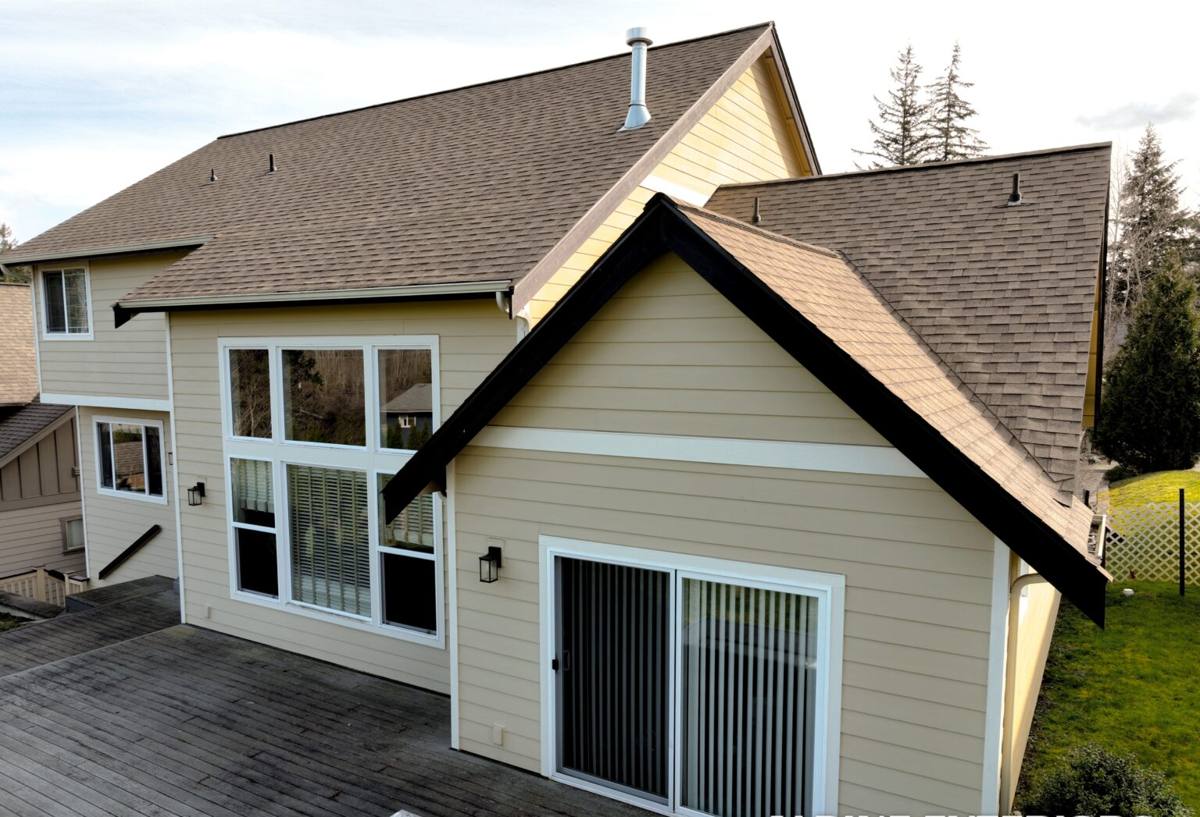
Primed spruce siding is solid-wood lap siding milled from spruce lumber and coated at the factory with a primer coat before it ships. It's been a staple in the siding industry for decades because it does a few things genuinely well: it looks like real wood because it is real wood, it takes paint in almost any color, and it can be trimmed and detailed on site by a skilled carpenter in ways that engineered products sometimes can't match. Homeowners in older Bradenton neighborhoods often have it on their homes right now, and plenty of it has held up fine for years under the right conditions.
We're not going to pretend primed spruce is a bad product on paper. It's a wood siding product doing what wood siding products do. The problem is what happens after it's nailed to the wall and left to face a Manatee County summer.
The Core Problem: Wood and Humidity Don't Mix Long-Term
Spruce is a softwood. It's dimensionally stable enough to mill cleanly and take a nail well, but it's also porous, which means it absorbs and releases moisture as humidity swings. Priming coats the surface, but priming is not a permanent moisture seal — it's a base layer meant to help paint adhere, not a barrier that stops water vapor from moving through the board over the life of the siding.
Why This Matters More Than It Sounds
Every time the board swells with moisture and then dries out, it moves slightly. Paint doesn't move the same way wood does, so over repeated cycles the paint film cracks at the grain lines and at butt joints first. Once that happens, the primer's job is done and the bare wood underneath is exposed directly to weather. From there it's a matter of time before rot sets in, usually starting at the bottom edges, butt joints, and anywhere fasteners penetrate the board.
Where Primed Spruce Actually Fails in the Field
The failure points are predictable, and they're the same ones we see over and over on service calls:
- Cut ends and field-trimmed edges that don't get re-primed or sealed before installation, leaving raw end grain exposed
- Butt joints between courses where two boards meet and water can wick in behind the paint film
- Nail holes and fastener penetrations that open a path for moisture behind the coating
- Bottom edges near grade or near roof-to-wall transitions where splashback and standing moisture linger
- Areas with minimal roof overhang, where the siding gets more direct rain exposure than the rest of the wall
None of these are exotic failure modes. They're the ordinary physics of wood siding, and they happen regardless of how carefully the crew installs it — installation quality can slow the clock, but it can't stop it.
Why Bradenton's Climate Makes This Worse, Not Better
Every wood siding product faces some version of this problem, but Manatee County isn't a mild, dry climate that gives a coating decades to slowly fail. It's a coastal, subtropical environment that stacks several stressors on top of each other at once.
Wind-Driven Rain
Hurricane and tropical storm systems don't just bring heavy rain — they drive it sideways under pressure, forcing water into laps, joints, and fastener penetrations that would stay dry in a normal vertical rainstorm. That's exactly where primed spruce's weak points are.
Year-Round, Intense UV
Florida sun is harder on exterior paint films than sun in most of the country, simply because there's more of it, more consistently, all year. UV breaks down paint resin over time, and once the film starts to chalk and thin, it loses its ability to shed water — accelerating the moisture cycle described above.
Salt Air
Being close to the Gulf and the coastal waterways around Bradenton means airborne salt settles on every exterior surface, including siding and the fasteners holding it up. Salt is hygroscopic — it pulls moisture out of the air and holds it against the surface it's sitting on, which keeps wood and fastener corrosion sites damp longer than they'd otherwise be.
Little Real Dry-Out Season
In a drier climate, wood siding gets long stretches to fully dry out between rain events. Manatee County's humidity rarely gives it that break, especially in the warmer months, which means moisture that does get behind the paint film has fewer chances to fully leave before the next rain.
Individually, none of these are unique to Bradenton. Together, stacked on a product whose known weak point is long-term moisture exposure, they shorten the runway considerably compared to what a manufacturer's general warranty language might suggest.
The Maintenance Bill That Comes With It
Primed spruce siding is a maintenance commitment, not a one-time purchase. It needs a top coat of paint after installation (priming alone was never meant to be the final finish), and it needs repainting on a cycle — often shorter here than in a milder climate — to keep the protective film intact. Skipping or delaying a repaint cycle is the single most common reason we see premature rot when we're called out to look at an older home's siding.
| Factor | Primed Spruce Siding | James Hardie Fiber Cement |
|---|---|---|
| Base material | Solid softwood | Cement, sand, and cellulose fiber |
| Factory finish | Primer only — paint applied after install | ColorPlus baked-on finish, ready to install |
| Repaint cycle | Typically every few years in this climate | ColorPlus finish carries its own long-term warranty |
| Moisture behavior | Absorbs and swells; rot risk at edges and joints | Fiber cement doesn't rot; engineered HZ lines for humid climates |
| Wind-driven rain resistance | Depends heavily on paint film integrity | Rated and tested for high-wind, wind-driven rain conditions |
| Fire behavior | Combustible | Non-combustible |
| Manufacturer warranty | Varies by mill; limited | Long-term, transferable non-prorated warranty |
Warranty Structure Is Part of the Real Cost
A siding warranty is only worth what it actually covers, and wood siding warranties are typically written around material defects, not around rot caused by moisture exposure once the coating has broken down — which is the failure mode wood siding is most prone to. In practice, that means the years when a homeowner is most likely to need warranty help are often the years the warranty doesn't apply to. We'd rather stand behind a product with a warranty structure that matches how it actually fails in this climate.
What We Install Instead, and Why
We install James Hardie fiber cement siding exclusively, including their HZ product lines engineered specifically for humid, high-moisture climates like ours. Fiber cement is non-combustible, doesn't swell or rot the way wood does, and comes from the factory with a ColorPlus baked-on finish rather than a primer coat waiting for a homeowner to schedule a paint job. It's also backed by a long-term, transferable warranty structure — which matters to a future buyer if the home is ever sold.
None of this means fiber cement is maintenance-free or magic. It still needs to be installed to manufacturer spec — proper clearances, fastening, joint treatment, and flashing — and installation quality matters as much with Hardie as it does with any product. The difference is that when it's installed correctly, the material itself isn't the thing working against you in a Manatee County summer.
Questions Worth Asking Before You Choose Wood Siding
If you're weighing wood siding against fiber cement for a Bradenton home, these are the questions we'd want answered before signing a contract with anyone:
- Who is responsible for the first top coat of paint, and is that priced into the installation or billed separately?
- What's the manufacturer's actual repainting or recoating interval recommendation for a coastal Florida climate?
- Are cut ends and field-trimmed edges re-primed or back-primed before installation, and who's checking that on site?
- Does the warranty cover rot, or only material defects at the time of manufacture?
- What's the plan for butt joints and fastener penetrations — the two most common places we see failure start?
- How does the product's fire rating compare to non-combustible alternatives, given how close some Bradenton lots sit to neighboring structures?
These aren't trick questions meant to steer you toward one answer. They're the same questions we ask ourselves about any product before we put our name on the installation.
Our Honest Bottom Line
Primed spruce siding isn't a scam or a bad piece of lumber — it's a real wood product that behaves like wood, which is exactly the issue in a climate that gives wood siding hurricane-force wind-driven rain, intense year-round UV, and salt air with almost no dry season to recover in between. We've made the call to install only James Hardie fiber cement because it's engineered to hold up under those specific conditions with a warranty structure that reflects that. If you're planning a siding project on your Bradenton home and want a straight answer about what will actually hold up here, we're happy to walk your property, look at your specific exposure, and put together a free, no-pressure estimate.