 Bradenton
 Why Decks in Palmetto Wear Out Faster Than Inland Decks
Palmetto sits along the Manatee River corridor near the mouth of Tampa Bay, which means homes here take a different kind of beating than a deck fifty miles inland. The combination of near-constant humidity, intense UV exposure almost year-round, salt-laden air moving in off the water, and the wind-driven rain that comes with Gulf Coast storm season adds up faster than most homeowners expect. A deck that would last two decades in a drier, cooler climate can start showing real structural problems in half that time here if it wasn't built with this environment in mind.
The damage isn't always obvious from the surface. Boards can look fine while the framing underneath, the fasteners holding it together, or the connection points to the house have already started to fail. That's the core problem with a lot of deck work done without local experience: it treats a deck in Manatee County the same as a deck anywhere else in the country, when the materials, hardware, and structural details all need to change to hold up here.
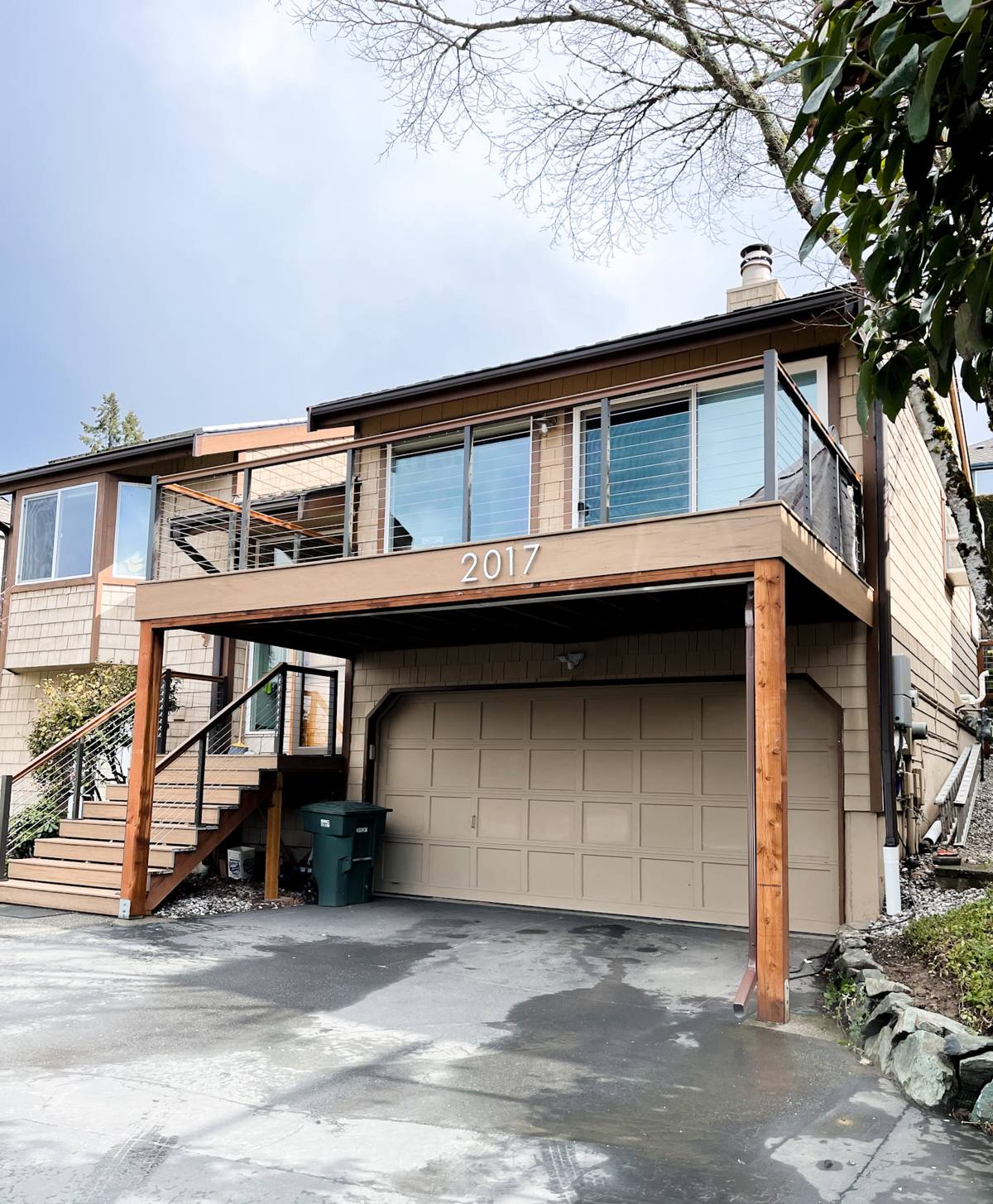
What "Replacement" Should Actually Mean
A lot of deck "replacements" are really just re-decking jobs — new boards laid over the same old frame. That can be the right call if the structure underneath is genuinely sound, but on a lot of older Palmetto-area decks, it isn't. A correct replacement starts with the structure, not the surface.
Framing and Ledger Board Inspection
The ledger board — the piece that attaches the deck to the house — is one of the most common failure points, especially where it's been exposed to years of wind-driven rain. Flashing that was skipped or installed poorly lets moisture get behind the ledger and into the rim joist, which can rot the connection point from the inside while the deck still looks solid. We open this up and inspect it rather than assuming it's fine because the boards on top look new.
Footings and Post Bases
Footing depth and post-base hardware matter more here than in drier climates. Wood posts set directly in concrete, or footings that were poured too shallow, tend to hold moisture and break down faster in this humidity. Proper post bases keep the wood off the concrete and off standing water, which meaningfully extends the life of the structure.
Fasteners and Hardware
This is where a lot of corners get cut, and it's the one that costs homeowners the most down the road. Standard galvanized screws and joist hangers corrode faster in salt air than most people realize, sometimes within a handful of years. We'll get into fastener choice in more detail below, but it's worth saying up front: hardware selection is not a minor detail on a coastal-adjacent deck. It's one of the main things separating a deck that lasts from one that doesn't.
Decking Material Options for This Climate
There's no single "best" decking material — every option is a set of trade-offs, and the right one depends on your budget, how much upkeep you're willing to do, and how much sun and salt exposure your specific deck gets. Here's an honest comparison of the materials we most commonly work with for Bradenton and Palmetto homes.
| Material | Moisture & Salt Behavior | Maintenance | Typical Lifespan |
|---|---|---|---|
| Pressure-treated wood | Can warp, cup, or split with repeated wet/dry cycling; needs sealing to resist moisture intrusion | Annual cleaning and re-sealing/staining recommended | 10–15 years with upkeep |
| Composite decking | Resists rot and doesn't absorb moisture like wood; some early-generation composites held heat and moisture at the surface | Periodic cleaning; no sealing or staining needed | 20–25+ years |
| PVC/capped polymer decking | Fully resists moisture absorption; performs well in high-humidity, high-UV settings | Occasional washing | 25+ years |
| Aluminum decking | Immune to rot and largely resistant to corrosion with proper coating; can transfer heat in direct sun | Very low | 30+ years |
Wood is still a reasonable choice for homeowners who want that traditional look and don't mind the upkeep, and it's typically the lower up-front cost. Composite and PVC cost more initially but make sense for anyone who wants to spend less time maintaining a deck they'll be using in full Florida sun most of the year. We'll walk through what fits your situation rather than pushing one material as universally "better."
Florida Building Code and Manatee County Permitting
Deck replacement in unincorporated Manatee County and the Palmetto area isn't a handshake job — structural decks require a permit, and the work has to meet Florida Building Code wind load provisions for this region. That includes proper fastening schedules, connection hardware rated for the required uplift and lateral loads, and, depending on deck height and configuration, guardrail and stair requirements.
Skipping the permit might save a little time up front, but it creates real problems later: unpermitted structural work can complicate a home sale, cause issues with insurance claims after storm damage, and in some cases requires the work to be opened back up and redone to code. We handle the permitting and coordinate inspections as part of the job, not as an afterthought.
Our Deck Replacement Process, Start to Finish
On-Site Evaluation
We start by physically inspecting the framing, ledger connection, footings, and existing hardware — not just the visible decking. This tells us whether you're looking at a true replacement or whether parts of the structure can reasonably be reused.
Permitting and Planning
Once we know the scope, we handle the permit application and any engineering documentation the county requires for your specific deck size and configuration.
Demolition and Disposal
Old decking, framing, and hardware are removed and hauled off. We check the ledger flashing and the rim joist behind it once the old structure is off, since this area is often not visible until then.
Framing and Structural Work
New framing goes in to current code, with attention to footing depth, post bases, and ledger flashing designed to keep water moving away from the house rather than behind it.
Decking, Railing, and Fascia
Decking is installed per the manufacturer's specifications for gapping and fastening — this matters more in a climate with this much thermal movement and moisture than people expect. Railings and fascia go on last.
Final Inspection and Walkthrough
We coordinate the required county inspection and walk the finished deck with you so you know what maintenance it needs and what warranty coverage applies to the materials and labor.
Railings, Fasteners, and Hardware That Hold Up to Salt Air
This is worth its own section because it's the detail most likely to be overlooked, and the one most likely to cause an early failure in a Palmetto-area deck. Standard hardware isn't rated for long-term exposure to salt-laden coastal air, and it shows — rust streaks on decking, corroded screw heads, and weakened joist hangers are common on decks in this region that were built with inland-grade materials.
Our standard is stainless steel or coated fasteners and connectors rated for coastal or corrosive-environment use, matched to whatever decking material is installed. It costs more than generic hardware, but it's the difference between hardware that's still sound in fifteen years and hardware that's failing in five. Railings get the same consideration — post connections and baluster fasteners take direct weather exposure and need to be rated for it.
Maintenance Checklist for Palmetto Homeowners
Whatever material you choose, a little seasonal attention goes a long way toward getting the full lifespan out of a deck in this climate. After your new deck is installed, here's what we recommend keeping an eye on:
- Rinse off salt residue and organic debris (leaves, pollen) every few weeks, more often if the deck is close to open water
- Check fastener heads and railing connections once or twice a year for rust staining or looseness
- Inspect the ledger board area at the house connection annually for any signs of moisture intrusion
- Clear standing water and debris from between boards after storms, especially in shaded, slow-drying areas
- Reseal or restain wood decking on the manufacturer-recommended schedule — don't wait until it looks obviously weathered
- Have footings and post bases checked periodically for shifting, especially after a significant storm season
Why Hiring a Crew That Already Works in Palmetto Matters
Deck construction that's correct in Ohio or the Carolinas isn't automatically correct in Manatee County. Wind load requirements, humidity behavior, fastener corrosion rates, and permitting expectations here are all shaped by this specific coastal environment, and a crew that works this area regularly already knows which details actually matter versus which are optional elsewhere but not here.
That local familiarity also means faster, more accurate permitting — we're not learning the county's process on your job — and a realistic read on how your deck's specific site conditions (sun exposure, proximity to water, drainage) should shape material and hardware choices. It's the difference between a deck built to a generic spec sheet and one built for the conditions it will actually face every day.
If your deck in Palmetto or the greater Bradenton area is showing its age, or you're just not sure whether it needs a full replacement or a smaller repair, we're happy to take a look and give you a straight answer. Reach out for a free, no-pressure estimate using the form below.