 Bradenton
 Windows in Rosedale: Built for Manatee County's Climate
Rosedale is one of the established residential communities on the north side of Bradenton, and like the rest of Manatee County it sits squarely in Florida's Gulf Coast weather pattern: long, intense sun for most of the year, a hurricane season that runs June through November, and the kind of wind-driven rain that finds every weak point in a wall assembly. Homes here range from older construction to newer builds, but the windows on all of them face the same basic stress: heat, ultraviolet light, storm-force wind, and salt-laden air moving in off the Gulf. A window is a small assembly doing a big job, and in this climate it either holds up to all of that at once or it becomes the first thing that fails when a storm rolls through.
Bradenton Exterior replaces, repairs, and installs windows for homes throughout Rosedale and the surrounding Bradenton area, and we also handle siding, roofing, and other exterior work, because a window is never really an isolated product — it's one component of a wall system that has to work together with the siding, flashing, and framing around it. When we plan a window project for a Rosedale home, every decision, from frame material to installation detail, gets made with hurricane winds, year-round UV, wind-driven rain, and salt air in mind, not just the sales spec sheet.
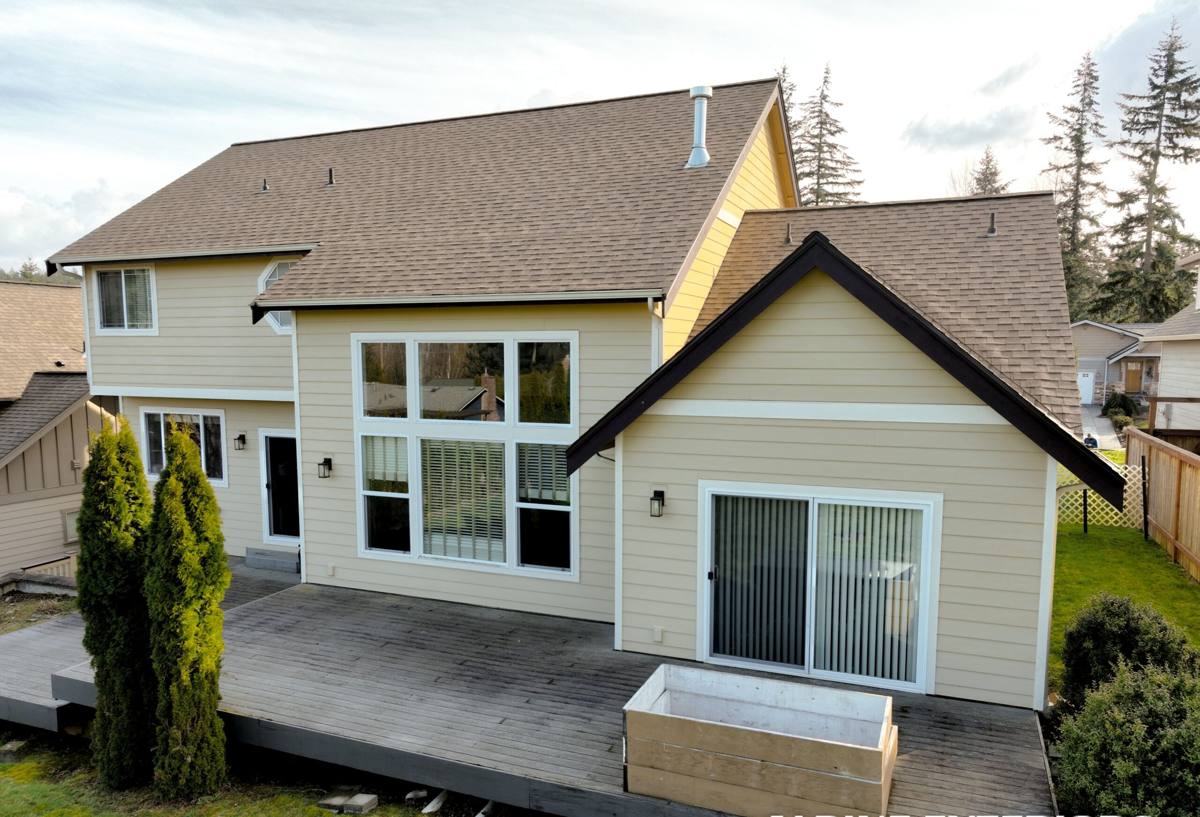
What Bradenton's Climate Does to Windows Over Time
Hurricane-Force Wind and Wind-Borne Debris
Manatee County sits inside Florida's wind-borne debris region, which means windows here have to be engineered to survive both sustained high wind pressure and the impact of debris carried by that wind — a branch, a piece of roofing, a lawn chair. Older, non-rated windows can fail catastrophically under that kind of load, and once a window fails during a storm, wind pressure inside the house can do far more damage to the roof and walls than the broken glass itself. This is the single biggest reason window choice matters more here than in most parts of the country.
Year-Round UV and Material Breakdown
Florida's sun exposure is intense and consistent almost every month of the year, not just in summer. That steady UV load breaks down vinyl and composite frame materials faster than in milder climates, causing discoloration, brittleness, and warping over time. It also degrades window seals and weatherstripping, which is a big part of why double-pane seal failure and fogged glass shows up sooner on Gulf Coast homes than the manufacturer's climate-neutral warranty numbers might suggest.
Wind-Driven Rain and Water Intrusion
Rain in a Gulf Coast storm rarely falls straight down. Tropical systems and even routine summer thunderstorms push rain sideways with real force, which puts far more stress on a window's flashing and sill pan than a light, vertical rain ever would. Most of the water intrusion we find around windows in this area traces back to installation shortcuts — a missing sill pan, flashing that wasn't lapped correctly, or sealant used as a substitute for proper flashing — rather than to the window itself.
Salt Air and Hardware Corrosion
Rosedale isn't directly on the water, but Bradenton's whole coastal air mass carries salt further inland than people expect, and it accelerates corrosion on window hardware, screen frames, and lower-grade fasteners over time. Locks that stick, cranks that seize, and screens that pit and discolor are often the earliest visible sign that a window's hardware wasn't specified for this air.
Florida Building Code, Wind Ratings, and What They Mean for Your Project
Florida's building code treats window replacement differently than most states, and Manatee County enforces it closely. Any replacement window installed here has to meet a design pressure rating appropriate to the home's wind zone and be either impact-rated on its own or paired with code-compliant shutters or panels that are rated to protect it. Replacement projects also require a permit and inspection in almost every case — this isn't optional paperwork, it's what confirms the installation actually meets the pressure and anchoring requirements the product label promises.
There are two accepted paths to compliance, and each has real trade-offs worth understanding before you decide:
| Approach | How It Works | Day-to-Day Living | Upfront Cost |
|---|---|---|---|
| Impact-rated windows | Laminated glass and reinforced frame resist wind-borne debris directly; no separate covering needed | No storm-day prep; usable as regular windows year-round | Higher per-window cost |
| Standard windows with code-rated shutters or panels | A standard window is protected by a separate shutter or panel system rated for the same wind zone | Requires deploying and storing shutters or panels before every storm | Lower window cost, but added cost and upkeep for the shutter system |
Neither path is automatically wrong. A homeowner who wants to walk away from the house ahead of a storm without prepping anything usually leans toward impact glass. A homeowner working with a tighter budget, who's willing to put up panels each season, can still meet code with a standard window and a properly rated shutter system. We'll walk you through both honestly rather than defaulting to whichever is easier for us to sell.
Choosing the Right Window: Materials and Glass Options
Frame material and glass package both affect how a window performs against Bradenton's specific combination of sun, wind, and salt air.
| Frame Material | Sun & Heat Behavior | Corrosion Resistance | Typical Maintenance |
|---|---|---|---|
| Vinyl | Can discolor or soften under sustained UV if lower-grade; quality vinyl holds up well | Won't corrode; hardware quality still matters | Low |
| Fiberglass | Dimensionally stable under heat and sun; holds paint and color well over time | Excellent | Low |
| Aluminum | Conducts heat, which affects comfort and energy bills in Florida's climate | Can corrode over time in salt air unless well-finished | Moderate |
| Wood, clad or painted | Attractive but more vulnerable to heat and humidity cycling at joints | Lower unless well-maintained | Higher; regular finish upkeep |
On the glass side, laminated impact glass is the product that actually earns the "hurricane-rated" label — it's built from two panes bonded around an interlayer that holds together under impact rather than shattering outward. Beyond storm protection, a good Low-E coating and appropriate tint also cut down significantly on the heat gain Bradenton's near-constant sun pushes through ordinary glass, which matters for comfort and cooling costs well outside of hurricane season.
Full-Frame Replacement vs. Insert Replacement
One of the first decisions on any window project is whether to do a full-frame replacement, which removes the existing window down to the rough opening and rebuilds the flashing and sill pan from scratch, or an insert replacement, which fits a new window into the existing, structurally sound frame. Insert replacement is faster and less disruptive to surrounding stucco or siding, and it works well when the existing frame is solid and was properly flashed to begin with. Full-frame replacement takes longer and costs more, but it's the honest answer whenever there's already water damage at the sill or jambs, or when the original flashing was never done correctly — which we see often enough in older Rosedale homes that we always check before recommending a shortcut.
Cost Factors Homeowners Should Understand
- Impact rating and design pressure required for your specific wind zone and elevation
- Frame material and glass package, including Low-E coatings and tint
- Full-frame versus insert replacement, and whether hidden rot or damage is found once the old window is out
- Number and size of openings, plus any custom shapes or oversized units
- Permit and inspection fees required by Manatee County for the scope of work
- Trim, interior finish work, and any stucco or siding repair needed around the opening
We'll give you a clear, itemized picture of what's driving your specific number rather than a vague lump sum, so you understand what you're actually paying for.
How Our Window Replacement Process Works
- On-site assessment. We inspect existing windows, framing, and any signs of past water intrusion, and measure every opening precisely.
- Product and glass selection. We walk through impact-rated versus shuttered options, frame materials, and glass packages suited to your home's exposure and budget.
- Permitting. We handle the Manatee County permit application and schedule required inspections so the finished work is documented and code-compliant.
- Careful removal. Old windows come out with attention to the surrounding stucco, siding, and framing so we're not creating new damage to fix the old.
- Flashing and waterproofing. A properly pitched sill pan, correctly lapped head and jamb flashing, and appropriate sealants go in before the new window ever sits in the opening.
- Installation and anchoring. The new window is set, shimmed, and anchored to the design pressure rating the opening requires, not just tacked in place.
- Inspection and finish work. We coordinate the county inspection, then complete interior and exterior trim and finish work.
- Walkthrough and cleanup. We review the finished work with you, confirm proper operation of every unit, and clean up the job site.
Signs a Rosedale Home Needs Window Replacement
- Visible fogging or condensation trapped between panes, meaning a failed seal on a double-pane unit
- Windows that are original to an older home and were never upgraded to current impact standards
- Difficulty opening, closing, or locking a window that used to operate smoothly
- Soft, discolored, or bubbling frame material, especially on sun-exposed or storm-facing elevations
- Visible gaps, cracked sealant, or daylight showing around the frame from inside
- A noticeable draft, temperature swing, or rattle near a closed window during windy weather
- Water staining on interior walls, sills, or ceilings near a window after heavy rain
Any one of these is worth a professional look before the next storm season, not after it.
Repair, Reseal, or Replace: How We Help You Decide
Not every window problem calls for full replacement, and we don't default to recommending one. We look at the age of the window, whether it already carries an impact rating appropriate to your wind zone, whether the seal failure or draft is isolated or widespread across the house, and whether there's already water damage in the surrounding frame or wall. A single window with a failed seal on an otherwise sound, code-compliant house is often a straightforward repair. A house with multiple aging, non-rated windows and a history of storm prep hassle is usually more honestly addressed with a phased replacement plan, done in stages if the budget requires it, rather than patching individual units one at a time. We'll explain what we find and why, in plain terms, instead of pushing whichever option is more profitable for us.
Why a Crew That Already Works Rosedale Matters
A crew that installs and permits windows across Bradenton and Manatee County season after season learns things a spec sheet can't teach: how a given elevation in Rosedale actually takes wind and rain compared to a lot on open water, which flashing details are worth the extra time on install day so you're not dealing with a leak after the next tropical system, and how to navigate the county's permitting and inspection process without unnecessary delays. It also means working with someone who understands the difference between a coastal Bradenton property and an inland one, and doesn't apply a one-size-fits-all approach to both. Windows are our focus, but we also handle siding and roofing, and if a window project turns up moisture damage in the surrounding wall or a roof-to-wall transition that's letting water in, we can address it as part of the same conversation instead of sending you to find a second contractor.
If your Rosedale home has windows that are fogging, drafty, hard to operate, or simply weren't built to current hurricane standards, we're glad to take a look and give you a straightforward, honest read on what it actually needs. Reach out using the form below to schedule a free, no-pressure estimate.