 Bradenton
 Why Anna Maria Island Is Uniquely Hard on Siding
Anna Maria Island sits out on the Gulf side of Manatee County, and that location changes the math on how long any siding job actually lasts. A house a few miles inland in Bradenton deals with Florida heat and the occasional tropical system. A house on the island deals with all of that plus constant salt-laden air moving off the water, wide-open wind exposure with nothing to break it, and rain that rarely falls straight down — it gets driven sideways into every seam, lap, and joint the siding has.
None of these forces act alone. Salt air accelerates corrosion on fasteners and trim. Intense, near year-round UV bakes paint finishes and breaks down anything not engineered to hold color outdoors. Hurricane-force wind events test every nail, joint, and clearance the installer used. Wind-driven rain finds the one flashing detail that wasn't done right and works on it for years before anyone sees a stain inside. On a barrier island, siding isn't just decorative — it's the first line of defense, and it's working harder here than almost anywhere else in the county.
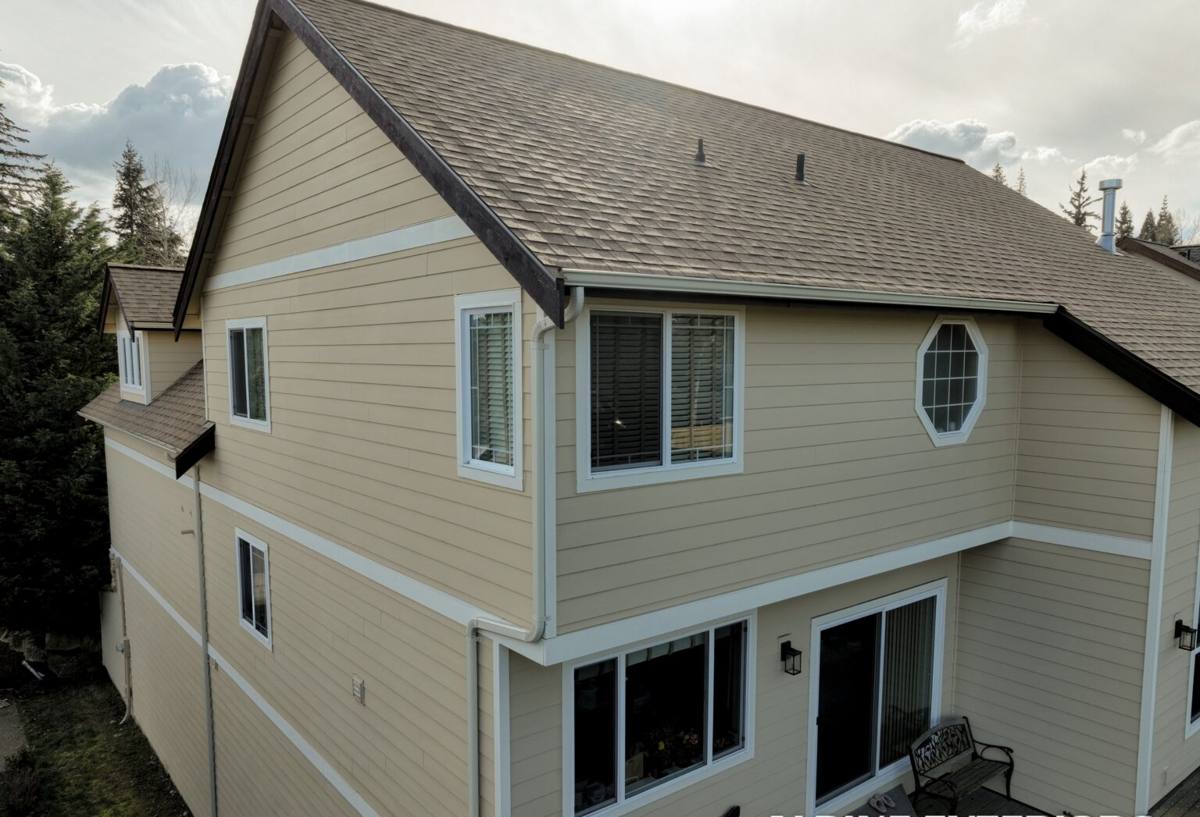
Signs Your Anna Maria Island Home's Siding Needs Replacing
Because island exposure accelerates wear, siding problems here often show up faster and more severely than homeowners expect based on a product's rated lifespan. Worth checking for:
- Paint that's chalking, fading, or peeling faster than a normal repaint cycle would explain
- Soft, spongy, or crumbling sections — usually a sign of moisture that's gotten behind the siding and started breaking down what's underneath
- Boards that are cracked, warped, or buckled from repeated heat and wind-load cycling
- Rust streaks bleeding down from fastener heads or trim
- Visible gaps opening up at seams, corners, or around windows and doors
- Mold, mildew, or algae staining that keeps coming back no matter how often it's washed
- Siding that's simply reached or passed the end of its realistic service life for coastal exposure, regardless of how it looks from the street
Any one of these can be cosmetic. Several at once, especially on the Gulf- or bay-facing side of a home, usually means water has already found its way past the surface and it's time for a real inspection rather than another patch or repaint.
What a Correct Siding Replacement Involves Here
Full Tear-Off, Not a Cover-Up
On the island, we don't recommend installing new siding over old. Overlaying traps whatever moisture is already in the wall assembly and hides it instead of fixing it. A proper job means stripping the old siding down to the sheathing and actually looking at what's underneath — which, on a lot of older island homes, has taken on more wind-driven rain over the years than the exterior ever let on.
The Right Weather-Resistive Barrier
Whatever house wrap or building paper goes on next needs to be suited to a high-humidity, high-salt environment, installed with correct laps and seams so water sheds down and out rather than working its way in.
Flashing That Actually Does Its Job
Windows, doors, and any other penetration in the wall are where wind-driven rain concentrates. Flashing details here aren't a formality — they're usually the single biggest factor in whether a siding job holds up on a barrier island or starts leaking within a few storm seasons.
Fastening and Clearances Matched to the Exposure
Fastener spacing and type need to match the wind exposure the home actually sees, not a generic inland nailing schedule. Clearances at grade, roof lines, and other transitions also matter more here, since standing moisture and salt spray punish any detail that was left too tight.
Choosing a Siding Material for a Barrier Island
This is the point where product choice stops being a style decision and starts being a durability decision. We install James Hardie fiber cement siding exclusively, and on Anna Maria Island specifically, that's not a marketing preference — it's a response to what this environment does to other materials over time.
Vinyl siding can soften, warp, or crack under sustained high heat and UV, and its seams give wind-driven rain more opportunities to get behind it. Wood-based products, including primed spruce, cedar, and engineered wood siding like LP SmartSide, are more vulnerable to moisture absorption at cut edges and seams — a real liability in an environment where salt air and driving rain are constant rather than occasional. None of these are "bad" products everywhere; they're just working against their limits in exactly the conditions Anna Maria Island produces year-round.
| Factor | James Hardie Fiber Cement | Vinyl Siding | Wood-Based / LP SmartSide |
|---|---|---|---|
| Salt air / corrosion resistance | High — non-combustible cement composite, unaffected by salt corrosion itself | Moderate — can chalk and become brittle over time in coastal air | Lower — moisture and salt accelerate deterioration at seams and edges |
| UV / fade resistance | Strong with ColorPlus factory finish | Moderate — color fades and finish can chalk under intense sun | Depends on field-applied paint upkeep |
| Wind-driven rain / moisture behavior | Engineered HZ5 formulation for humid, storm-prone climates | Seams and panels can allow water intrusion under wind pressure | Most moisture-sensitive; prone to swelling and rot if compromised |
| Maintenance burden | Low — factory finish holds up, minimal repainting | Low, but can crack/warp and need panel replacement | Higher — regular repainting and moisture monitoring needed |
| Fire performance | Non-combustible | Combustible | Combustible |
The takeaway isn't that other products can't be installed correctly — it's that on a barrier island, the margin for error is smaller, and James Hardie's climate-engineered HZ5 line is built specifically for the humidity, salt exposure, and storm activity this coastline sees.
Wind Rating and Permitting Considerations
Siding replacement on Anna Maria Island isn't just a product and labor decision — it's also a code and permitting one. Homes here fall under Florida Building Code wind-load requirements, and the island's three municipalities (Anna Maria, Holmes Beach, and Bradenton Beach) each handle their own permitting, separate from unincorporated Manatee County. That means the permit process, inspection scheduling, and documentation requirements can differ block to block depending on which jurisdiction a home sits in.
Whatever siding system goes on needs to be installed to its manufacturer's tested wind rating for the applicable exposure category, not just a standard inland spec. Getting this right matters beyond passing inspection — insurance carriers increasingly look at exterior construction details, including siding and the broader wind mitigation picture, when underwriting coastal properties. A job that's permitted, inspected, and documented correctly protects the homeowner well past the day the crew leaves.
Our Process, Start to Finish
Every siding replacement follows the same sequence, adjusted for the specific home:
- Inspection and assessment — we evaluate the existing siding, look for signs of moisture intrusion, and check the home's exposure to prevailing wind and rain direction
- Tear-off — full removal of the old siding down to the sheathing
- Sheathing repair — any rot or damage found underneath gets addressed before anything new goes on; this is not an optional step on a barrier island home
- Weather barrier and flashing — house wrap and flashing installed and lapped correctly at every seam, window, and door
- James Hardie HZ5 installation — installed to manufacturer spec, including fastening pattern and clearances suited to the site's wind exposure
- Finish and detailing — trim, corners, and ColorPlus factory-finished panels completed for a clean, uniform look
- Final walkthrough — we review the completed work with the homeowner before calling the job done
Why Hiring a Crew That Already Works Anna Maria Island Matters
Working on the island comes with logistics that don't exist a few miles inland in Bradenton. Bridge access limits how equipment and material deliveries get scheduled. Many island lots are tight, with little room for staging materials or parking crew vehicles, which affects how a job needs to be sequenced. Permitting differs by which of the island's municipalities a home falls under, so a crew unfamiliar with that split can lose real time just figuring out who to file with. And a lot of island homes are older, with framing and prior repair work that doesn't always match what's on the original plans — something a crew that's opened up island walls before knows to expect and plan around.
A contractor who already works Anna Maria Island regularly isn't guessing at any of this. That familiarity translates directly into fewer surprises, fewer permitting delays, and a tear-off that goes smoothly instead of turning into a scramble the first time hidden damage shows up behind the old siding.
Get a Free, No-Pressure Estimate
If your Anna Maria Island home's siding is showing its age, chalking, or you've spotted soft spots or gaps after the last storm season, it's worth getting a straight assessment before the problem grows behind the walls. Use the form below to request a free estimate — we'll take a real look at your home's exposure and walk you through exactly what a correct James Hardie installation would involve.