 Bradenton
 Siding Built for the Way Parrish Actually Weathers
Parrish sits in one of the fastest-growing corners of Manatee County, and a lot of homes here are newer than what you'll find closer to downtown Bradenton. That doesn't mean they're immune to what Florida throws at exterior walls. Newer construction still has to survive the same hurricane-force wind events, the same relentless UV load, the same wind-driven rain, and the same salt-laden air moving inland off the Gulf and the local waterways. Siding is your home's first line of defense against all of it, and in this part of the state, "good enough" siding tends to show its age fast.
Homes in Parrish also tend to sit on more open lots than older, denser neighborhoods — newer subdivisions, larger setbacks, fewer mature trees providing wind buffering in the first years after construction. That open exposure means wind and rain hit exterior walls more directly, with less natural shielding. It's one more reason the siding material and the installation quality both matter more here than a lot of homeowners realize until something goes wrong.
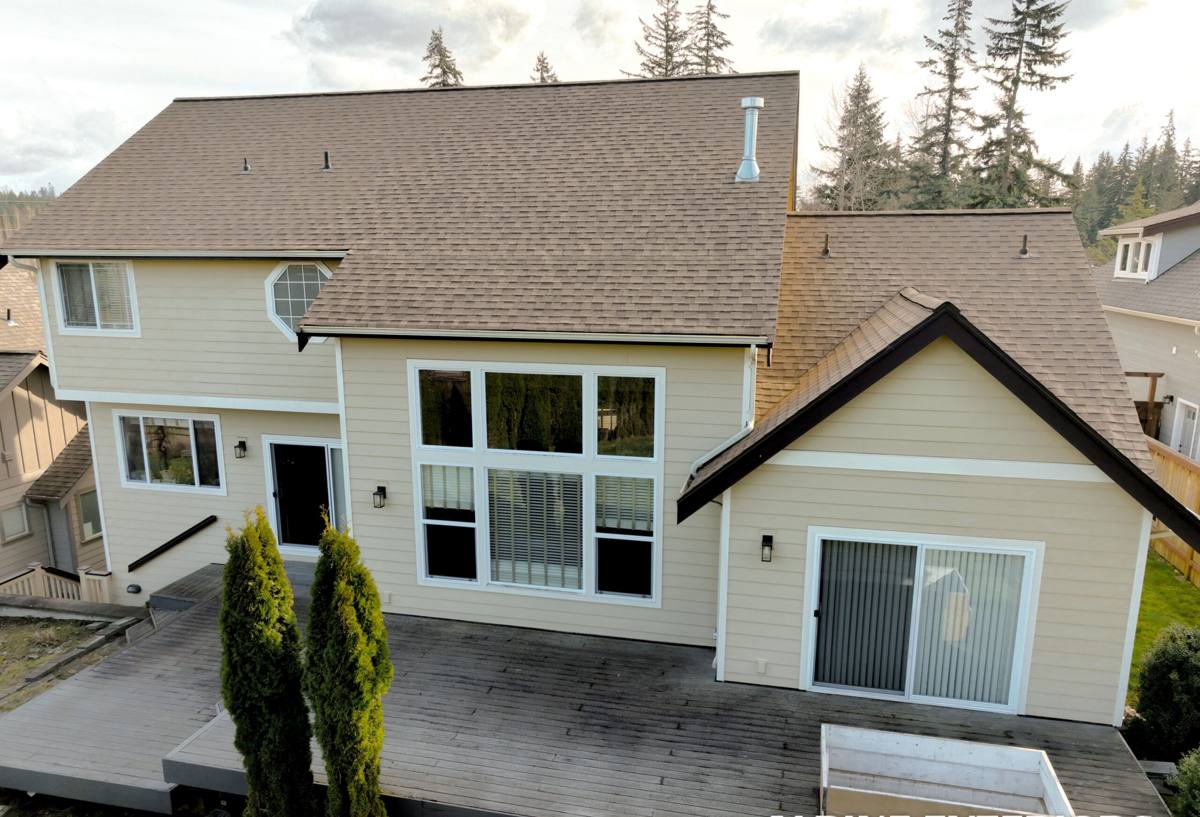
What Florida Climate Does to the Wrong Siding
Every siding failure we get called out to look at in this area traces back to one or more of the same four stressors:
- Hurricane-force wind: loosens poorly fastened panels, drives rain behind seams, and turns any gap or lifted edge into a lever for further damage during the next storm.
- Year-round UV exposure: breaks down pigments and surface coatings faster than in most of the country, leading to fading, chalking, and brittleness in materials not engineered for it.
- Wind-driven rain: doesn't fall straight down — it gets pushed sideways into laps, joints, and fastener penetrations that a standard installation in a milder climate wouldn't need to worry about as much.
- Salt air: accelerates corrosion of fasteners and trim, and speeds up moisture absorption in materials that aren't dimensionally stable.
None of these stressors is unique to Parrish. What's true here, as it is across Manatee County, is that they all show up together, year after year, without a real off-season. That combination is exactly what siding manufacturers mean when they talk about "climate-engineered" product lines — and it's exactly why we standardized on one.
Why We Install Only James Hardie Fiber Cement
We don't install vinyl siding, LP SmartSide, Cemplank, Allura, or primed wood products like spruce or cedar. That's a deliberate standard, not a lack of options. James Hardie fiber cement is the only siding system we've found that consistently holds up to this specific mix of wind, UV, moisture, and salt without the maintenance headaches or failure patterns we've seen from the alternatives over years of working on Gulf Coast homes.
What Makes It Different
James Hardie siding is a cement-based composite, not a wood product or a plastic extrusion. That matters in a few concrete ways for a Parrish home:
- It's non-combustible, which matters for both wildfire-adjacent brush areas and general fire safety in a home's exterior envelope.
- It doesn't warp, rot, or delaminate the way wood-based products can when they take on moisture.
- The ColorPlus factory-applied finish is baked on and warranted separately from field-applied paint, which holds color and resists the fading that intense Florida UV causes in standard paint jobs.
- Hardie's HZ5 product line is specifically engineered for high-humidity, high-moisture climates like ours, with formulation differences from the HZ10 line sold in colder, drier regions.
We're not going to tell you every other product is worthless — vinyl is inexpensive and easy to source, wood has a genuine traditional appeal, and engineered wood products have improved over the decades. But when we weigh the maintenance burden, the moisture behavior, and the real-world durability against what a Manatee County home needs to survive, fiber cement is what we're willing to put our name behind and warranty our labor on.
How the Main Siding Options Actually Compare
| Factor | Vinyl | Wood / LP SmartSide | James Hardie Fiber Cement |
|---|---|---|---|
| Wind resistance | Can crack or blow off in high wind if fasteners loosen | Moderate; fastening and moisture entry are the weak points | Engineered and rated for high-wind installation when installed to spec |
| Moisture / rot risk | Low rot risk, but traps moisture behind panels if installed poorly | Vulnerable to swelling, rot, and fungal growth if the coating fails | Cement-based; does not rot or absorb moisture the way wood does |
| UV / fade resistance | Can fade and become brittle over time | Field paint fades and needs repainting on a regular cycle | ColorPlus finish is factory-baked and separately warranted against fading |
| Fire performance | Combustible plastic material | Combustible | Non-combustible cement composite |
| Typical maintenance | Occasional cleaning; limited repair options if cracked | Periodic repainting/recaulking; watch for moisture damage | Occasional cleaning and caulk checks; no repainting cycle required |
| Expected lifespan when installed correctly | Shorter in intense sun and storm exposure | Shorter if moisture management fails | Long-term, backed by a strong transferable manufacturer warranty |
The table above compares materials in general terms — actual performance always comes down to installation quality as much as the product itself, which is the next thing worth understanding.
What a Correct Siding Installation Actually Involves
Fiber cement siding is only as good as the installation behind it. A rushed or by-the-numbers job on a good product will still fail early in this climate. Here's what we treat as non-negotiable on every Parrish job:
Weather Barrier First
Before any siding goes up, the wall needs a continuous, properly lapped weather-resistant barrier. Every penetration, seam, and transition gets sealed and flashed so wind-driven rain has nowhere to get behind the cladding.
Flashing at Every Vulnerable Point
Windows, doors, roof-to-wall transitions, and any other penetration get flashed according to manufacturer specifications — not just caulked over. Caulk is a supplement to good flashing, never a substitute for it.
Manufacturer-Specified Fastening
James Hardie publishes exact fastener types, spacing, and embedment requirements for high-wind zones. We follow those specs to the letter, because this is precisely the detail that determines whether siding stays put in a named storm or ends up in the yard next door.
Correct Clearances
Siding installed too close to grade, roofing, or decking traps moisture and invites the exact rot and staining problems fiber cement is supposed to avoid. Manufacturer-specified clearances are a hard rule on our jobs, not a suggestion.
Proper Joint and Butt Seam Treatment
Every joint gets treated to shed water, not collect it — with correct overlap, sealant, and, where called for, joint flashing rather than relying on caulk alone to bridge a gap.
Our Installation Process for Parrish Homes
- On-site assessment: we walk the exterior, check the existing wall assembly, note moisture damage, and measure wind exposure specific to the lot.
- Removal and prep: old siding comes off, sheathing is inspected and repaired where needed, and any hidden moisture or rot damage gets addressed before anything new goes up.
- Weather barrier and flashing installation: the water management layer goes on first, correctly lapped and sealed at every penetration.
- James Hardie panel or lap installation: installed to manufacturer fastening and clearance specifications for our wind zone.
- Trim, corners, and joint detailing: finished to shed water at every seam and transition.
- Final inspection and cleanup: we walk the job with you, check every detail, and leave the site clean.
Signs Your Parrish Home May Need New Siding
Siding problems don't always announce themselves with an obvious crack. Watch for:
- Visible warping, buckling, or panels that look loose or misaligned
- Cracking, especially near corners, seams, or fastener points
- Soft spots, staining, or a musty smell near exterior walls, which can indicate moisture behind the siding
- Paint or finish that's fading unevenly or chalking heavily to the touch
- Rising cooling costs without another clear explanation, which can point to a compromised exterior envelope
- Visible gaps at trim, window, or door edges that weren't there before
Any one of these on its own might be minor. Several together, especially after a rough storm season, usually mean it's worth having someone look at the whole wall assembly, not just the surface.
Why Hiring a Crew That Already Works in Parrish Matters
Siding installation isn't a one-size-fits-all trade. A crew that already works throughout Manatee County understands the local wind zone requirements that inform proper fastening schedules, knows how Parrish's mix of new-construction subdivisions and older rural properties tends to be built, and isn't learning the area's permitting process on your project. That familiarity shows up in fewer surprises during the job and fewer callbacks after it.
It also means we're not guessing about how this specific stretch of the Gulf Coast treats exterior materials over time. We've seen what happens to the wrong product on a Parrish home five or ten years down the line, and we build every installation to avoid repeating those problems.
After Installation: Keeping It Performing
One advantage of correctly installed James Hardie siding is how little upkeep it demands compared to wood-based alternatives. There's no repainting cycle to plan around. That said, a couple of habits go a long way in this climate:
- Rinse the exterior periodically to clear salt residue and airborne debris, especially on homes closer to open water.
- Do a quick visual check after major storms for lifted trim, damaged caulk lines, or debris impact.
- Keep an eye on caulked joints and have any that look cracked or pulled away resealed before the next rainy season.
If you're weighing a siding replacement or planning ahead for a Parrish home, we're happy to walk the exterior with you and give you a straight assessment — no pressure, no upsell script. Reach out for a free estimate using the form below.