 Bradenton
 Decks Built for Parrish's Climate, Not Just Its Views
Parrish sits in northern Manatee County, close enough to the Manatee River and Tampa Bay that every outdoor structure has to answer to the same conditions the rest of the Bradenton area deals with: hurricane-force wind gusts, punishing year-round UV, wind-driven rain, and a steady dose of salt air carried in off the Gulf. A deck built to a generic national spec will show its age here fast. A deck built for this specific climate — with the right fasteners, the right material, and the right structural detailing — holds up.
We build custom decks for homeowners throughout Parrish and the surrounding Bradenton area, and this page walks through what actually matters when you're planning one: what the climate does to a deck over time, how to choose materials that make sense for your budget and your property, what a correctly engineered deck involves, and what our process looks like from first call to final walkthrough.
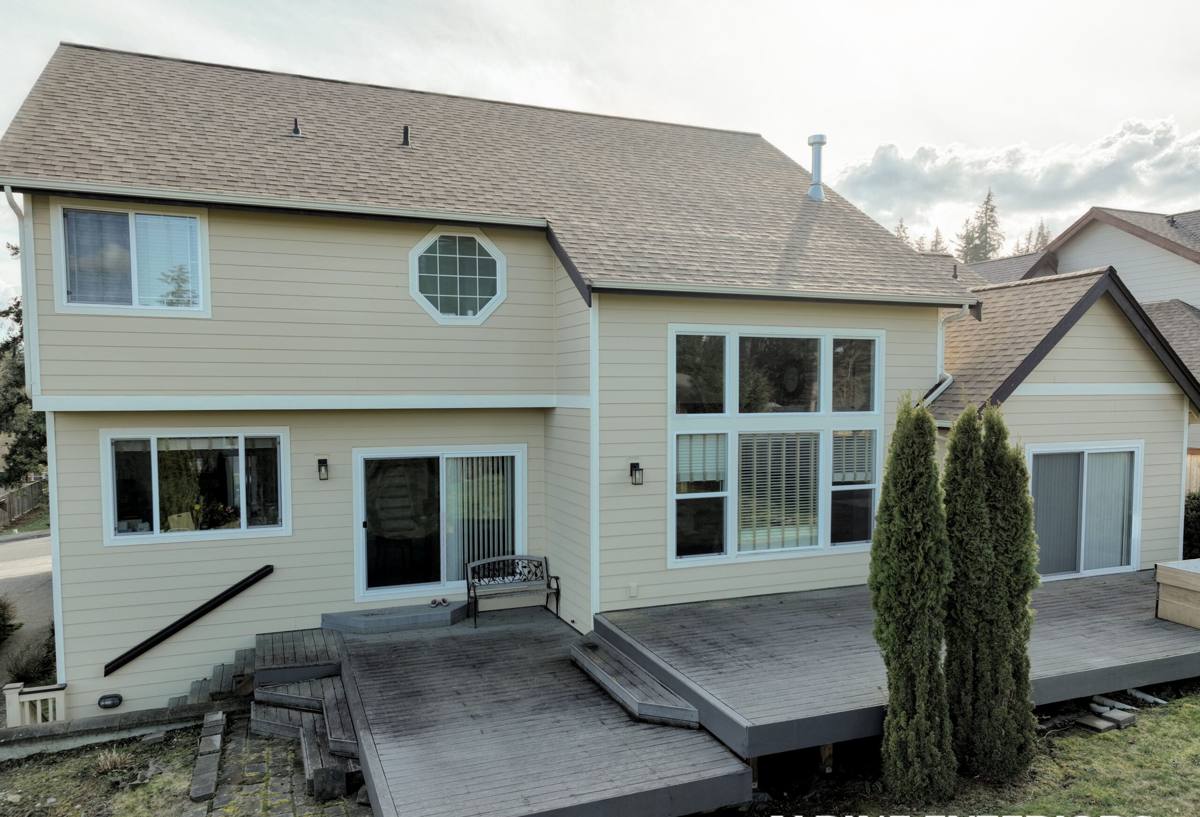
What This Climate Does to an Outdoor Deck
Before talking about materials or design, it's worth being honest about what a deck in Parrish is actually up against, because it's more than most homeowners expect.
UV and Heat
Florida's sun is intense almost year-round, not just in summer. Constant UV exposure breaks down wood fibers, fades and chalks composite surfaces over time, and can cause lower-grade plastics and finishes to become brittle. Dark decking materials also absorb more heat, which matters if you're planning a pool deck or a space you want to walk on barefoot.
Wind-Driven Rain and Humidity
Afternoon storms here don't just fall straight down — wind pushes rain sideways into ledger connections, under railings, and into any gap a deck wasn't detailed to shed water from. Combined with Florida's humidity, that moisture is what drives rot in untreated wood, corrosion in the wrong fasteners, and mold growth in decking that doesn't drain and dry properly.
Salt Air
Even well inland from the coast, salt-laden air moves through the Bradenton area and accelerates corrosion on fasteners, brackets, and railing hardware. Standard hardware-store screws and generic galvanized connectors are often the first thing to fail on a deck that otherwise looks fine.
Hurricane-Force Wind Loads
Manatee County is squarely in a wind-borne debris region under the Florida Building Code. A deck attached to your home has to be engineered to resist uplift and lateral loads, not just support the weight of people standing on it. This is the piece of deck-building that's easiest for an inexperienced crew to shortcut, and the one that matters most when a storm actually hits.
Choosing the Right Decking Material for a Parrish Home
There's no single "best" decking material — the right choice depends on your budget, how much maintenance you want to take on, and how the deck will be used. Here's how the common options compare specifically for this climate.
| Material | Upfront Cost | Sun & Salt Performance | Maintenance | Realistic Lifespan Here |
|---|---|---|---|---|
| Pressure-treated wood | Lowest | Fair — fades, checks, and grays without upkeep | Annual sealing/staining recommended | 10–15 years with consistent maintenance |
| Tropical hardwood (e.g. ipe) | High | Very good — naturally dense and rot-resistant | Periodic oiling to maintain color | 20–25+ years |
| Capped composite | Mid to high | Good — capped shell resists fading and staining better than wood | Occasional washing, no sealing | 20–25 years |
| PVC decking | Highest | Very good — fully synthetic, does not absorb moisture | Occasional washing | 25+ years |
For most Parrish homeowners, the deciding factor isn't which material looks best in a showroom — it's how much time you want to spend maintaining it and how close your property sits to salt exposure and direct sun. Wood costs less up front but asks for real annual upkeep to hold up under this UV load. Composite and PVC cost more initially but shed water and resist fading with far less attention, which is a large part of why they've become the default choice on newer decks in this area. We'll walk you through the honest trade-offs for your specific project rather than pushing whatever has the best margin.
A Note on Fasteners and Hardware
The decking surface gets all the attention, but the hardware holding a deck together matters just as much in a salt-air environment. We use stainless steel or coated fasteners rated for coastal exposure and hot-dip galvanized or stainless structural connectors — not the standard-grade hardware that's fine inland but corrodes prematurely here.
Structural Details That Matter in Manatee County
A deck that looks finished isn't the same as a deck that's built correctly. The parts you don't see are what determine whether it survives its first real storm.
Ledger Attachment
Where a deck attaches to your house is the single most critical connection on the structure. It needs proper flashing to keep wind-driven rain from getting behind your siding, and it needs to be bolted — not just nailed — with hardware sized for the loads involved.
Footings and Post Bases
Footing depth and post-to-beam connections need to account for both the soil conditions common in this part of Manatee County and the uplift forces generated by high winds. Post bases should mechanically tie the post to the footing rather than simply resting on it.
Railings and Guards
Railings need to meet Florida Building Code load requirements for lateral force, not just look sturdy. This matters even more on elevated decks or decks near pools.
Permitting
Most new decks and significant deck renovations in Manatee County require a permit and inspection. We handle that process as part of the job rather than leaving it for the homeowner to sort out, and we build to pass inspection the first time.
Design Considerations Specific to Parrish Properties
Beyond structure and material, a few design choices tend to come up again and again on decks we build in this area:
Pool and Lanai Integration
Many homes here pair a deck with a pool area or screened lanai. That changes decking material choices (heat underfoot matters more), drainage detailing, and how the deck ties into existing hardscape.
Shade
Given how much direct sun this area gets, a lot of homeowners plan a pergola, shade sail, or roofed section into the deck design from the start rather than adding it later. It's easier and cheaper to plan for shade during the initial build.
Drainage
Frequent, heavy summer rain means deck surfaces and substructures need real drainage — proper board spacing, sloped ledger flashing, and in some cases below-deck drainage systems if you want dry space underneath for storage or a patio.
Multi-Level Layouts
Parrish lots vary in grade and layout more than some of the flatter, older neighborhoods closer to downtown Bradenton, which sometimes calls for multi-level decks or stepped designs to work with the yard instead of against it.
Our Deck-Building Process
Every custom deck we build in Parrish goes through the same basic process, adjusted for the specifics of your property:
- On-site consultation. We walk your property, discuss how you plan to use the deck, and talk through material and design options honestly, including cost trade-offs.
- Design and engineering. We put together a design that accounts for your home's structure, local wind load requirements, and drainage, and prepare what's needed for permitting.
- Permitting. We handle the permit application and inspection scheduling with Manatee County so you're not managing that process yourself.
- Construction. Footings, framing, ledger attachment, decking, and railings are installed in sequence, with attention to the connections that don't show once the deck is finished.
- Final inspection and walkthrough. We confirm the deck passes inspection and walk you through care and maintenance specific to the material you chose.
Maintaining a Deck in Salt Air and Year-Round Sun
Whatever material you choose, a little routine maintenance goes a long way toward getting the lifespan you're paying for. A basic seasonal checklist for Parrish-area decks:
- Rinse off salt residue, pollen, and debris every few weeks, more often if you're closer to the water
- Check fastener heads and railing connections annually for corrosion or looseness
- Inspect ledger flashing and the house connection point for signs of water intrusion
- Keep gutters and downspouts near the deck clear so runoff isn't dumping directly onto or under it
- For wood decks, re-seal or re-stain on the schedule recommended for the specific product, typically annually in this climate
- Trim back vegetation that's holding moisture against the deck structure
- After any major storm, check for loose boards, railing movement, or debris impact damage before the deck sees heavy use again
Why Local Deck-Building Experience Matters
A deck contractor who mostly works elsewhere in Florida, or out of state, often defaults to generic specs that don't hold up to Manatee County's wind requirements or this area's combination of UV and salt exposure. A crew that already works in and around Parrish and greater Bradenton knows the local permitting process, has already worked through the structural detailing this climate demands, and isn't learning those lessons on your project. That experience shows up in fewer inspection delays, hardware that doesn't rust out in three years, and a deck that's still solid a decade in.
If you're planning a new deck or replacing one that's failing, we'd be glad to take a look and give you a straightforward, no-pressure estimate. Fill out the form below to get started.