 Bradenton
 Why Siding in Tara Has to Work Harder Than Almost Anywhere Else
Tara is one of Bradenton's established residential communities, and like every neighborhood in Manatee County, its homes take a beating from a climate that doesn't let up. Summers bring months of intense, direct UV exposure that breaks down paint and cheaper siding materials from the outside in. Afternoon storms roll through with wind-driven rain that finds every gap, seam, and fastener hole in a siding system that wasn't installed correctly. And when a tropical system or hurricane pushes through the Gulf Coast, sustained high winds and horizontal rain test every panel, joint, and piece of trim on a house at once.
Tara sits a bit further inland than beachfront neighborhoods, so direct salt spray isn't a daily concern the way it is for waterfront homes. But Gulf breezes still carry salt-laden humid air across Manatee County, and that moisture load adds up over years, especially on a material that swells, rots, or delaminates when it stays wet. The combination that actually drives siding failure in Tara is UV plus humidity plus wind — day after day, year after year. Siding for this area has to be engineered for that combination, not just for looks.
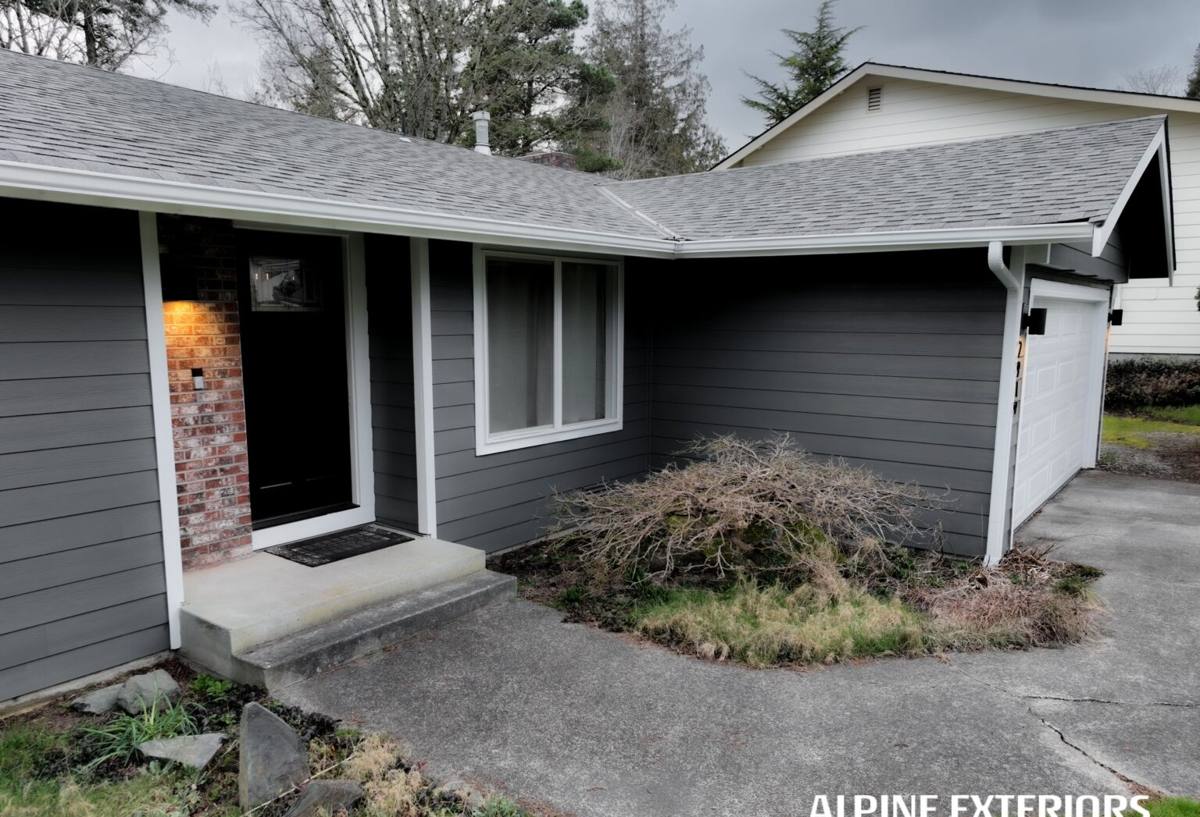
How to Tell Your Tara Home's Siding Needs Replacing, Not Just Repair
Not every siding problem calls for a full tear-off. But there's a point where patching individual boards stops making sense — either because the damage is spread across the whole house, or because the underlying problem (moisture behind the siding, failed original installation) will just keep resurfacing. Here's what tells us a home needs full replacement rather than spot repair:
- Soft, spongy, or crumbling spots when you press on the siding, especially near the bottom courses and around windows
- Panels that are visibly buckling, cupping, or pulling away from the wall
- Paint that won't hold anymore, even after a fresh coat — a sign the substrate underneath is failing
- Gaps opening up at seams, corners, or butt joints that weren't there a few years ago
- Recurring mold, mildew, or staining that comes back shortly after cleaning
- Visible pest or rot damage, particularly on wood-based or engineered wood products
- Rising cooling bills, which can point to moisture-compromised insulation behind aging siding
If you're only seeing one or two of these on a small section of the house, repair may still be reasonable. If you're seeing several of these spread across multiple walls, it's usually more cost-effective — and more honest advice — to plan for a full replacement rather than keep patching a system that's failing as a whole.
What a Correct Siding Replacement Actually Involves
Siding replacement isn't just stripping off the old material and nailing up new panels. Done correctly, it's a system, and every layer of that system matters in a climate like ours.
Tear-Off and Substrate Inspection
Once the old siding comes off, that's the only time anyone will ever see the sheathing underneath until the next full replacement decades from now. A rushed crew covers it back up immediately. A careful one stops and looks: soft or delaminated sheathing gets identified and replaced, not covered over. This step is where hidden problems from a prior installation — or from years of a compromised weather barrier — get caught before they're sealed behind new siding for another 30-plus years.
Moisture Barrier and Flashing Details
In a climate that gets wind-driven rain as often as ours does, the water-resistive barrier and flashing details do most of the real work of keeping a house dry — the siding itself is really the second line of defense. Proper installation means correctly lapped house wrap, flashing integrated around every window and door opening, and careful detailing at roof-to-wall intersections and any penetration through the wall. Skipping or rushing this step is the single most common reason siding fails early, regardless of what material was used.
Fastening and Clearances
James Hardie fiber cement has specific fastening requirements — fastener type, spacing, and depth all matter for wind performance and for the product's warranty to remain valid. Ground clearance and gaps at trim, corners, and butt joints also matter more here than in drier climates: siding installed tight against grade or hardscaping stays wet longer and is more likely to wick moisture. Correct clearances and expansion gaps are a small detail during installation that prevents a callback years later.
Why We Install Only James Hardie Fiber Cement
We don't install vinyl siding, LP SmartSide, or other engineered wood or fiber cement alternatives like Cemplank or Allura. That's a deliberate standard, not a sales pitch, and it's worth explaining honestly.
Vinyl siding is inexpensive and easy to install, and in milder climates it can perform reasonably well. In a high-wind, high-UV environment like Manatee County, though, vinyl is prone to cracking, fading, and warping — and in a serious wind event it's more likely to come off the wall entirely, since it relies on interlocking panels rather than a fastened, rigid material. Engineered wood products like LP SmartSide perform well in many parts of the country, but they're wood-based, and wood-based siding is inherently more vulnerable to the moisture and humidity levels we deal with here if any water gets behind it.
James Hardie fiber cement is non-combustible, doesn't support rot the way wood-based products can, and holds its shape and finish through UV exposure and humidity swings far better than vinyl. Hardie also backs its ColorPlus finish and product warranties with terms that reflect confidence in how the material performs over decades, not just years. That's the standard we build every project on.
Hardie Fiber Cement vs. Common Alternatives
| Factor | James Hardie Fiber Cement | Vinyl Siding | Engineered Wood (e.g. LP SmartSide) |
|---|---|---|---|
| Core material | Cement, sand, cellulose fiber | PVC plastic | Wood strand composite |
| Combustibility | Non-combustible | Combustible | Combustible |
| High-wind performance | Rigid, fastened panel system | Interlocking panels can dislodge in severe wind | Fastened, but vulnerable if moisture compromises the panel |
| Moisture behavior | Engineered for humid climates; won't rot | Doesn't rot, but can trap moisture behind it | Can swell or deteriorate if water gets behind it |
| UV/fade resistance | ColorPlus factory finish, long fade warranty | Can fade and become brittle over time | Field-painted finish, needs more frequent recoating |
Choosing the Right Hardie Line and Color for a Tara Home
James Hardie engineers its products by climate zone, and Bradenton falls in the zone the company designs for high humidity and heat rather than freeze-thaw cycling. That matters more than most homeowners realize — it means the specific formulation and finish system on the boards going up on a Tara home is built for exactly the conditions it'll face here, not a generic national product.
Most Tara homes are well suited to HardiePlank lap siding for the main walls, with HardieShingle or trim accents for gables, dormers, or architectural details where a homeowner wants some visual variation. ColorPlus finish is applied and baked on at the factory under controlled conditions, which gives it more consistent, longer-lasting color than a field-applied paint job — a real advantage under Florida's year-round sun. We'll walk through the current color and texture options and help match a look that fits the house and the neighborhood, rather than pushing a single default.
Our Siding Replacement Process, From Estimate to Final Walkthrough
- On-site assessment — we inspect the current siding, look for signs of trapped moisture or substrate damage, and measure the home to scope the job accurately.
- Written estimate — a clear, itemized proposal covering material, labor, and any expected substrate repair, with no vague allowances.
- Product and color selection — choosing the Hardie line, profile, and ColorPlus finish that fit the home.
- Tear-off and inspection — removing the old siding and checking the sheathing before anything new goes up.
- Weather barrier and flashing installation — the step that determines how the house handles rain and humidity for decades.
- Hardie installation — fastened and spaced to manufacturer specification and local wind-load requirements.
- Trim, caulking, and final detailing — the finishing work that determines how clean the job looks up close.
- Final walkthrough — going over the completed work with the homeowner before calling the job done.
What Affects the Cost of Siding Replacement
Every home is different, but the same handful of factors drive most of the cost variation we see on siding replacement projects in this area:
| Cost Factor | Why It Matters |
|---|---|
| Home size and wall complexity | More square footage, more corners, gables, and cutouts mean more material and labor |
| Substrate condition | Rotted or moisture-damaged sheathing found during tear-off has to be repaired before new siding goes up |
| Siding profile and finish selected | Lap width, shingle-style accents, and trim details all affect material cost |
| Number of stories and access | Second-story and hard-to-access walls take more time and equipment |
| Existing siding removal and disposal | Tear-off and haul-away of the old material is part of a full replacement |
| Window and door trim work | Proper flashing and trim detailing around openings adds labor but is not optional for a correct install |
We give a written estimate up front, based on an actual inspection of the home, so there aren't surprises once the work starts.
Why Hiring a Crew That Already Works in Tara Matters
A siding job in Manatee County has to meet local wind-load and building code requirements, and permitting expectations can differ from one jurisdiction to the next. A crew that already works in and around Tara knows what the local permitting process requires, how to schedule around Florida's rain patterns, and what HOA or community aesthetic guidelines tend to look like in established neighborhoods like this one. That familiarity translates into fewer delays and fewer surprises for the homeowner — the paperwork and scheduling side of the job runs the way it's supposed to, instead of being figured out for the first time on your project.
It also means accountability. A contractor who's actively working in your neighborhood has a reputation to maintain with your neighbors, not just with you. That's a different incentive than a company that shows up once from out of the area and moves on.
If your Tara home's siding is showing its age, or you're just planning ahead for a replacement, we're happy to take a look and walk you through what we're seeing — no pressure, no obligation. Reach out for a free estimate using the form below.