 Bradenton
 What Parrish Siding Actually Has to Survive
Parrish sits inland from the coast on the Manatee County side of the Bradenton area, but "inland" doesn't mean sheltered. Homes here still take hurricane-force wind gusts during storm season, wind-driven rain that gets pushed sideways into wall assemblies rather than falling straight down, and some of the most intense, near year-round UV exposure in the country. Add in salt air that carries further inland than most homeowners expect on breezy days, and you have a climate that wears down the wrong siding material fast — sometimes years before a homeowner expects to think about replacement at all.
A lot of Parrish's housing stock is a mix of older site-built homes and newer construction, and we see siding failure patterns from both: original vinyl or wood siding that's aged out from UV and moisture, and newer installs that were done fast during a construction boom without the flashing detail this climate actually demands. This page covers what siding replacement specifically means for a Parrish home — what the climate does to different materials, what a correct tear-off and install involves, and how our process works from first look to final walkthrough.
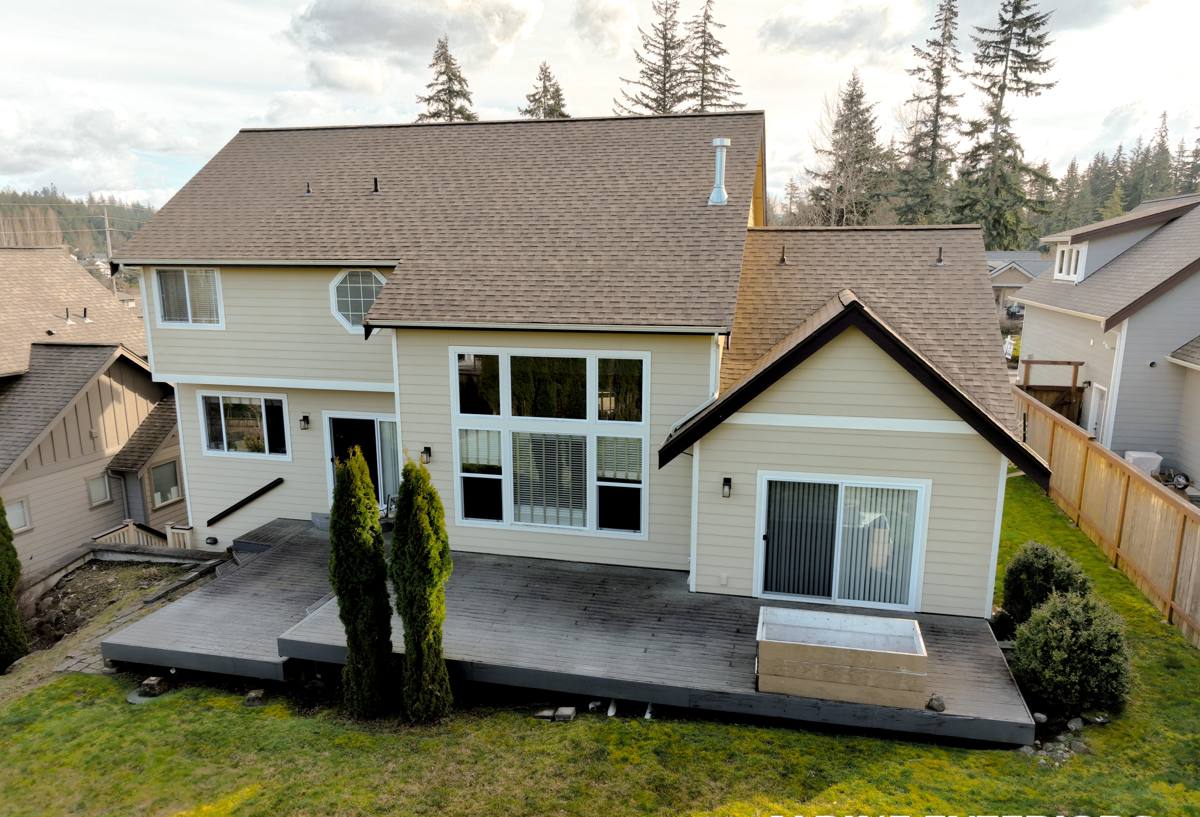
Why Siding Fails Faster in Parrish Than in Milder Climates
UV Load That Doesn't Let Up
Florida's UV index runs high for most of the year, and a south- or west-facing wall in Parrish takes that sun with very little seasonal relief. UV breaks down unstabilized finishes, fades color unevenly across a wall's sun-exposed sections, and can make lower-grade vinyl brittle enough to crack under normal wind flex within a decade. Whatever's installed on a Parrish home is doing more UV-resistance work than the same product would in most of the country.
Wind-Driven Rain and Hurricane Gusts
Hurricane-force wind is a real, recurring design condition here, not a rare event to plan loosely around. Wind at that intensity doesn't just stress the siding panels themselves — it drives rain sideways into every seam, lap joint, and gap in flashing that wasn't sealed correctly the first time. A siding system that looks fine in calm weather can still be quietly failing at its joints if it wasn't installed with hurricane-driven rain in mind.
Salt Air Further Inland Than People Expect
Parrish isn't beachfront, but it's close enough to Tampa Bay and the Gulf that salt-laden air still reaches this far inland on a regular basis, especially with onshore wind patterns. Salt air accelerates corrosion in exposed fasteners and trim hardware and speeds up the breakdown of lower-grade finishes, even at a distance from open water. It's a slower, less obvious version of what beachfront homes deal with constantly — easy to underestimate until fasteners or trim start showing it.
Humidity and Moisture Behind the Siding
Central Florida's humidity stays high most of the year, which matters more for organic siding materials than people realize. Wood-based products depend on an intact factory or field finish to keep ambient moisture out of the substrate; once that finish is compromised at a cut edge or a nail hole, humidity does the rest of the damage slowly, from the inside of the board outward, often before it's visible from the street.
Siding Replacement: What "Correct" Actually Means Here
Replacing siding isn't just pulling off old panels and nailing up new ones. In a climate like Parrish's, most of what determines whether the new siding lasts happens at the parts you don't see once the job is done: the water-resistive barrier, the flashing, and the fastening pattern.
- Full tear-off to bare sheathing so hidden moisture or rot damage from the old siding gets found and addressed, not covered back up
- Water-resistive barrier installed correctly, lapped in the right direction, with no gaps at seams or penetrations
- Flashing integrated at every window, door, and roofline transition — not caulked over as an afterthought
- Fastener pattern and spacing matched to the specific siding product and local wind exposure requirements
- Proper clearance from grade, decks, and patios so the bottom edge of the siding stays out of standing moisture
- Joint and seam treatment sized to Florida's UV and moisture load, not a generic national-average spec
Skip any one of these steps and the siding can still look fine for a year or two. The failure shows up later — a soft spot at a poorly flashed window, a seam that opens up after a few storm seasons, or fastener corrosion that starts staining the finish from underneath.
Why We Install Only James Hardie Fiber Cement
We install one siding product on every job we take on: James Hardie fiber cement. We don't offer vinyl, LP SmartSide, Cemplank, Allura, primed spruce, or cedar, and that's a deliberate professional standard, not a limited product lineup. Each of those alternatives gets something right — vinyl is inexpensive and low-maintenance in milder climates, engineered wood products install quickly and take paint well, cedar has genuine natural character — but each carries a trade-off we think matters too much in a climate like Parrish's to put our name behind.
Vinyl can warp, fade unevenly, and grow brittle with age under sustained UV, and its seams and J-channels are exactly the kind of gap wind-driven rain works into during a storm. Wood-based products, however well treated at the factory, still have an organic core that depends on flawless field priming and caulking at every cut edge to keep sustained humidity out — a demanding standard to hold across an entire crew, on every job, for the full life of the siding. Cedar is genuinely attractive, but it's organic too, and it asks for real ongoing upkeep in a climate that doesn't give it much of a dry season to recover in between storms.
Fiber cement handles the core problem differently because it isn't organic. There's no wood substrate for humidity to work into, and it doesn't feed mold or mildew growth the way wood-based products can in Florida's climate. James Hardie also engineers climate-specific HZ product lines around exactly this kind of sustained heat, moisture, and coastal-influenced exposure, rather than selling one generic formulation everywhere in the country. Paired with a factory-applied ColorPlus finish — baked on under controlled conditions instead of painted on-site — it holds color longer under intense Florida UV and resists cracking better than most field-applied finishes manage out here.
James Hardie Product Lines We Work With
| Product Line | Common Use | Why It Fits Parrish |
|---|---|---|
| HardiePlank lap siding | Traditional horizontal lap look, most common on Parrish homes | HZ formulation engineered for high-humidity, high-UV regions |
| HardiePanel vertical siding | Modern vertical or board-and-batten style accents | Same climate-engineered core, different profile |
| HardieTrim boards | Window, door, and corner trim | Matches the siding's moisture and UV resistance at vulnerable edges |
| HardieSoffit panels | Under eaves and overhangs | Resists humidity buildup in shaded, less-ventilated areas |
How Our Process Works
We start with a site visit to look at the existing siding's actual condition — not just what's visible, but probing for hidden moisture or soft spots at seams, corners, and penetrations. From there we walk through product line, profile, and color options, and give a written scope of work that spells out flashing details and fastening methods, not just a materials list.
Once a contract is signed, tear-off comes first, down to bare sheathing so we can address anything the old siding was hiding. Then the water-resistive barrier and flashing go in — this is the stage that determines how the whole system performs in wind-driven rain, and it's the stage that's easiest for a rushed crew to shortcut. The Hardie siding, trim, and soffit work go up next, fastened to the manufacturer's spec for the product and this region's wind exposure. We finish with a walkthrough covering what little maintenance the finished product actually needs.
What to Expect for Timeline
Most single-family siding replacements in the Parrish area take one to two weeks depending on home size, existing wall condition, and weather windows — Florida's rainy season can push a schedule if storms roll through during the job. Homes with more complex trim, multiple stories, or tear-off surprises can run longer. We give a realistic range specific to your house rather than a generic number.
Cost Factors for a Parrish Siding Replacement
| Factor | How It Affects Cost |
|---|---|
| Existing wall condition | Hidden moisture or rot damage found during tear-off adds repair scope before new siding goes up |
| Home size and wall complexity | More corners, gables, and penetrations mean more flashing detail and labor time |
| Siding profile and trim package | Board-and-batten or heavier trim detail runs higher than standard lap siding |
| Site access | Tight lot lines, landscaping, or fencing can affect staging and labor time |
| Story count | Two-story homes require more scaffolding and safety setup than single-story |
We don't publish blanket pricing because it wouldn't be an honest number — the real cost drivers are specific to the house in front of us. What we can promise is a written, itemized estimate before any work starts.
Why a Crew That Already Works Parrish Matters
A contractor who works Parrish and the surrounding Bradenton and Manatee County area regularly knows how differently a west-facing wall ages under afternoon sun compared to a shaded north wall two lots over, and adjusts flashing and fastening decisions accordingly. That judgment comes from doing this work repeatedly in this specific climate, not from a generic spec sheet written for the whole country. It also means someone local is reachable years later if a warranty question or a flashing detail needs a second look, rather than chasing down a crew that's moved on to another market entirely.
Local familiarity also matters for permitting. Manatee County building requirements account for the same wind loads that make correct fastening non-negotiable out here, and a crew that pulls these permits regularly moves through that process without it becoming a delay on your project.
What to Look For When Hiring for Siding Replacement
- Manufacturer training or certification on the specific siding product being installed, not just general carpentry experience
- A clear, written explanation of how flashing will be handled at every window, door, and roofline transition
- Willingness to explain why they recommend one product over another for this specific climate, not just what's cheapest
- Proper Florida contractor licensing, bonding, and insurance you can verify before signing anything
- A written scope of work and warranty terms you can actually read and understand before committing
- A track record of work specifically in Manatee County or the greater Bradenton area, not just a general service radius claim
Maintaining Your New Siding Once It's Installed
Even a correctly installed, climate-appropriate siding system benefits from basic seasonal attention in Parrish. Rinsing the exterior periodically clears salt residue and pollen before it builds up on the finish. Checking caulked joints at trim and penetrations once a year catches small gaps before wind-driven rain during storm season finds them. Keeping gutters clear ahead of the wet season prevents overflow from soaking siding and trim at the eaves. None of this is a heavy burden, and a crew that installed the work correctly should be able to tell you exactly what to watch for on your specific house.
If you're weighing siding replacement on a Parrish home, we're happy to take a look and give you a straight assessment of what your house actually needs — no pressure, no generic sales pitch. Reach out below for a free estimate and we'll walk the property with you and talk through what we see.