 Bradenton
 Building Decks That Hold Up in Mill Creek
A deck in Mill Creek has to do more than look good. It has to survive a Manatee County summer, shrug off wind-driven rain, and still be standing square after the next tropical system rolls through. We build custom decks for homeowners in this part of Bradenton with that reality in mind from the first sketch to the last screw. This page walks through what a deck built for Mill Creek actually needs, what separates a correctly built deck from one that just looks finished on installation day, and how we approach the job.
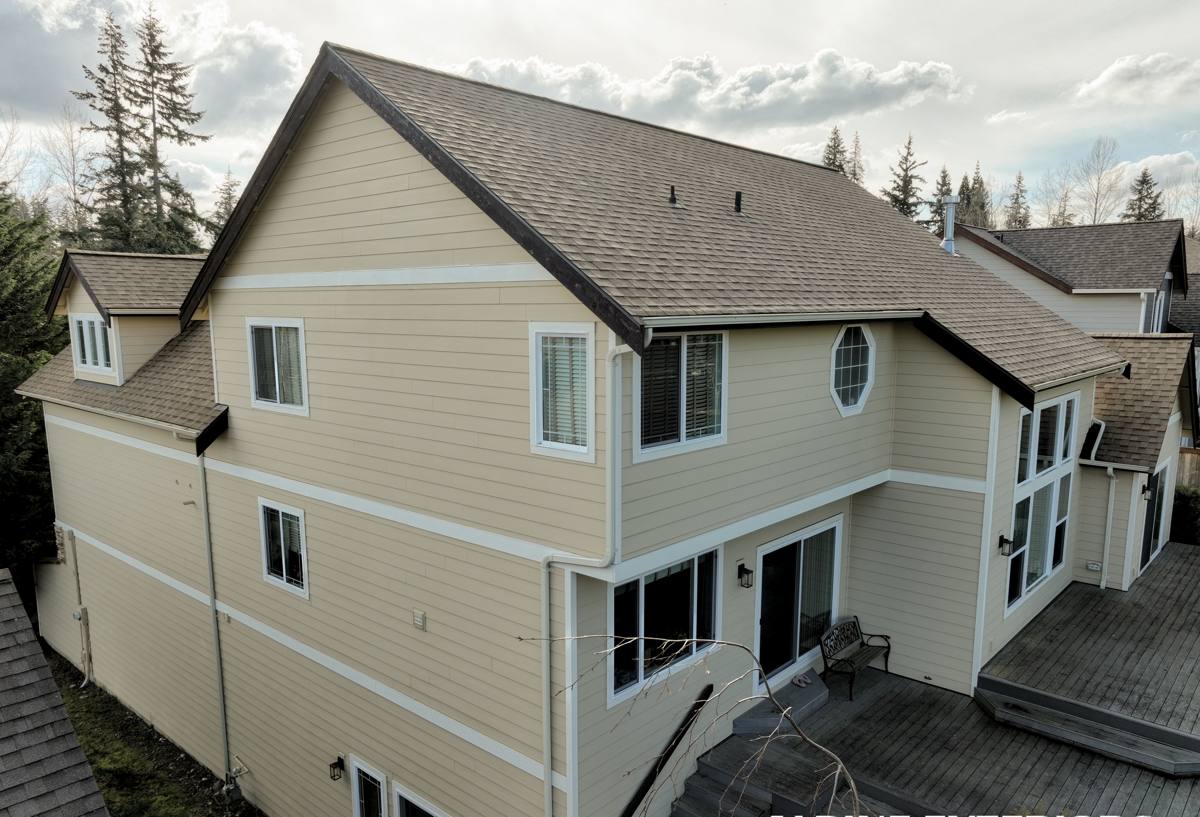
What Bradenton's Climate Actually Does to a Deck
Coastal Manatee County is hard on outdoor structures in ways that don't always show up until a few years in. A deck that's framed, fastened, and finished the same way you'd build one further inland tends to fail early here — loose railings, cupped boards, rusted hardware, or worse, a structure that shifts during a storm. Four things drive most of the wear we see on decks in this area.
Hurricane-Force Wind and Structural Uplift
Wind doesn't just push against a deck — it gets underneath railings, stair stringers, and open framing and pulls upward. A deck that's only screwed together at the joints, without proper structural connectors and correctly rated fasteners, can rack or separate from the house during high wind events. This matters most at the ledger board connection (where the deck ties into the house) and at any point where posts meet footings.
Year-Round UV Exposure
Florida sun is intense for most of the year, not just in summer. UV breaks down the surface fibers of wood decking, fades composite color over time, and dries out sealants and finishes faster than manufacturers' national warranty language usually accounts for. Materials and finishes chosen without this in mind tend to look tired within a couple of seasons.
Wind-Driven Rain and Standing Water
Rain in this area rarely falls straight down. Wind pushes it sideways and up under boards, railings, and any place two materials meet. Decks need drainage gaps, correct board spacing, and flashing details that account for water moving in directions a lot of standard deck plans don't anticipate.
Salt Air and Corrosion
Even without direct beachfront exposure, Bradenton's proximity to the Gulf means a steady low level of salt in the air. Over years, that salt accelerates corrosion in fasteners, brackets, and any exposed metal hardware. Standard construction-grade screws and joist hangers corrode faster here than the same products would inland, which is why fastener grade is a real decision point, not an afterthought.
Choosing the Right Decking Material for a Mill Creek Home
There's no single "best" decking material — the right choice depends on how much upkeep you want to do, your budget, and how the deck will be used. We walk through the honest trade-offs with every homeowner rather than steering everyone toward the same product.
Pressure-Treated Wood
Still the lowest upfront cost option and a reasonable choice for homeowners who don't mind annual maintenance. It needs to be sealed or stained regularly in this climate — skip that upkeep for a season or two and UV and moisture will show it fast, through graying, splintering, or cupping.
Composite Decking
Composite boards resist rot and don't need staining, which appeals to a lot of Mill Creek homeowners who want a low-maintenance outdoor space. The trade-off is upfront cost and, on darker colors especially, surface heat in direct summer sun. Quality varies a lot between product lines, so we only install composite products with a track record in hot, humid, coastal climates rather than whatever is cheapest at the moment.
PVC Decking
Fully synthetic PVC decking handles moisture and humidity the best of the three, since there's no wood content to absorb water or feed rot. It typically costs more than composite and has a distinct look and feel that some homeowners love and others don't. It's a strong option for decks with heavy rain exposure or minimal covered protection.
| Material | Upfront Cost | Maintenance | Moisture Resistance | Typical Lifespan |
|---|---|---|---|---|
| Pressure-Treated Wood | Lowest | Annual sealing/staining | Fair — depends on upkeep | 10-15 years |
| Composite | Moderate to High | Occasional cleaning | Good | 20-25 years |
| PVC | Highest | Minimal | Excellent | 25+ years |
What's Actually Underneath a Well-Built Deck
The decking material gets all the attention, but what's underneath it determines whether the deck is still safe and level in ten years. This is where we see the biggest gap between a correctly built deck and one that just passes a quick visual inspection.
- Footings set below the frost-irrelevant but locally required depth, sized to the actual load and soil conditions on your lot rather than a generic minimum.
- Ledger board attachment flashed correctly where it meets the house, so water can't work its way into the house's structure — this is one of the most common failure points on decks we're asked to repair.
- Joist hangers and structural connectors rated for the actual wind exposure of the site, not just whatever's on the shelf.
- Fastener grade matched to the coastal air — stainless steel or coated fasteners rated for corrosion resistance, especially at connection points that are hard to inspect once the deck is finished.
- Board spacing and drainage planned for wind-driven rain, not just straight-down rainfall.
Permitting and Wind-Load Requirements in Manatee County
Custom decks in Bradenton generally require a building permit, and depending on the size, height, and attachment method, that can mean engineered plans and a structural review rather than a simple over-the-counter permit. Florida's building code has specific wind-load provisions that apply to attached structures like decks, and inspectors will check ledger attachment, footing depth, and railing height before signing off.
If your property in Mill Creek is part of a homeowners association, there may also be architectural review requirements for exterior additions — material, color, and placement approval before construction starts. We handle the permitting process as part of the job and factor in any HOA review timeline up front, so it doesn't turn into a surprise delay partway through.
Our Process, From Estimate to Finished Deck
We use the same process on every custom deck, adjusted for the specifics of your property and how you plan to use the space.
- On-site assessment. We look at the house's structure, the yard's grade and drainage, sun exposure, and how the space will actually be used before recommending anything.
- Design and material selection. We go over layout options and material trade-offs honestly, including what each choice means for long-term maintenance in this climate.
- Permitting. We pull the required permits and handle engineered plans if the design calls for them, along with any HOA submission.
- Construction. Footings, framing, and structural connections go in first and get inspected before decking, railings, and finish work proceed.
- Final walkthrough. We go over the finished deck together, including care instructions specific to the material you chose.
Keeping a Mill Creek Deck in Good Shape Year After Year
Most deck problems we're called out to fix could have been avoided with a few basic habits. Here's what actually matters in this climate, regardless of what material your deck is built from.
- Rinse off salt residue and organic debris every few weeks, especially after storms.
- Check fasteners and railing connections once or twice a year for corrosion or loosening.
- Reseal or restain wood decking on schedule — don't stretch it an extra season to save money.
- Inspect flashing at the ledger board connection for gaps or water staining on the siding above it.
- Keep nearby vegetation trimmed back so boards can dry out fully between rains.
- Walk the deck periodically and check for soft spots, movement at posts, or gaps that have opened up between boards.
Why Hire a Crew That Already Works in Mill Creek
Building a deck that holds up in this specific part of Bradenton isn't just about following a generic plan set. It's knowing which fastener grades actually hold up to the local salt air, how Manatee County's permitting office handles deck submissions, what an HOA architectural review board typically expects, and how sun exposure and wind actually behave on lots in this neighborhood versus a plan drawn up for a different climate entirely. A crew with that local experience catches problems before they're built into the structure, instead of after a homeowner calls about a wobbly railing two years later.
If you're weighing a new deck for your Mill Creek home, we're happy to walk the property with you, talk through material options honestly, and put together a straightforward estimate — no pressure, no pushy upsell. The form below is the easiest way to get started.