 Bradenton
 Lakewood Ranch's Climate Is Harder on Siding Than Most Homeowners Realize
Lakewood Ranch sits inland from Sarasota Bay but still lives under the same weather pattern that defines Manatee County: long stretches of intense subtropical sun, seasonal downpours that come in sideways on tropical storm winds, and salt-laden air that drifts inland further than most people expect. None of these forces act alone. A siding product that handles UV fine but swells when wet, or resists moisture but chalks and fades in full sun, will show its weaknesses here faster than it would in a milder climate.
Homes in this area also deal with the compounding effect of hurricane season. Even when a storm doesn't make a direct hit, wind-driven rain gets forced under poorly sealed joints and laps, and repeated wet-dry cycling is what actually breaks down inferior siding materials over years, not any single storm event. That's the standard we install to on every Lakewood Ranch project — not just "will it survive one storm," but "will it hold its seal, its color, and its shape through a decade of this cycle."
Why We Install James Hardie and Nothing Else
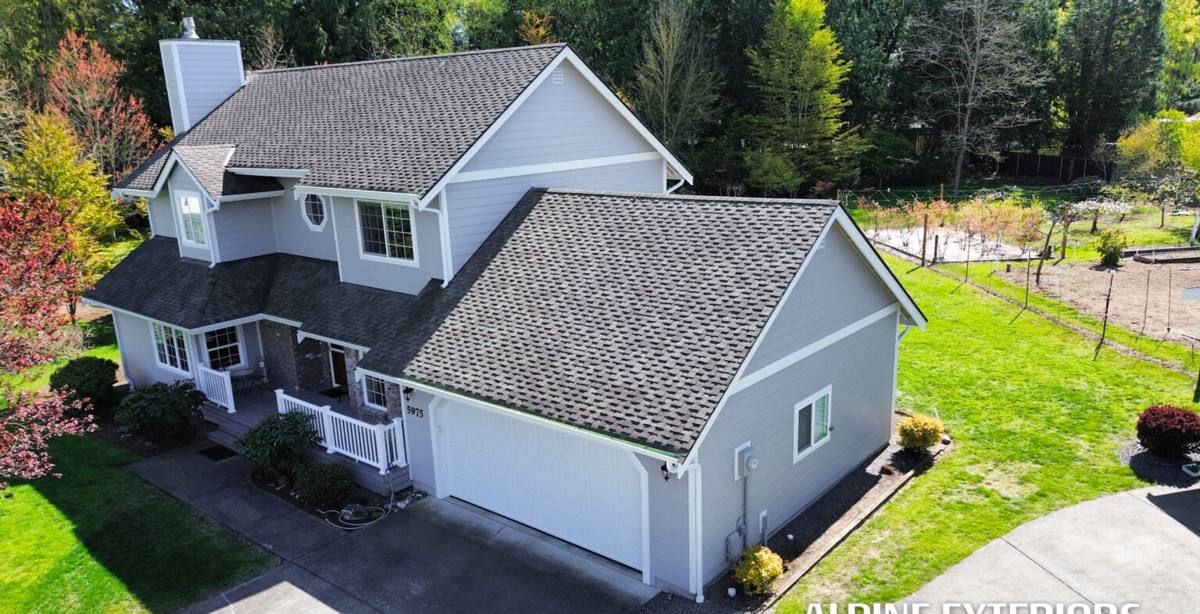
We are a James Hardie-only siding contractor. We don't install vinyl, LP SmartSide, Cemplank, Allura, or unfinished wood siding, and we're upfront about why. Each of those products has legitimate uses and reasonable manufacturers stand behind them — but for the specific combination of UV load, humidity, and wind-driven rain that Lakewood Ranch homes face, they each carry a trade-off we're not willing to put our name on: vinyl softens and can deform in sustained heat and impact; engineered wood products depend on flawless field sealing to keep moisture out of their wood-based core; unfinished wood needs a maintenance schedule most homeowners can't keep up with in this climate.
James Hardie fiber cement is cement, sand, and cellulose fiber — it does not have an organic wood core to rot, it will not ignite from wind-blown embers, and it does not soften in heat. Its HZ5 product line is engineered specifically for the moisture and humidity profile of climates like ours, and the ColorPlus factory finish is baked on and warranted against fading in a way field-applied paint cannot match. That's the whole reason we standardized on one product line instead of offering several — it lets us get very good at installing it correctly, every time.
What Lakewood Ranch Homes Specifically Need From the Product
- A moisture-resistant core that won't absorb wind-driven rain through hairline gaps at laps and joints
- A factory finish that holds color under near year-round direct sun without chalking within a few seasons
- Non-combustible material, relevant given how dry Florida brush can get between summer rain systems
- A fastening and joint system engineered for a wind zone that regularly sees tropical-storm-force gusts
- A warranty structure that transfers with the home, since siding is a decades-long investment
What a Correct James Hardie Installation Actually Involves
James Hardie siding performs to its rating only when it's installed to the manufacturer's published specifications. This is where most siding problems we get called out to inspect actually originate — not product failure, but installation shortcuts. A correct job on a Lakewood Ranch home involves several details that are easy to skip and expensive to fix later.
Clearance and Flashing
Hardie panels and lap siding need proper clearance from grade, roof lines, decks, and horizontal surfaces to prevent standing water from wicking into the bottom edge of the material. Every penetration — windows, doors, hose bibs, light fixtures, vents — needs correctly lapped flashing and a weather-resistant barrier behind it, installed in the right order so water sheds outward rather than getting trapped behind the siding.
Fastening for Wind Zone
Manatee County construction standards reflect a high-wind design zone, and fastener type, spacing, and embedment depth all affect how the siding performs when gusts hit it directly. Under-fastened siding can rattle loose or blow off in a storm; over-driven fasteners crack the board and create an entry point for moisture. Both are common shortcuts on rushed jobs.
Joint Treatment and Caulking
Butt joints, corners, and trim transitions have to be treated with the right sealant, applied correctly, and given proper gaps for the material to expand and contract with temperature swings. A caulked joint that looks fine on install day but was sealed without the specified gap will crack open within a year or two of Florida's heat cycling.
Where Installation Shortcuts Actually Show Up
The table below outlines the difference between a correct installation and the shortcuts we most often see when we're asked to inspect or repair another contractor's work in this area.
| Detail | Correct Practice | Common Shortcut |
|---|---|---|
| Clearance from grade/roof | Manufacturer-specified gap maintained on all sides | Siding installed tight to concrete or roofing to save trim work |
| Fastener spacing | Matched to wind zone requirements | Generic spacing not adjusted for local wind loads |
| Joint caulking | Correct sealant with expansion gap | Standard caulk applied tight with no movement allowance |
| Flashing sequencing | Layered so water sheds outward at every penetration | Flashing added after the fact or omitted at minor penetrations |
| Cut-edge sealing | Factory or field-sealed per Hardie spec | Cut edges left unsealed, inviting moisture at the cut |
Our Process for a Lakewood Ranch Project
We run the same disciplined process on every home, adjusted for the specific exposure of that lot — a home backing up to open water or a golf course sees different wind and salt exposure than one tucked into an interior street.
- On-site assessment — we walk the exterior, check for existing moisture damage, note wind exposure, and measure for material.
- Written estimate — a clear scope covering product line, color, trim details, and timeline, with no vague allowances.
- Tear-off and substrate check — old siding comes off and we inspect sheathing underneath for hidden rot or damage before anything new goes up.
- Weather-resistant barrier and flashing — installed and sequenced correctly at every penetration before a single piece of siding goes on.
- Hardie installation — fastened, spaced, and jointed to manufacturer spec and local wind-zone requirements.
- Final inspection and walkthrough — we go over the finished work with the homeowner before calling the job complete.
Why Local Experience in Lakewood Ranch Matters
Lakewood Ranch is a large, master-planned community with active community development districts and architectural review processes that vary somewhat by village and neighborhood. A crew that already works in this area knows to check color and material approval requirements before ordering, rather than after a homeowner has picked a ColorPlus finish that needs sign-off. That single step, done out of order, is one of the most common causes of project delays we see reported in planned communities like this one.
Local experience also means understanding how a given property's exposure — proximity to open water, tree cover, prevailing wind direction relative to the house — should inform product and installation choices. A siding crew that only occasionally works in coastal Southwest Florida doesn't build that judgment the same way a crew that works Manatee County year-round does.
Maintenance in This Climate
One advantage of ColorPlus-finished James Hardie siding is how little upkeep it needs compared to painted wood or vinyl in this climate, but "low maintenance" isn't "no maintenance." A simple annual check protects the investment:
- Rinse the siding with a garden hose to clear salt residue and pollen buildup, especially on homes closer to the water
- Inspect caulked joints and trim transitions for cracking or separation after storm season
- Keep irrigation heads and sprinklers from spraying directly on the siding, which causes localized mineral staining
- Trim back landscaping that holds moisture against the siding surface
- Have flashing and penetrations checked periodically, since these are the most common failure points over time regardless of siding material
What Drives Cost on a Lakewood Ranch James Hardie Project
Every home is different, so we don't quote broad, meaningless price ranges — but the factors that move a project's cost up or down are consistent, and it's worth understanding them before you get quotes.
| Factor | Why It Matters |
|---|---|
| Home size and wall complexity | More corners, dormers, and trim detail mean more labor and material cuts |
| Existing substrate condition | Rotted sheathing found during tear-off adds repair scope before siding can go on |
| Product line and profile | Lap, shingle, and panel systems differ in material and labor cost |
| Color and finish selection | Custom ColorPlus finishes and trim packages affect material pricing |
| Access and site conditions | Tight lots, water-adjacent lots, or multi-story sections affect equipment and labor time |
We walk through these factors on-site so the estimate reflects your actual home, not a generic average.
Get an Honest Look at Your Home's Siding
If your Lakewood Ranch home's siding is showing signs of wear, or you're planning ahead for a full replacement, we're glad to come take a look and give you a straightforward, no-pressure estimate. There's no obligation — just an honest assessment from a crew that installs one product, does it correctly, and stands behind the work.