 Bradenton
 Why Lakewood Ranch Siding Has to Work Harder Than It Looks
Lakewood Ranch sits inland from Sarasota Bay, but "inland" in Manatee County doesn't mean sheltered. Homes here still face the full range of what Gulf Coast weather throws at an exterior wall: hurricane-force winds during named storms, wind-driven rain that gets pushed sideways under eaves and around window trim, and near-constant UV exposure that most of the country never sees. Add the humidity that sits over this part of Florida for most of the year, and you have a climate that tests siding on every front at once — structurally, chemically, and visually.
Siding that's rated for a mild climate somewhere else often doesn't hold up here. Paint chalks and fades faster under Florida sun. Panels that trap moisture behind them stay damp longer in our humidity, which invites rot and mold growth you can't see until it's already spread. And in a storm, siding that isn't fastened and flashed correctly is often the first thing to fail — sometimes before the roof does. None of this is a hypothetical for anyone who's lived through a Florida summer and hurricane season back to back.
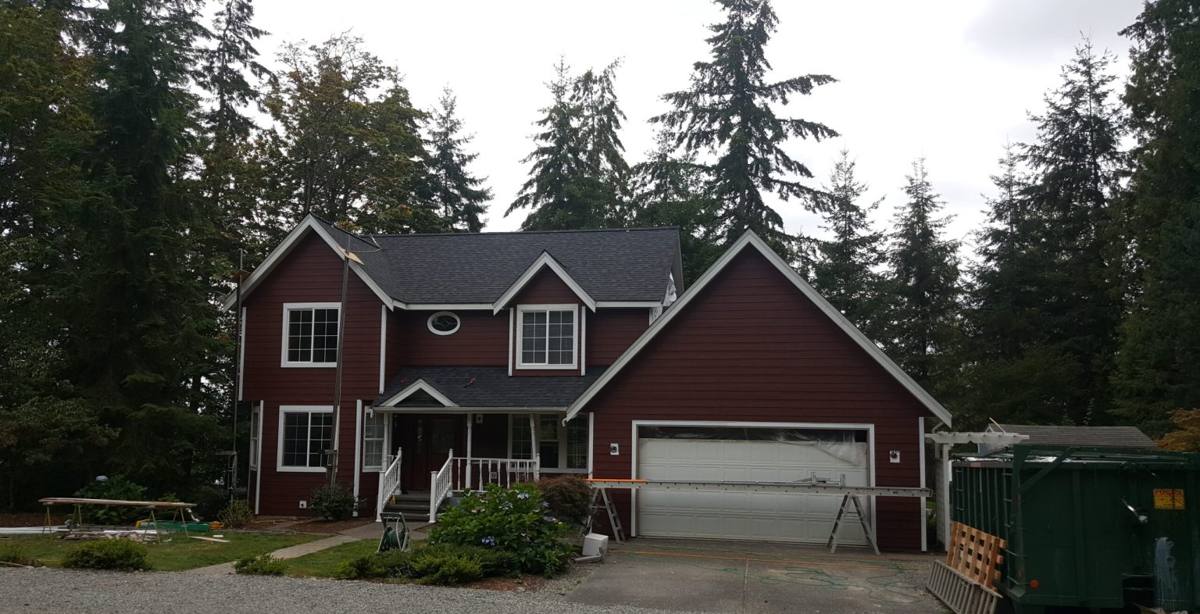
What Fiber Cement Siding Is — and Why We Only Install One Brand
Fiber cement siding is made from a mix of cement, sand, and cellulose fibers, pressed and cured into dense, rigid boards or panels. Unlike vinyl, it doesn't soften or warp in high heat. Unlike wood or wood-composite products, it's not made from organic material that mold and insects can feed on. It's non-combustible, holds paint far longer than wood, and is engineered to keep its shape through decades of expansion and contraction from Florida's heat-humidity cycle.
We install James Hardie fiber cement exclusively. We don't install LP SmartSide, vinyl, Cemplank, Allura, or primed wood siding, and we're upfront about why: those products each carry real trade-offs — vinyl can warp and fade in direct UV and doesn't stand up well to wind-driven debris, wood and wood-composite products need more diligent maintenance to keep moisture out over the long run, and other fiber cement brands haven't matched Hardie's factory finish warranty or its climate-specific engineering. James Hardie has the strongest track record we've seen for coastal-adjacent Florida conditions, backs its ColorPlus finish with a real factory warranty, and gives us product lines built specifically for high-moisture, high-UV regions like ours.
The HZ5 Climate Engineering Difference
James Hardie engineers its siding by climate zone, not as a one-size-fits-all product. Their HZ5 formulation is built for the exact conditions Lakewood Ranch deals with — high humidity, heavy seasonal rain, and intense sun. It's denser and more moisture-resistant than the HZ10 product line used in drier northern climates, which matters when a wall assembly is going to sit through a Florida wet season every single year for decades.
What a Correct Fiber Cement Installation Actually Involves
Fiber cement siding is only as good as the installation behind it. Most of the failures we get called out to inspect on other contractors' work aren't the siding's fault — they're installation shortcuts that let water get where it shouldn't. A correct install isn't complicated, but it has to be done in the right order and with the right materials at every step.
- Weather-resistant barrier installed and sealed correctly behind the siding, not just stapled up as an afterthought
- Proper flashing at every window, door, and roofline intersection so water is directed out, not in
- Correct starter strip and clearance at the foundation line to keep siding off standing water and irrigation spray
- Manufacturer-specified fasteners driven at the correct depth — overdriven nails are one of the most common causes of cracking
- Proper joint and butt-seam treatment, caulked and sealed per Hardie's published installation guidelines
- Correct clearances left around HVAC lines, hose bibs, and other penetrations
Skip any one of these steps and the siding can still look fine on install day — the problems show up a year or two later, usually as moisture damage behind the wall that's far more expensive to fix than it would have been to install correctly the first time.
Where We See Installation Problems Go Wrong Locally
When we're called to look at siding that's failing early in this area, it's almost always one of a small handful of issues: fastener corrosion from using the wrong nail type in our humidity, caulking that was never applied or has failed at seams and trim, flashing that was skipped or installed backwards above windows, or panels hung too close to grade where they stay wet after every rain. Salt-influenced air moving in off the Gulf accelerates corrosion on any fastener or trim piece that isn't rated for it, even this far inland. None of these are defects in the siding itself — they're installation mistakes that a climate like ours won't forgive the way a drier region might.
Fiber Cement vs. the Alternatives for a Lakewood Ranch Home
| Factor | James Hardie Fiber Cement | Vinyl Siding | Wood / Wood-Composite |
|---|---|---|---|
| UV and fade resistance | ColorPlus finish holds color for years under Florida sun | Can fade and chalk faster in intense, year-round UV | Requires repainting/staining on a regular cycle |
| Wind performance | Rigid, dense material engineered for high-wind regions | Can crack or blow off panels in sustained high wind | Performance depends heavily on fastening and material quality |
| Moisture and humidity behavior | HZ5 formulation resists moisture-related damage | Doesn't rot, but can trap moisture behind panels if installed poorly | Prone to swelling, rot, and mold in sustained humidity |
| Fire resistance | Non-combustible | Can melt or deform under heat | Combustible |
| Long-term maintenance | Low — factory finish, occasional wash and caulk check | Low, but repairs and color-matching aging panels can be difficult | Higher — regular inspection, sealing, and repainting needed |
This isn't about any of these products being "bad" — vinyl and wood siding both have legitimate uses and plenty of homes wearing them successfully. It's that, given what Manatee County weather does to an exterior wall year over year, we've made a professional call that James Hardie fiber cement gives Lakewood Ranch homeowners the best combination of durability, appearance, and long-term value, and it's the only product we're willing to put our name behind.
Our Process, Start to Finish
Assessment and Estimate
We start with an on-site look at your home's current siding, trim, and any problem areas — soft spots, staining, gapped seams — along with a straightforward, no-pressure estimate. There's no obligation and no pressure tactics.
Product and Color Selection
We walk you through the James Hardie lines and ColorPlus color options that fit your home's style and your neighborhood's guidelines. Many Lakewood Ranch communities are part of master-planned developments with active homeowners associations that review exterior material and color changes, so we help you choose options that are likely to move smoothly through that process.
Tear-Off and Prep
Old siding and trim come off, the wall sheathing gets inspected for hidden damage, and any rot or moisture issues are addressed before anything new goes up — covering a compromised wall with new siding just hides the problem.
Weather Barrier and Flashing
A properly sealed weather-resistant barrier goes on first, followed by correct flashing at every window, door, and roof intersection — the step that does the most to keep wind-driven rain out of the wall assembly.
Installation
Hardie panels or planks go up per manufacturer specification: correct fastener type and depth, proper clearances, and sealed joints throughout.
Final Walkthrough
We walk the finished job with you, point out anything worth knowing for future maintenance, and make sure you're satisfied before we consider the job done.
Why It Matters That We Already Work in Lakewood Ranch
A crew that already works Lakewood Ranch homes has a practical advantage over one working here for the first time: familiarity with the permitting process through Manatee County, an understanding of the architectural review expectations common to this area's HOA-governed communities, and a working knowledge of how local wind-load and building code requirements apply to siding installation specifically. That familiarity shows up in fewer surprises — permit delays, color approval issues, or inspection callbacks — and in a finished install that's built to the standard local code actually requires, not just a generic national spec.
It also means we've seen how siding installed in this area actually performs over time, not just how it looks on install day. That experience directly shapes how carefully we handle flashing, fastening, and sealing on every job.
Keeping Your Siding Performing Long-Term
James Hardie siding is low-maintenance, not no-maintenance. A little attention a couple of times a year keeps it performing the way it's designed to.
- Rinse siding periodically to clear salt-influenced air residue and general dirt buildup
- Inspect caulking at trim, windows, and seams annually and reseal any cracked or missing sections
- Trim back landscaping and irrigation spray so siding near grade isn't kept constantly wet
- After major storms, walk the exterior and check for cracked panels, loose trim, or exposed fasteners
- Address any soft spots or staining promptly rather than waiting — small moisture issues are far cheaper to fix early
If your Lakewood Ranch home's siding is showing its age, or you're planning ahead of storm season and want it done right the first time, we're happy to take a look and give you a straightforward, no-pressure estimate using the form below.