 Bradenton
 Building Decks for Whitfield Estates Homes
Whitfield Estates sits close to the water on Bradenton's west side, which means homes here deal with a version of Florida weather that's a step tougher than what you'll find further inland. Salt-laden air off the bay, wind-driven rain, and direct year-round UV exposure all work on a deck's structure and finish at the same time. A deck built with inland assumptions — standard hardware, unsealed cuts, a fastening schedule that just meets minimum code — tends to show its age fast in this kind of environment: rust bleeding through fastener heads, boards cupping, railings loosening at the posts. We build decks for this specific coastal-adjacent exposure, not a generic deck spec, because that's the only way to get a structure that still looks and performs well five and ten years out.
What "Coastal-Adjacent" Really Means for a Deck
You don't have to be beachfront to get salt air corrosion. Prevailing winds carry salt particles well inland from Sarasota Bay and the Gulf, and Whitfield Estates' proximity to open water puts it squarely in that zone. Combine that with Manatee County's humidity and afternoon storm pattern, and a deck here is dealing with near-constant moisture cycling, UV breakdown of surface finishes, and metal corrosion pressure that a deck in a landlocked subdivision simply doesn't see at the same rate.
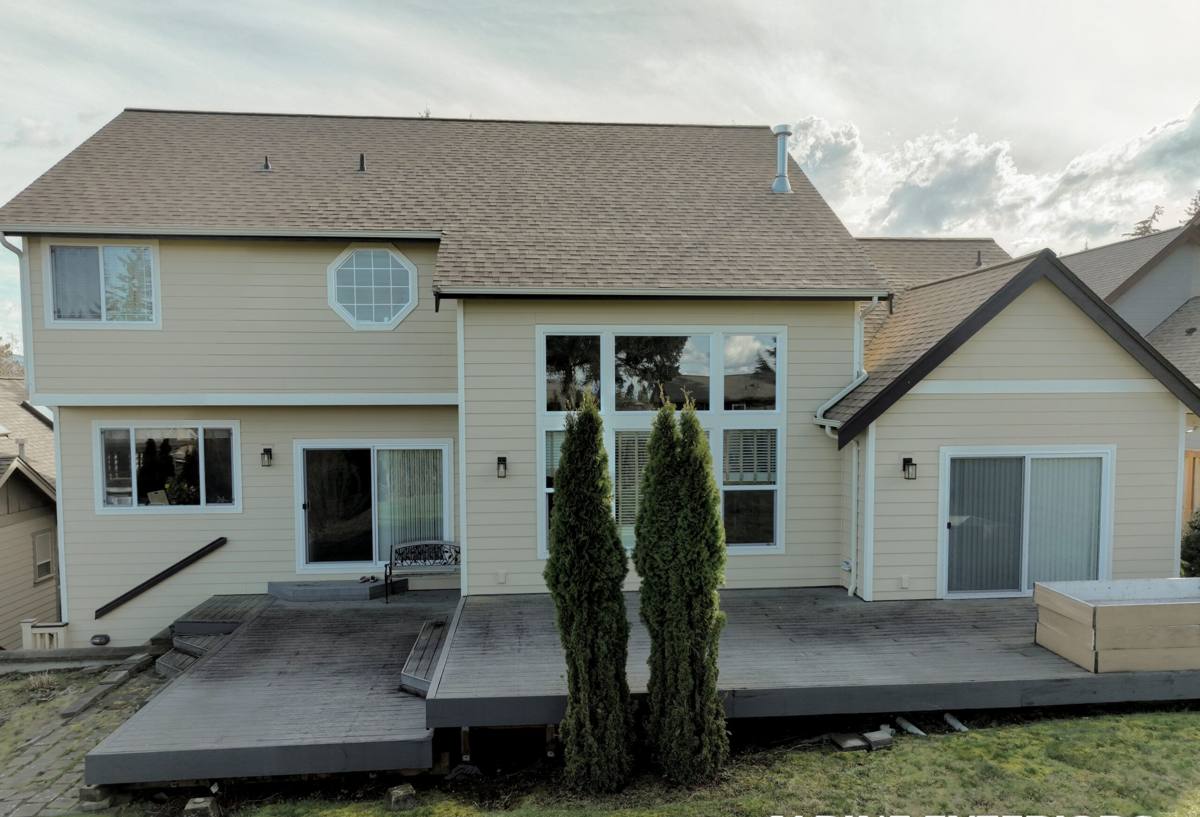
What Local Conditions Demand From a Deck
- Corrosion-resistant fasteners and hardware. Standard galvanized screws and joist hangers corrode faster near the water. We spec stainless steel or high-grade coated fasteners rated for coastal exposure at every connection point, not just the visible ones.
- Wind-rated structural connections. Hurricane-force wind events are a real design load here, not a hypothetical. Post-to-beam and ledger-to-house connections need hurricane ties, proper anchoring, and attachment methods that hold under uplift and lateral load, not just gravity load.
- Moisture-tolerant framing and decking. Wind-driven rain gets under railings, around post bases, and into end grain. Framing lumber, decking material, and the fasteners holding it all together need to tolerate repeated wetting and drying without losing strength or fastener grip.
- UV-stable surface materials. Bradenton gets strong, direct sun essentially year-round. Finishes and composite capstocks that aren't UV-stabilized will fade, chalk, or degrade noticeably faster here than they would in a milder climate.
- Proper drainage and airflow underneath. Trapped moisture under a deck breeds rot and mold. Framing needs enough clearance and ventilation to dry out between rain events, which in a humid coastal climate happen often.
Framing and Structure: Where Most Deck Failures Start
Almost every deck problem we get called out to inspect traces back to the framing, not the decking boards on top. The boards are what you see and walk on, but the ledger board, the posts, the beams, and the connectors are what actually keep the structure attached to your house and standing up in a storm.
The Ledger Connection
If your deck attaches to the house, the ledger board connection is the single most important structural detail on the entire project. It has to be properly flashed to keep water from getting behind the siding and into the house structure, and it has to be bolted — not just nailed or screwed — with hardware sized to the load. A poorly flashed or under-fastened ledger is a slow leak and a structural liability at the same time.
Posts, Footings, and Beams
Post footings need to be sized and set to local soil conditions and depth requirements, and posts need proper base connectors that keep wood off standing water rather than sitting directly in a footing where it stays wet. Beams need to be sized for the actual span and load, not just "what's always worked" — undersized beams are a common shortcut that shows up as bounce and sag well before any visible rot.
Joists and Blocking
Joist spacing affects both structural feel and decking material choice — composite and PVC decking often need tighter joist spacing than wood to avoid flexing between boards. Blocking at rail posts and stair stringers adds rigidity exactly where the structure takes the most abuse from foot traffic and wind load on railings.
Decking Material Options for This Climate
There's no single "best" decking material for every homeowner — it comes down to budget, maintenance appetite, and how close to the water your specific lot sits. Here's how the common options actually perform under Bradenton's sun, humidity, and salt exposure.
| Material | Salt/Moisture Resistance | UV/Fade Behavior | Maintenance |
|---|---|---|---|
| Pressure-treated wood | Good if properly sealed and re-sealed on schedule | Fades and grays without regular finish maintenance | Highest — annual inspection and refinishing |
| Tropical hardwoods (e.g., ipe) | Very good natural density and rot resistance | Grays over time unless oiled regularly | Moderate to high — periodic oiling for color retention |
| Capped composite | Very good — capstock resists moisture intrusion | Good with quality UV-stabilized capstock | Low — occasional cleaning |
| PVC decking | Excellent — no wood fiber to absorb moisture | Good with UV-stabilized formulations | Low — occasional cleaning |
We'll walk you through these trade-offs honestly rather than pushing whatever has the best margin. Wood costs less up front but asks for more of your time every year. Composite and PVC cost more initially but hand you back your weekends. In a salt-air environment, the fastener and framing decisions underneath the decking matter as much as which board you pick on top — a premium composite board over corroding hardware is still a deck with a shortening lifespan.
Railings, Fasteners, and the Details That Fail First
Railings take direct wind load and salt exposure, and they're usually the first thing on a deck to show corrosion or looseness, because post connections see constant lateral stress from both wind and normal use. We use rail post connectors and fasteners rated for the same coastal exposure as the rest of the structure, and we make sure post spacing and bracing meet code for wind resistance, not just the minimum baluster-gap requirement most people think of when they picture "code compliant" railings.
Stairs
Stair stringers see concentrated foot traffic and, on an open deck, direct weather exposure on every tread edge. We build stringers with adequate structural sizing and use fasteners and hardware that match the rest of the deck's corrosion resistance — a stair system is a bad place to cut corners since it's also a safety component.
Fastener Consistency
One detail homeowners rarely think to ask about: mixing dissimilar metals in fasteners and hardware can accelerate corrosion through galvanic reaction, especially in salt air. We keep fastener and connector systems consistent across a build so one component isn't corroding faster because it doesn't match the metal it's touching.
Our Deck Building Process
- On-site assessment. We look at your existing structure (if replacing a deck), grade and drainage around the footprint, sun and wind exposure, and how close the lot sits to open water to inform material and hardware specs.
- Design and material selection. We talk through decking material, railing style, and layout against your budget and maintenance preference, with honest trade-offs on each option.
- Permitting. Manatee County and the City of Bradenton (where applicable) require permits for deck construction, and coastal wind zone requirements affect structural specs. We handle the permit process and build to the engineering requirements that apply to your specific location.
- Framing. Footings, posts, beams, joists, and the ledger connection go in first, inspected before decking begins.
- Decking, railings, and stairs. Surface material, railing systems, and stair components are installed to the fastening schedule specified for the material and exposure.
- Final walkthrough. We go over the finished deck with you, including any maintenance recommendations specific to the material you chose.
Maintenance in a Salt-Air Environment
Even a well-built deck needs some upkeep to hit its full lifespan here. What that upkeep looks like depends heavily on material choice, which is part of why we walk through maintenance expectations before you commit to a decking type.
- Rinse salt residue and debris off decking and railings periodically, especially after storms with onshore wind.
- Inspect fastener heads and connectors annually for early signs of corrosion or loosening.
- Check the ledger flashing and post bases for any signs of trapped moisture or wood softening.
- Re-seal or re-oil wood decking on the schedule appropriate to the specific wood species used.
- Keep gaps between boards clear of debris so water continues to drain rather than pool.
- Watch for undermined or settling footings after major storm events.
Why Local Experience on This Type of Build Matters
A crew that mainly builds decks in drier, inland parts of the country — or even inland parts of Florida — doesn't always carry the instinct for how fast salt air and wind-driven rain can undo a deck that's otherwise built to code. Knowing which fasteners actually hold up near open water, how to detail a ledger flashing for wind-driven rain rather than just vertical rain, and what wind load a railing system genuinely needs to handle in a hurricane-prone county isn't something you pick up from a spec sheet — it's something you learn from building and maintaining decks in exactly this environment over time. That's the experience we bring to every Whitfield Estates deck project, from a small ground-level platform to a full multi-level deck with stairs and built-in railings.
Get an Estimate
If you're planning a new deck or need to replace one that's showing its age, we're happy to come take a look, walk the site with you, and put together a straightforward estimate — no pressure, no hard sell. Fill out the form below and we'll get back to you to schedule a time.