 Bradenton
 Siding Built for a Whitfield Estates Address
Whitfield Estates sits among Bradenton's older, established neighborhoods — the kind of area with mature tree canopy, homes built across several different decades, and close proximity to open water and salt air. That combination is exactly why a generic siding job doesn't hold up here the way it might further inland. Homes in this part of Manatee County take a steady beating from three directions at once: humidity and wind-driven rain most of the year, intense UV exposure that never really lets up, and salt-laden air that accelerates corrosion on anything not built to handle it. Add the real possibility of hurricane-force winds during the season, and siding stops being a cosmetic decision — it becomes part of the home's defense system.
This page is specifically about siding installation for homes in and around Whitfield Estates — not a general overview of siding options. If you're comparing products or trying to decide whether replacement makes sense at all, that's a separate conversation. Here, we're focused on what a correct installation looks like for this neighborhood, given its age, its location, and its climate exposure.
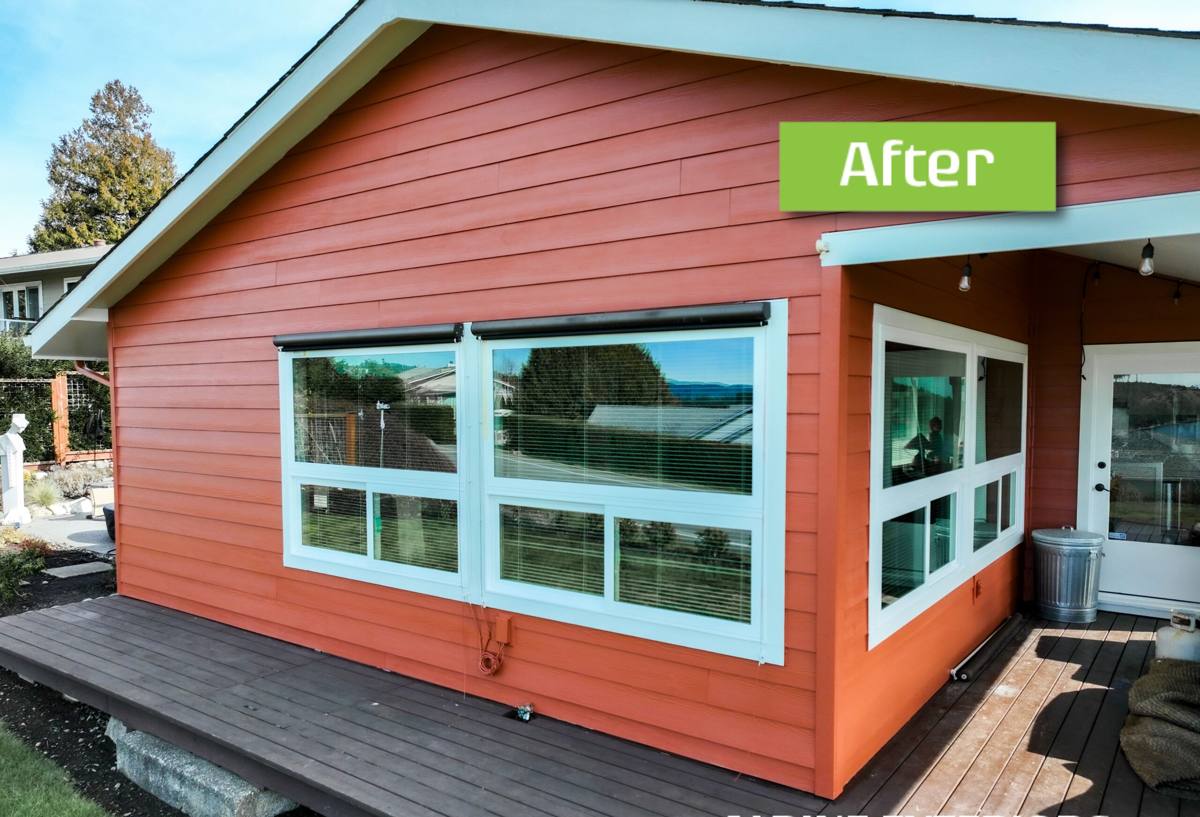
What Whitfield Estates Homes Are Up Against
Salt Air and Humidity
Proximity to the water means airborne salt settles on exterior surfaces year-round, not just after a storm. Salt accelerates the breakdown of fasteners, trim, and any siding material that isn't engineered to resist moisture intrusion. It also speeds up fading and chalking on lower-grade paint finishes, which is why factory-applied, baked-on finishes matter so much more here than in drier inland markets.
UV Exposure
Florida sun is relentless on south- and west-facing elevations in particular. Over years, UV breaks down pigments and softens caulking and sealants. Siding that isn't UV-stable at the factory level will show fading, chalking, or streaking well before its expected service life is up.
Wind-Driven Rain and Storm Load
During heavy weather, rain doesn't fall straight down here — it drives sideways into wall assemblies. That means water management behind the siding (flashing, house wrap, proper laps and gaps) matters as much as the siding material itself. And when hurricane-force winds arrive, fastening pattern and product wind rating determine whether siding stays put or ends up in the yard.
Older Housing Stock
Because Whitfield Estates includes a number of established homes, we regularly find prior additions, mismatched repairs, or aging trim and sheathing hidden under the current siding. A correct installation starts by dealing honestly with what's underneath — not just covering it over.
What a Correct Siding Installation Actually Involves
Siding installation is often sold as a one-day cosmetic swap. Done right, it's a multi-step process where most of the value is in the parts a homeowner never sees once the job is finished.
- Tear-off and inspection. Old siding comes off and the sheathing underneath gets inspected for rot, soft spots, or prior water damage — common in older Whitfield Estates homes where a leak may have gone unnoticed for years.
- Substrate repair. Any compromised sheathing or framing is repaired or replaced before anything new goes on. Installing new siding over damaged substrate just hides a problem that keeps getting worse.
- Weather barrier installation. A code-compliant house wrap or weather-resistant barrier goes on to manage bulk water and give the wall assembly a second line of defense behind the siding itself.
- Flashing at every penetration. Windows, doors, hose bibs, vents, and other penetrations get properly flashed so wind-driven rain has nowhere to collect and work its way inward.
- Siding installation to manufacturer spec. Correct fastener type, fastener spacing, clearances, and joint treatment — all of which affect both appearance and wind performance.
- Trim, caulking, and finish detail. The finish work is what makes a job look clean for years instead of just on installation day — proper caulk joints, corner treatment, and consistent reveals.
- Final inspection and cleanup. A walk-through to confirm every detail was executed to spec, not just that the wall is covered.
Skipping or rushing any one of these steps is how homeowners end up with siding that looks fine for a season or two and then starts showing problems — buckling, staining, or water intrusion — well ahead of schedule.
Why We Install Only James Hardie Fiber Cement
We standardized on James Hardie fiber cement siding for every installation we do, including here in Whitfield Estates, and we don't install vinyl, LP SmartSide, or other fiber cement brands. That's a deliberate professional standard, not a sales pitch, and it's worth explaining why.
- Non-combustible material. Fiber cement doesn't contribute fuel to a fire the way some other siding materials can — a real consideration for insurance and safety alike.
- Built for humid, coastal-influenced climates. James Hardie's HZ10 product line is engineered specifically for high-humidity, storm-prone regions like ours, addressing moisture behavior in a way generic fiber cement or vinyl products aren't designed to.
- ColorPlus factory finish. A baked-on, UV-stabilized finish applied under controlled factory conditions holds color far better than field-applied paint exposed immediately to Florida sun and salt air.
- Warranty backing. A strong, transferable product warranty gives homeowners real recourse — useful both for peace of mind and for resale.
- Proven track record when installed to spec. Fiber cement has a long history of holding up to wind, rain, and sun exposure in coastal Florida conditions specifically, which is exactly the environment Whitfield Estates sits in.
Vinyl siding is lighter and often cheaper up front, but it can soften, warp, or become brittle under sustained heat and UV, and it typically carries a lower wind rating than fiber cement installed correctly. LP SmartSide and other engineered wood products perform well in some climates but require more diligence around moisture exposure — a bigger liability in a humid, storm-driven market than in drier regions. We're not saying those products have no place anywhere; we're saying that for the conditions Whitfield Estates homes actually face, we don't think they're the right long-term investment, and we'd rather stand behind one product system we trust completely than install several we have reservations about.
Material Comparison at a Glance
| Factor | James Hardie Fiber Cement | Vinyl | Engineered Wood (LP SmartSide) |
|---|---|---|---|
| Combustibility | Non-combustible | Combustible | Combustible |
| UV/color stability | Factory ColorPlus finish, highly UV-stable | Can fade/chalk over time | Depends on field-applied paint |
| Moisture tolerance (coastal humidity) | Engineered HZ line for humid climates | Generally good, can warp in heat | Requires diligent maintenance |
| Wind performance (installed to spec) | Strong | Moderate | Moderate to strong |
| Typical maintenance | Low | Low | Moderate — sealing, painting |
Why Hiring a Crew That Already Works Whitfield Estates Matters
Siding installation isn't just about the product — it's about who's installing it and whether they understand the specific demands of this neighborhood. A crew that regularly works in and around Whitfield Estates already knows what to expect: the age range of the housing stock, the salt exposure from being close to the water, and the wind and rain patterns that come through Manatee County during storm season. That familiarity translates into fewer surprises during tear-off, better judgment about substrate repair, and installation choices — fastening patterns, flashing details — that account for real local conditions rather than a generic checklist.
It also matters for permitting and code compliance. Manatee County has wind-load and building code requirements that apply to exterior work, and a local crew that pulls permits in this area regularly is going to navigate that process more smoothly than an out-of-town outfit unfamiliar with local requirements.
Signs Your Whitfield Estates Home May Need New Siding
- Visible warping, buckling, or bowing in the siding panels
- Cracking or crumbling, especially near corners and seams
- Persistent staining or discoloration that won't clean off
- Soft spots when you press on the siding, suggesting moisture has gotten behind it
- Paint that's peeling or blistering on the siding itself or nearby trim
- Rising energy bills that may point to a compromised building envelope
- Visible gaps or separation at joints, windows, or doors
If you're seeing more than one of these, it's worth having someone take a real look rather than waiting for the next storm season to make the decision for you.
What to Expect From Our Process
We start with an on-site inspection and honest assessment — not a sales script. If your existing siding has a few isolated repair needs rather than a full-replacement problem, we'll tell you that. If replacement is the right call, we'll walk through material options within the James Hardie lineup, explain what the tear-off is likely to reveal given your home's age, and give you a clear, written scope before any work begins. Throughout the job, we handle permitting, substrate repair, weather barrier installation, and finish work as one coordinated process — not a string of shortcuts stacked on top of each other.
If you're a homeowner in Whitfield Estates weighing your siding options, we're happy to take a look and give you a straight answer — no pressure, no hard sell. Request a free estimate below and we'll walk the property with you.