 Bradenton
 Siding Repair in Parrish: What Local Homes Are Up Against
Parrish sits in the northern stretch of Manatee County, close enough to the Gulf and Tampa Bay that salt-laden air reaches homes here even without an ocean view, and far enough inland that afternoon heat and humidity build up fast in the warmer months. That combination is hard on exterior siding. Homes in this area deal with intense year-round UV exposure, sudden downpours that drive rain sideways into wall assemblies, and the occasional direct hit or near-miss from a tropical system that brings sustained hurricane-force wind. None of that is unique to Parrish, but it's a lot more constant here than in most of the country, and it shows up in siding failures faster than homeowners expect.
Parrish has also grown quickly over the last several years, which means the area has a real mix of housing stock — some newer construction, some older site-built homes that have been through multiple storm seasons already. Older siding, especially anything that wasn't installed with proper flashing and moisture management, tends to be where we find the worst damage. Newer homes aren't immune either; a lot of siding problems trace back to installation shortcuts rather than the age of the product.
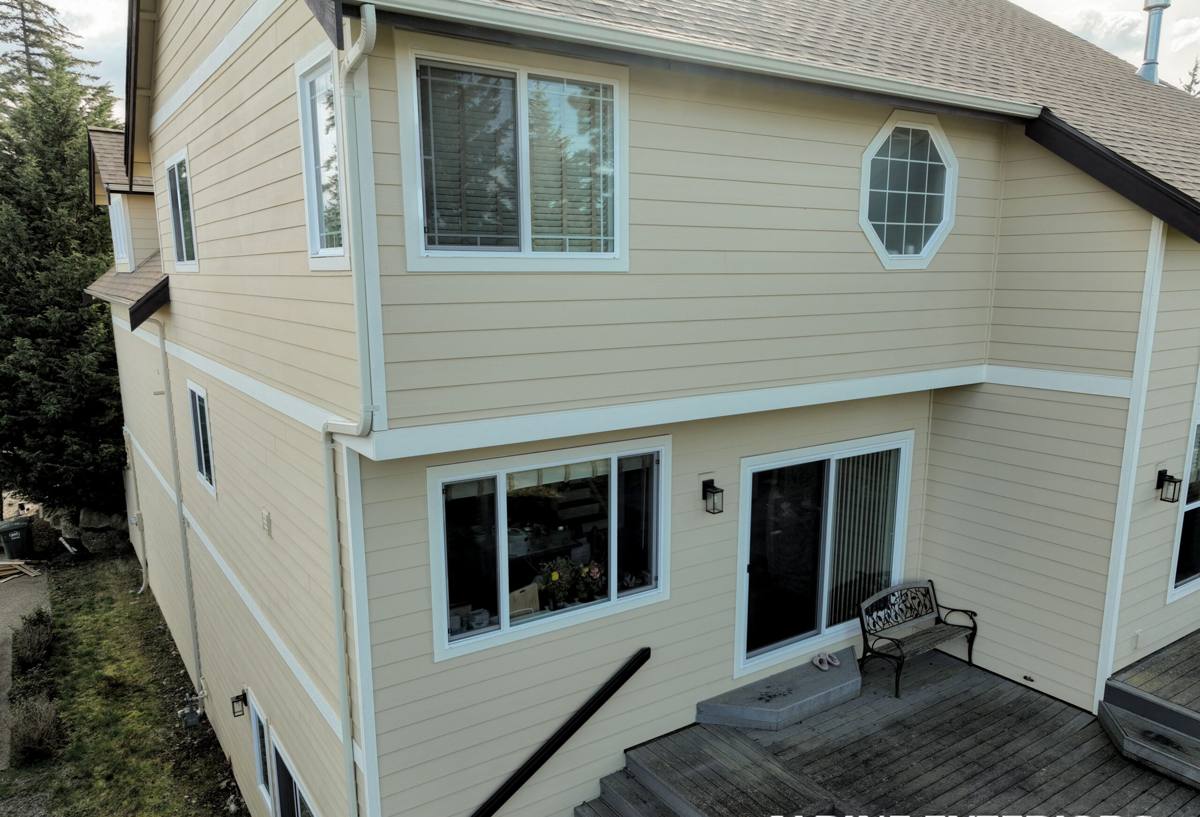
Signs Your Siding Needs Repair, Not Just a Look
Siding damage in this climate doesn't always announce itself. A lot of the damage that matters most is hiding behind a wall that still looks fine from the driveway. Here's what we look for, and what homeowners should be watching for between inspections:
Visible Warning Signs
- Cracked, chipped, or buckled siding panels, especially near corners and around windows and doors
- Soft or spongy spots when you press on the siding — a strong sign of moisture damage underneath
- Visible gaps at seams, trim, or fastener lines where wind-driven rain can get behind the panel
- Peeling or bubbling paint, or streaking that suggests water is running down from a failure point above
- Discoloration or dark staining, particularly low on the wall or under roof valleys
- Loose panels or fasteners that have backed out, often after high-wind events
Signs That Point to Trouble Behind the Wall
Musty odors near exterior walls, interior drywall that feels damp or shows staining, and siding that seems to have shifted or separated from the wall are all signs the problem has moved past cosmetic. Salt air accelerates corrosion on fasteners and trim, so galvanic staining or rust streaks around nail heads are also worth flagging early, before they spread.
Why Wind-Driven Rain Is the Real Enemy Here
Most siding failures in this part of Florida aren't caused by rain falling straight down — siding is generally designed to shed that just fine. The damage comes from rain being pushed sideways and even upward by wind, forcing water into seams, laps, and fastener penetrations that were never meant to handle water pressure from that direction. Over enough storm seasons, that repeated intrusion breaks down whatever is behind the siding: sheathing, house wrap, and framing. By the time a homeowner notices a soft spot or a stain, there's often been moisture intrusion happening for a while. This is why we don't just patch what's visible — a proper repair means checking what's underneath, not just replacing the panel on top.
What a Correct Siding Repair Actually Involves
A repair that only addresses the surface is a repair that fails again. Doing it right means treating each damaged area as a chance to inspect the assembly behind it, not just swap out a board. Here's what that looks like in practice:
- Diagnose the cause, not just the symptom. Cracked siding near a window might be impact damage, or it might be a sign that flashing above the window has been failing for years. We trace the damage back to its source before deciding on a fix.
- Remove damaged material and inspect what's behind it. This is where we find out if the sheathing, house wrap, or framing has taken on moisture. If it has, that gets addressed before any new siding goes back up — patching over wet substrate just hides the problem for a while.
- Repair or replace moisture barriers and flashing. Any compromised house wrap, flashing tape, or trim flashing gets corrected as part of the repair, not left as-is.
- Install matching James Hardie material with correct fastening and clearances. Proper nail patterns, joint treatment, and the manufacturer-specified gaps at trim and horizontal surfaces all matter for how the repair holds up in wind and rain going forward.
- Match the finish. Where possible, we use ColorPlus factory-finished material so the repaired section holds its color the same way the rest of the wall does, rather than fading or weathering at a different rate.
Repair Versus Replacement: How We Make the Call
Not every damaged section needs a full re-side, and not every "small" repair should stay small. The right call depends on how much of the wall is affected, what's causing the damage, and how the existing siding was installed in the first place.
| Factor | Leans Toward Repair | Leans Toward Replacement |
|---|---|---|
| Extent of damage | Isolated to one or two sections/elevations | Spread across multiple walls or the whole home |
| Underlying moisture | Localized, sheathing intact | Widespread rot or repeated moisture staining |
| Age of existing siding | Recently installed, otherwise sound | Original installation is decades old or poorly done |
| Cause of damage | Impact damage, isolated flashing failure | Systemic installation errors (missing flashing, wrong fastening) |
| Color/finish match | Product and color still available or close enough | Discontinued finish, heavy visible mismatch risk |
We'll tell you honestly which side of that table your home falls on. There's no upside for us in talking a homeowner into a full replacement they don't need — but there's also no honest way to "repair" a wall that has systemic problems and expect it to hold.
Our Repair Process, Step by Step
Here's what working with us on a siding repair in Parrish typically looks like, start to finish:
- On-site inspection. We walk the exterior, identify every area of concern (not just the spot you called about), and check for moisture behind suspect areas.
- Honest scope and written estimate. You get a clear explanation of what's damaged, why, and what it will take to fix it correctly — with repair and, if relevant, replacement pricing laid out separately.
- Material matching. We source James Hardie product and ColorPlus finish to match your existing siding as closely as possible, and we'll tell you upfront if an exact match isn't realistic.
- Removal and substrate check. Damaged siding comes off, and we inspect and address anything underneath before new material goes on.
- Correct installation. Proper fastening, clearances, flashing, and joint treatment, done to manufacturer specification — not shortcuts to save an hour.
- Final walkthrough. We go over the completed repair with you before we consider the job done.
Why We Repair Only With James Hardie Fiber Cement
We install James Hardie exclusively, and that applies to repairs as much as full re-sides. There are a few practical reasons this matters in Manatee County specifically:
Fiber cement doesn't absorb water the way wood-based products can, and it isn't fuel for fire the way some alternatives are — both matter in a climate with heavy seasonal rain and, in dry stretches, real wildfire risk. Hardie's HZ product lines are engineered for high-humidity, high-moisture climates like ours, which means a repaired section performs the same way the surrounding siding was designed to perform, rather than introducing a weak point. ColorPlus finishes are baked on at the factory and resist the fading that intense Florida UV causes in field-applied paint, so a repaired section holds its color instead of standing out as a visibly different patch a year later. And Hardie's warranty structure is transferable and well documented, which protects the value of the repair itself, not just the new siding.
We don't repair Hardie siding with mismatched material — vinyl trim pieces, primed wood, or a different fiber cement brand — just because it's on hand or cheaper. A patch that behaves differently than the wall around it, whether that's how it expands and contracts, how it takes paint, or how it sheds water at the seams, becomes the next failure point.
What Poor Repairs Look Like Down the Road
We get called out to fix a lot of repair work that wasn't done right the first time. The patterns are pretty consistent:
- Caulk used to "seal" a gap instead of proper flashing — it looks fine for a season, then cracks and lets water back in
- New siding fastened directly over damp sheathing that was never allowed to dry or get addressed
- Mismatched material or finish that ages differently and becomes an obvious patch within a year or two
- Fasteners driven incorrectly — too tight, too shallow, or in the wrong pattern — which shows up as cracking or panel movement later
- Repairs that address the visible damage but ignore the flashing or drainage issue that caused it, guaranteeing a repeat call
Every one of those shortcuts saves time on the day of the repair and costs more later, usually after the next major storm season.
Why Hiring a Crew That Already Works in Parrish Matters
Siding repair isn't just about product knowledge — it's about knowing how a specific area's weather actually behaves against a wall. A crew that regularly works Parrish and the surrounding Manatee County communities has seen how wind-driven rain moves during a typical Gulf-side storm, how salt air affects fasteners and trim over time, and how UV exposure differs across a home's elevations depending on sun orientation. That local pattern recognition is what separates a repair that lasts through the next few storm seasons from one that's a callback waiting to happen. It also means faster response — when storm damage hits multiple homes in an area at once, a crew already familiar with the neighborhood and its typical construction can move efficiently instead of learning the area from scratch.
Keeping a Repair from Becoming a Recurring Job
Once a repair is done correctly, a little routine attention keeps it that way. We recommend homeowners do a simple visual check of their siding after any major storm — looking for the same warning signs listed earlier — rather than waiting for the next scheduled inspection. Keeping gutters clear and downspouts directed away from the foundation reduces the amount of water running down and pooling near the base of walls, which is one of the more common causes of repeat damage in this area. Trimming back vegetation that holds moisture against siding, and rinsing off accumulated salt spray periodically if your property is closer to open water, both help extend the life of a repair. None of this is complicated, but skipping it is how a good repair turns into another service call a few years down the line.
Get an Honest Look at Your Siding
If you're seeing cracked panels, soft spots, staining, or storm damage on your Parrish home, it's worth getting eyes on it before the next heavy rain finds the gap. We'll walk your exterior, tell you honestly whether you're looking at a targeted repair or something bigger, and put it in writing — no pressure, no upsell. Reach out for a free estimate using the form below.