 Bradenton
 Storm Damage Roof Repair Built for Village of the Arts Homes
Village of the Arts sits close to downtown Bradenton, and its character is different from the newer subdivisions you'll find elsewhere in Manatee County. The neighborhood is known for its mix of early- and mid-century bungalows and cottages, many of which have been converted into studios, galleries, and live-work spaces over the years. That character is exactly why storm damage roof repair here needs a different eye than a cookie-cutter service call. Older roof framing, mixed roofing materials from decades of piecemeal updates, and additions with their own rooflines all change how wind and rain find their way in during a storm.
After a tropical system, a strong squall line, or even a run of severe thunderstorms, homeowners in this area are usually dealing with one of two situations: obvious damage (missing shingles, a torn-back section, water coming through a ceiling) or the quieter kind that shows up weeks later as a stain, a soft spot, or a musty smell. Both need a straightforward, honest assessment — not a guess.
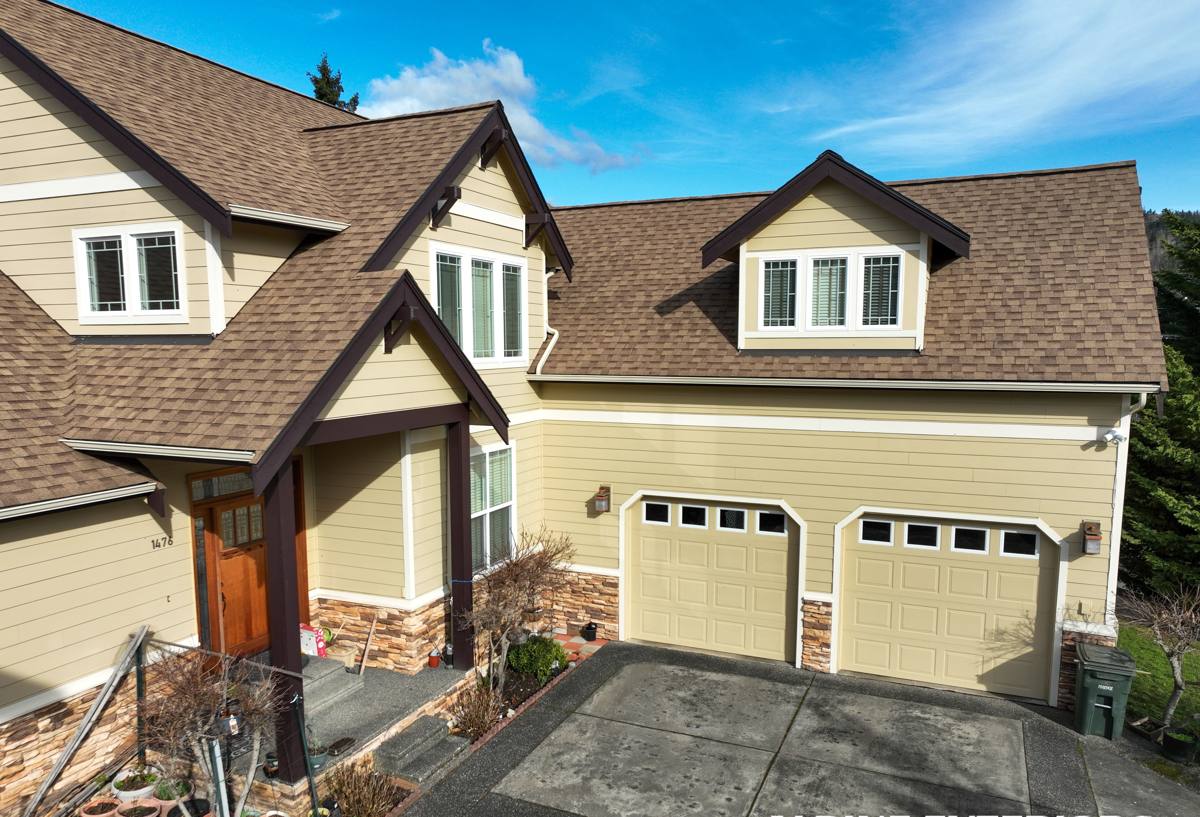
How Bradenton's Climate Wears on These Roofs
Wind
Manatee County sits in a hurricane-prone stretch of Florida's Gulf Coast, and even storms that don't make direct landfall here can bring sustained winds and gusts strong enough to lift shingle edges, loosen ridge caps, and stress older fasteners. On a roof that's already 15-25 years old, wind doesn't need to be catastrophic to cause real damage — it just needs to find the weak point.
Wind-driven rain
Bradenton storms rarely come straight down. Wind-driven rain gets pushed sideways and upward under shingle tabs, around flashing, and into any gap in the roof deck. This is how a roof can look mostly intact from the ground while water is already getting into the attic or wall cavities.
Year-round UV and salt air
Between storms, the sun and salt-laden air near the coast keep working on the roof. UV exposure dries out shingle granules and asphalt oils over time, while salt air accelerates corrosion on exposed metal fasteners, flashing, and drip edge. A roof that's already brittle or corroded from years of sun and salt has far less capacity to handle the next storm — which is why storm damage in this area often reveals problems that were building long before the wind ever picked up.
Recognizing Storm Damage Before It Becomes a Bigger Problem
Not all storm damage is dramatic. Some of the most costly repairs start as small, easy-to-miss issues. After any significant weather event, it's worth checking for:
- Missing, cracked, or curled shingles, especially near ridges, edges, and valleys
- Granules collecting in gutters or at the base of downspouts
- Lifted or missing flashing around chimneys, skylights, and roof-to-wall transitions
- Soft or spongy spots when walking the attic (a sign of a wet or weakened deck)
- New ceiling stains, peeling paint, or a musty odor in a room below the roofline
- Debris punctures or dents from tree limbs, especially on older or established lots
- Sagging sections along the roofline or at gutter attachment points
- Daylight visible through the roof deck from inside the attic
If you notice any of these after a storm, the roof should be looked at before the next rain event, not after. Small gaps get bigger every time wind-driven rain finds them again.
What a Correct Storm Damage Repair Actually Involves
Emergency mitigation first
If a roof is actively leaking or has an open section, the first priority is stopping further water intrusion — tarping exposed areas and securing loose material so the interior of the home and its contents aren't damaged further while a full repair is planned. This step matters for insurance purposes too, since most policies expect reasonable steps to prevent additional damage.
A full assessment, not just a patch
A correct repair starts with checking the whole roof system, not just the spot that's visibly damaged. That means looking at the decking underneath for soft or rotted sections, checking the underlayment's condition, and inspecting flashing at every penetration — chimneys, vents, skylights, and roof-to-wall junctions. Wind and water damage often extends beyond the obviously torn area, and repairing only what's visible from the ground is how the same leak reappears after the next storm.
Matching materials and meeting code
Florida's building code has specific requirements for roof repairs, including how much of a roof section needs to be brought up to current wind-resistance standards once a certain percentage of it is being replaced. On older Village of the Arts homes, this sometimes means a repair needs to include updated fastening patterns, proper underlayment, and correctly installed flashing — even if the original roof didn't have them — to meet current code and hold up to the next storm.
Repair or Replace? What Actually Drives the Decision
Storm damage doesn't always mean a full replacement, but it doesn't always mean a simple patch either. The right call depends on a few honest factors:
| Factor | Leans toward repair | Leans toward replacement |
|---|---|---|
| Age of existing roof | Under 10-12 years | Nearing or past expected lifespan |
| Extent of damage | Localized to one section | Spread across multiple areas or the deck itself |
| Decking condition | Solid, dry, sound | Soft, rotted, or previously patched multiple times |
| Material availability | Matching shingle/material still available | Discontinued color or profile |
| Prior repair history | First real issue | Pattern of recurring leaks or patches |
We'll walk through which of these applies to your roof and explain the reasoning in plain terms — including when a repair is genuinely the right, more economical choice, and when it would just be delaying a bigger expense.
How Our Process Works
- Initial call and scheduling — we get a sense of the damage and urgency over the phone, and prioritize active leaks.
- On-site inspection — a full walk of the roof (and attic, where accessible) to document damage, not just the section that's visibly torn up.
- Written scope and estimate — a clear explanation of what needs to be done and why, with repair and replacement options laid out honestly when both are viable.
- Emergency mitigation — if needed, tarping or temporary sealing happens before the full repair, protecting the interior in the meantime.
- The repair itself — deck repair where needed, correct underlayment and flashing, and materials matched as closely as possible to the existing roof.
- Final walk-through — we go over the completed work with you before calling the job done.
Working With Your Insurance Company
Most storm damage roof repairs in this area involve an insurance claim, and the process goes smoother when the documentation is solid from the start. We provide clear photos, a written description of the damage, and a scope of work that adjusters can review without back-and-forth delays. We won't inflate a scope to chase a bigger payout, and we won't tell you a roof needs full replacement when a proper repair will genuinely hold — our estimate reflects what the roof actually needs, which is also what holds up best under an adjuster's review.
One practical note: after any major storm, be cautious of unfamiliar contractors going door-to-door in the neighborhood offering to "handle the insurance company" for you. A legitimate repair should be documented on its own merits, with an estimate you can review and understand before anyone touches your roof.
Why Local Experience in Village of the Arts Matters
Working in this specific neighborhood means understanding the mix of roof ages and styles you'll find here — some homes with original framing dating back decades, others with additions or converted studio spaces that have their own roof sections tied into the main structure. It also means knowing how the City of Bradenton and Manatee County handle permitting for roof repairs, so the paperwork side doesn't slow down a repair that needs to happen quickly. And after a storm affects a wider area, being a crew that already knows these streets and these roofs means a faster, more accurate assessment than a company seeing the neighborhood for the first time.
Salt air, UV exposure, and Gulf Coast storm patterns don't treat every roof the same — a repair approach that works on a newer subdivision roof isn't automatically right for an older Village of the Arts bungalow, and we plan the work accordingly.
If a recent storm has left your roof damaged — or you're just not sure whether that stain on the ceiling is something to worry about — we're happy to take a look and give you a straight answer. Use the form below to request a free, no-pressure estimate.