 Bradenton
 Siding That Has to Work Twice as Hard in Village of the Arts
Village of the Arts sits among the older, close-knit residential pockets of Bradenton, where a lot of the housing stock predates modern building codes and modern siding technology altogether. Many of these homes have real character — bungalow rooflines, individual color choices, small lots with houses set close together. That character is worth protecting, but the siding wrapped around it is often decades behind what Manatee County's climate actually demands today. When we're called out to a home in this neighborhood, we're rarely dealing with a blank slate. We're dealing with old wood lap siding that's been painted over a dozen times, or a vinyl retrofit from the 90s that's chalked out and buckling, or trim that's been patched more than it's been protected.
This page is about one thing: replacing that siding with James Hardie fiber cement, done correctly, for homes in this specific part of Bradenton. Not a general overview of Hardie products — the specific reasoning for why it matters here, what the job actually involves, and what to expect when you hire us for it.
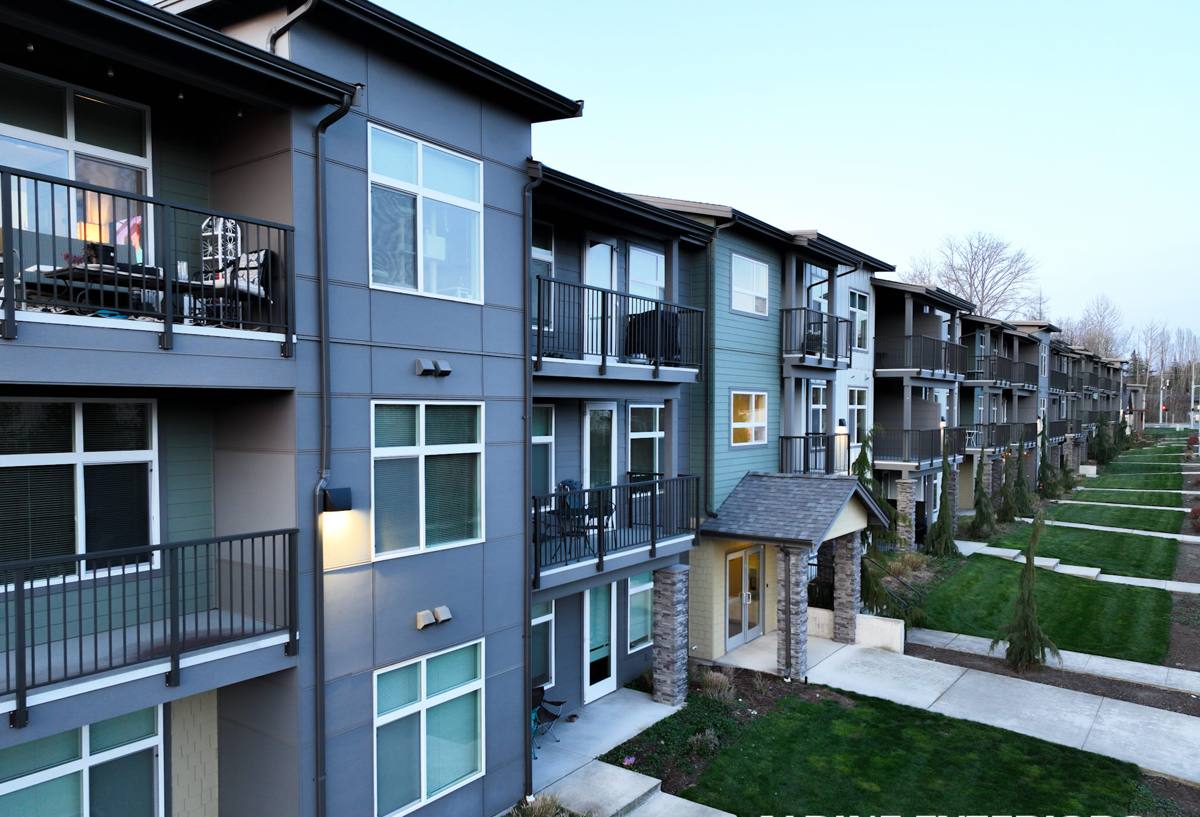
What Bradenton's Climate Does to Siding Over Time
Manatee County sits close enough to the Gulf that every siding material on a home here is fighting the same four things, year after year, without a break:
Hurricane-Force Wind
Wind doesn't just push on siding — it gets under it. Loose butt joints, under-fastened panels, and old caulk lines all become entry points once sustained wind speeds climb during a named storm. Siding that isn't fastened to spec is siding that peels off in strips, and once it's gone, the wall assembly behind it is exposed to whatever rain comes with the wind.
Intense, Year-Round UV
Florida sun doesn't take a winter off. Field-applied paint on wood or fiber cement chalks, fades, and breaks down faster here than it would in a milder climate, which is part of why factory-applied finishes hold up so much better in this market than anything painted on-site after installation.
Wind-Driven Rain
Rain that comes in sideways during a tropical system finds every gap in flawed flashing, every unsealed seam, and every place where siding was installed tight to a surface it should have had clearance from. Once moisture gets behind siding and can't dry out, the sheathing and framing underneath are what actually fail — long before the siding itself looks bad from the street.
Salt Air
Being inland of the immediate coastline doesn't fully protect a home from salt-laden air moving in off Tampa Bay and the Gulf. Salt accelerates corrosion on fasteners and trim hardware, and it degrades cheaper coatings faster than a straightforward humidity-only environment would.
None of that is unique to Village of the Arts specifically — it's the reality for all of Bradenton and Manatee County. What is specific to this neighborhood is the age and construction style of the homes absorbing that punishment, which changes how a siding job needs to be scoped.
Why We Install James Hardie Here — Not Vinyl, Not Wood, Not LP SmartSide
We install James Hardie fiber cement exclusively, and on homes like the ones in Village of the Arts, that standard matters more than usual. Older wood-sided homes in this neighborhood are frequently sided with something moisture-sensitive or combustible, sitting in a climate that punishes both. Fiber cement is non-combustible and doesn't feed on moisture the way wood or engineered wood products can once a seal fails. Vinyl, meanwhile, softens, warps, and can crack in high heat and impact — not the profile you want on a home already exposed to storm debris and relentless sun.
James Hardie's ColorPlus factory finish is the other half of the reason. It's baked on under controlled conditions, not brushed on in a driveway, and it's backed by its own finish warranty separate from the substrate warranty. For a neighborhood known for distinctive, individual home colors, that matters — you get a real color selection without gambling on how a field-applied coat will hold up against Bradenton sun in year three.
Hardie also makes products specifically engineered for high-humidity, storm-prone regions like ours — commonly referred to in the industry as HZ5 formulations. That's not a marketing detail; it changes how the product resists moisture intrusion and how it's rated to perform in exactly the conditions Manatee County sees every hurricane season.
Matching the Neighborhood's Character
A lot of homes in Village of the Arts have visual charm worth preserving — lap siding proportions, shingle-style accents, and detailed trim around windows and porches. James Hardie's product lines give us the ability to match that: HardiePlank for traditional lap profiles, HardieShingle where a home has shingle-style accents to preserve, and HardieTrim for window and door surrounds, fascia, and corner boards. The goal on most of these homes isn't to modernize the look — it's to keep the character homeowners bought into while finally putting a durable, storm-rated material behind it.
What a Correct Installation Actually Involves
James Hardie siding is only as good as the installation behind it. The product is engineered to a spec, and skipping steps in that spec is the single biggest reason any fiber cement siding job underperforms — not the material itself.
| Step | Why It Matters in This Climate |
|---|---|
| Full tear-off and sheathing inspection | Older homes in this area often have hidden rot or moisture damage behind existing siding that needs to be addressed before anything new goes on |
| Weather-resistive barrier, correctly lapped | Provides the drainage plane that lets any moisture that does get past the siding find its way back out instead of sitting against the wall |
| Manufacturer-specified fastener pattern and type | Under-fastening is the main reason siding fails in high wind; correct fastener spacing and embedment is what keeps panels attached during a storm |
| Correct clearances (roofline, grade, decking) | Siding installed too tight to a roof, deck, or the ground wicks moisture and traps it, regardless of how good the material is |
| Sealant only where Hardie specifies it | Hardie's design actually calls for engineered gaps in some joints, not caulk everywhere — over-sealing traps moisture instead of releasing it |
| Flashing at every penetration and trim intersection | Wind-driven rain finds any unflashed seam; this is where most water intrusion actually starts |
This is also where the age of Village of the Arts homes becomes a real factor rather than a footnote. Original framing and sheathing on older homes doesn't always match current standard dimensions, and previous repairs aren't always done to code. A crew unfamiliar with that has to slow down and figure it out on the fly — which is exactly when corners get cut.
Our Process, Start to Finish
- On-site inspection. We walk the full exterior, check for moisture damage, note trim conditions, and look at how the home was built, not just how it looks from the street.
- Written estimate. Scope, product lines, ColorPlus color options, and a clear breakdown of what's included — no vague allowances.
- Tear-off. Old siding comes off completely; we don't install over existing material.
- Sheathing repair. Any rot or damage found underneath gets addressed before new siding goes up — this is not an optional add-on, it's the point of doing the job right.
- Weather barrier and flashing. Installed per manufacturer detail at every window, door, and penetration.
- Hardie installation. Fastened, clearanced, and sealed to Hardie's published specifications for our climate zone.
- Final walkthrough. We review the finished work with you before considering the job done.
Repair, Partial Replacement, or Full Re-Side?
Not every home in this neighborhood needs a full tear-off immediately. Some homes have isolated damage — a section facing prevailing wind and rain that's failed while the rest of the wall is sound. We'll tell you honestly when a targeted repair or partial replacement makes sense versus when the existing siding has enough hidden moisture damage that a full re-side is the only thing that actually solves the problem. What we won't do is recommend a full replacement on a home that doesn't need one yet, or patch over damage that's clearly going to keep spreading.
Signs Your Current Siding Needs a Closer Look
- Paint that's peeling or bubbling in patches rather than fading evenly
- Soft spots when you press on siding near the ground or under windows
- Visible gaps or separation at butt joints and corners
- Persistent staining below window sills or at trim intersections
- Siding that flexes or feels loose when pushed by hand
- A musty smell along interior walls that back up to exterior siding
Why a Crew That Already Works Village of the Arts Matters
This neighborhood has real constraints that don't show up on a generic siding job: tight lot lines with homes set close to neighbors, limited staging space for material and equipment, and older construction that doesn't always match what a crew expects to find once tear-off starts. A contractor who hasn't worked this specific area ends up learning those lessons on your house, in real time, on your schedule. We've priced and installed jobs here enough to know what an accurate estimate actually looks like before we ever pull siding off the wall — and to know how to keep a job site respectful of the neighbors on either side of you.
Permitting through Manatee County and the City of Bradenton is also part of doing this correctly. We handle what's required for a siding replacement so you're not the one tracking down inspections.
Caring for James Hardie Siding After Installation
One advantage of switching to Hardie in this climate is how little upkeep it actually asks for compared to what these homes have likely had before. A periodic rinse to clear salt residue and pollen buildup is normally enough — there's no repainting cycle to plan around with a ColorPlus finish, and no annual caulk-and-touch-up routine like older wood siding demands. Keep an eye on caulking at trim joints over the years and let us know if you notice any separation, but day to day, it's a low-maintenance product by design.
If you're weighing a siding project for a home in Village of the Arts, we're happy to take a look and give you a straightforward, no-pressure estimate — including an honest read on whether you need a full replacement or something more targeted. Use the form below to get started.