 Bradenton
 Why Roofs Age Faster on Longboat Key
Longboat Key sits out on the barrier island, exposed to the Gulf on one side and the bay on the other, straddling the Manatee and Sarasota county line. That location is beautiful, but it's also one of the toughest environments in the region for a roof to survive. Homes here take a steady beating from four things at once: sustained onshore wind that turns to hurricane-force gusts during storm season, salt-laden air that corrodes metal fasteners and flashing year-round, intense UV exposure that breaks down roofing materials faster than it does even a few miles inland, and wind-driven rain that finds its way through any weak point in the roof system, not just the shingles or tiles themselves.
That last point is the one homeowners underestimate most. A roof doesn't have to lose material to fail during a storm. Wind-driven rain can be forced sideways and even upward under normal roofing details, which is why the underlayment, flashing, and edge details matter as much as the visible roofing material. A roof replacement on Longboat Key has to be built as a system, not just a surface layer, or it will underperform exactly when it matters most.
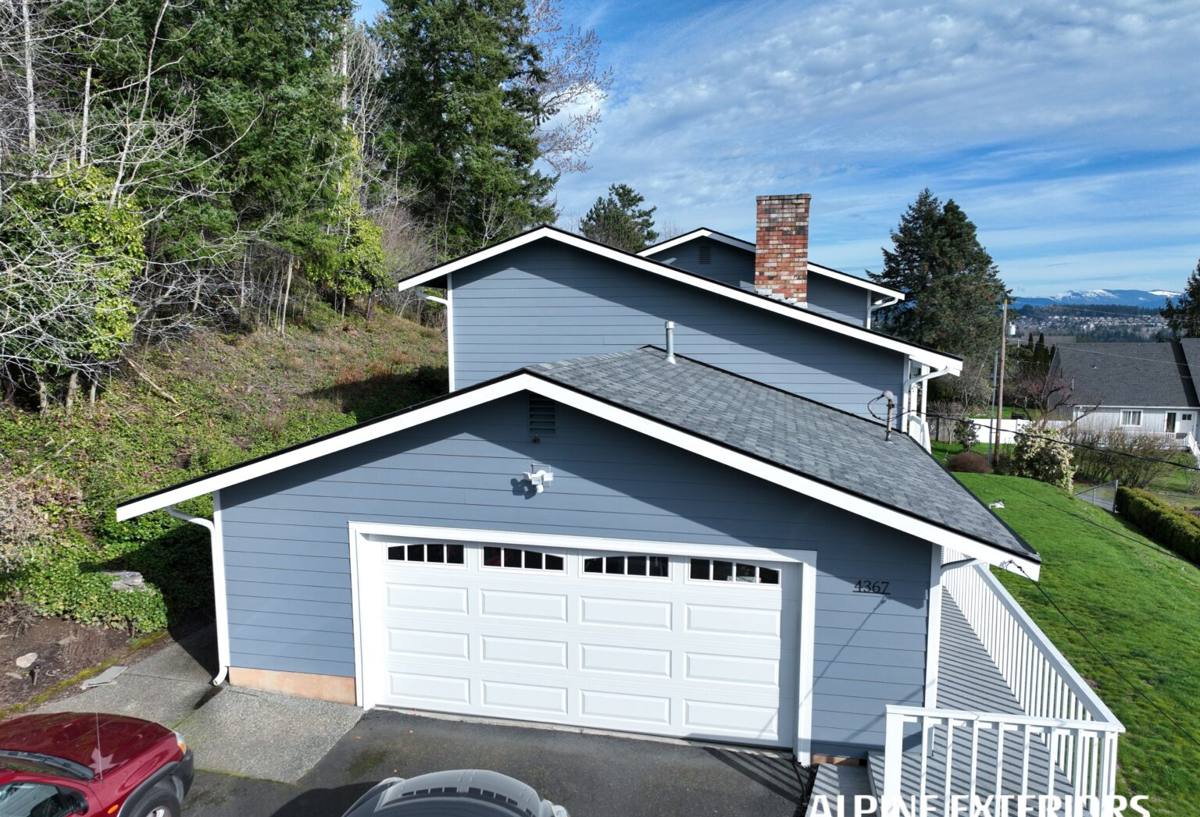
Signs Your Roof Is Due for Replacement, Not Another Repair
Coastal homes often get patched repeatedly because a repair is cheaper up front. But repeated repairs on a roof that's genuinely at the end of its life usually cost more over time, and they can leave you with an insurance problem. Here's what tends to signal it's time to stop patching:
- Granule loss on shingles heavy enough that you can see bare patches or find granules collecting in gutters
- Cracked, curling, or missing tiles, especially near ridges, hips, and valleys where wind uplift concentrates
- Rust staining or corrosion around metal flashing, fasteners, or roof penetrations
- Soft spots or sagging in the roof deck, which usually means moisture has reached the wood underneath
- Recurring leaks in the same area even after repairs
- A roof approaching or past 15-20 years old, which is the range where many Florida insurers start requiring inspection or replacement to keep or renew a policy
If you're seeing more than one of these, it's worth getting an honest inspection before your next renewal notice or the next named storm, whichever comes first.
Roofing Materials That Hold Up Near the Gulf
There's no single "right" material for every Longboat Key home — it depends on your home's structure, your HOA or condo association's rules if you have one, your budget, and how much maintenance you want to take on. What matters is that whatever you choose is installed correctly for wind and salt exposure. Here's how the common options compare in this specific environment:
| Material | Wind Performance | Salt-Air Durability | Typical Lifespan | Maintenance Notes |
|---|---|---|---|---|
| Architectural asphalt shingle | Good with high-wind rated products and proper nailing/sealing | Moderate — fasteners and flashing need corrosion-resistant hardware | 15-25 years in coastal exposure | Watch for granule loss and edge lifting after storms |
| Concrete or clay tile | Very good when properly fastened; heavy, stable profile | Good — tile itself doesn't corrode | 25-40+ years | Roof structure must support the added weight; broken tiles need prompt replacement |
| Standing seam metal | Excellent when installed with the right clip and fastener spacing | Depends heavily on coating quality and fastener material | 30-50 years | Requires marine-grade or coated fasteners; inspect seams and sealant periodically |
Fasteners and Flashing Matter as Much as the Roofing Material
On a barrier island, the small metal parts of a roof fail before the shingles, tile, or panels do. Standard fasteners and flashing corrode faster here than almost anywhere else in the region. We use corrosion-resistant hardware — stainless steel or properly coated fasteners — on Longboat Key jobs, because a roof is only as strong as its weakest connection point, and that's usually a rusted nail or a degraded flashing seam, not the field material.
Wind Codes, Permits, and Insurance in Manatee County
Longboat Key falls within Florida's coastal wind-borne debris region, which means roofing materials and installation methods have to meet specific wind-resistance standards under the Florida Building Code — this isn't optional or a matter of preference. A permit through the appropriate county building department is required for a full roof replacement, and the job has to pass inspection before it's considered complete.
This code compliance isn't just red tape. It directly affects your insurance. Florida's property insurance market has gotten stricter about roof age and condition, and many carriers now require a wind mitigation inspection to apply credits or even to keep writing a policy. A properly permitted, code-compliant roof replacement can lower your premium and make your home easier to insure — an improperly documented one can do the opposite, even if the workmanship is fine. We pull permits, coordinate inspections, and provide the documentation homeowners need for their insurance file, because on Longboat Key, the paperwork is part of the job.
What a Correct Roof Replacement Actually Involves
A roof replacement is more than swapping old material for new. Skipping steps below is exactly how a roof looks fine going up but fails during the next tropical system.
Tear-Off and Deck Inspection
The old roofing comes off completely so the deck underneath can actually be inspected, not guessed at. Any soft, delaminated, or water-damaged decking gets replaced before anything new goes down. Covering a compromised deck is one of the most common shortcuts in the industry, and it's the one that causes the worst failures later.
Underlayment
This is your roof's backup barrier if wind-driven rain gets past the surface layer, which it will during a strong storm. On coastal homes we favor self-adhered or high-performance synthetic underlayment at vulnerable areas — eaves, valleys, and penetrations — because standard felt underperforms in wind-driven rain conditions.
Flashing and Penetrations
Every place something breaks the roof plane — vents, pipes, chimneys, skylights, wall transitions — is a potential leak point. Flashing has to be formed, fastened, and sealed correctly at each one, with corrosion-resistant materials given the salt air.
Ventilation
Proper attic ventilation keeps roofing materials from overheating and extends their service life, and it also affects moisture management. A replacement is the right time to correct ventilation problems the old roof may have been living with for years.
Final Material Installation
Whatever the finish material — shingle, tile, or metal — it goes down according to the manufacturer's high-wind installation specifications, not the standard specification, since that's what the wind-borne debris region requires and what your fastening pattern needs to hold up to hurricane-force gusts.
How We Handle a Longboat Key Roof Replacement
Our process is the same on every job because skipping steps is how coastal roofs fail early:
- On-site inspection and honest assessment of whether you need a repair or a full replacement
- Written estimate that spells out materials, wind rating, underlayment type, and scope — no vague line items
- Permit application with Manatee County before any work begins
- Tear-off and deck inspection, with any deck repairs approved by you before we proceed
- Underlayment, flashing, and ventilation work done to coastal-grade standards
- Final material installation per manufacturer high-wind specifications
- Site cleanup, including magnetic sweep for stray fasteners
- Final county inspection and paperwork you can hand to your insurance carrier
We keep you updated at each stage rather than disappearing between the estimate and the final walkthrough. On an island where weather windows for roofing work can close fast, clear communication about scheduling matters as much as the workmanship.
Working With HOA and Condo Requirements
A lot of Longboat Key roofing work involves condo associations or HOAs with their own approval processes, color and material restrictions, and sometimes shared roof structures on multi-unit buildings. That adds a layer most inland roofing jobs don't have. We're used to working within association guidelines, providing the documentation boards ask for, and scheduling around the realities of a shared building — it's a routine part of working on the Key, not a special accommodation.
Why Local Experience on Longboat Key Matters
A contractor who mostly works well inland doesn't necessarily know how differently salt air treats fasteners, or how wind-driven rain behaves on an exposed barrier island roof, or which underlayment choices actually hold up here. Crews who work Longboat Key regularly know the wind-borne debris region requirements cold, have relationships with the Manatee County permitting process, and have seen firsthand which shortcuts cause the leaks they get called back to fix. That experience shows up in details a homeowner might never think to ask about but that determine whether a roof is still doing its job ten years from now.
Questions Worth Asking Before You Hire Anyone
- Are you licensed and insured to work in Manatee County, and can you provide proof?
- Will you pull the permit yourself, and who handles the final inspection?
- What underlayment and fastener materials do you use on coastal homes, and why?
- Can you provide the wind mitigation documentation my insurance company will ask for?
- Have you worked with my HOA or condo association's approval process before?
- What's your plan if weather delays the job mid-project?
If a contractor can't answer these clearly, that's worth noticing before you sign anything.
If your roof is showing its age or you just want an honest opinion on whether repair or replacement makes more sense for your Longboat Key home, we're happy to take a look. Use the form below to request a free, no-pressure estimate — no obligation, just a straight answer about where your roof actually stands.