 Bradenton
 Why Windows in Tara Take More Punishment Than People Expect
Tara sits inland from the coast, but "inland" in Manatee County doesn't mean sheltered. Homes here still deal with the same tropical storm system that batters the immediate coastline — sustained straight-line winds, wind-driven rain that finds its way through any weak seal, and gust loads that spike hard during summer and fall storm season. Add to that Florida's relentless year-round UV exposure and the fine salt aerosol that carries well inland on sea breezes off Tampa Bay, and you have three separate forces working against ordinary windows at the same time: wind pressure, moisture intrusion, and material breakdown from sun and salt.
Most window failures we see in this area aren't dramatic. They're slow. A frame that's been baking in UV for a decade starts to chalk and go brittle. A seal that was never fully set lets a thin line of water track into the wall cavity during every hard rain. A lock point that's slightly out of adjustment means the sash doesn't compress evenly against the weatherstripping, so wind pressure finds the gap. None of that shows up on day one. It shows up as a soft spot on a sill, a musty smell in a closet, or a window that suddenly won't latch right five years in.
Custom windows done correctly address all three problems at once — not just with better glass, but with a frame, installation, and hardware package matched to how this specific climate loads a house.
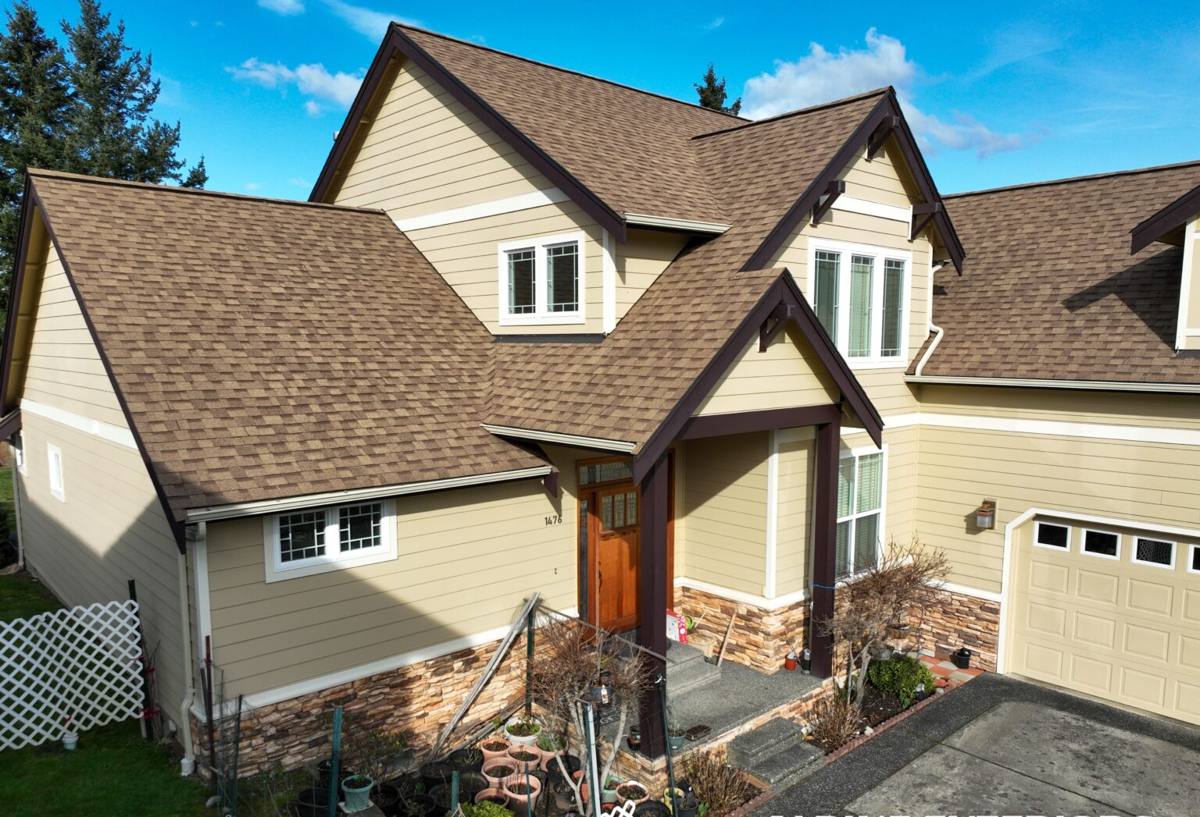
What "Custom" Actually Means Here
"Custom" doesn't mean decorative. For a Tara home it means the window is specified — size, frame material, glass makeup, and hardware — to fit your actual opening and your actual exposure, rather than pulled off a shelf in a standard size and shimmed to fit. That distinction matters more in this climate than almost anywhere else in the country, because an ill-fitting window is exactly where wind-driven rain and pressure differentials go to work.
Custom sizing also matters for older Manatee County homes, where original openings often don't match modern stock dimensions. Forcing a standard-size window into a non-standard opening usually means extra shimming, inconsistent fastening, and a wider gap for sealant to bridge — which is a maintenance liability in a climate this humid and this windy.
Impact-Rated vs. Standard Windows: What Actually Differs
Every window we install in a wind-borne debris zone like Manatee County has to meet Florida Building Code impact standards — either impact-rated glass or an approved shutter system on every opening. For most Tara homeowners doing a full custom replacement, impact glass is the simpler long-term choice: no separate shutters to store, deploy, or maintain, and it's working 24/7, not just when a storm is forecast.
| Factor | Standard (Non-Impact) Window | Impact-Rated Window |
|---|---|---|
| Code compliance | Requires separate shutters or panels on every opening | Meets code on its own, no shutters needed |
| Glass construction | Single or standard dual-pane | Laminated glass with an interlayer bonded between panes |
| Storm prep | Manual shutter installation before every storm | None — protection is built in |
| UV and sound performance | Varies by glass package | Laminated interlayer typically blocks more UV and reduces noise |
| Upfront cost | Lower per window | Higher per window, offset by no shutter cost |
| Insurance impact | May not qualify for wind-mitigation credits | Often qualifies for wind-mitigation premium credits |
The insurance angle is worth a real conversation, not an assumption — credits depend on your carrier and the specific product's approval documentation, so we pull the actual Notice of Acceptance (NOA) or Florida Product Approval number for whatever window we quote and hand it to you to give your agent, rather than promising a discount we can't guarantee.
Frame Materials: Trade-Offs, Not a Sales Pitch
There's no single "best" frame material for every Tara home — each has a real trade-off in this climate, and we'd rather walk you through it than push whatever has the best margin.
- Vinyl: Low maintenance, good insulation, competitively priced. Quality varies a lot between manufacturers — thin, poorly reinforced vinyl can warp under years of direct summer sun, so frame gauge and UV stabilizers matter more than the word "vinyl" itself.
- Aluminum: Strong, slim sightlines, holds up structurally, but conducts heat and can corrode near salt air faster than other materials unless it's properly coated and maintained.
- Fiberglass: Dimensionally stable in heat swings, resists UV degradation well, generally the strongest per-dollar option for long-term durability — usually a higher upfront cost.
- Wood-clad: Best interior appearance for homeowners who want it, but the wood core is the highest-maintenance option in a humid, salt-influenced climate and needs consistent upkeep to avoid moisture problems.
We match frame material to the specific exposure of each elevation of your house — a west-facing wall taking full afternoon sun and a wall closer to prevailing salt-carrying wind don't necessarily call for the same product.
The Installation Details That Actually Determine Performance
The window itself is maybe half the story. The other half is installation, and it's the half most likely to get rushed on a lower-cost job. A correctly installed custom window in this climate involves:
- Removing the old unit down to the rough opening and inspecting the framing and sill for rot, rust, or prior water intrusion before anything new goes in
- Correcting any out-of-square or out-of-level opening rather than shimming around it
- Installing flashing tape and a proper drainage path so any water that does get past the exterior seal has somewhere to go besides your wall cavity
- Setting the window plumb, level, and square, then fastening per the manufacturer's engineering — not just "enough screws to hold it"
- Sealing with the correct backer rod and sealant system, sized to the actual gap, not just caulked over
- Verifying every lock and sash operates and compresses evenly across the full frame before we call the job done
Skip any one of these steps and you can have a code-compliant, impact-rated window that still leaks or underperforms in a real storm — because the failure point moved from the glass to the installation.
Our Process, Start to Finish
- On-site assessment: We measure every opening individually, check framing condition, and note sun and wind exposure by elevation — nothing is quoted from a phone call alone.
- Product selection: We walk through frame material, glass package, and hardware options against your budget and priorities, including the actual NOA documentation for whatever meets code.
- Written estimate: Itemized by opening, so you can see what's driving cost where — not a single lump number.
- Permitting: We pull the required Manatee County or City of Bradenton permits and handle inspections — impact window replacement is permitted work here, and skipping that step can cause problems at resale or with insurance claims later.
- Installation: Removal, opening prep, flashing, setting, and sealing as outlined above, one window at a time so your home isn't fully open to the weather at once.
- Final walkthrough and inspection: We test operation and sealing on every unit with you before we consider the job complete, and we schedule the county inspection as required.
Signs It's Time to Replace, Not Repair
Not every window problem means a full replacement. But in a climate this hard on materials, some signs mean repair is just delaying an inevitable and more expensive fix:
- Frame feels soft, chalky, or visibly pitted when you press on it
- Condensation forms between panes on a dual-pane window — the seal has failed and can't be repaired
- Window won't latch fully or the lock doesn't line up without force
- Visible daylight or a draft around the frame when the window is closed
- Water staining on the interior sill or wall below the window after storms
- Window predates current Florida Building Code wind-load requirements and has no documented impact rating
If you're only seeing one of these on one window, a repair or reseal might genuinely be the right call — we'll tell you that instead of pushing a full-house replacement you don't need yet.
Permits, Codes, and What's Actually Required
Window replacement in Manatee County requires a building permit in nearly all cases, and the installed product has to meet current Florida Building Code wind-load requirements for your zone. This isn't paperwork for its own sake — it's what protects you if you ever file an insurance claim after a storm or sell the house and a buyer's inspector checks whether the windows are permitted and code-compliant. Unpermitted work is a real problem at closing. If your home is in a community with an HOA or architectural review process, exterior appearance changes — frame color, grid pattern, glass tint — may also need approval before installation, and we can help you figure out what that community requires before we order product.
Why Hiring a Crew That Already Works in Tara Matters
A window installer who mostly works dry inland climates without heavy wind-load code, or one who's never pulled a Manatee County permit, is going to be learning on your house. That shows up as slower permitting, product specified for the wrong wind zone, or installation shortcuts that don't matter in a mild climate but matter a great deal here. A crew that regularly works in and around Tara already knows the county's inspection process, has relationships with suppliers who stock code-compliant product in the sizes local homes actually need, and has seen firsthand which installation habits hold up after a few hurricane seasons and which ones fail quietly over time.
That local pattern recognition is worth more than it sounds like on paper — it's the difference between a window that's "code-compliant on installation day" and one that's still performing correctly five storm seasons later.
If your Tara home has windows showing their age, or you're planning ahead of the next storm season, we're happy to walk the property, measure every opening, and give you a straightforward written estimate — no pressure, no obligation. Use the form below to get started.