 Bradenton
 Composite Decking in Tara: Built for Manatee County's Climate, Not Just the Showroom Floor
Tara is one of the established residential communities on Bradenton's east side, and like most of Manatee County, the homes here sit exposed to a demanding mix of conditions: long stretches of intense UV, sudden wind-driven downpours in summer, salt-laden air carried in off Tampa Bay and the Gulf, and the real possibility of hurricane-force wind loading during storm season. A deck is one of the most exposed structures on a property — it takes direct sun for most of the day, sheds and absorbs rain constantly, and its fasteners and framing are the first thing to suffer if moisture gets trapped where it shouldn't.
Composite decking has become the practical choice for homeowners in this area because it resists a lot of what breaks down wood decking here — but "composite" isn't one product, and installing it correctly in this climate takes more than following the manufacturer's mainland-average instructions. This page covers what a Tara deck actually needs, what a correct installation looks like, and why local experience with these conditions matters as much as the material choice itself.
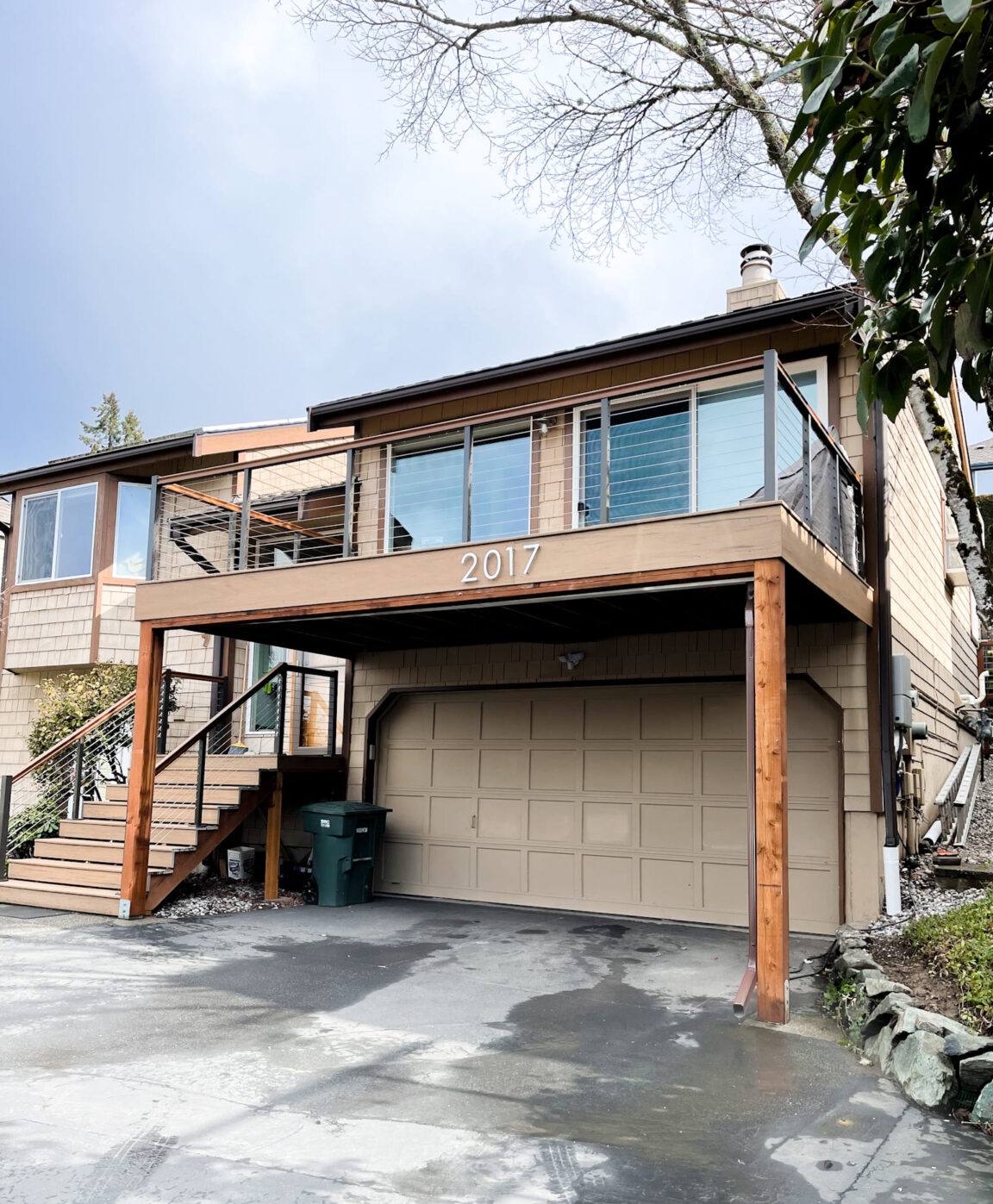
What Bradenton's Climate Actually Does to a Deck
UV and heat
Florida sun is stronger and more consistent than most of the country sees. Lower-quality composite boards can fade, chalk, or soften under years of direct exposure. Better-quality capped composites resist this far longer, but even those benefit from board orientation and gap spacing that accounts for real thermal expansion — composite moves more than wood does as it heats and cools through the day.
Wind-driven rain and humidity
Summer storms in this area don't just fall straight down — wind pushes rain sideways and underneath railings, stair stringers, and ledger connections. If the substructure underneath a composite deck isn't properly flashed and ventilated, water gets trapped against wood framing and fasteners long after the surface boards have dried, leading to hidden rot and corrosion even though the decking itself looks fine.
Salt air
Bradenton's proximity to the coast means airborne salt reaches inland neighborhoods, including Tara, more than most homeowners expect. Salt accelerates corrosion in fasteners, brackets, and any exposed metal hardware. This is a fastener and hardware decision as much as a decking-board decision — the wrong screws or joist hangers can start showing rust and staining within a couple of seasons.
Wind uplift and storm loading
Hurricane-force wind events put real uplift and racking forces on an elevated deck structure, especially around ledger attachments and railing posts. Framing that's undersized or under-fastened for local wind exposure is a safety issue, not just a durability one.
What a Correct Composite Deck Installation Involves
The decking boards get the attention, but most of what determines whether a deck lasts 20 years or needs rework in five happens below the surface.
Substructure and framing
Pressure-treated or naturally resistant framing, sized and spaced to the actual span rating of the composite board being used — not a generic 16-inch assumption. Composite boards typically need tighter joist spacing than wood, especially on diagonal or picture-frame layouts, and manufacturers publish specific span tables that a correct installation follows exactly.
Ledger attachment and flashing
Where the deck attaches to the house, proper flashing keeps wind-driven rain from working its way behind siding or into the rim joist. This is one of the most common failure points on decks in this climate, and it's invisible once the deck is finished — which is exactly why it has to be done right the first time.
Ventilation underneath
Low-clearance decks or those near grade need airflow underneath to let humidity and trapped moisture escape. Skipping this because it complicates the build is a shortcut that shows up later as musty smells, mold on the underside, and premature framing decay.
Fasteners and hardware
Stainless steel or coated fasteners rated for coastal exposure, hidden fastener clip systems compatible with the specific board profile, and corrosion-resistant joist hangers and brackets throughout. This is not an area to cut cost — it's the difference between hardware that lasts and hardware that stains and fails early.
Board layout and expansion gaps
Correct end-gap and side-gap spacing per manufacturer spec, accounting for Florida's higher average material temperature, so boards don't buckle or leave unsightly gaps as they expand and contract through the year.
Railings and stairs
Post attachment strong enough for actual wind and code-required guard loads, not just what looks sturdy. Stair stringers cut and supported to handle real foot traffic loads over time, with the same fastener and flashing standards as the deck field.
Composite vs. Other Decking Materials for This Climate
| Material | UV/Fade Resistance | Moisture Behavior | Salt Air Durability | Maintenance |
|---|---|---|---|---|
| Capped composite | Strong — cap layer resists fading and chalking | Won't rot; can trap moisture at cut ends if not sealed | Good with correct hardware | Occasional wash; no staining/sealing |
| Uncapped composite | Moderate — more prone to fading over time | More susceptible to moisture absorption at surface | Fair | More frequent cleaning |
| PVC decking | Strong | Fully moisture-resistant | Good with correct hardware | Low; can feel harder underfoot in full sun |
| Pressure-treated wood | Weak — fades and grays quickly | Absorbs water; prone to rot without diligent upkeep | Poor — fasteners corrode faster against wet wood | Annual sealing/staining required |
Every option on this table can work in Bradenton if it's installed and maintained correctly — the real differences show up in how much upkeep a homeowner is willing to commit to and how the structure is built underneath, not just which brand of board is chosen.
How Our Process Works for Tara Projects
- On-site assessment: We look at the existing structure (if replacing a deck), grade and drainage around the footprint, sun exposure, and how close the site is to salt air corridors.
- Material and layout recommendation: We walk through board options honestly, including trade-offs in cost, appearance, and long-term maintenance, and recommend a layout that fits the home and how it's used.
- Permitting: Manatee County and the City of Bradenton (depending on exact location) require permits for most new and replacement decks above certain heights or attached to the structure. We handle the permit submission and inspection scheduling.
- Framing build-out: Correct span, flashing, ventilation, and fastener spec as detailed above — this stage determines the deck's lifespan more than any other.
- Decking, railing, and stair installation: Installed to manufacturer spec for gapping and fastening, with attention to how the layout will look and perform over years, not just on install day.
- Final walkthrough: We go over care instructions specific to the board chosen and answer questions before we consider the job finished.
Maintenance Reality for Composite Decks in This Area
Composite is lower-maintenance than wood, not maintenance-free. In Tara's climate, a realistic care routine looks like:
- Rinse or sweep off salt residue, pollen, and organic debris regularly, especially after storms
- Wash the surface a few times a year with mild soap and water to prevent mildew film in humid months
- Check railings, stair connections, and visible fasteners annually for corrosion or looseness
- Keep gutters and downspouts clear so runoff doesn't concentrate onto or under the deck
- Trim back landscaping that traps moisture or blocks airflow around the deck's edges
- Inspect underneath the deck (if accessible) every year or two for signs of trapped moisture or pest activity
Cost Factors Homeowners Should Understand
| Factor | Why It Affects Price |
|---|---|
| Board tier (uncapped vs. premium capped) | Material cost and expected lifespan vary significantly between composite grades |
| Deck height and railing requirements | Taller decks need more substantial framing, code-required guards, and often more complex stair builds |
| Structural condition (replacement projects) | Rotted or undersized existing framing may need full replacement, not just resurfacing |
| Layout complexity | Picture-frame borders, diagonal patterns, and multi-level designs add labor and material |
| Fastener and hardware spec | Coastal-grade stainless hardware costs more upfront but avoids early corrosion issues |
| Permitting and inspection scope | Attached, elevated, and larger decks typically require more inspection steps |
We give straightforward ranges during the estimate rather than a single number pulled before we've seen the site — decking projects vary too much based on existing conditions to price accurately any other way.
What to Check Before Hiring a Decking Contractor in Tara
- Do they reference manufacturer span tables for the specific board, or just build to a generic spacing?
- Do they specify corrosion-resistant fasteners and hardware for coastal exposure, or use whatever's standard stock?
- Do they handle the Manatee County or Bradenton permit process themselves?
- Can they explain their flashing and ventilation approach at the ledger and under the deck?
- Do they have current licensing and insurance, and will they provide proof without hesitation?
- Are they used to working in this specific climate, or applying a build method from a different region?
Why Local Experience in Tara Matters
A crew that already works in and around Tara has seen how decks in this specific pocket of Manatee County actually hold up over time — which framing details fail first, how much salt exposure really reaches this area, and how local permitting and inspection processes run in practice. That's different from following a national installation manual written for a drier, milder climate. It shows up in the small decisions: fastener choice, flashing detail, ventilation gaps, and board layout — the parts of the job that aren't visible once it's finished but determine whether it's still solid a decade from now.
If you're planning a new composite deck or replacing an aging one in Tara, we're happy to take a look at your property and walk through options honestly, including what does and doesn't make sense for your specific site and budget. Reach out for a free, no-pressure estimate using the form below.