 Bradenton
 Why Samoset Decks Take a Beating
Samoset sits in the thick of Bradenton's outdoor living culture — mornings on the deck with coffee, evenings grilling before the humidity settles in. But that same Manatee County climate that makes outdoor decks worth having is also what wears them out faster than decks almost anywhere else in the country. Intense, near year-round UV breaks down wood fibers and softens plastics in composite boards. Wind-driven rain drives moisture sideways into joints, fastener holes, and end grain that a vertical rainstorm would never reach. Salt air drifting inland from Tampa Bay and the Gulf accelerates corrosion in anything metal — nails, screws, joist hangers, railing brackets. And when a tropical system or hurricane-force wind event rolls through, a deck that was already weakened by sun and moisture is the part of the house most likely to fail first.
None of this means a deck is a bad investment in Bradenton. It means a deck built or repaired here has to be built or repaired with this climate in mind, not with generic techniques borrowed from a drier, milder part of the country.
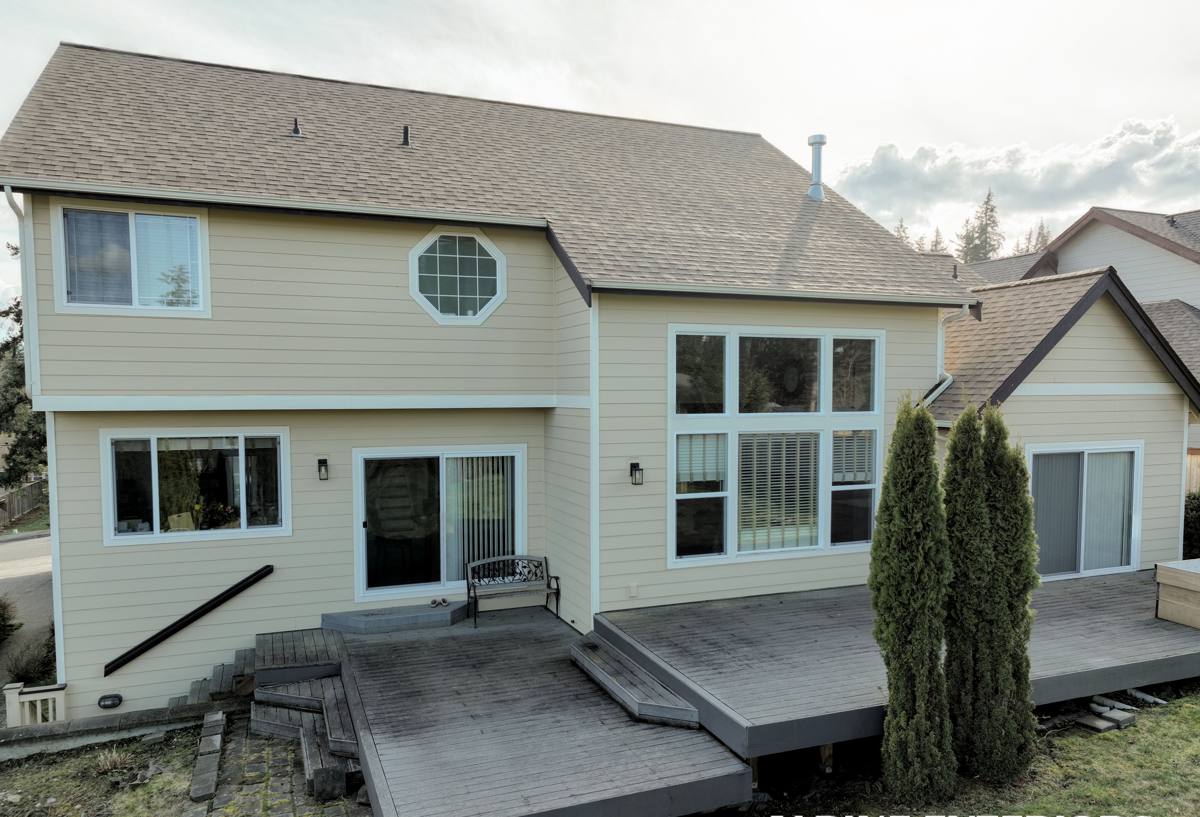
Common Signs a Deck Needs Repair
Most deck failures don't happen all at once — they show up as small warning signs months or years before a board gives way or a railing comes loose. Catching these early is what keeps a repair job small instead of turning it into a full rebuild.
- Boards that feel spongy, springy, or slightly soft underfoot
- Visible cupping, splitting, or graying that goes past the surface
- Rust streaks around fasteners or metal connectors
- A railing or post that wiggles more than it did last year
- Gaps opening up where the deck meets the house (the ledger board)
- Stairs that feel less solid or squeak in new places
- Standing water that doesn't drain within a few hours after rain
- Visible daylight or soft wood around joist hangers underneath the deck
Any one of these on its own might just need a targeted fix. Several at once, especially near the ledger board or support posts, usually points to a structural issue that needs a proper inspection rather than a patch.
The Ledger Board: The Part Most Homeowners Never Check
The ledger board is the piece that bolts the deck to the house itself, and it's the single most common source of serious deck failure — not just in Bradenton, but nationally. Because it sits tight against the house's rim joist, water that gets behind it has nowhere to evaporate. In a climate with wind-driven rain pushing moisture into every seam, a poorly flashed ledger board can rot from the inside for years without showing an obvious sign from the top. Any real deck repair starts by checking this connection, not just the boards you can see.
Wood, Composite, and Aluminum: Repair Considerations
What your deck is built from changes both how it fails and how it should be repaired. We work on all three, but each has different trade-offs worth understanding before you decide whether to repair, replace a section, or convert.
| Material | How Bradenton's climate affects it | Repair approach |
|---|---|---|
| Pressure-treated wood | UV grays and dries the surface; wind-driven rain and humidity drive rot at joints, fastener holes, and end cuts | Sister or replace rotted framing members, re-seal cut ends, upgrade to corrosion-resistant fasteners |
| Composite decking | Generally holds up well to moisture, but heat expansion/contraction is more pronounced; older or budget composite can fade and become brittle under constant UV | Replace individual boards using hidden fastener systems, check hidden framing underneath (still usually wood) |
| Aluminum decking/railing | Excellent moisture resistance but salt air can still pit uncoated or damaged-finish metal over time | Address finish damage early, replace corroded hardware, check welds and connection points |
A detail homeowners are often surprised by: even an all-composite deck almost always sits on a wood or wood-hybrid frame underneath. Composite resists moisture on the surface, but if the framing beneath it was never properly flashed or ventilated, the frame can be failing while the decking on top still looks fine. We check the substructure regardless of what the walking surface is made of.
What a Correct Deck Repair Actually Involves
A repair that only replaces what's visible from the top is a repair that will need to be done again soon. Doing it right in this climate means working from the structure outward.
Structural Inspection First
Before any board gets pulled or replaced, we check the framing: joists, beams, posts, footings, and the ledger board connection to the house. Soft or discolored wood, rusted hardware, and any movement at the connections all get flagged before we talk about what the surface needs.
Fastener and Hardware Upgrades
A huge share of deck problems near the coast trace back to fasteners that were never rated for salt-air exposure. Standard galvanized screws and nails corrode faster here than they would inland. Where we're opening up a connection anyway, we use stainless or coated fasteners and hardware rated for coastal exposure, so the repair outlasts the materials around it.
Drainage and Ventilation
Water that pools on the deck surface or gets trapped underneath is the single biggest driver of repeat failures. Board spacing, flashing at the house connection, and airflow underneath the deck all matter as much as the boards themselves.
Board Replacement Done Right
When boards need replacing, cut ends get properly sealed (a step that's frequently skipped and is a common cause of early rot at butt joints), and new boards are matched for expansion behavior so the deck doesn't develop new gaps or crowning within a season.
Our Deck Repair Process
- On-site inspection. We walk the full deck, check underneath, and test the ledger board, posts, and any areas you've flagged as concerning.
- Honest assessment. You get a clear picture of what's cosmetic, what's structural, and what can wait — not an upsell to a full rebuild when a targeted repair will hold.
- Written scope and estimate. Before work starts, you know what's being repaired, with what materials and hardware, and roughly what it will cost.
- Repair work. Framing repairs and hardware upgrades happen first, then surface boards, railings, and stairs.
- Final check. We walk the deck with you, test rails and stairs, and point out anything worth watching going forward.
What Deck Repair Costs Depend On
Every deck is different, so we won't quote a number without seeing it — but these are the main factors that move the price up or down.
| Factor | Why it matters |
|---|---|
| Extent of framing damage | Repairing a few boards costs far less than replacing rotted joists or a compromised ledger board connection |
| Deck material | Composite and aluminum materials generally cost more per board than pressure-treated wood |
| Height and access | Elevated decks or decks with limited access underneath take longer to inspect and repair safely |
| Railing and stair condition | Code-compliant railing and stair repairs add labor, especially on older decks built to outdated standards |
| Fastener and hardware upgrades | Coastal-rated hardware costs more upfront but reduces how often you're paying for repairs down the road |
As a general rule, small, caught-early repairs run a few hundred dollars; structural work involving framing, ledger boards, or full board replacement across a larger deck runs well into four figures. We'll give you real numbers once we've seen the deck in person.
Why a Crew That Already Works Samoset Matters
A deck repair contractor who works Bradenton and Manatee County neighborhoods regularly already knows what to expect before the inspection even starts — how salt air behaves this close to the bay, which fastener grades actually hold up here, and how local permitting and inspection processes work for structural deck repairs. That familiarity means fewer surprises mid-project and a repair that's built for the conditions your deck actually faces, not generic conditions from a manual written for a different climate. It also means someone who can be back out quickly if a named storm is bearing down and you want your railings and stairs checked beforehand, or if something needs a follow-up look after the season's first big blow.
Keeping Your Repaired Deck in Good Shape
A good repair buys you years, but a little maintenance stretches that further in a climate this demanding.
- Rinse off salt residue and debris periodically, especially after storms
- Keep gutters and downspouts clear so runoff isn't dumping onto or near the deck
- Reseal or re-stain wood decking on the schedule appropriate to the product used
- Check railings and stair connections for movement once or twice a year
- Look underneath the deck occasionally, not just at the walking surface
- Address small issues — a loose board, a rust spot — before the next rainy season, not after
If your Samoset deck is showing any of the signs above, or it's just been a while since anyone looked at it from underneath, we're happy to take a look. Fill out the form below for a free, no-pressure estimate — we'll tell you honestly what it needs and what it doesn't.