 Bradenton
 Roofing on a Barrier Island Is a Different Job
Holmes Beach sits out on Anna Maria Island, fully exposed to the Gulf, which means the roofs here take a beating that inland Manatee County homes simply don't see. Every storm that moves through brings wind loads that are higher than what a house a few miles inland would experience, because there's no tree line, no row of buildings, and no elevation change to slow the wind down before it hits your shingles or tile. Add in the salt air rolling off the water twenty-four hours a day, and you've got a roof assembly that's fighting corrosion, UV breakdown, and wind uplift all at once, every single day of the year.
We work on roofs across Bradenton and Manatee County, but Holmes Beach and the rest of Anna Maria Island get a specific kind of attention from us because the failure points are different. A repair that would hold up fine on a ranch house off Cortez Road can fail fast on a beach home that's catching direct onshore wind and salt spray. Knowing that difference is most of what separates a roof that lasts through the next decade of hurricane seasons from one that needs the same repair redone in three years.
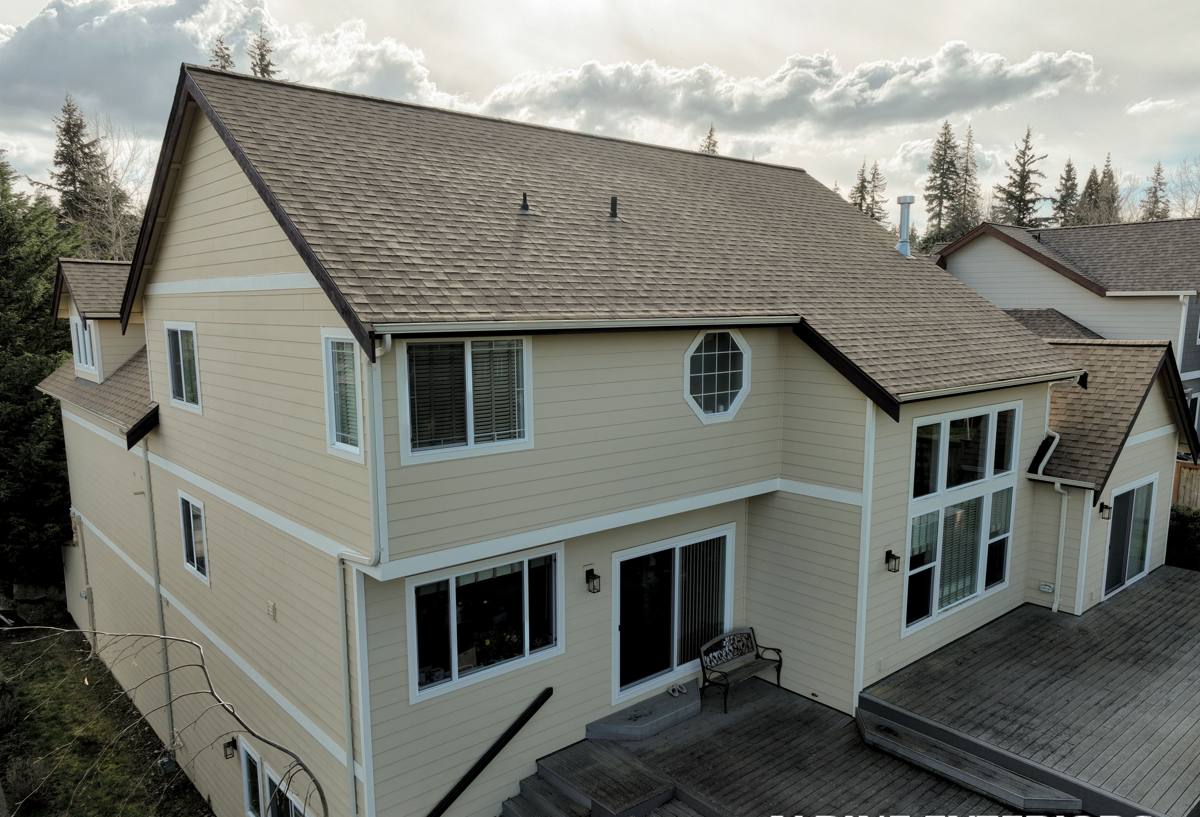
What Storm Damage Actually Looks Like on an Island Roof
Wind Damage
Wind doesn't just rip shingles off in dramatic fashion — most of the damage we find after a storm is quieter than that. Uplift at the edges and corners of the roof (the areas engineers call high-pressure zones) loosens shingles, tile, or metal panels just enough to break the seal without them visibly moving. From the ground, the roof can look untouched. Underneath, wind-driven rain has already found a way in.
Wind-Driven Rain Intrusion
On a barrier island, rain rarely falls straight down during a storm — it comes in sideways. That means water gets pushed up under shingle tabs, through gaps in flashing, and around vent boots and pipe penetrations that would never leak in a normal rain. This is the single most common cause of interior water damage we see after storms in this area, and it happens even on roofs that "held up fine" from the outside.
Hidden and Latent Damage
Some of the worst problems show up weeks or months after a storm, not the day after. A shingle that got lifted and re-sealed by the sun's heat, a nail that backed out a quarter inch, a small tear in underlayment — none of these leak immediately, but they're weak points that fail the next time wind and rain line up right. This is why we always recommend a full inspection after any named storm or significant wind event, even if nothing is dripping yet.
Our Storm Damage Repair Process
1. Inspection
We walk the roof (not just look at it from the driveway) and check every vulnerable point: ridge caps, valleys, flashing around chimneys and vent stacks, drip edges, and the perimeter zones where uplift concentrates. On tile roofs we check for cracked, slipped, or displaced tiles and the condition of the underlayment beneath them, since the tile itself is often just the weather shield and the underlayment is doing the real waterproofing work.
2. Documentation
We photograph and note everything we find before we touch anything, dated and organized in a way that's usable for an insurance claim. Storm damage claims live or die on documentation, and having a clear before-and-after record from a licensed contractor carries real weight with adjusters.
3. Repair
We repair what's damaged rather than pushing a full replacement when a full replacement isn't actually needed — and we're upfront when it is. Repairs are done to match the existing roofing system's materials and installation method so the fix doesn't become a mismatched weak point of its own.
4. Final Check
Before we consider the job done, we re-inspect flashing seals, fastener lines, and any adjacent areas that could be affected by the repair. A rushed patch job that leaks again in the next storm costs everyone more time and money than doing it right the first time.
Repair or Replace? What Actually Drives That Decision
Homeowners often assume storm damage means an automatic full roof replacement. Sometimes it does, but often it doesn't. Here's how we think through it:
| Factor | Leans Toward Repair | Leans Toward Replacement |
|---|---|---|
| Age of roof | Under 10-12 years, still within useful service life | Near or past the material's expected lifespan |
| Extent of damage | Isolated to a section, valley, or flashing point | Widespread across multiple roof planes |
| Underlayment condition | Intact and still sealing properly | Compromised, brittle, or already leaking in several spots |
| Prior repair history | First or second repair on this roof | Repeated patch jobs stacking up over the years |
| Insurance scope | Adjuster approves targeted repair | Adjuster's scope supports full replacement |
We'll always give you our honest read on which side of that table your roof falls on. A roof close to the end of its service life that's taken a hard hit is usually better served by replacement — patching it just delays a bigger bill and risks more interior damage in the meantime.
Materials and Installation Details That Matter on Anna Maria Island
Fasteners and Flashing
Standard galvanized fasteners corrode faster in salt air than most homeowners expect, sometimes visibly staining the roof within a few years. We use corrosion-resistant fasteners and flashing material suited to direct coastal exposure, because a fastener that rusts through is a future leak sitting there waiting to happen — it's a small cost difference upfront that avoids a much bigger one down the line.
Underlayment
Given how much of Holmes Beach's roof damage is wind-driven rain finding a way past the surface layer, we don't cut corners on underlayment during any repair or replacement. A high-quality synthetic or self-adhered underlayment at valleys, eaves, and penetrations is the difference between a roof that sheds a sideways storm and one that lets water track in along a nail head.
Sealants and Adhesives
UV exposure out here is intense and constant, and cheaper sealants dry out and crack faster than they would inland. We use products rated for direct sun and salt exposure at every repair point, not just because it looks better initially, but because a sealant that fails in eighteen months means redoing the same repair.
Insurance and Permitting for Holmes Beach Homeowners
Storm damage repairs on the island usually involve both a permit and, in most cases, an insurance claim — and the two processes move differently. Permits for roofing work typically route through the local building department, and depending on the scope of repair, inspections may be required before and after the work. We handle that coordination as part of the job rather than leaving it for you to sort out.
On the insurance side, having a wind mitigation inspection on file matters more here than almost anywhere else in Manatee County, since it directly affects both your premium and how a claim gets evaluated. If you don't have a current one, or aren't sure what's on file, that's worth checking before storm season rather than after a claim is already in progress.
What to Do Right After a Storm
- Do a visual check from the ground only — don't get on the roof yourself, especially with standing water or debris still around
- Look inside at ceilings and around light fixtures for any new staining, even faint
- Photograph anything visible from the ground or from inside before cleanup starts
- Cover any active leak from the inside with a tarp or bucket to limit interior damage
- Call for a professional inspection even if nothing looks obviously wrong — hidden uplift damage doesn't always show from the ground
- Hold off on signing anything with a door-knocking contractor who showed up right after the storm with no local track record
Why It Matters That We Already Work This Island
After a major storm, Holmes Beach and the rest of Anna Maria Island see an influx of traveling repair crews who show up, do fast work, and are gone before the next season — long before a repair that was done wrong has a chance to fail. We're not that. We work in Bradenton and across Manatee County year-round, which means if something about a repair isn't holding up the way it should, we're a phone call away, not a truck that left the state.
Working this specific area repeatedly also means we already know what tends to go wrong here: which flashing details fail first in direct salt exposure, which roof styles are common on the island's homes, and what the local permitting process actually requires. That familiarity shows up in fewer surprises and fewer callbacks — the roof gets fixed right the first time because we've fixed this same type of problem, on this same kind of coastline, before.
If your Holmes Beach home has storm damage — or you just want a roof checked over before the next system rolls in — we're happy to come take a look. The estimate is free, there's no pressure to move forward, and you'll get a straight answer about what your roof actually needs. Use the form below to get started.