 Bradenton
 Building New in Ellenton Means Building for Florida Weather From Day One
Ellenton sits in a part of Manatee County that's seen steady new construction over the past decade — new homes, additions, and full rebuilds going up along the corridor near I-75 and the Manatee River. Whatever's driving the project, the windows going into those new stud openings only get one real chance to be installed correctly. Once the drywall is up and the siding or stucco is on, the flashing and sealant details behind the window frame are hidden for the life of the house.
That matters more here than in a lot of places. Manatee County sits in Florida's windborne debris region, which means new construction has to meet specific wind-load and impact requirements that didn't exist decades ago. On top of the wind, Ellenton homes deal with intense year-round UV that breaks down cheap seals and finishes, wind-driven rain that finds any gap in the flashing, and salt-laden air working its way inland off Tampa Bay that accelerates corrosion on hardware and fasteners. A new-construction window installed without those conditions in mind is a callback waiting to happen — usually a water stain on drywall a year or two down the road, long after the crew that installed it is gone.
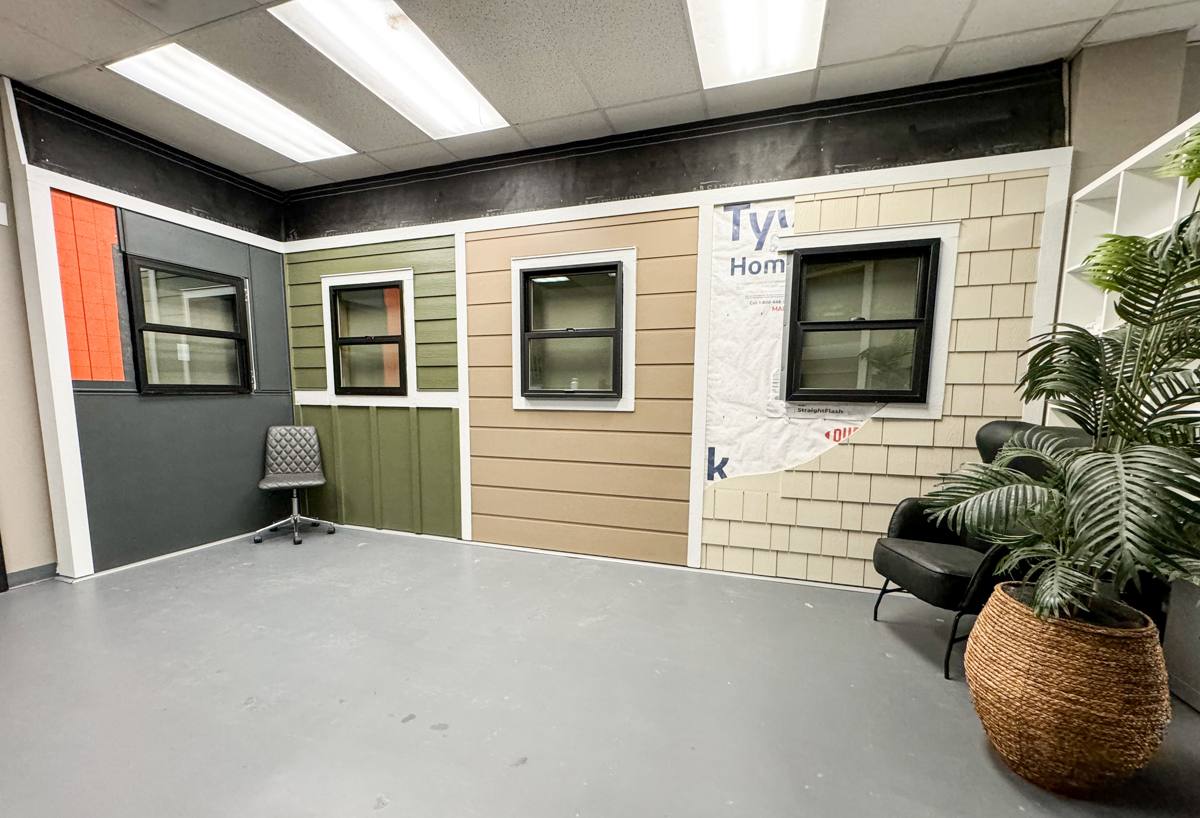
New-Construction Windows vs. Replacement Windows: Why the Difference Matters
"New-construction" windows aren't a different product line so much as a different installation method — and it's a distinction worth understanding before you hire anyone.
- New-construction (nail-fin) windows have a flange around the perimeter of the frame that gets fastened directly to the stud opening, then integrated into the wall's weather-resistant barrier before siding, stucco, or brick goes on. This is the standard approach for new builds, additions, and any project where the wall is opened down to the studs.
- Replacement (pocket) windows are sized to fit inside an existing frame that stays in place, with no access to the stud opening or wall wrap behind it.
Trying to use replacement-window methods on a new stud opening — or vice versa — is one of the more common corners cut on renovation and addition jobs. It's faster, but it skips the flashing layers that are supposed to carry water away from the wall assembly if it ever gets past the exterior finish. On a new opening, we always install for the opening we actually have.
What Manatee County Code Requires for New Window Openings
Any new window opening in Ellenton has to meet the current Florida Building Code as adopted and enforced by Manatee County, which includes design pressure ratings tied to the property's wind exposure and, for most homes here, windborne debris protection. In practice that means every window installed has to carry a valid Florida Product Approval (or Miami-Dade NOA) number matching the specific opening size and location on the house, and it has to be either impact-rated glass or paired with code-compliant shutters or panels.
Permitting and inspection are part of the job, not an afterthought. New-construction window installs typically get inspected before the wall is closed up (so the flashing and fastening are visible) and again at final. We pull permits, schedule inspections, and keep the product approval documentation on hand — that paperwork also matters later for insurance discounts and for resale, when a buyer's inspector or agent asks what's actually rated for wind.
What a Correct New-Construction Window Installation Involves
Sill Pan Flashing
Before a window ever goes into the opening, the rough sill should get a sloped, water-tight pan — either a manufactured flashing pan or one built up with flashing membrane — that directs any water that gets past the window back outside the wall instead of down into the framing. This step gets skipped more often than it should, mostly because it takes extra time and it's invisible once the window is in.
Weather-Resistant Barrier Integration
The window's nailing flange has to be woven into the house wrap or building paper in the correct shingle-lap order — sides first, then top, so water always drains over the next layer down rather than behind it. This is the single detail most responsible for whether a window leaks in a wind-driven rain event, which Ellenton gets its share of during summer storm season and any tropical system that moves through the Gulf.
Fastening, Shimming, and Sealant
The frame needs to be shimmed square and plumb before fastening — an out-of-square frame stresses the glass and hardware and can void the manufacturer's warranty. Fasteners go where the product approval specifies, at the spacing it specifies; that's not a place to save a few screws. Sealant around the flange and at the interior should be a product rated for exterior exposure and UV, since a cheap caulk will crack and open a path for water within a season or two in this sun.
Choosing the Right Window Products for Ellenton's Exposure
Frame material and glass package both affect how a window holds up here. There's no single "best" answer for every project — it depends on budget, the style of the home, and how exposed the opening is.
| Frame Material | How It Handles Local Conditions | Trade-Offs |
|---|---|---|
| Vinyl | Won't corrode from salt air; reasonable cost | Can expand/contract with heat; quality varies a lot by manufacturer |
| Aluminum | Strong, holds tight tolerances for large impact-rated openings | Conducts heat; needs a quality finish to resist salt-air corrosion over time |
| Fiberglass | Very stable in heat and UV, low expansion/contraction | Higher upfront cost |
| Wood/clad | Traditional look for certain home styles | More maintenance-sensitive in humidity and salt air; we're selective about where we recommend it |
For glass, impact-rated laminated glass is the standard we install on new openings in this area — it stays in place as a single unit even when the outer pane is struck, which keeps wind and water out of the house during a storm. It also cuts down on UV transmission and outside noise, which is a nice side benefit given how much sun Ellenton gets.
Our Process for New-Construction Window Installation
1. Site and Plan Review
We look at the rough openings (or the plans, if the wall isn't framed yet), the home's wind exposure category, and what the county's going to require for that specific address before recommending products.
2. Product Selection
We walk through frame material, glass package, and budget honestly — including where a lower-cost option is genuinely fine for a given opening and where it isn't.
3. Permitting
We pull the permit and line up the rough-in inspection so the flashing and fastening get signed off before the wall closes.
4. Installation
Sill pan, WRB integration, shimming, fastening, and sealant, done in that order, on every opening — not just the ones easiest to reach.
5. Final Inspection and Walkthrough
We confirm the county sign-off and walk the homeowner or builder through what was installed, including where the product approval labels are for future reference.
Why a Crew That Already Works in Ellenton Matters
A lot of what makes a new-construction window job go smoothly has nothing to do with the window itself. It's knowing what Manatee County's inspectors actually check for on a rough-in inspection, having a working relationship with the local permitting office so scheduling doesn't stall a build, and understanding how Ellenton's mix of new subdivisions and older infill lots affects wind exposure category on any given lot. A crew that's done this work in Manatee County — not just somewhere in Florida — isn't guessing at any of that.
It also matters when something needs a fast answer mid-build: a framer's opening is a half-inch off, a product approval doesn't quite match the opening size ordered, a delivery gets delayed. Contractors who work this area regularly have already seen most of these situations and know how to resolve them without holding up the rest of the build schedule.
A Few Things Worth Checking Before You Hire
- Ask to see the Florida Product Approval or Miami-Dade NOA number for the exact window and opening size — not just a general brochure claim.
- Confirm sill pan flashing and WRB integration are included in the written scope of work, not assumed.
- Make sure the contractor is pulling the permit and scheduling the rough-in inspection themselves.
- Check that fastener type and spacing match the product approval, not just "whatever's on hand."
- Get the warranty terms in writing — both the manufacturer's product warranty and the installer's labor warranty.
If you're planning new construction, an addition, or a full-wall rebuild in Ellenton and want windows installed the way Manatee County code and Florida weather actually demand, we're glad to take a look and walk you through your options. Reach out for a free, no-pressure estimate using the form below.