 Bradenton
 Decking Built for the Way Southgate Actually Lives Outdoors
Southgate is one of Bradenton's older, well-established neighborhoods, with mature tree canopy, mixed lot sizes, and a lot of homes that were built well before composite decking existed as an option. Many of these properties still have original wood decks, patios that were never covered, or additions where a deck was tacked on without much thought to drainage or airflow underneath. When we get a call from a Southgate homeowner about decking, it's usually because a wood deck has started splitting, graying unevenly, or feels soft in spots — and they want something that will actually hold up here instead of needing attention every year.
Composite decking has become the practical choice for this part of Manatee County because it's engineered to resist the specific things that wear a deck out fastest in our climate: constant UV exposure, humidity that never really lets a board dry out completely, wind-driven rain that gets under fascia and railings, and salt air drifting in off the coast. This page is about what that means specifically for a deck built in Southgate — not decking in general.
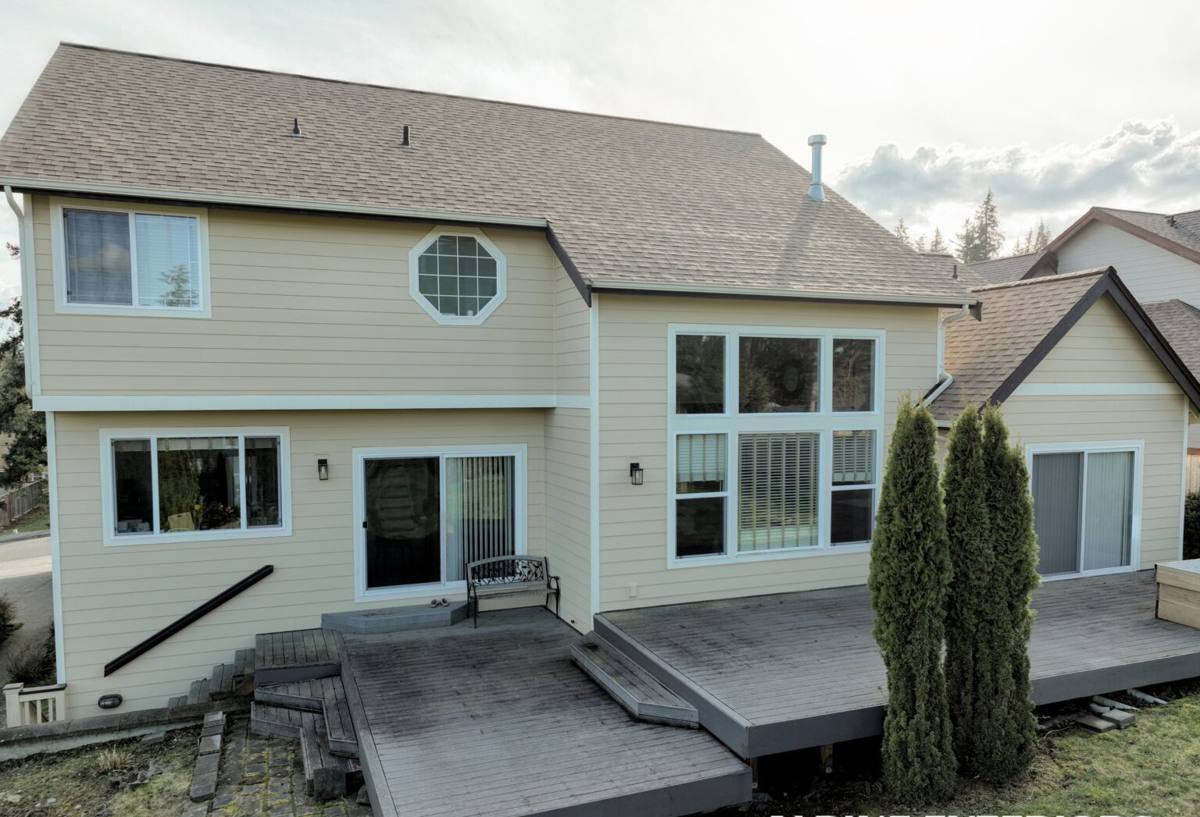
What Bradenton's Climate Does to a Deck Over Time
Every material on your deck is fighting the same four things, year-round, not just during storm season.
Intense, Year-Round UV
Florida sun is stronger and more consistent than most of the country deals with. Untreated or poorly finished wood grays and checks within a couple of seasons. Lower-grade composites without real UV stabilizers in the cap layer can fade unevenly, especially where furniture or planters create shade patterns. A deck that faces west or gets full afternoon sun in Southgate's more open lots will show fading fastest, and that's where board quality matters most.
Humidity and Moisture Cycling
Bradenton's humidity means boards rarely get a true dry-out period. Wood absorbs and releases moisture constantly, which is what drives cupping, warping, and eventually rot at fastener points. Composite boards don't absorb moisture the way wood does, but the substructure underneath — the joists, ledger board, and any framing — still can, if it isn't properly protected and ventilated.
Wind-Driven Rain and Storm Exposure
During Manatee County's storm season, rain doesn't just fall — it drives sideways under railings, fascia boards, and stair stringers. Water finds the smallest gap and sits there. This is why flashing, proper board spacing, and hardware choice matter as much as the decking material itself. A deck that looks fine on a calm day can still have water intrusion problems that only show up after a few named storms.
Salt Air
Southgate isn't right on the water, but Bradenton's proximity to Tampa Bay and the Gulf means salt-laden air still reaches inland neighborhoods, especially on windy days. Salt accelerates corrosion on fasteners, brackets, and any exposed metal hardware. Stainless or coated fasteners aren't optional extras here — they're part of building a deck that won't develop rust streaks and loosened connections within a few years.
Composite vs. Wood vs. PVC: What Actually Holds Up Here
There's no single "best" decking material for every homeowner, but the trade-offs look different once you factor in our climate. Here's how the three most common options compare for a Southgate deck project.
| Material | Maintenance | Moisture Behavior | Typical Lifespan Locally |
|---|---|---|---|
| Pressure-Treated Wood | Annual sealing/staining recommended | Absorbs and releases moisture; prone to cupping and splitting | 8-15 years before major repairs |
| Composite (Capped) | Occasional washing; no sealing or staining | Resists moisture absorption; core protected by cap layer | 25-30+ years, manufacturer-dependent |
| PVC/Cellular Decking | Occasional washing; no sealing | Fully moisture-resistant; can expand/contract more with heat | 25-30+ years, but installation-sensitive in high heat |
Most Southgate homeowners land on capped composite because it strikes the best balance: it doesn't need yearly upkeep, it handles our humidity without absorbing it, and it's less finicky to install correctly in high heat than full PVC, which can expand and contract more aggressively during Florida's temperature swings between a hot afternoon and a cooler evening.
What a Correct Composite Decking Installation Actually Involves
Composite boards are only as good as what's underneath them. A lot of decking problems we see aren't the boards failing — they're the substructure or hardware failing first.
Substructure and Framing
Joists and ledger boards need to be rated for ground contact or properly protected, sized correctly for the span, and installed level with consistent spacing. In our humidity, any framing lumber that isn't treated correctly becomes the weak point of the whole deck, even if the surface boards are top-quality composite.
Fasteners and Hardware
Given the salt air and humidity, we use corrosion-resistant fasteners and hardware rated for coastal or high-moisture environments — not standard hardware store screws. Hidden fastener systems, when used, need to be installed to the manufacturer's exact spacing to avoid board movement during heat expansion.
Drainage and Ventilation
Water needs somewhere to go. That means correct board spacing, proper slope away from the house, and ventilation underneath the deck so trapped moisture doesn't sit against framing. Decks built low to the ground or over solid patios need extra attention here, since airflow is naturally more limited.
Board Spacing for Heat Expansion
Composite boards expand and contract with Florida's heat more than people expect. Gaps that are too tight can cause buckling in peak summer; gaps that are too wide look sloppy and trap debris. This is a detail that's easy to get wrong without local installation experience.
Our Process for a Southgate Composite Decking Project
The steps don't change much from job to job, but the details we pay attention to at each step are shaped by what we've seen fail on decks in this area.
- On-site assessment — we look at the existing structure (if there is one), grading, drainage, sun exposure, and any moisture or rot already present.
- Honest scope and material discussion — we walk through composite board options, color and fade performance, and realistic cost ranges based on your deck's size and complexity.
- Permitting — Manatee County and the City of Bradenton have specific requirements for decking, especially for elevated structures and railings; we handle this so nothing gets flagged later.
- Substructure build or repair — framing, ledger attachment, and hardware selected for our humidity and salt exposure.
- Composite board installation — correct spacing, fastening, and finishing details like stair nosing and railing integration.
- Final walkthrough — we go over care basics and answer questions before we consider the job done.
Permits and Code Considerations in Manatee County
Decking work in Bradenton, including Southgate, generally requires a permit once you're dealing with an elevated structure, structural attachment to the house, or railings above a certain height. Requirements can also touch on setback distances from property lines and, depending on the property, flood zone considerations given how much of Manatee County sits at low elevation near water bodies and drainage canals. Skipping permitting on a deck rebuild is one of the more common issues we run into with older Southgate homes — it can complicate a future home sale or insurance claim even if the work itself was done well. We pull the correct permits as part of the job rather than leaving that step to the homeowner.
Choosing the Right Composite Board for This Climate
Not all composite decking is built the same, and the differences matter more in Florida than in milder climates. Here's what we walk homeowners through when picking a product:
- A full cap (capped on all four sides) rather than a partial cap, for better moisture and stain resistance at cut ends
- Manufacturer UV and fade warranty terms, and whether fade is covered separately from structural defects
- Board color — darker boards run hotter underfoot and can accelerate heat-related expansion; lighter and mid-tone colors tend to perform more predictably here
- Whether the hidden fastener system is rated for the board's specific expansion range
- Slip resistance rating, especially for decks that will regularly get wet from rain or pool splash-out
- Warranty transferability if you plan to sell the home down the road
We don't push a single brand for every project. The right board depends on your budget, how much sun the deck gets, and what you want it to look like in ten years, not just on day one.
Why Hiring a Crew That Already Works in Southgate Matters
A composite deck installed correctly for a dry inland climate isn't necessarily installed correctly for coastal Manatee County. The difference shows up in hardware choice, fastener spacing tolerances for heat, framing protection against humidity, and drainage planning for our rain patterns. Crews who work Southgate and the surrounding Bradenton neighborhoods regularly already know which details can't be shortcut here, what the county's permitting process expects, and how local soil and grading conditions typically affect deck framing. That local pattern recognition is often the difference between a deck that needs attention again in five years and one that doesn't.
If you're considering a new composite deck or replacing an aging wood deck in Southgate, we're happy to take a look and give you a straightforward, no-pressure estimate — no obligation, just an honest read on what your project actually needs. Use the form below to get started.