 Bradenton
 Siding Replacement in Rosedale, Built for Bradenton's Climate
Rosedale sits inland enough from the coast to feel a little sheltered, but it still takes the full brunt of what Manatee County weather delivers every year: tropical-storm and hurricane-force wind gusts, wind-driven rain that gets pushed sideways into wall systems, relentless UV exposure nearly twelve months a year, and salt-laden air that drifts inland off Tampa Bay and the Gulf. Siding here isn't just a cosmetic choice — it's the first line of defense for the wall assembly behind it. When we replace siding on a Rosedale home, we're not just swapping out old panels for new ones. We're rebuilding a weather barrier system that has to perform through storm season after storm season without babysitting.
This page is specifically about siding replacement for homes in and around Rosedale. If your siding is cracking, delaminating, holding moisture, or just past its service life, here's what a correct replacement actually requires in this climate, what our process looks like, and why it matters that the crew doing the work already knows this neighborhood.
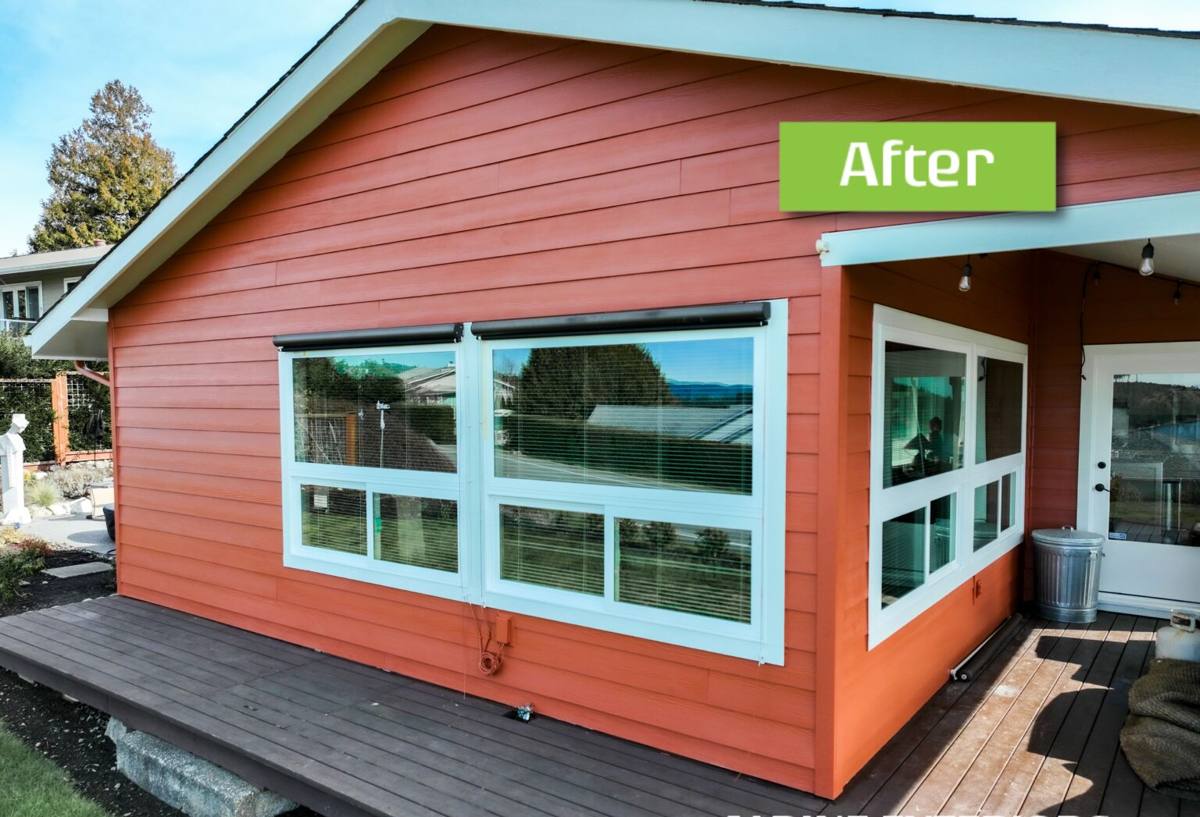
What Bradenton's Weather Actually Does to Siding
Hurricane-Force Wind Loads
Manatee County building code requires exterior materials to be rated and fastened for significant wind pressure, and for good reason. Wind doesn't just push on siding — it gets underneath loose panels, behind poorly sealed joints, and pries fasteners out over repeated storm cycles. Siding that looked fine in year one can fail catastrophically in a single wind event if it wasn't installed to the correct fastening schedule for this wind zone.
Year-Round UV Exposure
Florida sun is harder on exterior materials than most homeowners realize, and Bradenton gets more of it than almost anywhere else in the country. UV breaks down pigments, softens caulking, and accelerates the breakdown of any siding material that isn't specifically engineered for it. Faded, chalky, or brittle siding on a Rosedale home is almost always a sun problem before it's an age problem.
Wind-Driven Rain and Moisture
Rain that falls straight down is easy to shed. Rain that's being pushed sideways at 40-60 mph finds every gap, seam, and fastener hole in a siding system. Once moisture gets behind the cladding, it doesn't dry out quickly in Florida's humidity — it sits against sheathing and framing, which is where rot, mold, and structural damage actually start.
Salt Air Corrosion
Rosedale isn't beachfront, but salt air travels well inland off Tampa Bay, especially on onshore wind days. Salt accelerates corrosion on fasteners, trim flashing, and any metal components in the wall assembly, and it degrades certain siding finishes faster than manufacturers' standard warranties account for.
Signs Your Rosedale Home's Siding Needs Replacing
Some siding problems are obvious. Others hide behind paint until they're expensive. Here's what we look for during an inspection:
- Visible cracking, splitting, or buckling panels, especially on south- and west-facing walls
- Soft or spongy spots when pressed — usually a sign of moisture damage behind the siding
- Peeling or bubbling paint that keeps coming back no matter how often it's repainted
- Warping, bowing, or gaps opening up between panels or at corner trim
- Visible fastener corrosion or streaking below nail heads
- Rising energy bills that suggest the wall assembly isn't insulating or sealing the way it should
- Siding that's simply reaching the end of its rated service life, even if it still looks okay from the curb
Any one of these on its own might just need a repair. Several at once, or damage that shows up in multiple places on the same wall, usually means the underlying moisture barrier has failed and a full replacement is the honest recommendation.
What a Correct Siding Replacement Actually Involves
Full Tear-Off and Substrate Inspection
We don't install new siding over old. A proper replacement starts with stripping the wall down to the sheathing so we can actually see what's underneath — soft wood, rot, old water staining, or framing damage that's been hidden for years. Skipping this step is how a homeowner ends up with brand-new siding over a rotting wall.
Moisture Barrier and Flashing
Once the substrate is inspected and any repairs are made, a correctly lapped weather-resistant barrier goes on, along with proper flashing at every window, door, and penetration. This is the layer that actually keeps wind-driven rain out of the wall — the siding itself is the second line of defense, not the first.
Fastening Schedule for This Wind Zone
Fastener type, spacing, and placement all change based on local wind pressure requirements. This isn't a place to eyeball it. Under-fastened siding is one of the most common reasons homes lose panels in a storm that a properly installed neighbor's house rides out fine.
Finish and Sealant Details
Joints, seams, and trim transitions get sealed with products rated for Florida's UV and moisture conditions — not general-purpose caulk that will crack and fail within a couple of seasons.
Why We Install Only James Hardie Fiber Cement
We don't install vinyl, LP SmartSide, primed spruce or cedar, or other fiber cement brands. That's a deliberate standard, not a sales preference, and it's worth explaining honestly rather than just asserting it.
Vinyl is affordable and low-maintenance, but it's a petroleum-based product that softens and can warp under sustained high heat and direct sun exposure — a real concern on west-facing Rosedale walls — and it has real limits in high wind events because of how it's engineered to hang rather than fasten rigidly. Wood-based products like primed spruce, cedar, and OSB-based composites like LP SmartSide can perform well when maintained perfectly, but Florida's humidity and rain volume punish any lapse in caulking or paint upkeep, and moisture intrusion at cut edges is a recurring failure point. Other fiber cement brands exist, but we've standardized on James Hardie specifically because of its HardieZone engineering, factory-applied ColorPlus finish, and the strength of its transferable warranty when installed to Hardie's own specifications.
| Material | Where it earns its reputation | What it costs you in this climate |
|---|---|---|
| Vinyl | Low upfront cost, minimal maintenance | Can warp under sustained heat/UV; limited wind performance versus rigid-fastened alternatives |
| Primed wood / cedar | Natural appearance, repairable | High maintenance burden; vulnerable to moisture and rot without constant upkeep |
| LP SmartSide / OSB composite | Workable cost, wood-like look | Sensitive to cut-edge and seam moisture intrusion in high-humidity, high-rain climates |
| James Hardie fiber cement | Non-combustible, engineered for high-wind/high-moisture climates, factory finish | Higher installed cost; requires correct fastening and installation to perform to spec |
James Hardie's HZ5 product line is specifically engineered for climates like ours — hot, humid, hurricane-exposed — and it's non-combustible, which matters in a state where wildfire and lightning-strike ignition risk is real. The ColorPlus factory finish is baked on under controlled conditions, which holds color and resists fading far better than field-applied paint exposed to Florida sun from day one. None of that means Hardie is maintenance-free or bulletproof — it still has to be installed correctly, with the right fasteners, clearances, and sealant details, or it won't deliver the performance it's rated for. That correct installation is the other half of the equation, and it's exactly what our process is built around.
Our Rosedale Siding Replacement Process
- On-site inspection. We walk the exterior, check for moisture damage, and give you a straight answer on whether you need a repair or a full replacement.
- Written estimate. Clear scope, clear pricing, no pressure to decide on the spot.
- Tear-off and substrate check. Old siding comes off, sheathing gets inspected, and any rot or damage gets addressed before anything new goes up.
- Weather barrier and flashing install. Properly lapped and sealed at every window, door, and penetration point.
- James Hardie installation. Fastened to the correct schedule for this wind zone, with proper clearances and joint treatment.
- Final walkthrough. We go over the finished work with you before we consider the job done.
What Affects the Cost of Your Siding Replacement
Every home is different, so we don't quote pricing sight unseen — but these are the factors that actually move the number:
| Factor | Why it matters |
|---|---|
| Home size and wall square footage | More surface area means more material and labor |
| Extent of substrate damage found at tear-off | Rotted sheathing or framing repairs add scope beyond siding alone |
| Siding profile and trim complexity | Multiple reveals, accent trim, and detailed corners take more time than a simple lap pattern |
| Number of stories and access difficulty | Two-story walls and tight lot lines require more equipment and labor time |
| Existing paint/finish removal needs | Full tear-off to bare sheathing is more involved than a straightforward panel swap |
We'll walk your specific home and give you real numbers based on what we actually find, not a generic per-square-foot estimate that ignores the condition of your walls.
Why a Crew That Already Works Rosedale Matters
Rosedale includes HOA-governed sections where exterior changes, including siding color and material, often go through an architectural review process before work begins. A crew that's worked in the neighborhood before generally has a better sense of what that review process looks like and how to plan a project timeline around it, which saves you from delays that catch first-time-in-the-area contractors off guard.
Beyond HOA logistics, local experience means understanding Manatee County's permitting requirements and wind zone standards without a learning curve on your project, and having a realistic sense of how Bradenton's weather patterns — sudden afternoon storms, extended dry spells, peak hurricane season timing — should shape scheduling. It also means being reachable afterward. Siding is a long-term investment, and a crew based in the area is the one that's still around locally if a warranty question comes up five years down the road.
If your Rosedale home's siding is showing its age or storm wear, we're happy to take a look and give you a straight, no-pressure assessment of what it actually needs. Fill out the form below for a free estimate.