 Bradenton
 Building Decks for Rosedale Homes
Rosedale is one of the more established planned communities on Bradenton's east side, and the homes here run the gamut from golf-course lots to lakeside properties with mature landscaping. Whatever the lot looks like, the deck sitting behind a Rosedale home has to survive the same Manatee County weather every other outdoor structure in the area deals with: long stretches of intense UV, sudden wind-driven downpours, and the kind of humidity that never really lets wood dry out completely between storms. We build decks in Rosedale on a regular basis, and we've learned what holds up here and what doesn't.
This page is specifically about deck building for Rosedale properties — not a general overview of decks everywhere. If you live in this neighborhood and you're weighing a new deck, a rebuild, or an addition to an existing one, the details below reflect what actually matters for this location.
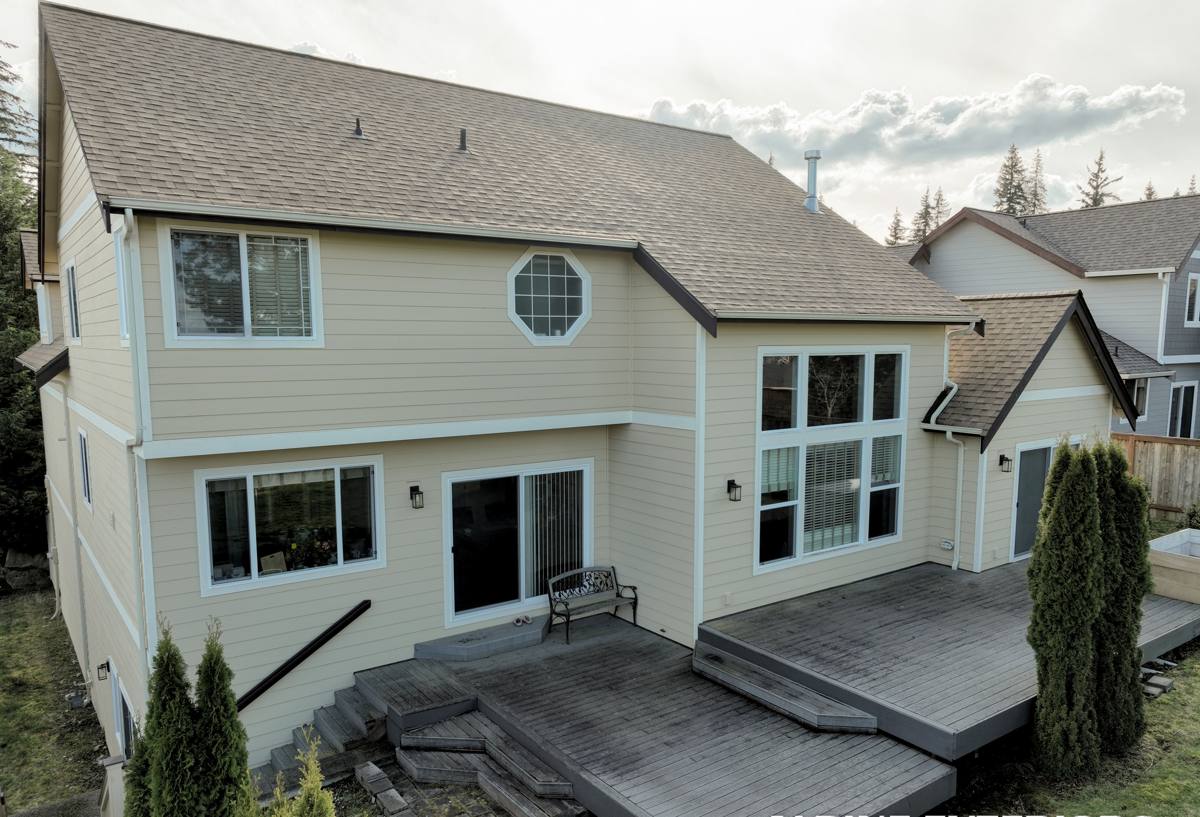
What Bradenton's Climate Does to a Deck
A deck in Rosedale isn't just outdoor furniture — it's an exterior structure exposed to the same conditions that wear down roofs and siding. A few things stand out:
UV Exposure
Florida's sun is close to overhead for a large part of the year, and it's relentless on horizontal surfaces like decking boards. UV breaks down the lignin in wood fibers and degrades the resins and pigments in composite decking over time. Boards that aren't rated or finished for this level of sun exposure gray, chalk, or fade unevenly faster than homeowners expect.
Wind-Driven Rain and Humidity
Bradenton gets its share of sudden, heavy rain, often blown sideways by gusts. That means water gets driven into joints, fastener holes, and end grain that a straight-down rain would never reach. Combined with our humidity, any spot where water collects and can't dry out becomes a starting point for rot, mold, or fastener corrosion.
Hurricane-Force Wind Loads
Manatee County sits in a hurricane-prone stretch of the Gulf Coast, and a deck attached to a house is a structural element, not just a platform. Ledger attachment, post spacing, and railing anchoring all need to account for uplift and lateral wind loads, not just the static weight of people standing on it.
Salt Air
Rosedale isn't right on the water, but Bradenton's proximity to Tampa Bay and the Gulf means salt-laden air still travels inland and settles on exposed metal. Fasteners, brackets, and hardware that aren't rated for coastal exposure corrode faster here than the same products would in a drier, inland climate.
What a Correct Deck Build Involves Here
A deck that's going to hold up in this environment starts below the decking boards, not at them. The parts homeowners don't see are the parts that determine whether the deck is still solid in ten years.
- Ledger attachment: Properly flashed and lag-bolted or through-bolted into the house framing, not just nailed — this is the connection point that carries most of the structural load and the most common failure point on poorly built decks.
- Footings sized for local soil: Footing depth and diameter need to match Manatee County soil conditions and frost-free requirements, set below grade with proper concrete coverage.
- Corrosion-resistant fasteners and hardware: Hot-dip galvanized or stainless connectors, joist hangers, and screws rated for ground contact and coastal exposure — mismatched or bargain-grade hardware is one of the fastest ways a deck fails early here.
- Proper flashing at the house connection: Keeps wind-driven rain from getting behind siding or into the rim joist where it can rot unseen for years.
- Board spacing and fastening for expansion: Both wood and composite boards move with heat and moisture; gaps and fastening patterns need to account for that movement so boards don't cup, buckle, or split.
- Railing and post anchoring rated for wind uplift: Not just code minimum, but installed with an eye toward the gusts that come through during storm season.
Decking Material Choices for This Area
There's no single "best" decking material — the right choice depends on how much upkeep a homeowner wants to do and what budget they're working with. Here's how the common options compare for a Rosedale application specifically.
| Material | UV / Fade Behavior | Moisture Behavior | Maintenance |
|---|---|---|---|
| Pressure-treated pine | Fades and grays without regular sealing | Prone to cupping/splitting if not sealed and drained well | Needs re-sealing every 1–2 years in this climate |
| Composite decking | Fade-resistant pigments, but quality varies by product line | Doesn't rot, but poor drainage under boards can still trap moisture and promote mildew on the surface | Periodic cleaning; no sealing or staining |
| Tropical hardwoods (e.g., ipe) | Naturally UV- and rot-resistant, but will gray without oiling | Very dense, sheds water well when properly installed | Oiling every 1–2 years to maintain color; otherwise low |
| PVC decking | Strong UV stability, minimal fading | Fully moisture-resistant, doesn't absorb water | Lowest maintenance of the group; occasional cleaning |
We'll walk through these trade-offs with you honestly rather than steering everyone toward the highest-margin product. A lot of it comes down to how the deck will be used, whether it's shaded or in full sun most of the day, and how much maintenance you actually want to commit to.
Why We're Selective About Certain Products
Not every decking product on the market is built for a climate like ours. Some lower-tier composite boards use core materials or capping that weren't engineered for constant high humidity and intense sun, and they can show streaking, surface degradation, or fastener pull-through years earlier than a better-engineered product. Our standard is to spec materials and connectors with a track record in Gulf Coast conditions specifically, even when that means steering a homeowner away from the cheapest board on the shelf. It's not that other products are junk everywhere — it's that Bradenton's combination of sun, humidity, and salt air is a tougher test than most decking is designed around.
Our Process for a Rosedale Deck Project
- On-site assessment: We look at the house's framing, the lot's drainage and grade, sun exposure, and how the deck will connect to existing structure.
- Design and material selection: We talk through layout, railing style, and decking material based on your budget, maintenance preference, and how the space will be used.
- Permitting: Deck construction in Manatee County typically requires a permit, and attachment details, footing depth, and railing height all need to meet current code. We handle this as part of the project.
- Structural build: Footings, framing, ledger attachment, and flashing go in first — this is the stage that determines the deck's long-term durability, even though it's invisible once finished.
- Decking, railing, and finish work: Boards, railings, stairs, and any lighting or fascia details are installed with attention to fastening patterns and drainage.
- Final walkthrough: We go over the finished deck with you, including any maintenance recommendations specific to the material you chose.
Repairs vs. Full Rebuilds
Not every aging deck in Rosedale needs to be torn out entirely. When we're called out to look at an older deck, we're checking a specific set of things to decide whether repair makes sense or whether a rebuild is the more honest recommendation.
- Soft or spongy spots in decking boards, which usually indicate rot has already started underneath
- Rust staining or corrosion around fasteners and connectors
- Movement or looseness at the ledger-to-house connection
- Wobble in railing posts, which is both a comfort and safety issue
- Gaps or separation where the deck meets the house, which points to a flashing or structural problem
- Visible cracking or checking in footings
If the framing and footings are sound and the issues are limited to surface boards or railings, a repair or partial resurfacing can extend the life of the deck significantly. If the ledger connection or footings are compromised, patching the surface just delays a bigger problem — and we'll tell you that directly rather than doing cosmetic work over a structural issue.
Why a Crew That Already Works Rosedale Makes a Difference
Deck codes, permitting requirements, and soil conditions aren't identical from one county to the next, and a crew that's already pulled permits and built decks in Manatee County isn't guessing at what the local building department expects. Beyond the permitting side, a crew that regularly works in Rosedale has a working sense of the neighborhood's typical lot layouts, drainage patterns, and HOA considerations, which tends to make the whole process — from initial design through final inspection — move more smoothly than starting from scratch on every project.
There's also a practical service-life argument: a deck built or repaired by a crew familiar with Bradenton's specific combination of UV, wind-driven rain, and salt air is more likely to have the right hardware, fastening details, and material choices from day one, instead of relying on generic specs that work fine in a milder climate but underperform here.
Maintenance That Actually Extends a Deck's Life Here
Whatever material you choose, a little regular attention goes a long way in this climate. A basic seasonal routine we recommend to Rosedale homeowners:
- Sweep off leaves, pollen, and debris regularly so moisture doesn't sit trapped against boards
- Check fastener heads periodically for rust staining, especially after storm season
- Inspect the ledger board area and any flashing for gaps or signs of water intrusion
- Reseal or oil wood decking on the schedule appropriate to that species — don't wait until it's already gray and dry
- Rinse salt residue off hardware and railings during dry spells, particularly after windy weather off the bay
- Keep an eye on drainage under the deck so water isn't pooling against posts or footings
Get a Straightforward Look at Your Deck Project
If you're planning a new deck in Rosedale, considering a rebuild, or just want an honest read on whether your current deck needs attention, we're happy to come take a look. There's no pressure and no obligation — just a straight assessment from a crew that already knows what this climate does to decks in this neighborhood. Use the form below to request a free estimate.