 Bradenton
 Why Lakewood Ranch Roofs Wear Out Faster Than the Manufacturer's Estimate
Every asphalt shingle and metal panel sold in the United States carries a warranty life that assumes a moderate climate. Lakewood Ranch does not get a moderate climate. Between hurricane-force wind events, year-round UV exposure that most northern states only see for three months, wind-driven rain that finds its way under poorly sealed flashing, and salt-laden air pushing in from the Gulf, roofs here age on a compressed timeline. A shingle roof rated for 25 years in a catalog might realistically deliver 15-18 years of sound performance in Manatee County if it was installed correctly, and considerably less if it wasn't.
That gap between rated life and real life is the reason we treat every replacement as a system, not a product swap. The shingles or panels matter, but the deck underneath, the underlayment, the flashing details, and the ventilation all determine whether a roof actually reaches its expected lifespan in this climate or fails early from the inside out.
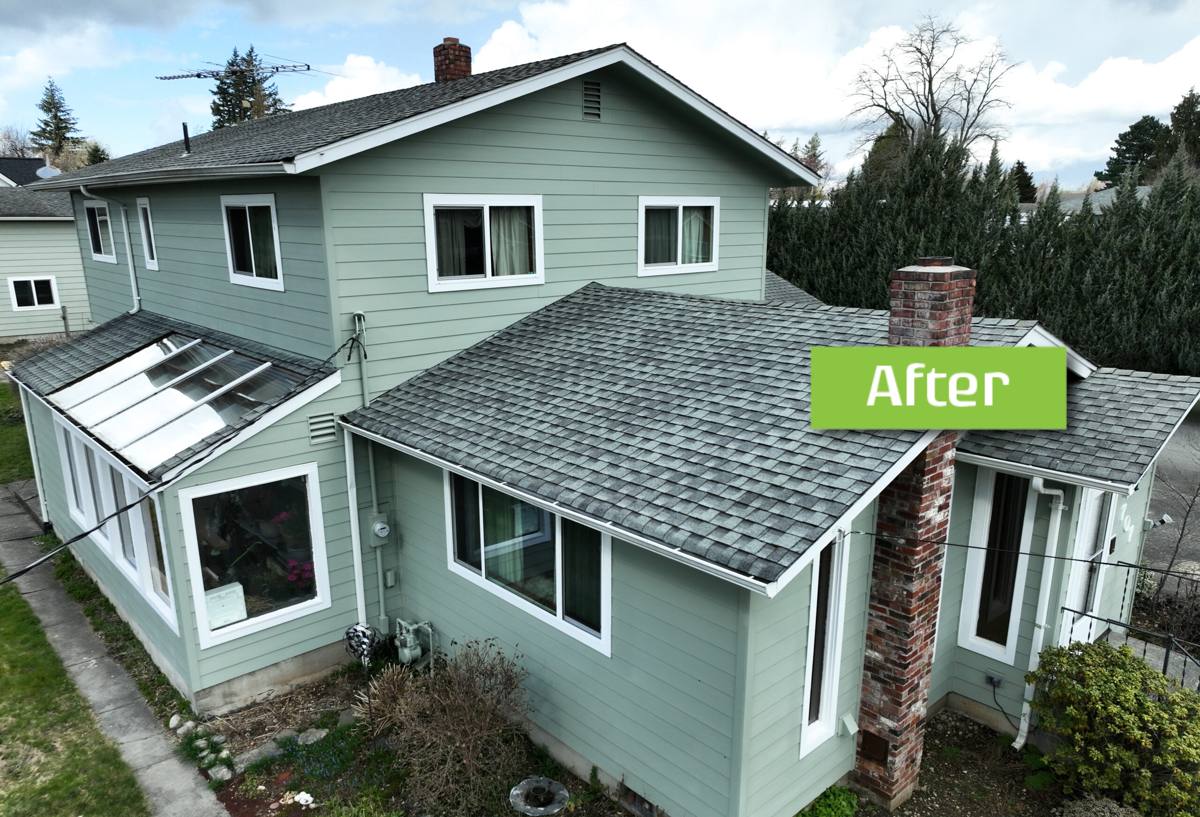
Signs a Lakewood Ranch Roof Needs Replacement, Not Another Repair
Homeowners often call us for a repair and learn during the inspection that the roof has moved past the point where patching makes financial sense. Here's what we look for when making that call honestly, rather than just recommending the more expensive option by default.
- Granule loss heavy enough to expose the black asphalt mat on multiple slopes, not just one storm-damaged section
- Shingles that have gone brittle and crack when lifted, a sign UV exposure has broken down the asphalt oils
- Soft spots or visible sag in the decking, usually found from the attic side during inspection
- Repeated leak points in different locations after previous repairs, suggesting the underlayment has failed broadly
- Flashing that has separated from repeated thermal expansion and contraction cycles
- A roof already past 15-18 years old with a hurricane in recent memory that it "survived" but likely took hidden fastener or seal damage from
If a roof shows one or two of these issues in isolation, a repair is often still the right call. When several show up together, replacement almost always costs less over a 5-10 year horizon than continuing to chase leaks.
The Insurance Angle
In Manatee County, insurance carriers have gotten considerably stricter about roof age and condition since the last round of major storms affected Florida's coast. A roof nearing the end of its service life can trigger non-renewal notices or steep premium increases even if it hasn't leaked yet. Replacing proactively, on your own timeline rather than after storm damage forces the issue, generally puts you in a stronger negotiating position with your carrier.
What a Correct Roof Replacement Actually Involves
A roof replacement is not simply stripping old shingles and nailing down new ones. Done correctly for this climate, it involves several layers that each do a specific job.
Full Tear-Off and Deck Inspection
We remove the existing roofing material down to the deck on every replacement — no exceptions, no roofing over an existing layer. That's the only way to actually see the plywood or OSB decking underneath and confirm it's still structurally sound. Any deck sections showing rot, delamination, or fastener pull-through get replaced before anything new goes down. Skipping this step is the single most common shortcut in the industry, and it's the one most likely to cause problems five years later.
Underlayment and Secondary Water Barrier
Florida Building Code requires a secondary water barrier on most new roof installations in our wind zone, and we treat it as standard practice regardless of what the code minimum technically requires. This usually means self-adhering underlayment at the eaves, valleys, and penetrations, with synthetic underlayment across the field. The idea is simple: if wind-driven rain ever gets past the outer roofing material during a storm, there's still a sealed layer between the water and your living space.
Flashing at Every Penetration
Chimneys, plumbing vents, skylights, and wall-to-roof transitions are where roofs actually fail. New step flashing, counter-flashing, and pipe boots go in at every one of these points rather than reusing old flashing to save time.
Ventilation
Attic ventilation gets checked and corrected as part of the job, not treated as a separate upsell. Poor ventilation traps heat and humidity, which shortens shingle life from underneath and can void manufacturer warranties outright.
Material Options for Lakewood Ranch Homes
Lakewood Ranch includes a wide mix of housing — from HOA-governed communities with specific architectural guidelines to standalone properties with more flexibility. Material choice depends on your community's rules, your budget, and how long you plan to stay in the home.
| Material | Typical Lifespan Here | Wind Performance | Considerations |
|---|---|---|---|
| Architectural asphalt shingle | 15-20 years | Good, when rated and installed for high-wind zones | Most common choice; wide color range; often required or preferred by HOAs |
| Standing seam metal | 30-40+ years | Excellent | Higher upfront cost; strong resale value; some HOAs restrict panel style or color |
| Concrete or clay tile | 30-50 years | Excellent for the tile itself; failures usually occur at underlayment or fastening | Heavier — requires structural check; underlayment life often shorter than the tile itself |
We'll walk through which of these your HOA (if applicable) actually allows before we ever talk product specifics — no point designing a roof around a material your architectural review board will reject.
Wind Rating, Permitting, and Florida Building Code
Manatee County enforces Florida Building Code wind provisions, which for this region typically require materials and fastening patterns rated for the applicable wind speed zone. This isn't paperwork we treat casually — under-rated materials or shortcut fastening patterns are exactly what separates a roof that stays put during a hurricane from one that doesn't.
Every full replacement we perform is permitted through Manatee County, inspected at the required stages, and closed out properly. An unpermitted roof can create real problems at resale, since a buyer's inspector or their insurance carrier will ask for permit history on any roof less than a few years old.
Wind Mitigation Inspection
Once a new roof is complete, it's worth having a wind mitigation inspection done. The report documents things like roof shape, deck attachment, and roof-to-wall connections, and it can qualify you for meaningful discounts on your homeowners insurance premium in a county where premiums are already a significant cost of ownership.
Our Replacement Process, Start to Finish
- Inspection and estimate — we assess the current roof, decking condition (where visible), attic ventilation, and any HOA or code requirements specific to your property.
- Material selection — we go over options that fit your budget, your community's rules, and your timeline for staying in the home.
- Permitting — we pull the required Manatee County permit before work begins.
- Tear-off — full removal of existing material and disposal.
- Deck repair — any compromised decking is replaced and documented for you.
- Underlayment and flashing — secondary water barrier, synthetic underlayment, and new flashing at every penetration.
- Installation — shingles, metal panels, or tile installed to manufacturer specification and code-required fastening patterns.
- Cleanup and magnetic nail sweep — property, driveway, and landscaping cleared of debris and stray fasteners.
- Final inspection — county inspection and our own walkthrough with you before we consider the job closed.
Timeline and What to Expect During the Project
Most single-family roof replacements in the Lakewood Ranch area take one to three days of active work once permitting and material delivery are complete, weather permitting — literally. Florida's summer storm pattern means we build schedule flexibility into every job rather than promising a hard date and then fighting an afternoon thunderstorm. Expect noise and vibration throughout the workday, a dumpster or trailer staged in the driveway, and a thorough cleanup pass at the end of each day, not just at project completion.
If you're in an HOA community, we handle submission of any required architectural review paperwork on your behalf where the community allows it, so the material and color you choose don't become a surprise problem after the roof is already on.
Why Hiring a Crew That Already Works in Lakewood Ranch Matters
Roofing crews who mainly work outside this immediate area often underestimate two things: the density and specificity of HOA architectural requirements in planned communities like this one, and the actual permitting workflow through Manatee County. Neither is difficult once you've done it repeatedly, but both cause delays and rework for crews encountering them for the first time on your project.
There's also a practical service argument. A crew that regularly works Lakewood Ranch already understands which shingle profiles and metal finishes are common here, keeps working relationships with the same county inspectors, and can respond faster if a warranty question or storm-damage claim comes up after the job is done. That local continuity matters more with roofing than with almost any other exterior trade, since a roof's failure points don't usually show up until years after installation.
Maintaining a New Roof in Manatee County's Climate
A correctly installed roof still benefits from basic upkeep in this climate. A short annual routine goes a long way toward hitting the full expected lifespan.
- Have gutters cleared before hurricane season each year so water isn't backing up under the roof edge
- Trim back overhanging tree limbs that drop debris or create constant shade and moisture on one section of roof
- Schedule a visual inspection after any named storm that produces sustained winds over your roof's rated threshold
- Watch for granule accumulation in gutters, which signals accelerated shingle wear
- Keep attic ventilation paths clear of stored items or insulation that's shifted over penetrations
- Address any interior ceiling staining immediately rather than waiting to see if it "dries out"
Getting a Straight Answer on Your Roof
Not every roof that looks rough from the ground actually needs full replacement, and not every roof that looks fine from the street is actually sound underneath. The only way to know which situation you're in is a proper inspection, not a guess based on age alone. If you're weighing repair versus replacement, or your roof is simply getting close to the end of its realistic lifespan for this climate, we're glad to take a look and give you a straight answer along with a free, no-pressure estimate using the form below.