 Bradenton
 Roof Repair Built Around Village of the Arts
Village of the Arts sits close to the heart of Bradenton, and like a lot of established Manatee County neighborhoods, it's a mix of older bungalow-style homes, converted studio spaces, and updated properties sitting on smaller in-town lots with mature tree canopy overhead. That combination changes what a roof repair actually needs to accomplish here compared to a newer subdivision on the edge of the county. Older roof decks, a wider range of roofing materials from different renovation eras, and tree limbs close to the roofline all factor into how we diagnose and fix a problem correctly the first time.
We repair roofs in this part of Bradenton regularly, which means we're not guessing at what these homes are dealing with. We've seen how humidity and shade from tree cover affect shingle life differently than it does on an open lot, and we know that a lot of the housing stock here has been re-roofed, patched, or added onto more than once over the decades. A good repair starts with understanding that history, not just patching the spot that's leaking today.
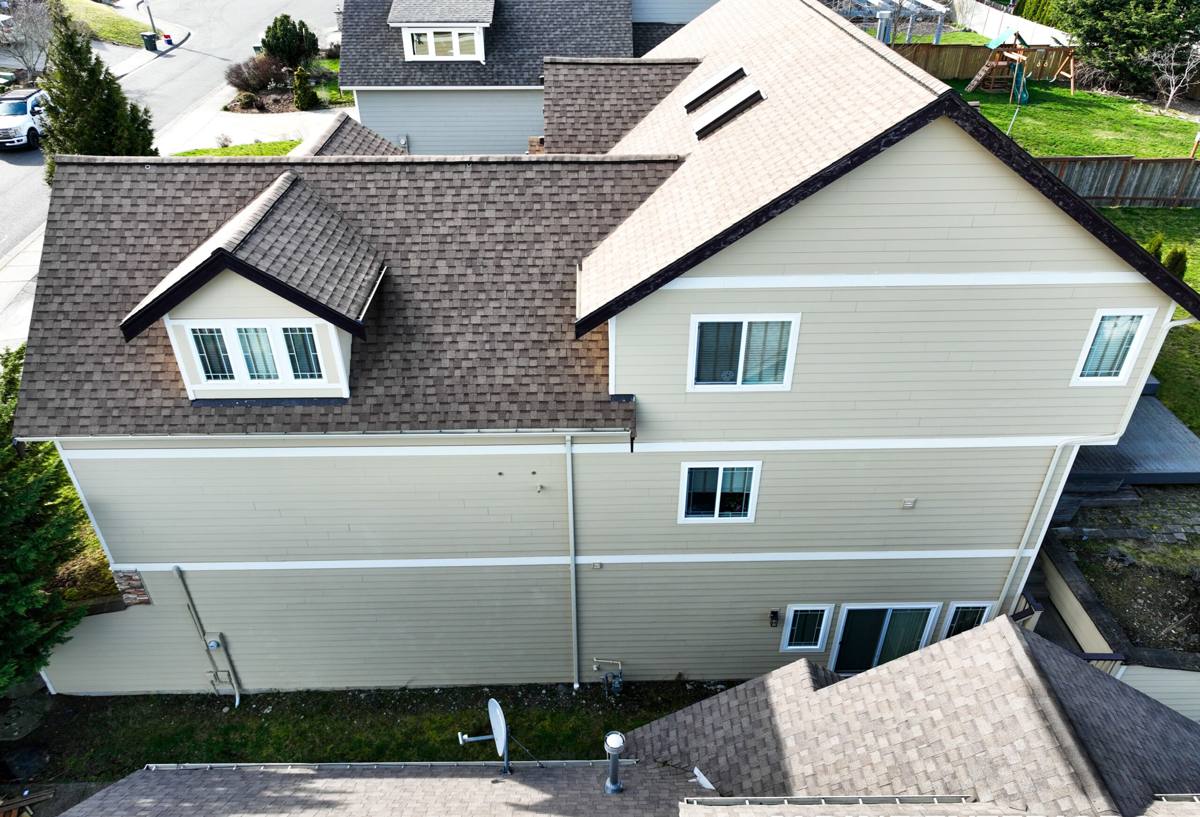
What Bradenton's Climate Does to a Roof
Manatee County roofs take a beating year-round, and Village of the Arts is no exception. A few things stack up over time:
- Hurricane-force winds lift shingle edges, crack tile, and loosen flashing — damage that's not always obvious from the ground.
- Intense, near-constant UV exposure bakes asphalt shingles brittle and fades and chalks tile and metal finishes faster than in most other parts of the country.
- Wind-driven rain during summer storms and tropical systems finds every gap in flashing, underlayment, and vent boots — this is the number one cause of interior leaks we get called out for.
- Salt air drifting in off Tampa Bay and the Gulf accelerates corrosion on nails, flashing, vents, and any exposed metal fasteners.
Add mature tree canopy — common in this older section of Bradenton — and you get extra debris load, more moisture retention on the roof surface, and granule loss where branches rub during wind events. None of this means a roof is doomed; it means repairs need to account for cumulative wear, not just the one visible symptom.
Signs You Need Roof Repair, Not Just a Patch
Homeowners usually call us for one of two reasons: they see a stain on a ceiling, or they had someone up on the roof after a storm who said something needs attention. Here's what we actually look for:
- Curling, cupping, or missing shingles, especially near ridges and edges where wind uplift concentrates
- Cracked or slipped tiles, or tiles that sound hollow or loose when checked
- Rusted, lifted, or separated flashing around chimneys, skylights, and roof-wall intersections
- Soft or discolored roof decking visible from the attic side
- Granules collecting in gutters — a sign asphalt shingles are past their protective life
- Ceiling stains, especially ones that reappear after every heavy rain
- Visible daylight through the roof deck in the attic
Any one of these can be an isolated fix. Several together usually mean the roof has multiple stress points and needs a broader assessment before we start pulling materials.
Why "It's Just a Small Leak" Is Rarely the Whole Story
Water doesn't travel in a straight line once it's under a roof covering. A stain on a bedroom ceiling might trace back to a failed pipe boot ten feet away, or flashing that's been letting moisture in slowly for a season or two. We trace the actual path of the water before we quote a repair — patching drywall or the visible leak point without finding the entry point just means the same call again after the next storm.
What a Correct Roof Repair Involves
A repair done right isn't just replacing what's broken — it's making sure the surrounding roofing system still works as a unit. Depending on what we find, that can include:
- Diagnosis first. We inspect the roof surface, flashing, penetrations, and attic (where accessible) to find the actual source, not just the symptom.
- Removing and replacing damaged materials — shingles, tile, or metal panels — matched as closely as possible to what's already on the roof.
- Checking and resealing flashing around chimneys, vents, skylights, and roof-to-wall transitions, since this is where most Bradenton leaks actually start.
- Inspecting the decking underneath the damaged area for soft spots or rot before new material goes back down — covering compromised decking is how small leaks turn into structural problems.
- Restoring proper drainage and ventilation in the repaired area so trapped moisture doesn't cause a repeat issue.
We also check adjacent areas of the roof while we're up there. If we see something else developing — a fastener starting to back out, a tile with a hairline crack — we'll tell you about it honestly, even if it's not part of the original repair call. That's a maintenance conversation, not an upsell pitch.
Repair Approach by Roof Type
Village of the Arts has a genuine mix of roofing materials given the age and renovation history of the neighborhood. The right repair method depends on what's already up there.
| Roof Type | Common Failure Point in This Climate | Repair Approach |
|---|---|---|
| Asphalt shingle | UV brittleness, wind uplift at edges, granule loss under tree cover | Section replacement with matched shingles, resealed flashing, deck check underneath |
| Concrete or clay tile | Cracked or slipped tiles, deteriorated underlayment beneath intact tile | Careful tile removal and reset, underlayment repair, individual tile replacement |
| Metal panel | Fastener corrosion from salt air, seam and flashing separation | Fastener replacement, seam resealing, corrosion spot treatment |
| Flat or low-slope (additions, porches) | Ponding water, membrane seam failure | Membrane patch or section replacement with proper drainage correction |
Older homes here sometimes have more than one roof type on the same structure — a main roof plus a lower-slope addition or converted porch, for example. We treat each section on its own terms rather than applying a one-size-fits-all fix.
Our Process, Start to Finish
1. Inspection and honest assessment
We look at the whole roof, not just the reported problem area, and explain what we find in plain terms — what needs fixing now, what's worth watching, and what's fine.
2. Straightforward estimate
You get a written scope of work and a price before anything happens. No pressure, no scare tactics about "the roof could go any day" unless that's genuinely what we're seeing.
3. The repair itself
We match materials where possible, protect the surrounding roof and landscaping during the work, and don't leave a job half-finished overnight when it can reasonably be completed.
4. Cleanup and walkthrough
Old materials and debris leave with us. We'll walk you through what was done and what to expect going forward.
Why a Crew That Already Works This Neighborhood Matters
Roofing crews who mostly work newer subdivisions can be caught off guard by what's under an older Village of the Arts roof — decking that doesn't match modern spacing standards, prior repairs stacked on top of each other, or tile profiles that are no longer in common production. We work on this kind of housing stock regularly across Bradenton and Manatee County, so we're not learning the quirks of an older roof on your dime.
There's also a practical side to local familiarity: knowing how storms typically move through this part of the county, understanding permitting expectations with the City of Bradenton and Manatee County, and being able to get back out to a job quickly if something needs a follow-up look after a rain event. That responsiveness matters more here than a generic statewide roofing outfit can usually offer.
Simple Roof Maintenance Between Repairs
A repair fixes what's broken now. A few habits help stretch the life of the fix and the rest of the roof:
- Trim back tree limbs that overhang or touch the roof surface
- Clear gutters and downspouts regularly, especially before storm season
- Have the roof checked after any major wind event, even if nothing looks obviously wrong
- Watch for granule buildup in gutters as an early warning sign on shingle roofs
- Don't ignore a small ceiling stain — get it looked at before the next heavy rain
Get a Straight Answer About Your Roof
If you're dealing with a leak, storm damage, or just want a second opinion on something you noticed after the last round of weather, we're happy to take a look. We'll give you a clear, no-pressure estimate for your Village of the Arts home — just fill out the form below to get started.