 Bradenton
 Bayshore Gardens Roofs Work Harder Than Most
Bayshore Gardens sits close to the water in Manatee County, which means the roofs here take on a different kind of stress than roofs a few miles inland. The combination of hurricane-force wind gusts during storm season, intense year-round UV exposure, wind-driven rain that gets pushed sideways under normal roofing details, and salt air drifting off the bay adds up over the years. None of these forces work alone — they compound each other. UV breaks down the flexibility of sealants and shingle mat, salt air accelerates corrosion on any exposed metal, and wind-driven rain finds the smallest gap left by that breakdown. A roof repair here isn't just patching a leak; it's addressing why that specific spot failed first.
We work on roofs throughout the Bradenton area, and Bayshore Gardens has its own personality: a mix of older homes with roofs that have already been through several storm seasons, alongside newer or recently re-roofed properties that still need periodic maintenance to protect the investment. Whatever your roof's age, the repair approach has to account for the coastal exposure this part of Manatee County deals with every year.
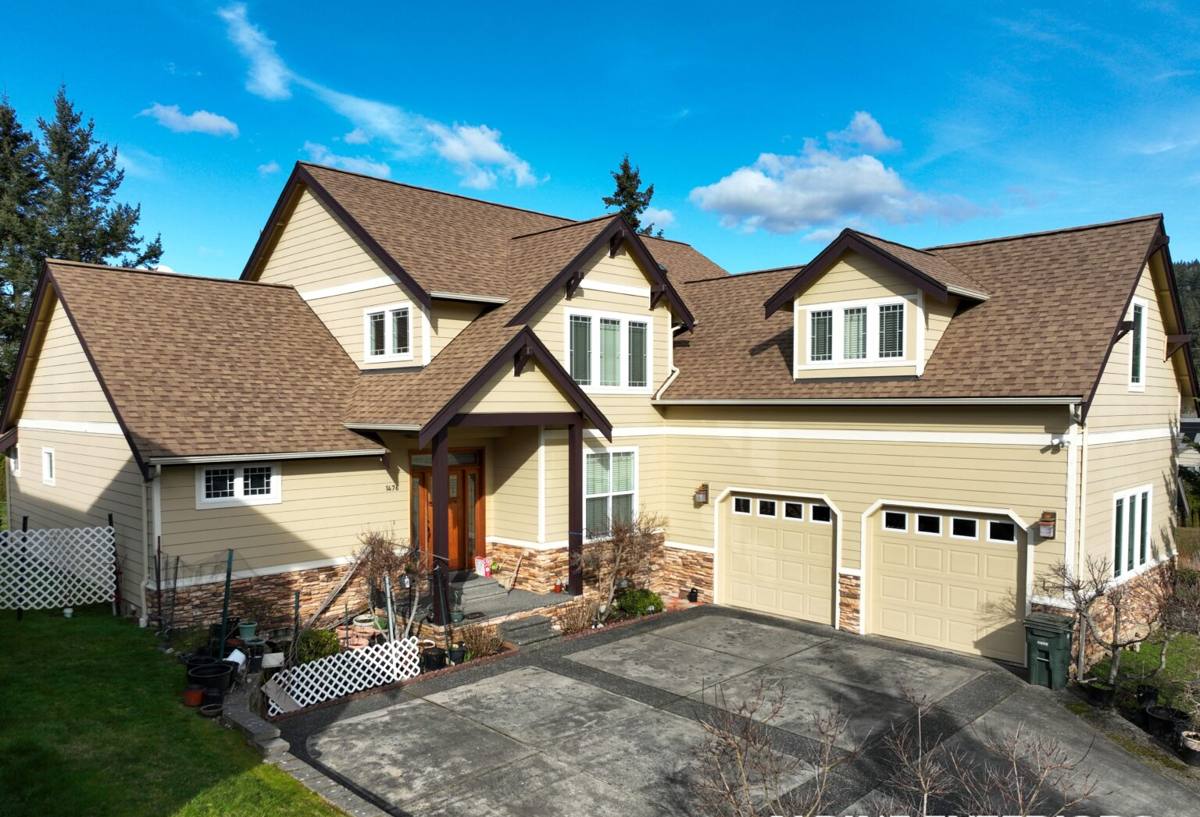
The Damage Patterns We See Most Often in This Neighborhood
Shingle Roofs
Asphalt shingle roofs in this area typically show wear first at ridge caps, valleys, and any spot where the roof meets a wall or chimney. Wind gusts lift shingle edges and, over repeated cycles, break the sealant bond that keeps them flat. Once a shingle can flex in the wind, granule loss speeds up and the mat underneath starts absorbing UV damage directly. We also see cracking around nail heads that were driven at the wrong angle or depth during a prior repair — a small mistake that turns into a leak path a year or two later.
Tile Roofs
Tile is durable against UV and salt air, but the underlayment beneath it is doing the real waterproofing work, and that layer ages regardless of how good the tile looks on top. Cracked or slipped tiles from wind uplift, deteriorated mortar or foam adhesion at hips and ridges, and worn battens are common repair points. A tile roof that "looks fine" from the ground can still have an underlayment problem that only shows up as a slow leak during heavy wind-driven rain.
Flat and Low-Slope Sections
Many homes in the area have a flat or low-slope section over a porch, garage, or addition. These are the areas most sensitive to ponding water and UV-driven membrane cracking, and they're often where a small maintenance item gets ignored until it becomes an active leak.
What a Correct Repair Actually Involves
A roof repair done right isn't just sealing the spot where water is currently showing up inside the house. Water travels — it can enter several feet away from where a stain appears on a ceiling, following a rafter or decking seam before dripping down. A proper repair starts with tracing the actual entry point, not just treating the symptom.
- Confirming the true source of the leak, not just the visible damage point
- Checking the condition of the decking underneath — soft or delaminated wood needs to be addressed, not covered over
- Matching materials correctly, including shingle type, tile profile, or membrane compatibility, so the repair doesn't stand out or create a new weak point
- Re-securing or replacing flashing at penetrations (vents, pipe boots, chimneys) rather than just adding sealant on top of failing metal
- Checking fastener patterns against current wind-resistance standards, since older repairs sometimes used fewer or improperly placed fasteners
Sealant-only fixes are common in this market because they're fast and cheap, but on a coastal roof they tend to fail again within a season or two once UV exposure makes the sealant brittle. We treat sealant as a finishing step, not the repair itself.
Our Repair Process
- Inspection. We get on the roof (not just a look from the ground) and check the specific area of concern along with any related penetrations, flashing, and edge conditions nearby.
- Diagnosis and explanation. We show you what we found and explain what's actually causing the problem, in plain terms, before any work starts.
- Written scope and estimate. You get a clear description of what will be repaired and why, so there are no surprises.
- The repair itself. Matching materials, correct fastening, proper flashing work, and attention to how the repair ties into the surrounding roof.
- Cleanup and check. We clear debris and nails from the property and confirm the repair area is watertight before we leave.
Repair or Replace? How We Help You Decide
Not every roof problem in Bayshore Gardens calls for a full replacement, and not every leak should be treated as "just a repair" if the roof is already near the end of its service life. We walk through this honestly rather than defaulting to whichever option is more profitable.
| Factor | Leans Toward Repair | Leans Toward Replacement |
|---|---|---|
| Roof age | Well within expected lifespan for the material | At or past the material's typical service life |
| Extent of damage | Isolated to one area or penetration | Multiple areas, or damage found in more than one prior repair visit |
| Decking condition | Solid, no soft spots | Widespread soft or delaminated decking |
| Repair history | First or second repair in this area | Repeated repairs to the same section over time |
| Typical cost range | Often a few hundred to around $1,500 for a contained repair | A full re-roof runs considerably higher, but resets your maintenance clock and warranty |
If your roof only needs a repair, we'll tell you that directly. If a repair would just be a short-term patch on a roof that's already failing in multiple places, we'll say that too, along with why.
Materials and Products We Work With
We repair with materials that match or are compatible with what's already on your roof, and we're straightforward about the trade-offs of each option when a repair opens up a choice (like replacing a small damaged section with a different but compatible product).
- Architectural asphalt shingles — the most common material in the area; good wind ratings when properly fastened, straightforward to repair and blend in, moderate maintenance needs
- Concrete and clay tile — excellent UV and salt-air resistance for the tile itself, but repairs require care since the underlayment beneath is the actual water barrier and mismatched or poorly seated tile can crack under foot traffic
- Metal flashing and edge components — we use corrosion-resistant metals given the salt air near the bay; cheaper galvanized flashing corrodes faster in this environment and we avoid it as a repair standard
- Low-slope membrane systems — for flat sections, proper seam sealing and slope-to-drain detailing matter more than the specific membrane brand
We don't push a specific brand as a cure-all. Every roofing product has installation sensitivities and maintenance expectations, and matching the repair to what's already performing well on your roof usually beats introducing something new into one section.
Signs Your Bayshore Gardens Roof Needs Attention Now
- Water stains on ceilings or upper interior walls, especially after wind-driven rain
- Missing, curled, or cracked shingles visible from the ground
- Cracked, slipped, or missing roof tiles
- Granules collecting in gutters or at downspout outlets
- Soft or spongy spots when walking near a roof edge or valley (have this checked, don't test it yourself)
- Visible rust or corrosion on flashing, vents, or metal edging
- Daylight visible through the attic at roof boards or soffits
- A roof that's due for its next storm-season inspection and hasn't had one in a while
Catching these early is almost always cheaper than waiting. A small flashing repair now is a fraction of the cost of replacing water-damaged decking, insulation, and drywall after a leak has been active for months.
Why Local Experience in Bayshore Gardens Matters
A roofer who mainly works inland doesn't necessarily think about salt-air corrosion on fasteners and flashing the same way a crew that works this part of Manatee County every week does. We know which failure points show up first on homes near the bay, what wind-mitigation documentation matters for insurance purposes, and how Bradenton-area permitting works for repair versus replacement scope. That local familiarity means fewer surprises during the job and a repair that's built for the conditions your roof actually faces, not generic conditions from somewhere else in the state.
We also know that many homes in this neighborhood have been repaired before, sometimes more than once, by different contractors over the years. Part of our inspection is figuring out what's already there so we don't just add another layer on top of an old problem.
If you're dealing with a leak, storm damage, or just want an honest read on your roof's condition before the next storm season, we're happy to take a look. Fill out the form below for a free, no-pressure estimate — we'll tell you exactly what we find and what it would take to fix it right.