 Bradenton
 Building a Deck That Actually Belongs in Parrish
Parrish sits in that fast-growing stretch of Manatee County where new construction, older ranch homes, and waterfront and near-waterfront lots all mix together. A deck here has to do more than look good in a listing photo. It has to survive a Gulf Coast summer of daily thunderstorms, months of relentless UV, salt-laden air moving in off the coast, and the real possibility of hurricane-force wind loading during storm season. We build decks for Parrish homeowners with that reality in mind from the very first framing decision, not as an afterthought once the boards are down.
A lot of deck problems we get called out to inspect trace back to the same root cause: the structure was built to a generic plan instead of a Florida plan. Undersized ledger attachments, fasteners that weren't rated for coastal exposure, decking laid without proper drainage gaps — none of it fails immediately, which is exactly the problem. It fails two, three, five years in, usually right when the deck sees its first real storm.
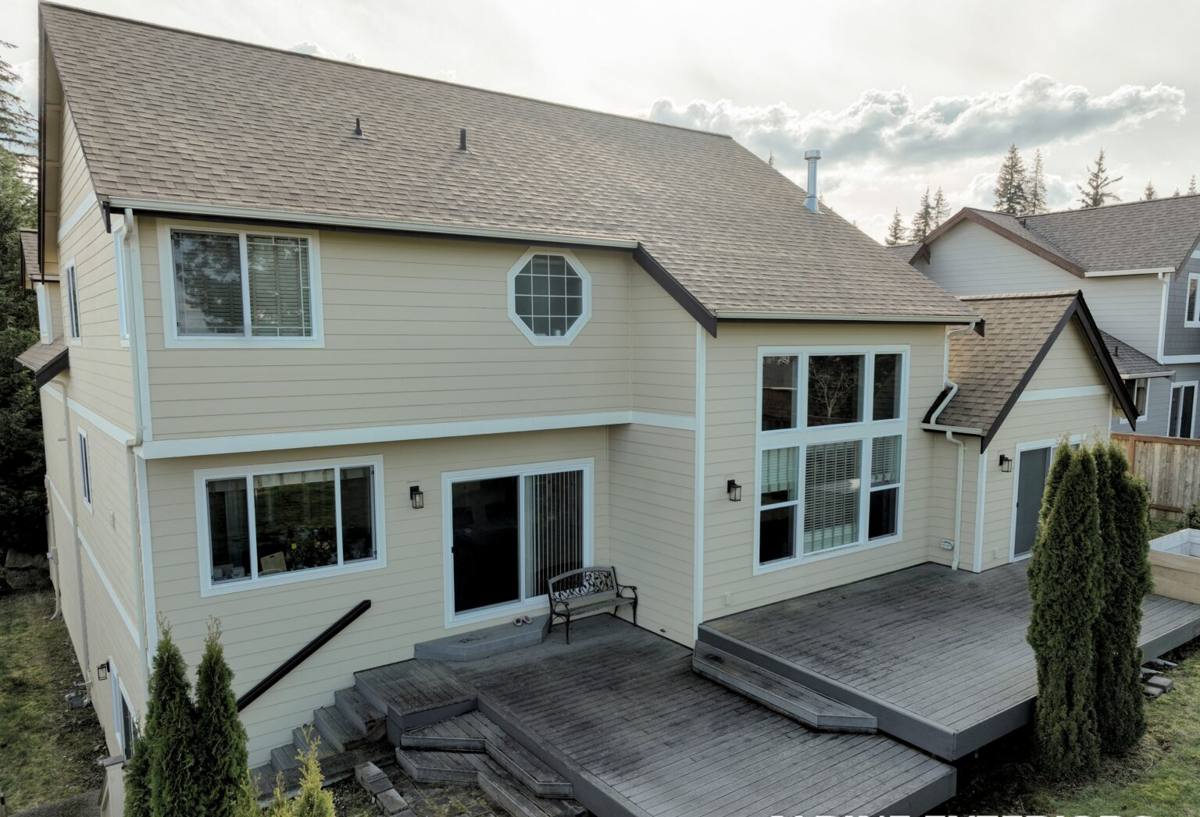
What Manatee County's Climate Actually Does to a Deck
Hurricane-Force Wind
Wind doesn't just push on a deck from the side — it gets underneath railings and lifts, it racks framing side to side, and it works loose any fastener that wasn't driven correctly or spaced to code. A deck attached to the house needs a ledger connection strong enough to resist both the pull-away force of wind and the shear force of the structure trying to twist. We size and space our fasteners, hangers, and hold-downs for the wind exposure category Parrish actually sits in, not a minimum-code afterthought.
Intense, Year-Round UV
Florida sun is harder on exterior materials than most homeowners realize, and it doesn't take a season off in winter the way it does farther north. UV breaks down the lignin in wood fibers, causing graying and surface checking, and it degrades the color pigments and some resin formulations in composite decking over time. Material choice and finish schedule both need to account for near-constant sun exposure, not the mild UV load a product spec sheet might have been tested under in a different climate.
Wind-Driven Rain
Straight-down rain is manageable. Wind-driven rain that comes in sideways during a Gulf storm finds every gap in flashing, every unsealed fastener hole, and every spot where decking butts up against the house. On an attached deck, the ledger flashing detail is one of the most important — and most commonly rushed — parts of the whole build. Done wrong, water tracks behind the ledger board and into the house band joist, where it can rot framing for years before anyone notices a soft spot.
Salt Air
Parrish isn't directly on the beach, but it's close enough to coastal water that salt-laden air still reaches structures here, especially on breezy days. Salt accelerates corrosion in standard fasteners, hardware, and connectors. It also speeds up the breakdown of some coatings and can leave a dulling residue on metal railings and hardware if they aren't rated for the exposure.
Choosing the Right Decking Material for a Parrish Home
There's no single "best" decking material — there's the right material for your budget, your maintenance appetite, and how the deck will actually be used. Here's how the common options stack up for our climate specifically.
| Material | How It Handles Our Climate | Maintenance | Typical Lifespan Here |
|---|---|---|---|
| Pressure-treated wood | Affordable and strong, but UV and humidity cycles cause graying, checking, and grain raise faster than in drier climates | Annual cleaning and re-sealing recommended | 10–15 years with upkeep |
| Composite decking | Resists rot and doesn't need sealing; quality varies a lot by product line and core construction | Periodic washing; no sealing or staining | 20–30 years, product-dependent |
| Tropical hardwoods (e.g., ipe) | Naturally dense and rot-resistant, holds up very well to sun and moisture | Oiling every 1–2 years to maintain color; will gray naturally if left untreated | 25+ years |
| PVC/capped polymer | Fully synthetic, handles moisture and salt exposure without absorbing water | Low; occasional cleaning | 25–30 years |
For most Parrish homeowners, the decision comes down to a straightforward trade-off: wood costs less up front but asks for more of your time every year, while composite and PVC cost more up front and largely just sit there looking good. We'll walk through actual product samples and give you an honest read on which fits your situation — we're not going to steer you toward whatever has the best margin for us.
What a Correctly Built Deck Actually Involves
The decking boards are the part everyone sees, but the structure underneath is what determines whether the deck is still safe in ten years. A correct build in this area includes:
- Footings sized and set to local frost-free depth and soil-bearing requirements, not guessed at
- A ledger board (on attached decks) properly flashed and through-bolted — never just nailed — to the house structure
- Joist hangers and structural connectors rated for coastal/exterior exposure, not standard interior-grade hardware
- Fasteners matched to the decking material to avoid galvanic corrosion between dissimilar metals
- Proper joist spacing for the specific decking product, since composite and PVC often require tighter spacing than wood
- Drainage gaps and slight slope away from the house so water doesn't pool on the surface or track back toward the structure
- Railings and guard posts anchored to resist both lateral wind load and the push-and-pull force of normal use
Skipping or shortcutting any one of these doesn't usually cause a visible problem on day one. It shows up later, as a wobble in the railing, a soft spot near the house, or fastener heads bleeding rust through the decking.
Our Deck Building Process
1. On-Site Consultation
We walk your property, talk through how you actually plan to use the deck — entertaining, grilling, a quiet morning coffee spot — and take a look at drainage, sun exposure, and how the deck will tie into the house. This is also when we discuss material options against your budget honestly.
2. Design and Permitting
We draw up the layout and structural details and handle the permit submission through Manatee County. Decks attached to a house, elevated decks, and anything with electrical or built-in features typically require a permit and inspection here — we don't skip that step, even when it would be faster to.
3. Construction
Footings and framing go in first, built to the wind and load requirements for this area, followed by decking, railings, and any stairs or built-ins. We keep the site reasonably clean and walk you through progress at key milestones rather than disappearing until the end.
4. Final Walkthrough and Inspection
Once the county inspection passes, we do our own walkthrough with you — checking that railings are solid, stairs are even, fasteners are set correctly, and the finish looks right. You get a clear picture of what maintenance the specific material you chose will need going forward.
Permits and Codes in Manatee County
Manatee County enforces the Florida Building Code, which includes specific wind-load provisions given our hurricane exposure. Deck height, guard rail requirements, stair geometry, and structural connections all have code minimums that inspectors check for — and those minimums exist because of real failure patterns seen in this climate, not bureaucratic box-checking. Building without a permit on work that requires one can create real problems later, from insurance claim denials to complications when you go to sell the house. We handle the permit process as a standard part of the job.
Deck Maintenance for Parrish's Climate
Whatever material you choose, a little regular attention goes a long way toward getting the full lifespan out of your deck in this climate. A basic seasonal routine:
- Rinse off salt residue and pollen buildup every few weeks, more often if you're near open water
- Inspect fasteners and hardware for rust staining or loosening at least twice a year
- Check the ledger flashing and the area where the deck meets the house for any signs of moisture staining
- Reseal or re-oil wood decking on the schedule the product calls for — don't wait until it's visibly gray
- Clear leaves and debris from between boards so water can drain instead of sitting
- Look under the deck after major storms for any shifted footings, cracked posts, or loose bracing
Cost Factors to Expect
Every deck project is different, but the same handful of factors drive most of the price variation we see on Parrish jobs.
| Factor | Why It Matters |
|---|---|
| Decking material | Pressure-treated wood sits at the lower end; PVC and premium composites sit at the higher end |
| Deck height and footing depth | Elevated decks need more substantial framing and footings than ground-level ones |
| Railing style | Cable, glass, and metal railing systems cost more than standard baluster railing |
| Site access and grading | Sloped or hard-to-access lots add labor time |
| Attached vs. freestanding | Attached decks need ledger flashing work that freestanding decks don't |
We'll give you a written, itemized estimate before any work starts so there's no guessing about where the cost is coming from.
Why a Crew That Already Works in Parrish Makes a Difference
A contractor who works this specific area regularly already knows the Manatee County permitting process, has a working relationship with the inspectors, and has seen firsthand how different materials and details hold up here over time — not in a showroom, but on decks a few miles from yours after a few real Florida summers and a storm season or two. That local track record is what lets us give you a straight answer about what will actually last on your property instead of a generic recommendation pulled from a national playbook that wasn't written for Gulf Coast wind and salt exposure.
If you're planning a new deck or replacing one that's showing its age, we're happy to come take a look and give you a straightforward, no-pressure estimate using the form below.