 Bradenton
 Deck Repair Built for Mill Creek's Conditions
Mill Creek homeowners in Bradenton ask us to look at a lot of decks, and the damage almost always tells the same story. Florida sun bakes the wood fibers until they turn gray and brittle. Salt-laden air off the Gulf works its way into every metal fastener. Afternoon thunderstorms drive rain sideways under railings and against ledger boards. And when a tropical system rolls through Manatee County, whatever weak point was already there gets found out fast. A deck built or repaired without this climate in mind will show problems years before it should.
This page is about deck repair specifically for Mill Creek — not a general overview of decking. If you're seeing soft spots, rust streaks, loose railings, or boards that have started to cup and split, this is what's actually going on and what fixing it correctly involves.
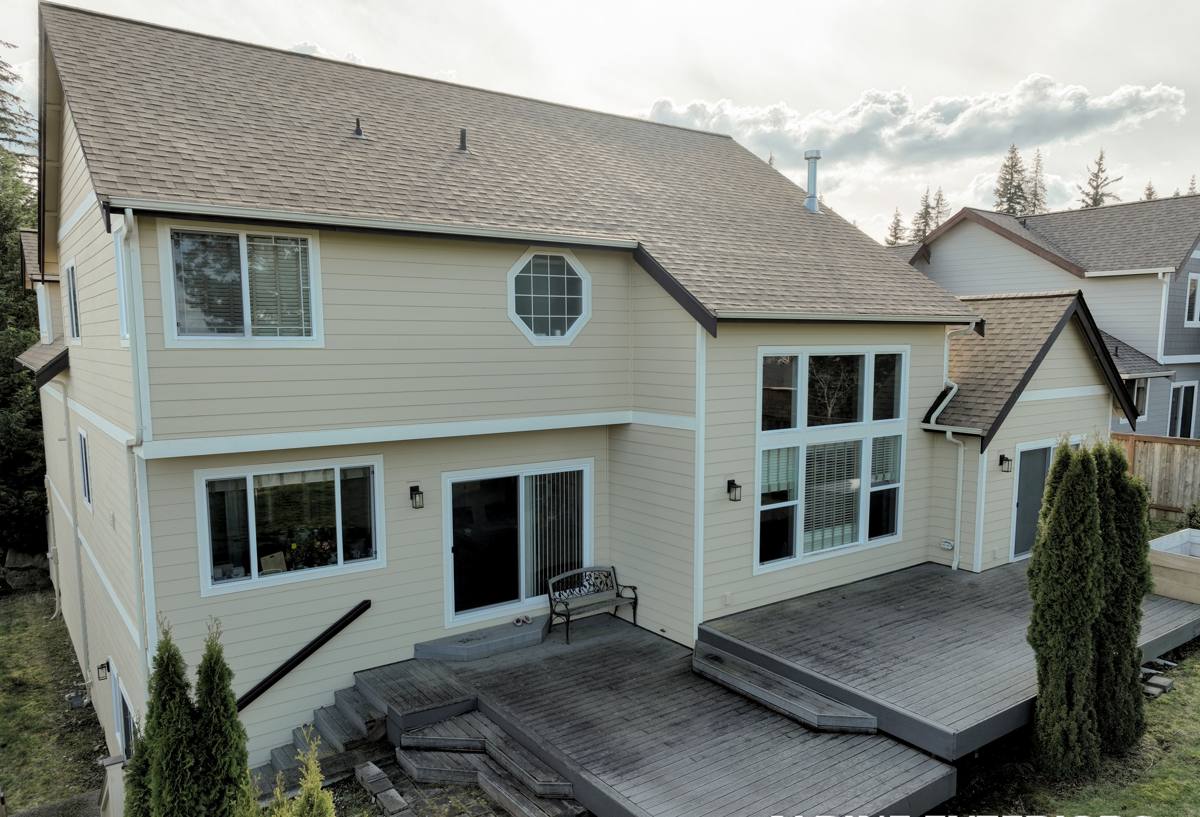
What Bradenton's Climate Does to a Deck
Year-round UV exposure
Unlike northern climates where a deck gets a few months of hard sun, decks in this part of Florida take intense UV nearly every day of the year. Untreated or under-maintained wood loses its natural oils, the surface fibers break down, and boards develop a rough, splintery "checked" texture. Composite and PVC boards fade and can become brittle at the surface if a lower-grade product was used or if capstock has worn through.
Wind-driven rain and humidity
Afternoon storms in Manatee County don't just fall straight down — wind pushes moisture into joints, under rail caps, and into end grain that isn't properly sealed. That moisture doesn't fully evaporate between storms because humidity stays high, so wood that would dry out in a drier climate stays damp long enough to start rotting from the inside.
Salt air corrosion
Mill Creek's proximity to the coast means airborne salt travels further inland than people expect. Standard carbon-steel screws, joist hangers, and bolts corrode from the inside out — often failing structurally before there's any visible rust on the surface. This is one of the most common reasons a deck that "looks fine" turns out to have a serious problem underneath.
Hurricane and tropical storm wind loads
Every deck in this area needs to hold up to hurricane-force wind events, not just everyday weather. Railing posts, structural connections, and ledger attachment to the house are the parts most likely to fail under wind loading, and they're also the parts most often under-built or weakened by years of corrosion by the time a storm arrives.
Common Deck Problems We Find in Mill Creek
- Soft, spongy, or bouncy decking boards — usually rot or delamination underneath
- Rust stains bleeding out around screw heads or bolts
- Cupping, splitting, or checking across the board surface
- Loose or wobbly railings and posts
- Gaps or separation where the deck ledger meets the house
- Corroded or sagging joist hangers
- Stairs that flex, shift, or feel unstable underfoot
- Discoloration or fading that's uneven across the deck surface
Any one of these can be a minor fix. Several together usually mean the deck's structural connections need a real inspection, not just a board swap.
Repair vs. Replace: How We Decide
Not every damaged deck needs to be torn out. But not every deck should be patched, either. Our approach is to separate the decking surface (the boards you walk on) from the substructure (framing, ledger, footings, and connections) and evaluate each on its own.
When repair makes sense
If the framing is sound and the damage is limited to a handful of boards, railing sections, or fasteners, targeted repair is the right call. This is also the case when a deck is structurally solid but showing surface wear from UV and weather exposure.
When replacement is the honest answer
If we find rot at the ledger board, corroded joist hangers, undersized or failing footings, or damage spread across most of the structure, patching individual boards just delays a bigger failure. We'll tell you plainly when that's the case rather than selling a short-term fix on a deck that needs to come apart.
Repair Scope Comparison
| Issue Found | Typical Fix | What It Involves |
|---|---|---|
| Isolated rotted boards | Board replacement | Remove and replace affected boards, match fastener spacing and type |
| Corroded fasteners/hangers | Hardware replacement | Swap to coastal-rated stainless or hot-dip galvanized hardware |
| Loose railings/posts | Structural reattachment | Re-anchor posts, add blocking, replace compromised connectors |
| Ledger board separation | Ledger repair or rebuild | Inspect flashing, re-secure or rebuild ledger connection to the house |
| Widespread substructure rot | Full deck rebuild | Remove decking, rebuild framing and footings to current standards |
Materials: What We Repair With and Why
Matching or upgrading decking
When repairing a wood deck, we match species and treatment where possible so the repair ages consistently with the rest of the deck. In many cases, we'll recommend upgrading damaged sections to a higher-grade treated lumber or a composite board, since patch repairs are a natural point to improve durability without redoing the whole deck.
Fasteners and hardware
Given the salt air in this area, we don't use standard carbon-steel hardware on repairs. Stainless steel or hot-dip galvanized fasteners and connectors cost more up front but hold up dramatically longer near the coast — using anything less on a Mill Creek deck just guarantees a repeat repair in a few years.
Composite and PVC decking repairs
Composite and PVC boards don't rot, but they do fail in their own ways — surface delamination, fastener pull-through, and heat-related expansion issues if they weren't installed with proper gapping. Repairing these systems means understanding the specific manufacturer's installation requirements, not treating them like wood.
Our Deck Repair Process
1. On-site inspection
We start by walking the entire deck — surface, railings, stairs, and, where accessible, the framing and ledger underneath. We probe suspect boards and check fasteners for corrosion, not just visible rust.
2. Honest assessment
We tell you what's cosmetic, what's structural, and what's a near-term safety issue. If we don't need to be involved in a repair, we'll say so.
3. Written scope and estimate
You get a clear breakdown of what will be repaired, what materials and hardware will be used, and why — no vague line items.
4. Repair work
We complete the structural and surface repairs to current wind-load and fastening standards for this area, not just to match what was there before if what was there before was the problem.
5. Final walkthrough
We check the repaired areas with you before calling the job done, including railings and stairs, since those are the components most tied to everyday safety.
Permitting and Local Standards
Deck repair work in Manatee County can require permitting depending on the scope of the work, particularly anything involving structural framing, railings, or footings. We handle that conversation as part of the process rather than leaving it for the homeowner to sort out, and we build repairs to hold up against the wind conditions this area actually sees.
Signs You Should Have Your Mill Creek Deck Inspected
- Boards feel soft, spongy, or flex noticeably when walked on
- Rust stains around screws or bolts
- Railings that wobble or shift when pushed
- Visible gap or dark staining where the deck meets the house
- Deck hasn't been inspected since before the last major storm season
- Deck is more than 10-15 years old and has had no structural review
If any of these apply, it's worth having someone look before the next storm season rather than after a failure.
Why a Crew That Already Works in Mill Creek Matters
Deck repair isn't generic work. A crew that regularly works in Mill Creek and the surrounding Bradenton area already knows what salt air does to fasteners over five years, what wind exposure looks like on an open deck versus one tucked against the house, and what Manatee County expects for structural repairs. That local experience means fewer surprises during the job and repairs that are built for the conditions your deck actually faces, not generic conditions from a manufacturer's spec sheet written for a different climate.
It also means faster response. When a storm passes through and you need someone to look at a deck before it becomes unsafe to use, working with a crew already familiar with the neighborhood means less time spent figuring out the basics and more time spent on the actual repair.
Get an Honest Look at Your Deck
If your deck in Mill Creek is showing wear, storm damage, or just hasn't been checked in a while, we're glad to come take a look. We'll give you a straightforward, no-pressure estimate and tell you plainly what needs attention and what doesn't — use the form below to get started.