 Bradenton
 Windows on Longboat Key Work Harder Than Windows Almost Anywhere Else
Longboat Key is a barrier island — Gulf water on one side, bay water on the other, and nothing but a few hundred yards of land absorbing whatever the weather brings. That geography is why the island is beautiful and why its windows take a beating most inland Manatee County homes never see. Salt-laden air corrodes hardware and frames faster than it does even a few miles inland. Gulf-facing exposures catch direct sun for most of the day, which degrades seals, glazing, and vinyl over time. And when a tropical system moves through, wind-driven rain gets pushed sideways into every gap, seam, and weak point in a window assembly.
A window that's merely "installed" — set in the opening, caulked around the edge, trim reattached — will usually hold up fine in a low-exposure inland neighborhood. On Longboat Key, that same shortcut shows up as fogged glass, stained drywall, or a soft spot under a windowsill within a few years. This page is about what it actually takes to install windows correctly on the island, not just what it takes to get one to sit in the opening.
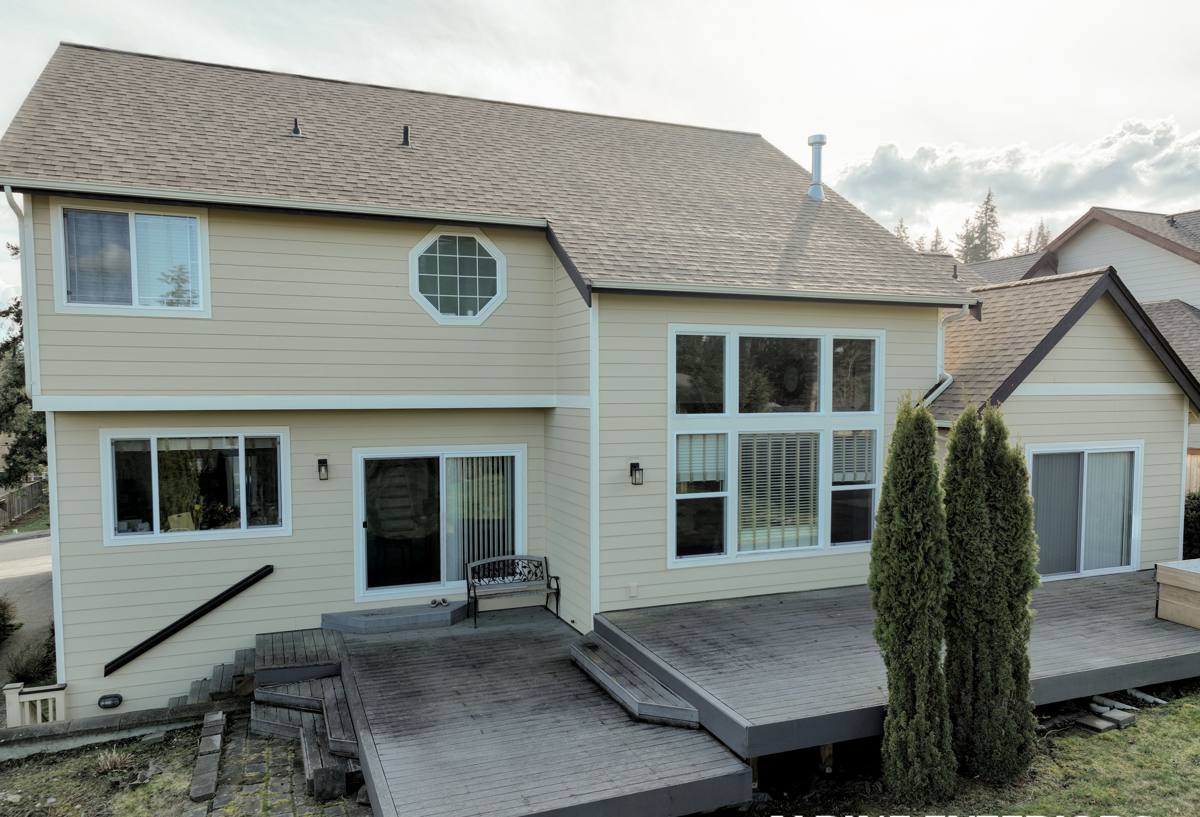
The Specific Conditions We're Installing Against
Wind
Coastal Manatee County sees higher design wind speeds in the Florida Building Code than inland areas, and Longboat Key's open exposure means real-world wind loads on a window opening are often higher than what a similar-looking home a few miles inland experiences. Every window we set has to be rated and anchored for the actual wind pressure at that specific wall, not a generic assumption.
Wind-driven rain
Most water intrusion around windows isn't from a leaky sash — it's from wind pushing rain up and under flashing that was never properly lapped, or through a gap where sealant was asked to do a job that flashing should have done. On an exposed island lot, the water pressure at a window opening during a storm is far higher than most flashing details are built to handle if they're done as an afterthought.
Salt air corrosion
Fasteners, hinges, balance mechanisms, and even some frame reinforcements corrode faster this close to saltwater. Standard-grade hardware that would last decades inland can start showing rust or seizing up within a handful of years on a Gulf-facing wall.
UV exposure
Year-round Florida sun breaks down vinyl, degrades sealant flexibility, and can discolor or warp lower-grade frame materials. A window that looks fine on day one needs UV-stable materials to still look and perform fine a decade later.
What a Correct Installation Actually Involves
None of this is exotic — it's just not optional here the way it might be treated as optional elsewhere.
- Opening inspection before anything is removed. We check the existing rough opening, sill condition, and substrate for rot, prior water damage, or out-of-square framing before a new window ever goes in.
- Correct product for the exposure. The window rated for that wall's wind zone and, where applicable, impact requirements — not a generic stock unit.
- Proper flashing sequence. Sill pan flashing, side flashing, and head flashing installed in the correct shingle-lap order so water is directed out and down, never trapped behind the frame.
- Mechanical anchoring per manufacturer and code specs. Fastener type, spacing, and embedment matched to the wall substrate and the window's design pressure rating — not "however many screws look about right."
- Sealant as a backup, not the primary defense. A quality exterior sealant closes the assembly, but it is never the only thing standing between the house and wind-driven rain.
- Corrosion-resistant hardware and fasteners suited to coastal salt exposure, not standard interior-grade components.
- Interior and exterior finish work that restores trim, stucco, or siding around the opening cleanly, with no gaps left for water or pests.
Impact-Rated Windows: Worth Understanding, Not Just Selling
A lot of homeowners on the island ask about impact-rated (laminated glass) windows versus standard windows paired with separate shutter protection. Both are legitimate paths to meeting Florida's wind-borne debris protection requirements — the right one depends on the home, the budget, and how the homeowner wants to live day to day.
| Factor | Impact-Rated Windows | Standard Windows + Shutters |
|---|---|---|
| Storm prep effort | None — protection is built in | Shutters must be deployed before each storm |
| Everyday appearance | Clean, unobstructed sightlines year-round | Clear until shutters go up |
| Upfront cost | Higher per opening | Lower window cost, added shutter cost |
| Noise and UV reduction | Laminated glass reduces both noticeably | Standard glass performance |
| Long-term maintenance | Glass and frame only | Shutter tracks, hardware, and storage to maintain |
We'll walk through both options honestly for your specific openings and exposure — there's no single right answer for every home on the island, and we're not going to push the higher-margin option if the simpler one genuinely fits your situation better.
Frame Material: What Holds Up on an Island Lot
Frame material matters more here than in a low-exposure inland install, because salt air and UV are constant, not occasional.
| Material | Coastal performance | Trade-offs |
|---|---|---|
| Vinyl (impact-rated lines) | Good UV-stable formulations resist fading and warping; no corrosion risk | Quality varies widely between product lines — not all vinyl is built the same |
| Aluminum | Strong, slim sightlines, common in coastal impact windows | Needs a good finish system to resist salt pitting over time |
| Fiberglass | Very stable dimensionally, holds paint well, low expansion/contraction | Higher material cost |
| Wood / wood-clad | Classic look, but wood is a poor match for direct salt and humidity exposure | Higher maintenance burden; we're selective about where we recommend it on the island |
We install multiple manufacturer lines rather than committing to one brand, so we can match the product to the exposure instead of the exposure to whatever's on the truck.
Permitting and Inspections
Window replacement on Longboat Key requires a permit, and depending on the scope, that may go through the Town of Longboat Key or the applicable county building department for your specific parcel. Permitted work means an independent inspector verifies the anchoring, flashing, and product approval documentation — which is exactly the paperwork trail you want if you ever sell the home or file an insurance claim. We pull the permit, schedule the inspection, and handle the documentation as part of the job. If a contractor offers to skip the permit "to save time," that's a red flag, not a favor — it leaves you without proof the work meets code.
Our Process
- On-site assessment — we measure openings, check substrate condition, and note exposure direction for each window.
- Product recommendation — options matched to your wind zone, exposure, budget, and whether you want impact glass or a shutter-based approach.
- Written proposal — clear scope, product specs, and pricing before any work starts.
- Permitting — we file with the correct jurisdiction and schedule required inspections.
- Removal and opening prep — old units out, substrate checked and repaired if needed before the new window goes in.
- Installation — flashing, anchoring, and sealing done in the correct sequence, not shortcut.
- Final inspection and walkthrough — inspector sign-off, then a walkthrough with you to confirm operation and finish work.
Why a Crew That Already Works This Island Matters
Longboat Key isn't like a typical inland Manatee County subdivision. Access can be tighter, HOA and architectural review requirements vary by building or community, and the wind/flood considerations for a Gulf-front lot are different from a bay-side or interior-island lot. A crew that's already done work on the island knows what questions to ask up front — what the local permitting process looks for, what exposure category a given wall falls into, and how to sequence a job around narrow driveways or building access rules — instead of learning it for the first time on your project. That familiarity saves time and avoids the kind of mid-project surprises that turn into change orders.
What Drives the Cost
| Factor | Why it matters |
|---|---|
| Impact-rated vs. standard glass | Laminated impact glass costs more per unit but removes the need for separate shutter systems |
| Frame material and manufacturer line | Vinyl, aluminum, and fiberglass span a wide price range even within "coastal-rated" products |
| Number and size of openings | Larger openings and specialty shapes (arched, oversized) cost more per unit |
| Substrate repair needed | Rot or prior water damage found during removal adds scope |
| Access and building requirements | Multi-story or restricted-access properties can add labor time |
We give a written, itemized proposal before work starts — no vague allowances, no surprise line items added after the job is underway.
Signs It's Time to Replace, Not Repair
- Fogging or a milky film between panes (seal failure — can't be repaired, only replaced)
- Frames that feel soft, spongy, or show visible rot or corrosion
- Windows that won't stay open, won't latch fully, or are difficult to operate
- Visible daylight or drafts around the frame when the window is closed
- Water staining on interior sills, drywall, or trim below or beside a window
- Single-pane or older aluminum windows with no current impact or wind rating
- Noticeably higher cooling bills without another clear cause
If you're only seeing one or two of these on an otherwise sound window, a repair may still make sense — we'll tell you that honestly rather than pushing a full replacement you don't need yet.
If you're weighing window replacement or new installation for a Longboat Key property, we're glad to come take a look and give you a straightforward, no-pressure estimate — what your openings actually need, what it will cost, and why. Fill out the form below to get started.