 Bradenton
 Deck Replacement Built for How Lakewood Ranch Actually Lives Outdoors
Lakewood Ranch homes lean hard on their outdoor space — pool decks, lanai extensions, second-story balconies off the primary suite, and freestanding decks tucked into larger lots. That means the deck isn't a side feature, it's part of how the house functions most of the year. When a deck starts failing — soft boards, rusted fasteners, a railing that flexes when you lean on it — it's not just cosmetic. It's a safety problem sitting right outside a door people walk through every day.
We replace decks across Bradenton and Manatee County, and Lakewood Ranch jobs have their own pattern. Lots here tend to be newer, HOA standards are usually specific about materials and colors, and a lot of these decks were built during the community's rapid growth years by framing crews who were moving fast. That's not a knock on anyone — it just means a lot of decks in this area are now hitting the age where the original materials and fastener choices are showing their limits at the same time.
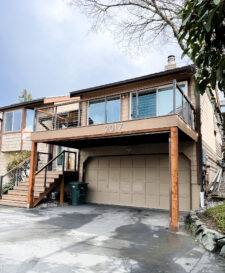
What Florida Climate Does to a Deck
Bradenton's climate is genuinely hard on exterior wood and wood-adjacent structures, and a deck takes more direct abuse than almost anything else on a house because it's horizontal, uncovered (often), and in constant contact with moisture.
The Four Things Working Against Your Deck
- UV exposure: Year-round sun breaks down wood fibers and degrades sealants and finishes far faster than in northern climates — a "5-year" stain often needs reapplication in 18-24 months here.
- Wind-driven rain: Afternoon storms don't just wet the surface, they drive moisture into end grain, fastener holes, and any gap where boards meet framing — which is where rot starts.
- Hurricane-force wind loads: Even decks that never take a direct hit still get repeatedly racked and stressed during tropical systems, which loosens connections over years.
- Salt air: Lakewood Ranch is inland, but Gulf-influenced salt air still travels this far and accelerates corrosion on any fastener, bracket, or ledger connection that isn't properly rated.
Individually, any one of these is manageable. Together, applied for years without a break, they're why we see so many Manatee County decks failing structurally well before the surface boards look obviously bad.
Signs a Lakewood Ranch Deck Needs Replacement, Not Repair
Not every tired-looking deck needs a full tear-off. But there's a line where patching stops making sense — where you're spending real money to extend the life of a structure that has a finite amount of life left in it. Here's how we tell the difference on a walkthrough.
| Signal | Usually Repairable | Usually Needs Replacement |
|---|---|---|
| Surface graying, minor splintering | Yes — sand, refinish | No |
| A few soft or spongy boards | Yes — spot replace | No, if isolated |
| Soft or spongy ledger board | No | Yes — structural |
| Railing posts that flex or wiggle | Sometimes | Often — connection failure |
| Rust staining streaking down from fasteners | No | Yes — fastener failure underway |
| Deck feels "bouncy" when walked on | No | Yes — joist or beam issue |
| Gaps opening up between boards and house | No | Yes — ledger separation risk |
The ledger board — where the deck attaches to the house — deserves special attention. It's the single most common cause of deck collapse nationally, and it's usually hidden from casual view. If yours hasn't been inspected in several years, that alone is worth a professional look before you decide repair vs. replace.
What a Correct Deck Replacement Actually Involves
A deck replacement isn't just pulling old boards and screwing down new ones. Done right, it's a structural project with a finish layer on top.
Structural Work
- Full inspection and, where needed, replacement of the ledger board with proper flashing to keep water from tracking behind it into the house framing
- Joist and beam sizing and spacing checked against current code and expected loads — pool decks and elevated decks carry different requirements than a simple ground-level platform
- Footings and posts inspected for movement, rot, or undersizing, particularly on older or hand-built structures
- Hardware upgraded to stainless steel or coated fasteners and connectors rated for coastal-influenced, high-moisture environments — not the standard interior-grade hardware sometimes used on the original build
Decking Surface and Finish
- Board spacing set correctly for drainage and for the specific material's expansion behavior in Florida heat
- Railing systems rebuilt to current code height and baluster spacing requirements
- Stairs rebuilt with correct rise/run and proper attachment — a common weak point on older decks
- Finish or capping applied appropriate to the material chosen
We also check that anything the deck connects to — a screen enclosure post, a pool cage tie-in, an existing paver patio — gets accounted for in the plan, since Lakewood Ranch decks are often part of a larger connected outdoor living space rather than a standalone structure.
Choosing the Right Decking Material for This Area
There's no single "best" decking material — there's a best material for your budget, your maintenance appetite, and how the deck gets used. Here's how the common options actually compare under Manatee County conditions.
| Material | Upfront Cost | Maintenance | Climate Notes |
|---|---|---|---|
| Pressure-treated wood | Lowest | Annual sealing/staining recommended | Most sensitive to UV and moisture cycling; shortest realistic lifespan here without upkeep |
| Composite decking | Mid to high | Low — periodic washing | Handles UV and moisture well; quality varies significantly by brand and core construction |
| PVC decking | High | Lowest | Fully synthetic, excellent moisture resistance; runs hotter underfoot in direct sun |
| Tropical hardwoods | High | Moderate — periodic oiling | Naturally dense and rot-resistant but still needs UV protection to hold color |
We're honest about trade-offs rather than pushing whatever has the best margin. Composite and PVC decking generally make the most sense for Bradenton's climate because they don't depend on a homeowner keeping up with an annual sealing schedule — but they cost more upfront, and cheaper composite products with weak core construction can still have moisture and fastener-pullout issues in this climate. Pressure-treated wood is a reasonable choice if you're comfortable with the maintenance commitment and want the lower entry cost. We'll walk through what fits your situation rather than defaulting to one answer.
How We Handle a Lakewood Ranch Deck Replacement
1. On-Site Assessment
We inspect the structure from the ledger down — not just the visible boards. This includes checking under the deck where accessible, testing for soft spots, and evaluating footings and post condition.
2. Straightforward Proposal
You get a written scope covering structural work, material choice, hardware, code requirements (including railing height and baluster spacing if those need updating), and a realistic cost range — no vague allowances that turn into surprise change orders.
3. Permitting
Most deck replacements in Manatee County require a permit, especially for structural work and elevated decks. We handle the permit process and coordinate inspections so you're not the one chasing paperwork.
4. Demolition and Rebuild
Old decking, railing, and any compromised framing come out. We rebuild from the ledger and footings up, following the agreed scope, with attention to HOA-compliant materials and finish where your community has requirements.
5. Final Walkthrough
Before we call it done, we walk the finished deck with you — checking board spacing, railing solidity, stair function, and overall finish — so nothing gets signed off until you've seen it in person.
Why It Matters That We Already Work in This Area
A crew that regularly works Lakewood Ranch and greater Bradenton knows the practical stuff that isn't on a spec sheet: which HOA architectural review boards want material samples submitted before approval, how Manatee County's permitting office typically handles deck submittals, and what fastener and hardware grade actually holds up given the humidity and storm exposure here versus a drier inland climate. That local pattern recognition shortens the process and avoids the kind of rework that happens when a crew unfamiliar with the area guesses wrong on materials or misses a permit requirement specific to this county.
It also means we're not disappearing after the last board is nailed down. If a fastener works loose after the first hurricane season or you have a warranty question two years out, you're calling a contractor who's still working three neighborhoods over — not chasing down a company that did one job here and left.
Deck Replacement Checklist for Homeowners
- Get the ledger board inspected specifically — it's the most common hidden failure point
- Ask what fastener and hardware grade will be used, and confirm it's rated for coastal/high-humidity exposure
- Confirm whether your project needs a Manatee County permit before work starts — most structural deck work does
- Check your HOA's material and color requirements before finalizing a decking product
- Get railing height and baluster spacing confirmed against current code if the existing railing predates recent updates
- Ask for a written scope that separates structural work from surface/finish work, so you know what you're paying for
- Discuss maintenance expectations honestly before choosing material — the cheapest board isn't cheapest if it needs yearly attention you won't keep up with
What This Typically Involves Cost-Wise
Deck replacement costs in this area vary widely based on size, height off the ground, material choice, and how much structural work is needed beyond the visible decking. A straightforward ground-level deck rebuild in pressure-treated wood sits at the lower end of the range; an elevated composite or PVC deck with new railing and stairs, tied into a pool area or screen enclosure, runs considerably higher. Rather than quote a number that doesn't reflect your actual structure, we give a firm, itemized number after the on-site assessment — that's the only way to price it honestly.
If your deck is showing its age or you're just not sure whether it needs repair or full replacement, we're glad to take a look. Fill out the form below for a free, no-pressure estimate — we'll give you a straight answer, not a sales pitch.