 Bradenton
 Decking Built for a Barrier Island, Not a Subdivision
Holmes Beach sits out on Anna Maria Island, which means every outdoor structure on the property deals with conditions that inland Manatee County homes simply don't face. Salt-laden air moves through the yard daily, UV exposure is close to constant most of the year, and wind-driven rain off the Gulf finds its way into gaps that would stay dry a few miles inland. A deck built or installed without accounting for those realities tends to show it early — fading, fastener corrosion, soft spots, and warping show up faster here than almost anywhere else in the region.
Composite decking exists specifically to handle this kind of environment better than wood, but "composite" isn't one product with one set of properties. What we install, how we fasten it, and how we build the frame underneath it all change based on the fact that this is a barrier island home a short walk from saltwater, not a backyard deck in a landlocked development.
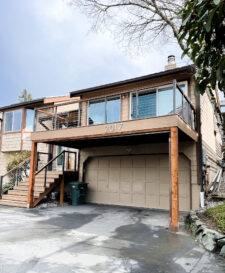
What Salt Air, Sun, and Wind-Driven Rain Actually Do to a Deck
Salt Air and Metal Fasteners
Airborne salt accelerates corrosion on anything metal — screws, brackets, joist hangers, ledger bolts. On a standard wood deck, corroding fasteners are often the first real failure point, sometimes years before the boards themselves are a problem. Composite decking doesn't solve this on its own; the hardware underneath still needs to be rated for coastal exposure, or the deck's structural integrity is only as good as its weakest fastener.
UV and Surface Fading
Near-constant sun exposure fades and dries out untreated or lower-grade wood quickly, and it will also fade cheaper composite boards that don't have real UV-stable capping. Not all composite decking handles UV the same way — this is one of the biggest differences between product tiers, and it's worth understanding before you buy on price alone.
Moisture and Wind-Driven Rain
Storms here don't just bring rain straight down — wind pushes it sideways, up under board edges, and into any gaps in flashing or substructure ventilation. Standing water and trapped moisture underneath a deck is where rot, mold, and structural softening start, whether the surface material is wood or composite.
Composite vs. Wood vs. PVC: An Honest Comparison for This Climate
Every decking material is a trade-off. Here's how the common options actually compare for a Holmes Beach property, not in general terms.
| Material | Salt air / moisture behavior | UV / fade resistance | Maintenance |
|---|---|---|---|
| Pressure-treated wood | Absorbs moisture, needs sealing and monitoring for rot | Fades and grays without regular staining | Highest — sanding, sealing, staining on a recurring schedule |
| Basic/uncapped composite | More moisture-stable than wood but can still absorb at cut edges | Can fade or chalk over time without a real cap layer | Low, but not maintenance-free |
| Capped composite (what we typically recommend here) | Strong resistance to moisture absorption and swelling | Cap layer holds color much longer under intense sun | Lowest — periodic cleaning, no sealing or staining |
| PVC decking | Excellent moisture resistance, fully synthetic | Very good, though can run hotter underfoot in direct sun | Low, similar cleaning routine to capped composite |
For most Holmes Beach homes, capped composite hits the right balance of coastal durability, appearance, and cost. PVC is a reasonable option where moisture exposure is especially severe — close to a seawall or dock, for example — but it comes at a higher price point and a different look underfoot.
What a Correct Installation Actually Involves
The decking boards themselves get most of the attention, but on a barrier island property, what's underneath them determines whether the deck lasts. A correct installation here includes:
- Corrosion-resistant fasteners and hardware rated for coastal/marine exposure, not standard interior-grade hardware
- A substructure with proper spacing and ventilation so trapped moisture and salt-laden air can escape rather than sit against the framing
- Flashing and joist protection at every point where the frame is exposed to weather, not just at the ledger board
- Board spacing set correctly for composite's expansion and contraction in Florida's heat swings — too tight and boards buckle, too loose and they feel unstable
- Hidden fastener systems installed to manufacturer spec, since improper clip spacing is a common cause of board movement or squeaking later
- Proper drainage grading underneath so wind-driven rain doesn't pool against the house or footings
Skipping any one of these doesn't usually show up on day one. It shows up in year two or three, as a squeak, a soft spot, or rust bleeding through a board — right around when a homeowner assumes composite decking should still look brand new.
Our Process for a Holmes Beach Composite Deck
1. On-Site Assessment
We look at the existing structure if there is one, the exposure of the site (how close to open water, prevailing wind direction, shade coverage), and any drainage or framing issues before quoting anything. Coastal lots vary block to block, and the right approach for one property isn't always right for the one next door.
2. Material Selection Based on Exposure
We walk homeowners through the real differences between composite grades and, where it makes sense, PVC — including what each option actually costs to own over time, not just to install.
3. Framing and Hardware First
Before a single deck board goes down, the substructure and fasteners get built to coastal standards. This is the part of the job that's invisible once it's finished, and it's the part that determines whether the deck is still solid in ten years.
4. Installation to Spec
Board spacing, fastening systems, and edge treatment are installed to the manufacturer's specifications for this climate — not generic instructions written for a drier, cooler part of the country.
5. Final Walkthrough
We go over maintenance expectations honestly, including what "low maintenance" does and doesn't mean in a salt-air environment, so there are no surprises a year in.
Maintenance: What Low-Maintenance Actually Means Here
Composite decking is a real improvement over wood in terms of upkeep, but "low maintenance" isn't "no maintenance" — especially this close to the Gulf. A reasonable maintenance routine includes:
- Periodic rinsing to clear salt residue and airborne grit before it builds up on the surface
- Keeping gaps between boards clear of debris so drainage and ventilation aren't blocked
- Checking visible fasteners and hardware annually for early signs of corrosion
- Inspecting under the deck after major storms for standing water or debris buildup
- Avoiding pressure washing at high PSI directly into board seams, which can force water into places it shouldn't go
None of this is heavy work, but skipping it entirely — treating composite as truly maintenance-free — is how avoidable problems turn into real ones on a barrier island property.
What Affects Cost on a Holmes Beach Deck Project
| Factor | Why it matters here |
|---|---|
| Composite grade selected | Capped composite and PVC cost more upfront but hold up better against salt air and UV over time |
| Substructure condition | Existing framing on older coastal homes often needs repair or full replacement before new decking goes on |
| Hardware specification | Marine-grade fasteners and connectors cost more than standard hardware but are not optional this close to the water |
| Deck size and elevation | Elevated construction, common on barrier island lots, adds framing and access complexity versus a ground-level deck |
| Railing and finish details | Composite railing systems and trim add cost but also add to how well the whole structure holds up over years of sun and salt |
We give straightforward, itemized estimates rather than one flat number, so homeowners can see exactly where the cost is going and where there's room to adjust scope if needed.
Why Local Experience on Anna Maria Island Matters
A crew that mostly works inland jobs may not think twice about standard fasteners, standard spacing, or skipping extra flashing — because on most of their jobs, it never causes a problem. On Holmes Beach, those shortcuts show up faster than almost anywhere else in Manatee County. Working this island regularly means we already know which details can't be skipped, what the wind and salt exposure actually demand, and how elevated coastal construction needs to be framed and fastened differently than a standard mainland deck. That local pattern recognition is worth more than a lower bid from a crew that's guessing at coastal specs for the first time.
Questions Worth Asking Any Composite Decking Contractor Here
- What fastener and hardware grade do you use, and is it rated for coastal/marine exposure?
- How do you handle substructure ventilation and drainage on elevated builds?
- Which composite brands and grades do you install, and why those specifically for this location?
- What does your installation warranty cover versus the manufacturer's material warranty?
- Have you worked on Anna Maria Island or similar barrier island properties before?
If you're weighing composite decking options for a Holmes Beach property, we're glad to walk the site, look at what's there now, and put together a straightforward, no-pressure estimate — just fill out the form below to get started.