 Bradenton
 Longboat Key Homes Face a Different Kind of Weather
Longboat Key sits out on the barrier island between the Gulf of Mexico and Sarasota Bay, which means the homes here take a beating that inland Manatee County properties simply don't see. Salt-laden air moves through every day, sometimes as a light mist off the water and sometimes driven hard by onshore wind. Add in the sun exposure common to a Gulf-front barrier island and the periodic direct hits from tropical systems, and you have an exterior envelope that is working overtime year-round, not just during hurricane season.
For a Bradenton exteriors crew, siding on Longboat Key isn't the same job as siding twenty minutes inland. The material has to resist moisture intrusion from wind-driven rain, hold its finish under constant UV, and stay dimensionally stable through humidity swings and salt exposure that will find every gap, fastener, and seam a crew leaves behind. This page is about what that means in practice, and why the siding product and the installation method matter just as much as each other on this stretch of coastline.
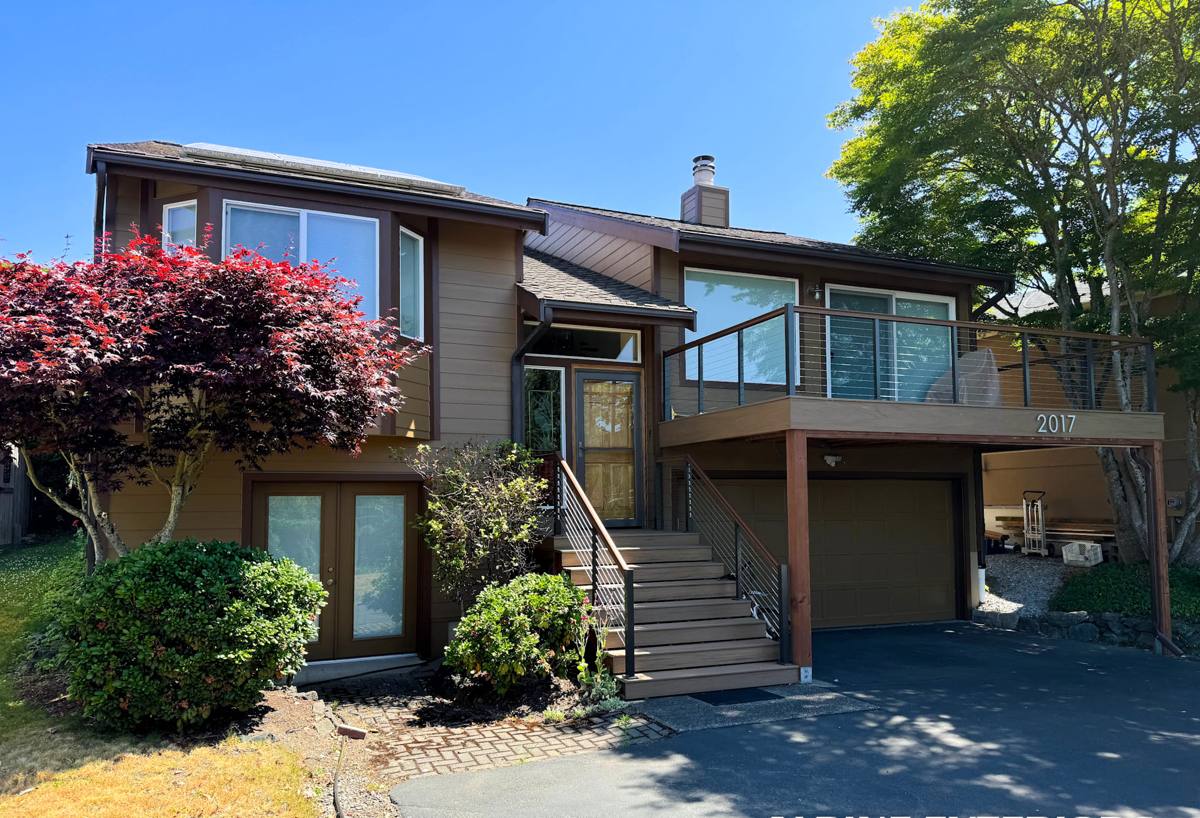
What Longboat Key's Climate Actually Does to Siding
Salt Air and Corrosion
Airborne salt is corrosive to unprotected metal fasteners, trim flashing, and any siding component that isn't rated for coastal exposure. Over time it also accelerates the breakdown of lower-grade coatings, leading to chalking, fading, and surface degradation well before an inland home would show the same wear.
Wind-Driven Rain and Moisture Intrusion
Barrier island storms don't just bring rain, they push it sideways. Wind-driven rain finds any weak lap joint, undersized overlap, or poorly flashed penetration and drives moisture behind the siding plane. Once water gets behind cladding that can't handle repeated wetting, the wall assembly underneath is what actually suffers, not just the siding face.
UV Intensity
Florida's UV load is intense everywhere, but exposed Gulf-front lots often see less natural shading from mature tree canopy than inland neighborhoods, which means more direct sun on the siding surface for more hours of the day. Coatings and finishes that aren't formulated for this level of UV exposure fade, chalk, and become brittle faster.
Wind Load During Storms
Longboat Key homes are built to coastal wind codes, and the siding system has to perform as part of that system. Fastening pattern, panel engineering, and installation to the manufacturer's high-wind specification all factor into whether siding stays attached and sealed during a real wind event, not just how it looks on a calm day.
Why We Only Install James Hardie Fiber Cement
We made a standing decision as a company to install James Hardie fiber cement siding exclusively. We don't install vinyl, LP SmartSide, Cemplank, Allura, or primed wood products like spruce or cedar. That's not a marketing position, it's a practical one built on what actually holds up in this climate over the long haul.
Vinyl softens, warps, and can pull away from the wall in sustained high wind, and it offers essentially no fire resistance. Engineered wood products like LP SmartSide are wood-based at the core, which means any breach in the factory treatment or field-cut edge sealing creates a path for moisture to reach wood fiber that can swell or deteriorate. Primed cedar and spruce require an ongoing maintenance commitment, repainting, caulk inspection, moisture monitoring, that most homeowners underestimate until the wood starts to show damage. Other fiber cement brands like Cemplank and Allura are reasonable products in the abstract, but we standardized on one manufacturer, one factory finish system, and one warranty structure so we can install to spec every time and stand behind the result.
James Hardie fiber cement is non-combustible, dimensionally stable in humidity swings, and available in a factory-applied ColorPlus finish that's engineered to resist UV fade far longer than field-applied paint. For a barrier island property, that combination of moisture stability, UV resistance, and non-combustibility is exactly what matches the actual conditions on the ground.
The HZ5 Climate Distinction
James Hardie engineers its lap siding, panels, and trim in different formulations for different climate zones, and Florida falls into the HZ5 category, the moisture and humidity-focused engineering line built for hot, wet climates. HZ5 products are formulated to resist moisture-related damage in exactly the conditions Longboat Key sees most: high humidity, salt air, and heavy seasonal rain. Specifying the correct HZ line for the region isn't a minor detail. It's the difference between a product engineered for this exact climate and one that's simply been shipped here because it was available.
ColorPlus Factory Finish vs. Field-Applied Paint
| Factor | ColorPlus Factory Finish | Field-Applied Paint |
|---|---|---|
| UV resistance | Baked-on, engineered for long-term color retention | Fades and chalks faster under intense sun |
| Salt air performance | Consistent factory-controlled coating thickness | Coverage varies by installer, more prone to thin spots |
| Touch-up needs | Minimal, warranted finish | Repainting cycle every several years |
| Color consistency | Uniform across all boards and trim | Can vary batch to batch |
What Correct Installation Looks Like on a Barrier Island Home
The siding product is only half the equation. A correct James Hardie installation on Longboat Key follows the manufacturer's specifications closely, and in a high-wind, high-moisture coastal environment, skipping steps shows up as problems faster than it would inland.
- Correct fastener type, spacing, and embedment depth for high-wind zones, not a generic inland pattern
- Proper lap and overlap dimensions to shed wind-driven rain instead of channeling it behind the panel
- A water-resistive barrier installed and lapped correctly behind the siding, giving the wall a second line of defense
- Flashing at every window, door, and penetration, sealed to actually redirect water rather than trap it
- Correct clearance from grade, roof lines, and decking so siding doesn't sit in standing moisture
- Factory-cut edges used wherever possible, with any field cuts properly sealed per Hardie's specification
- Caulking only at manufacturer-specified joints, not as a substitute for correct flashing
Every one of those steps exists because it addresses a real failure mode. Skip the flashing detail and wind-driven rain gets behind the plane. Use the wrong fastener spacing and a panel can work loose in sustained high wind. This is where a crew's field experience matters as much as the product spec sheet.
Why a Crew That Already Works Longboat Key Matters
There's a real difference between a crew installing Hardie siding for the first time on a coastal property and one that already understands what this specific stretch of coastline demands. A crew familiar with Longboat Key and the surrounding Bradenton barrier island area already knows to plan around salt exposure at fastener heads, to account for wind-driven rain angles common to Gulf-facing elevations, and to sequence work around the area's storm season rather than getting caught mid-job. That local pattern recognition doesn't show up on a spec sheet, it shows up in fewer callbacks and fewer surprises after the first real storm.
It also matters for access and logistics. Barrier island jobs often mean tighter lot access, HOA or community coordination, and scheduling around bridge traffic and seasonal population swings. A crew that already navigates that as part of working Bradenton and the surrounding islands moves through the job more efficiently than a crew learning the area for the first time.
Our Process for a Longboat Key Siding Project
1. On-Site Assessment
We walk the exterior, check the current siding and substrate condition, look at moisture history around windows and penetrations, and evaluate wind and salt exposure by elevation, since the Gulf-facing side of a home often needs different attention than the bay side.
2. Product and Line Selection
We help you choose the right James Hardie product line, HZ5-engineered for Florida, along with a ColorPlus finish that fits the home and the neighborhood. Lap width, texture, and trim details all get decided at this stage.
3. Preparation and Moisture Barrier Work
Old siding is removed, the substrate is inspected for hidden damage, and the water-resistive barrier is installed and lapped correctly before a single piece of new siding goes up.
4. Installation to Manufacturer Spec
Fastening, flashing, and lap details follow James Hardie's high-wind installation requirements, not a generic standard. This is the step that determines how the siding actually performs in the next storm, not just how it looks on installation day.
5. Final Inspection and Walkthrough
We walk the finished job with you, checking seams, trim, and finish consistency, and go over the warranty coverage so you know exactly what's backed and for how long.
Cost Factors Specific to a Barrier Island Job
| Factor | Why It Affects Cost on Longboat Key |
|---|---|
| Access and staging | Tighter lots and limited staging space on island properties can affect labor time |
| Substrate condition | Existing moisture damage from prior wind-driven rain intrusion may need repair before new siding goes up |
| Elevation-specific detailing | Gulf-facing walls often need more attention to flashing and lap detail than sheltered elevations |
| Trim and architectural detail | Coastal homes often have more window and door openings requiring precise flashing work |
| HOA or community requirements | Some island communities have color or material approval processes that affect timeline |
We don't quote a job without seeing it, and we won't hand you a number that isn't grounded in the actual condition of your home. A broad range for a full fiber cement siding replacement covers a wide spread depending on square footage, trim complexity, and substrate condition, which is exactly why an on-site estimate matters more than a phone quote.
Maintenance Once the New Siding Is Up
James Hardie fiber cement with a ColorPlus finish is low-maintenance compared to wood or repainted alternatives, but low-maintenance isn't no-maintenance, especially this close to the Gulf. A simple annual rinse to clear salt residue, a periodic check of caulked joints for cracking, and prompt attention to any impact damage will keep the system performing the way it's engineered to. None of that requires repainting cycles or the moisture vigilance that wood siding demands, which is part of why it holds up better here.
If you own a home on Longboat Key or nearby and you're weighing your siding options, we're glad to walk the property with you and give you a straight, no-pressure estimate on what a correct James Hardie installation would involve for your specific home. There's no cost and no obligation, just a clear look at what your exterior actually needs.