 Bradenton
 Ellenton sits close enough to the Manatee River and the Gulf that its homes take on a specific mix of punishment: salt-laden air drifting in off the water, sun that doesn't let up for most of the year, and the wind-driven rain that comes with every summer storm system and the occasional hurricane threat. Siding here isn't a cosmetic decision. It's the layer standing between that environment and your walls, insulation, and framing. We install James Hardie fiber cement siding on Ellenton homes because it's the one product we trust to hold up to all of that without turning into a maintenance project.
What Ellenton's Climate Actually Does to Siding
It helps to be specific about the stresses involved, because they're not the same everywhere in Florida. Ellenton's location in Manatee County puts homes in a zone where a few things happen at once:
- Salt air corrosion. Proximity to the Manatee River and the broader Tampa Bay region means airborne salt settles on exterior surfaces and accelerates deterioration of materials that aren't built to resist it — especially fasteners, trim, and anything with exposed seams.
- Sustained UV exposure. Florida sun is intense nearly year-round, not just in summer. Siding faces constant thermal cycling — heating through the day, cooling at night — that stresses paint bonds and can cause lesser materials to warp, crack, or fade unevenly.
- Wind-driven rain. Storms here don't just drop rain straight down. Wind pushes it sideways and forces water into laps, seams, and fastener points that weren't designed to handle horizontal moisture intrusion.
- Hurricane-force wind loading. Even homes that never take a direct hit still deal with repeated high-wind events over their lifespan, which puts real stress on how siding is fastened and how well it holds a seal at the edges.
Any siding product will survive a photo shoot. What separates a good choice from a bad one in Ellenton is how it performs after ten summers of that cycle repeating.
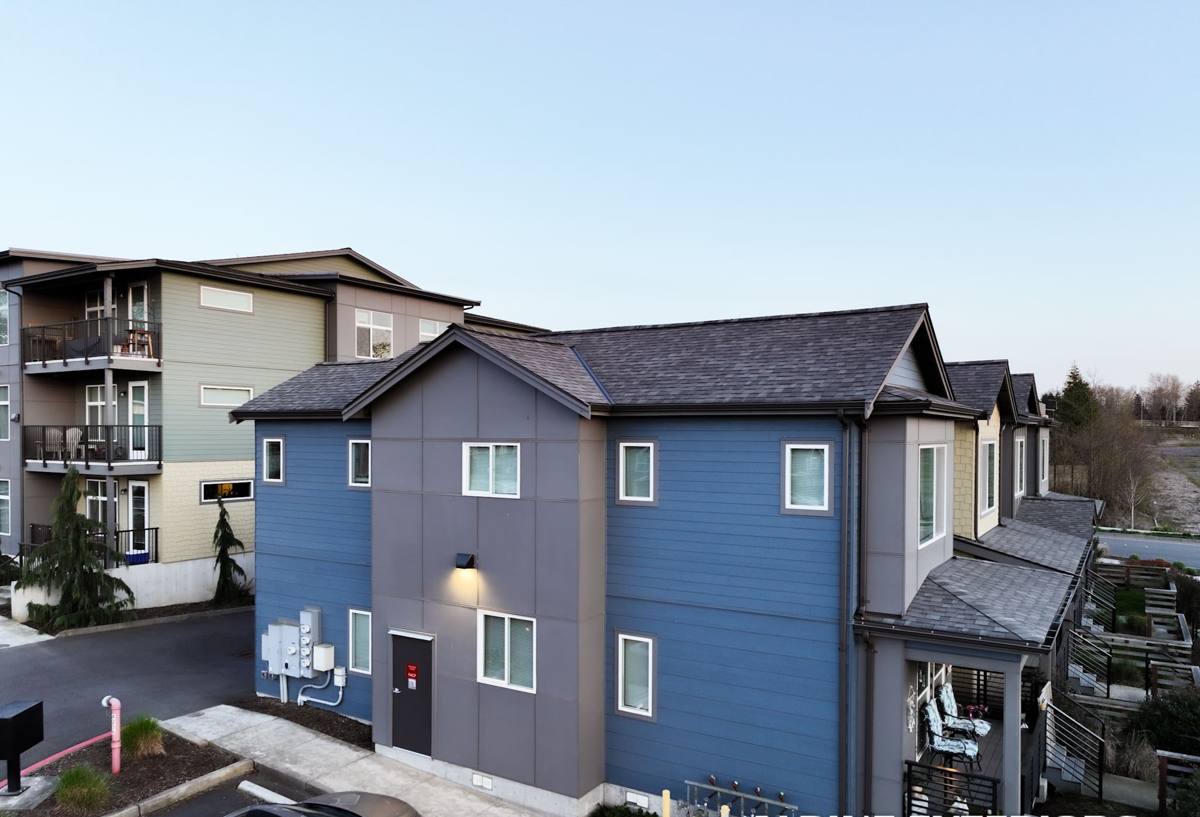
Why We Install James Hardie and Nothing Else
We don't offer vinyl, LP SmartSide, Cemplank, Allura, or primed wood siding. That's a deliberate standard, not a limitation of what we know how to install. Here's the honest reasoning:
Vinyl
Vinyl is inexpensive and easy to install, and in a lot of climates that's a reasonable trade-off. In this climate, sustained UV exposure fades and embrittles vinyl over time, and it has real limits on wind resistance compared to fiber cement — panels can crack, warp, or blow off in high wind events. It's also not a good match for the way salt air interacts with its fastening system over the long run.
Wood-based and other fiber cement competitors
Primed spruce and cedar look good on day one but demand an ongoing maintenance commitment — recoating, caulking, and moisture vigilance — that most homeowners underestimate until they're a few years in. Engineered wood products like LP SmartSide use a wood-strand substrate that, while treated, is still more moisture-sensitive than true fiber cement, which matters a lot in a region with wind-driven rain. Other fiber cement brands like Cemplank and Allura are legitimate products on paper, but we've standardized on one manufacturer, one installation system, and one warranty structure so our crews are installing to a single spec every time instead of juggling different product tolerances, fastening rules, and finish systems across jobs.
What James Hardie gets right for this specific climate
James Hardie fiber cement is non-combustible, dimensionally stable, and engineered specifically for high-moisture, high-heat climates through its HZ5 product line — the version formulated for Gulf Coast and Southeast conditions. The ColorPlus factory-applied finish is baked on under controlled conditions rather than painted on-site, which gives it far more consistent UV and fade resistance than field-applied paint on other materials. It doesn't rot, it resists pest damage, and it holds its shape through the thermal cycling that comes with a Manatee County summer.
What Correct Installation Involves
A big share of siding failures we get called out to inspect aren't product failures — they're installation failures. James Hardie publishes detailed fastening, clearance, and flashing specifications, and skipping them is what causes moisture problems down the line. Correct installation on an Ellenton home includes:
- Proper starter strip and water-resistive barrier installation before the first plank goes up
- Correct fastener type, spacing, and embedment depth — this matters more in high-wind zones than most homeowners realize
- Minimum clearances from grade, roofing, and decks to prevent wicking moisture into the plank ends
- Factory-mitered or properly caulked and primed field-cut edges, since cut edges are the most vulnerable point on any fiber cement installation
- Correct flashing and integration at windows, doors, and any wall penetrations
- Panel and joint treatment that accounts for expansion and contraction rather than fighting it
Get these details wrong and you can end up with moisture intrusion, cracking at the joints, or premature paint failure — even though the siding itself is rated for the job. This is why the installing crew matters as much as the product choice.
Our Process for an Ellenton Siding Job
1. On-site assessment
We walk the home, check the current siding condition, look at the sheathing and water-resistive barrier where it's exposed, and note anything specific to the property — orientation to prevailing wind and rain, tree cover, existing moisture damage, and how the home's trim and roofline will need to integrate with new siding.
2. Product and color selection
We help you choose the right HardiePlank profile (lap width, texture) and ColorPlus finish for the home's style and HOA requirements if applicable. We'll also talk through where HardieTrim and HardieSoffit make sense to complete the system.
3. Tear-off and substrate check
Old siding comes off and we inspect what's underneath before anything new goes up. Rotted sheathing or compromised barrier material gets addressed at this stage — covering over a hidden problem is how small issues turn into expensive ones.
4. Installation to manufacturer spec
Fastening, clearances, flashing, and joint treatment all follow James Hardie's published requirements for the HZ5 climate zone, not shortcuts.
5. Final walkthrough
We go over the completed job with you, confirm trim and caulk lines, and make sure everything meets the standard we install to before we call it finished.
Comparing the Options Homeowners Usually Ask About
| Factor | Vinyl | Wood / Engineered Wood | James Hardie Fiber Cement |
|---|---|---|---|
| Wind resistance | Moderate; can crack or detach in high wind | Moderate; fastening is critical | Engineered and rated for high-wind installation when installed to spec |
| Moisture behavior | Doesn't absorb, but seams can trap water | Absorbs moisture; rot risk if maintenance lapses | Resists moisture intrusion; doesn't rot |
| UV / fade resistance | Fades and can become brittle over time | Depends entirely on paint maintenance schedule | ColorPlus factory finish holds color significantly longer than field-applied paint |
| Maintenance | Low, but limited lifespan in intense sun | High — recoating and caulk inspection needed regularly | Low; occasional wash and caulk check |
| Fire resistance | Combustible | Combustible | Non-combustible |
Why It Matters That We Already Work in This Area
A crew that installs siding across a lot of different climates treats every job the same way. A crew that works Manatee County and the surrounding Bradenton area every week knows how homes here actually take on damage — where wind-driven rain tends to find gaps, which orientations get hit hardest by salt air, and what a Manatee County or City of Palmetto/Bradenton area permit and inspection process actually requires. That familiarity shows up in the details: how tight the flashing is at a window head, how much clearance is left at a lower course, how a joint is caulked before the next hurricane season tests it. It's not a marketing point — it's the difference between siding that looks right for a year and siding that performs for decades.
Signs Your Ellenton Home May Need New Siding
- Visible cracking, warping, or buckling in siding panels
- Soft spots or discoloration near the base of exterior walls
- Paint that's peeling or chalking faster than expected
- Gaps opening up at seams, corners, or trim boards
- Rising energy bills that may point to compromised insulation behind failing siding
- Visible mold, mildew, or persistent staining that pressure washing doesn't resolve
If you're seeing any combination of these, it's worth having the siding and the substrate behind it inspected before a storm season finds the weak point for you.
What a Realistic Timeline and Cost Range Look Like
Every home is different, and the honest answer is that cost depends on square footage, the number of stories, trim complexity, and how much substrate repair is needed once old siding comes off. In general terms, fiber cement siding is a mid-to-upper range investment compared to vinyl, reflecting both material cost and the labor involved in installing it correctly. Most single-family home installations take one to two weeks depending on size and weather, which in this region means we plan around Florida's rain patterns rather than fighting them.
If your Ellenton home's siding is showing its age or you're planning ahead of the next storm season, we're happy to walk the property and give you a straight, no-pressure assessment of what it needs. Reach out below for a free estimate.