 Bradenton
 Building a Deck That Holds Up in Tara
Tara is one of Bradenton's established planned communities, known for its golf course frontage, mature landscaping, and a mix of pool lanais, screened enclosures, and open patio spaces. A lot of homes here were built with an outdoor living area in mind, but many original decks and patios are now old enough that the materials underneath are showing their age. When we build or replace a deck in Tara, we're not just thinking about how it looks on day one — we're thinking about how it performs through a Manatee County summer, a wet season with regular afternoon downpours, and whatever tropical system rolls through during hurricane season.
A deck in this part of Florida does a different job than a deck in a drier, milder climate. It has to shed water fast, resist warping and cupping from constant humidity swings, tolerate direct UV exposure for months at a time, and stay structurally sound when wind loads spike during a storm. Get any one of those wrong and you're looking at a deck that looks fine for a year or two and then starts telling on itself — boards cupping, fasteners backing out, railings going soft at the post base.
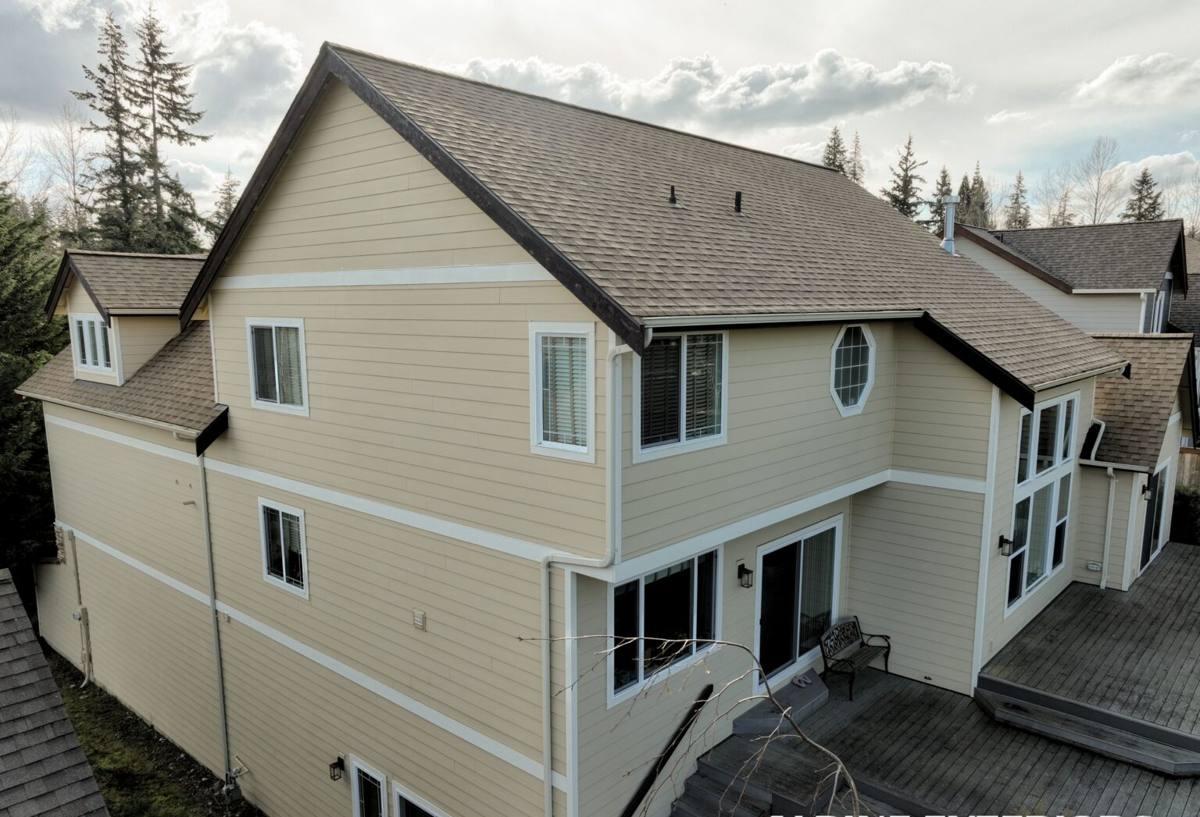
What Bradenton's Climate Actually Does to a Deck
It helps to understand the specific stresses at work, because they drive almost every decision we make on material selection and construction detail.
Heat and UV
Central Florida sun is intense and consistent nearly year-round. Wood and composite decking both absorb UV energy, and lower-grade products fade, chalk, or become brittle faster than homeowners expect. Dark-colored decking also gets noticeably hot underfoot in direct sun, which matters for a deck used barefoot around a pool.
Humidity and Wind-Driven Rain
Manatee County doesn't just get rain — it gets rain pushed sideways by wind, which finds its way into any gap, fastener hole, or unsealed cut end. Combined with high ambient humidity, this is the environment where wood rot, fastener corrosion, and substructure decay actually start. Decking that isn't detailed correctly at the framing level will trap moisture against the joists no matter how good the surface material is.
Hurricane-Force Wind Loads
Attached decks and their railing systems have to handle real wind loads, not just support foot traffic. Railing posts, ledger board attachment to the house, and joist hangers are all load-bearing points that get tested hardest during a tropical storm or hurricane, not during normal use.
Salt Air Influence
Tara isn't beachfront, but the broader Bradenton area sits close enough to the Gulf that salt-laden air still reaches inland neighborhoods, especially during onshore wind events. Salt air accelerates corrosion in unprotected metal fasteners and connectors over time, which is why fastener selection matters even for decks that aren't within sight of the water.
What a Correctly Built Deck Includes
A deck that's going to last in this climate is built right from the framing up, not just finished nicely on the surface. The parts nobody sees matter more than the parts everybody sees.
- Pressure-treated or naturally rot-resistant framing lumber rated for ground contact where applicable
- Stainless steel or coated corrosion-resistant fasteners and joist hangers — not standard galvanized in high-exposure areas
- A ledger board properly flashed and sealed where it attaches to the house, so wind-driven rain can't work its way behind the siding
- Joist spacing and blocking sized for the decking material chosen, not just a generic 16-inch layout
- Post footings sized and set to local frost-free depth and soil-bearing requirements, with proper anchoring for wind uplift
- Railing systems with post attachment engineered to resist lateral load, not just screwed to the rim joist
- Gaps between boards sized correctly for the decking material's expansion and contraction behavior
- Cut ends and field cuts sealed before installation, especially on wood products
Skipping any of these doesn't usually show up right away. It shows up two or three years later as soft spots, rust streaks, or a railing that flexes more than it should.
Choosing the Right Decking Material for Tara
There's no single "best" decking material — there's a best fit for your budget, your maintenance appetite, and how the deck will actually be used. Here's how the common options compare under Manatee County conditions.
| Material | UV / Fade Resistance | Moisture Behavior | Maintenance | Typical Lifespan Here |
|---|---|---|---|---|
| Pressure-treated wood | Fades and grays without upkeep | Prone to cupping/warping if not sealed regularly | Annual sealing/staining recommended | 10–15 years with upkeep |
| Composite decking | Good, quality-dependent | Stable, doesn't rot, but lower-grade boards can absorb heat and moisture at cut ends | Low — periodic cleaning | 20–25+ years |
| PVC / capped polymer | Very good | Fully moisture-resistant, doesn't support rot | Lowest — occasional washing | 25+ years |
| Tropical hardwoods | Naturally dense, fades to gray without oil treatment | Naturally rot-resistant when properly sourced | Moderate — periodic oiling | 20–25 years with upkeep |
We'll walk through these trade-offs honestly during your estimate. Composite and PVC decking cost more upfront but reduce the recurring maintenance burden that wood demands in this climate. Wood keeps a traditional look and a lower entry price but only holds up if the sealing schedule actually happens — and in Florida heat and rain, that schedule slips fast if it's not kept up.
Decks, Screened Enclosures, and Pool Areas
Many Tara homes pair a deck or paver patio with a screened lanai or pool cage. When we're building a deck that ties into an existing screen enclosure or pool deck, we pay close attention to how water drains away from the house and the pool equipment pad, and how the new structure integrates with existing footings and screen framing without creating a new spot for water to pool. Decking material choice also matters more around a pool — some composite and PVC products are specifically formulated to stay cooler underfoot and resist the effects of pool chemicals and sunscreen residue better than others.
Our Process for a Tara Deck Project
1. On-Site Assessment
We look at the existing structure (if there is one), the condition of any framing we can access, drainage patterns around the house, and how the deck will actually be used — entertaining, pool access, grilling, quiet morning coffee. That use case shapes size, layout, and material recommendations.
2. Honest Material and Design Recommendation
We'll lay out the real trade-offs between wood, composite, and PVC decking for your specific goals and budget, including what the maintenance commitment actually looks like year to year in this climate — not just what looks best in a sample board.
3. Permitting
Deck construction and modification in Manatee County and the City of Bradenton typically requires a building permit, particularly for anything structurally attached to the house or involving new footings. We handle the permitting process so the work is inspected and documented correctly.
4. Construction
Framing first, with attention to ledger flashing, fastener selection, and footing depth. Decking installation follows, with attention to board spacing, fastening method, and cut-end sealing. Railings and any stairs are built to code for the load requirements in this wind zone.
5. Final Walkthrough
We walk the finished deck with you, check railing stability, decking fastening, and drainage, and answer any maintenance questions before we consider the job done.
Maintenance That Actually Matters Here
Whatever material you choose, a few habits make a real difference in how long a Bradenton-area deck lasts:
- Keep gaps between boards clear of leaf and debris buildup, which traps moisture
- Rinse salt and pollen film off the surface periodically, especially after storms
- Check railing post connections annually for looseness — wind load works these joints over time
- For wood decking, don't let the sealing schedule slip even one season behind
- Inspect under the deck (framing, joist hangers, fasteners) once a year if it's accessible
Why Local Experience in Tara Matters
A crew that already works in Tara and the surrounding Bradenton neighborhoods knows the practical realities that don't show up in a generic spec sheet: how the local HOA architectural review process typically runs, what soil and drainage conditions look like on established Tara lots, and which fastener and framing details actually hold up through a full Manatee County wet season and storm cycle rather than just looking good at handoff. That local track record is worth more than a lower bid from a crew that's never built here before.
If you're planning a new deck or need to replace one that's past its prime, we're happy to take a look and give you a straightforward assessment — no pressure, no upsell. Fill out the form below to request a free estimate for your Tara property.