 Bradenton
 Building a Deck That Can Actually Live on Anna Maria Island
Anna Maria Island sits right on the Gulf, and that changes what a deck has to survive compared to a deck built a few miles inland in Bradenton proper. Salt air corrodes hardware faster, constant UV breaks down wood fibers and coatings, wind-driven rain finds its way into every joint that wasn't sealed correctly, and hurricane-force gusts put real uplift and lateral load on the structure. A deck that would hold up fine in a sheltered inland yard can fail within a few years out on the island if it was built to a generic standard instead of a coastal one. We build decks specifically for this environment, not a version of an inland deck with better paint.
This page covers what a deck on Anna Maria Island actually needs — material selection, framing and fastener choices, permitting realities for Manatee County's barrier island communities, and the maintenance that keeps a deck looking and performing well for the long haul.
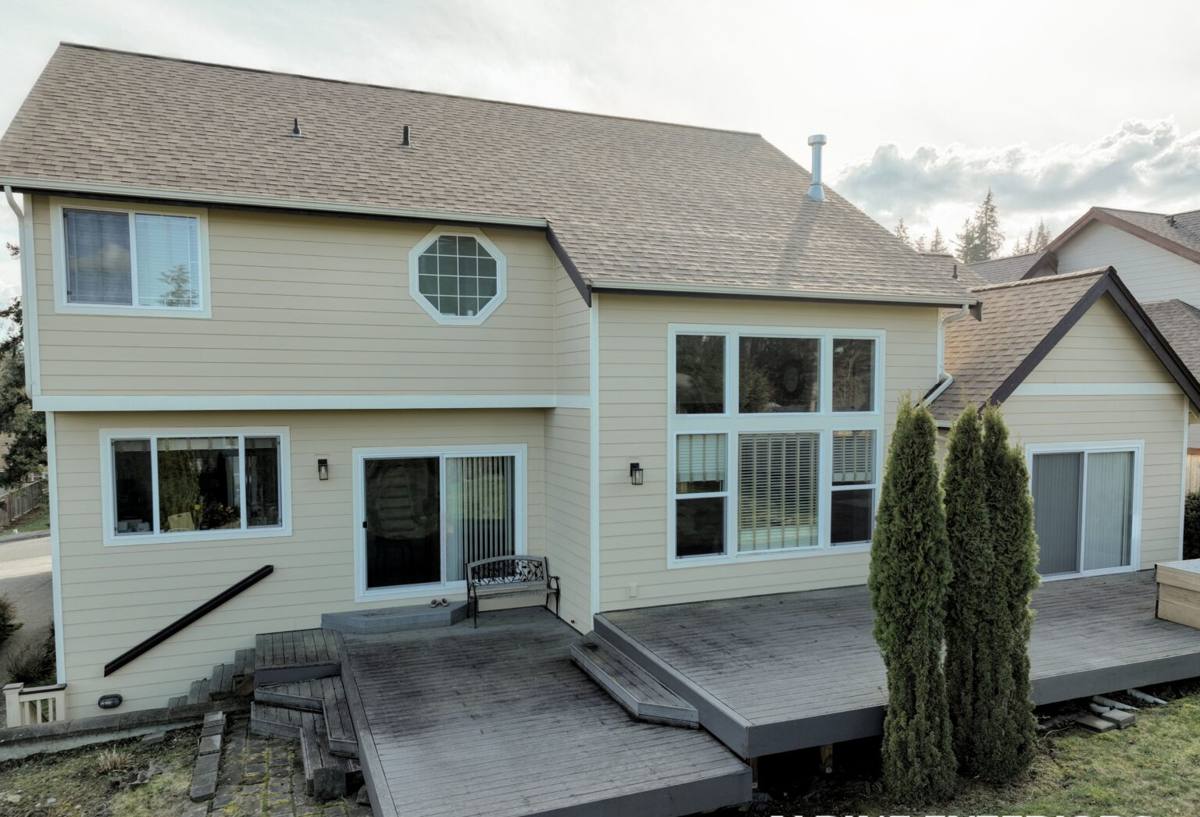
What Makes Anna Maria Island Different From a Typical Bradenton Backyard
Barrier Island Conditions
Anna Maria Island — covering Anna Maria, Holmes Beach, and Bradenton Beach — is a narrow barrier island with the Gulf of Mexico on one side and Sarasota Bay on the other. That means almost every property is close to saltwater, and airborne salt spray reaches every exterior surface, not just homes directly on the beach. Combine that with Florida's UV exposure and long, humid summers, and you get accelerated wear on any material that wasn't chosen with corrosion and moisture in mind.
Elevation and Flood Zones
Many homes on the island are elevated on pilings or stem walls because of flood zone requirements, which means decks here often connect to a structure well above grade, sometimes with multiple levels, stair runs, and railings that all need to meet code for both wind and fall protection. A ground-level deck design that works inland doesn't always translate directly to an elevated island home — the ledger connection, structural attachment points, and support posts all need to be engineered for the actual house they're attached to.
Material Choices: What Actually Holds Up Out Here
There's no single "best" decking material for every home — it depends on budget, how close the property is to open water, and how much maintenance the owner wants to take on. Here's how the common options compare in a coastal Manatee County setting.
| Material | Salt Air Performance | Maintenance | Typical Lifespan |
|---|---|---|---|
| Pressure-treated pine | Fair — needs sealing to resist moisture and salt intrusion | Annual cleaning, resealing every 1-2 years | 10-15 years with upkeep |
| Composite decking | Good — resists rot and salt staining, doesn't absorb moisture | Periodic washing, no sealing or staining | 20-25+ years, manufacturer-dependent |
| Tropical hardwoods (e.g., ipe) | Very good — naturally dense and rot-resistant | Regular oiling to maintain color and prevent surface checking | 25+ years with consistent maintenance |
| PVC decking | Very good — fully synthetic, unaffected by salt or moisture | Low — occasional washing | 20-25+ years |
We don't push one product on every job. What we won't do is install a decking material without also matching the substructure and fasteners to it — a beautiful composite deck board over the wrong hardware or an under-built frame just moves the failure point underneath where you can't see it.
A Word on Wood Sealers and "Budget" Composite
Cheaper composite boards and thin, poorly formulated wood sealers tend to struggle in this specific environment — not because they're inherently bad products everywhere, but because salt air and constant sun exposure are a harder test than most manufacturers design around. Our standard is to spec materials and coatings rated for coastal or marine-adjacent use, even when it costs a bit more up front, because re-doing a deck in five years costs a lot more than that difference.
Framing and Fasteners: Where Coastal Decks Actually Fail
Most deck failures near the Gulf don't start with the decking boards — they start underneath, where nobody's looking. Galvanized fasteners that aren't rated for coastal exposure can corrode from the inside out over a few seasons, weakening the connection long before it's visibly rusted on the surface. We build every Anna Maria Island deck around a few non-negotiables:
- Stainless steel or coastal-rated hot-dip galvanized fasteners throughout — not standard galvanized hardware
- Hurricane ties and structural connectors at ledger, post, and beam connections to resist uplift and lateral wind loads
- Proper ledger flashing and waterproofing where the deck attaches to the house, since this is the single most common point of hidden rot
- Post bases and joist hangers rated for the actual span and load, not undersized to save material cost
- Adequate spacing and blocking to handle wind-driven rain without trapping moisture against framing
None of this is visible once the deck is finished, which is exactly why it matters who builds it. A deck can look identical on the surface with correct hardware underneath or corner-cut hardware underneath — the difference only shows up years later, usually during a storm.
Permitting and Code Requirements for the Island
Decks on Anna Maria Island fall under Manatee County and, depending on the specific municipality (Anna Maria, Holmes Beach, or Bradenton Beach), local permitting review in addition to Florida Building Code wind provisions for coastal construction. Because much of the island sits in a flood zone, elevated decks and any structural attachment to a pile-supported home may also need to account for flood zone construction standards. Permitting on the island can involve more coordination than an inland Bradenton permit — we handle that process as part of the job rather than leaving the homeowner to sort out which department needs what.
What This Means for Timeline
Because of the additional review layers, island permits sometimes take longer to approve than a comparable inland project. We build that into the schedule up front so there are no surprises — better to plan for the real timeline than promise a fast turnaround and miss it.
Our Deck Building Process
- On-site assessment — we look at the existing structure, elevation, sun and wind exposure, and how the deck will connect to the home
- Design and material selection — matched to budget, maintenance preference, and proximity to open water
- Permitting — we pull and manage the permit through the appropriate jurisdiction
- Framing — coastal-rated fasteners and connectors, correctly flashed ledger attachment, engineered post and beam spacing
- Decking, railing, and stairs — installed to code for fall protection and wind resistance
- Final walkthrough — inspection sign-off and a clear rundown of maintenance for the specific materials used
Before we start, here's a quick checklist we walk every island deck project through:
- Is the substructure rated for this home's actual wind exposure, not a generic inland standard?
- Are all fasteners and connectors coastal-rated stainless or hot-dip galvanized?
- Is the ledger properly flashed and sealed against wind-driven rain?
- Does the railing and stair design meet current code for height and baluster spacing?
- Has the permit accounted for flood zone or elevation requirements where applicable?
- Does the decking material match the homeowner's realistic maintenance plan?
Maintenance: Keeping a Salt-Air Deck Looking Right
Every deck near the Gulf needs more regular attention than one built inland, regardless of material. Salt residue builds up on every surface, and if it's not rinsed off periodically, it can accelerate corrosion on hardware and dull finishes on wood and composite alike. A simple periodic rinse with fresh water, combined with the manufacturer-recommended cleaning schedule for whatever decking material was chosen, goes a long way. Wood decks need more frequent sealing or oiling out here than the same product would need a few miles inland — the sun and salt combination is genuinely harder on a finish. We give every homeowner a maintenance rundown specific to their deck's materials when the job wraps up, not a generic printout.
Why Hire a Crew That Already Works Anna Maria Island
Deck building on a barrier island isn't the same trade as deck building in a sheltered subdivision. A crew that hasn't worked this environment before can underestimate how fast salt air degrades standard hardware, or miss the extra permitting coordination the island requires. We build decks throughout the Bradenton area and specifically understand what Anna Maria Island's combination of flood zone construction, coastal wind exposure, and salt air demands from materials and structure. That local familiarity is what keeps a project on schedule and keeps the deck performing the way it's supposed to for years after the crew leaves.
If you're planning a new deck or replacing one that didn't hold up on Anna Maria Island, we're happy to take a look and put together a straightforward, no-pressure estimate. Fill out the form below and we'll go over what your property actually needs.