 Bradenton
 Cortez Sits at the Edge of Every Coastal Stress Factor
Cortez is one of the last working waterfront communities on Florida's Gulf Coast, and that closeness to open water is exactly what makes siding decisions here different from a house a few miles inland in Bradenton or Manatee County. Homes in Cortez sit directly in the path of onshore wind, salt-laden air, and the kind of wind-driven rain that finds every gap in a wall system during a summer squall or a tropical system. Siding that would hold up fine in a landlocked neighborhood can fail early here if it wasn't built, and installed, for this specific exposure.
Four things do most of the damage over time: hurricane-force and near-hurricane wind loads, intense year-round UV that breaks down paint and cheaper composite materials, wind-driven rain that gets pushed sideways into laps and seams instead of simply running down a wall, and salt air that accelerates corrosion on fasteners, trim, and anything not rated for a marine-adjacent environment. None of these are hypothetical for Cortez — they're the baseline climate the exterior of a house has to be engineered to handle every single year, not just during a named storm.
Why Fiber Cement, and Why James Hardie Specifically
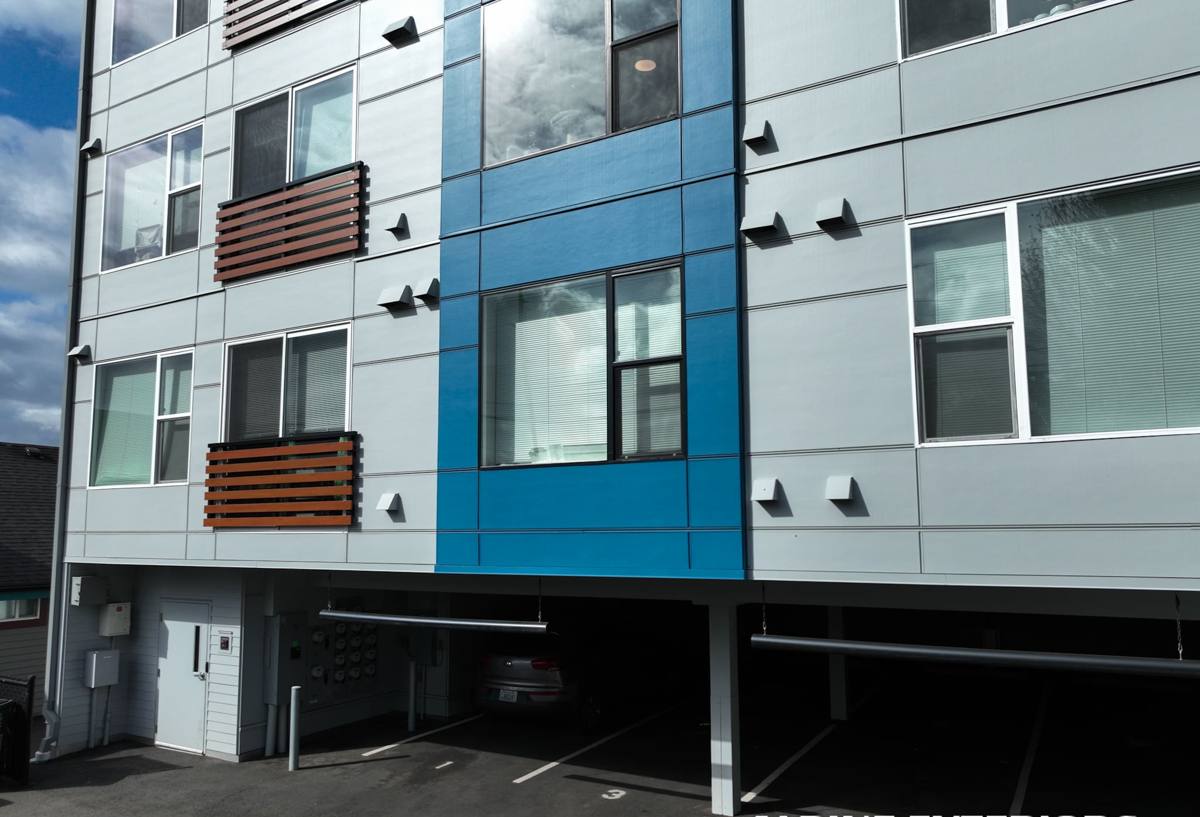
We install James Hardie fiber cement siding exclusively. We don't install vinyl, LP SmartSide, Cemplank, Allura, or wood products like primed spruce or cedar, and that's a deliberate standard, not a sales preference. In a coastal wind and salt environment, the material matters as much as the workmanship. Vinyl can deform and crack under sustained UV and heat, and it's more vulnerable to wind uplift at the edges during high gusts. Wood-based and OSB-core products absorb moisture at cut edges and fastener points, and once moisture gets in, humidity and salt air keep it from drying out the way it might in a drier climate. Fiber cement doesn't share those weak points — it's dimensionally stable, doesn't rot, and is non-combustible, which matters for insurance conversations as much as for storm resilience.
James Hardie backs its coastal-rated products with a strong transferable limited warranty, and the ColorPlus factory-applied finish is baked on and UV-cured rather than field-sprayed, which matters directly for a location that gets intense sun exposure nearly every day of the year. That's the whole reason we standardized on one manufacturer instead of offering several tiers of product — we'd rather install one system correctly than offer homeowners a cheaper option we don't think holds up here.
The Right Hardie Product Line for a Waterfront Exposure
James Hardie makes region-specific formulations, and the HZ5 line is engineered for the higher moisture, humidity, and storm exposure found along the Gulf Coast — which is what we specify for Cortez homes as a default rather than a generic mid-country formulation. The difference isn't cosmetic. HZ5 boards are engineered to resist moisture-related expansion and to hold paint adhesion better in high-humidity, high-UV conditions, which is exactly the combination Cortez deals with for most of the year.
Matching the Profile to the House
Beyond the climate formulation, the profile and reveal you choose affects both looks and long-term performance. Lap siding is the most common choice for a durable, low-maintenance exterior. Board-and-batten or panel systems can suit certain home styles but change how flashing and drainage details need to be handled. We walk through this with the homeowner based on the home's existing lines and the level of coastal exposure the specific elevation faces — a wall facing open water or prevailing wind gets treated more conservatively than a sheltered side of the house.
| Siding Choice | Wind/Storm Behavior | Salt Air & Moisture Behavior | Long-Term Upkeep |
|---|---|---|---|
| James Hardie HZ5 Fiber Cement | Engineered and tested for high-wind coastal zones when installed to fastening spec | Non-combustible, dimensionally stable, resists moisture-driven swelling | ColorPlus finish holds color; occasional caulk/paint touch-up at trim joints |
| Vinyl Siding | Can deform, crack, or blow off at panel edges under sustained high wind | Doesn't rot, but UV and heat cause fading and brittleness over time | Low upkeep but limited repair options once faded or warped |
| LP SmartSide / OSB-Core Products | Performs reasonably when new, but wind-driven rain intrusion is the real risk factor | Engineered wood absorbs moisture at cut edges and fasteners; salt air speeds deterioration | Requires vigilant caulking and repainting to prevent moisture entry |
| Cedar / Primed Wood | Wind performance depends heavily on fastening; can split or crack | Natural wood movement plus salt air accelerates checking and rot without diligent maintenance | Highest maintenance — regular refinishing and moisture inspection needed |
What a Correct Installation Actually Involves
Fiber cement siding is only as good as the installation behind it. Most of the failures we get called out to inspect on other contractors' work trace back to shortcuts in details that don't show on the surface until years later. For a Cortez home, we treat the following as non-negotiable:
Fastening for Wind Zones
James Hardie publishes specific fastener type, spacing, and embedment requirements for high-wind zones, and Manatee County's coastal exposure means we follow the high-wind schedule, not the standard interior schedule. Under-fastened siding is one of the most common causes of panels working loose in a storm.
Flashing and Water Management
Every window head, door head, and horizontal trim transition needs proper flashing so wind-driven rain gets shed outward instead of trapped behind the cladding. This is the detail that separates siding that survives a decade of Gulf Coast weather from siding that starts showing rot in the wall sheathing behind it.
Clearances and Gaps
Hardie's installation instructions call for specific clearances from roofing, decks, and grade, along with gapping at butt joints that then get properly caulked and sealed — not butted tight, which traps moisture and defeats the point of the gap. Corrosion-resistant fasteners and trim hardware are used throughout, since standard-grade metal degrades quickly in salt air.
Caulking and Sealant Choice
Salt air and intense UV break down lower-grade sealants faster than they would inland. We use sealants rated for exterior, high-UV, coastal use at every joint that calls for one.
Our Process for a Cortez Job
- On-site assessment — we look at the home's specific exposure (open-water-facing walls versus sheltered sides), existing sheathing and moisture condition, and any trim or window details that affect the tear-off.
- Tear-off and sheathing check — old siding comes off and the sheathing underneath gets inspected for hidden rot or moisture damage before anything new goes up.
- Weather-resistive barrier and flashing — a proper drainage plane and flashing details go in first, since this layer does most of the real work keeping water out over the life of the siding.
- HZ5 Hardie installation — installed to the high-wind fastening schedule with correct clearances and gapping.
- Trim, caulking, and finish details — coastal-rated sealants and corrosion-resistant hardware at every joint and penetration.
- Final walkthrough — we go over the finished exterior with the homeowner and explain what routine upkeep to expect.
What Maintenance Looks Like After Installation
One reason we recommend Hardie for this area is how little ongoing maintenance it asks for compared to the alternatives, but "low maintenance" doesn't mean "no maintenance" in a salt-air environment. A simple annual routine goes a long way:
- Rinse salt residue and airborne grime off the siding a few times a year, especially on walls facing open water
- Walk the exterior after major storms and check caulking at trim joints, window heads, and penetrations
- Watch for chalking, fading, or nail-head staining, which can signal it's time for a touch-up rather than a full repaint
- Keep gutters and downspouts clear so water isn't sheeting down the siding face longer than it should
- Trim back vegetation and irrigation spray that keeps a wall section damp longer than the rest of the house
Signs Your Current Siding Is Already Losing the Fight
If your home in or around Cortez currently has vinyl, wood, or an OSB-based product, here's what tends to show up first when the material is losing ground against the local climate:
- Soft or spongy spots when you press on the siding near the bottom courses or window sills
- Visible warping, buckling, or waviness, especially on walls that face prevailing wind
- Cracking or splitting at butt joints and corners
- Paint or finish that's chalking heavily or peeling rather than just fading
- Rust streaking from fasteners or trim hardware
- A musty smell or visible staining on interior walls that back up to exterior siding
Any of these are worth a real inspection before they turn into sheathing or framing repairs, which cost a lot more than the siding itself.
Why It Matters That We Already Work in Cortez
A crew that already understands Cortez's exposure doesn't have to guess at which walls need the more conservative flashing and fastening details and which don't — that judgment comes from having done the work in this specific setting, not from a generic install checklist. We know that a house facing open water needs different treatment than one set back and sheltered by neighboring structures, and we know the intense year-round sun in this part of Manatee County means finish quality and sealant choice aren't optional upgrades. A crew unfamiliar with barrier-island and working-waterfront conditions can do technically adequate work that still underperforms here simply because it wasn't built with this specific exposure in mind.
If your Cortez home needs new siding or you want a second opinion on siding that isn't holding up, we're glad to take a look. We offer a free, no-pressure estimate — walk us through what you're seeing and we'll tell you honestly what your home needs.