 Bradenton
 Deck Replacement Built for Whitfield Estates Conditions
Whitfield Estates is one of the older, established neighborhoods on the Bradenton side of the Sarasota Bay area, with a mix of mid-century homes and newer builds, many sitting close to canals or open water. That proximity to the bay is part of what makes the neighborhood desirable — and part of what makes decks here fail faster than a spec sheet would suggest. Salt-laden air corrodes fasteners and hardware from the inside out, long stretches of direct Florida sun break down wood fibers and finish coatings, and wind-driven rain off the Gulf finds its way into every seam a builder didn't seal correctly the first time. When a deck in this area needs replacing, it's rarely just cosmetic. It's usually a structural conversation.
This page is about deck replacement specifically for Whitfield Estates homeowners — what the climate does to a deck here, what a correct rebuild actually involves, and why the details matter more in this neighborhood than they would fifty miles inland.
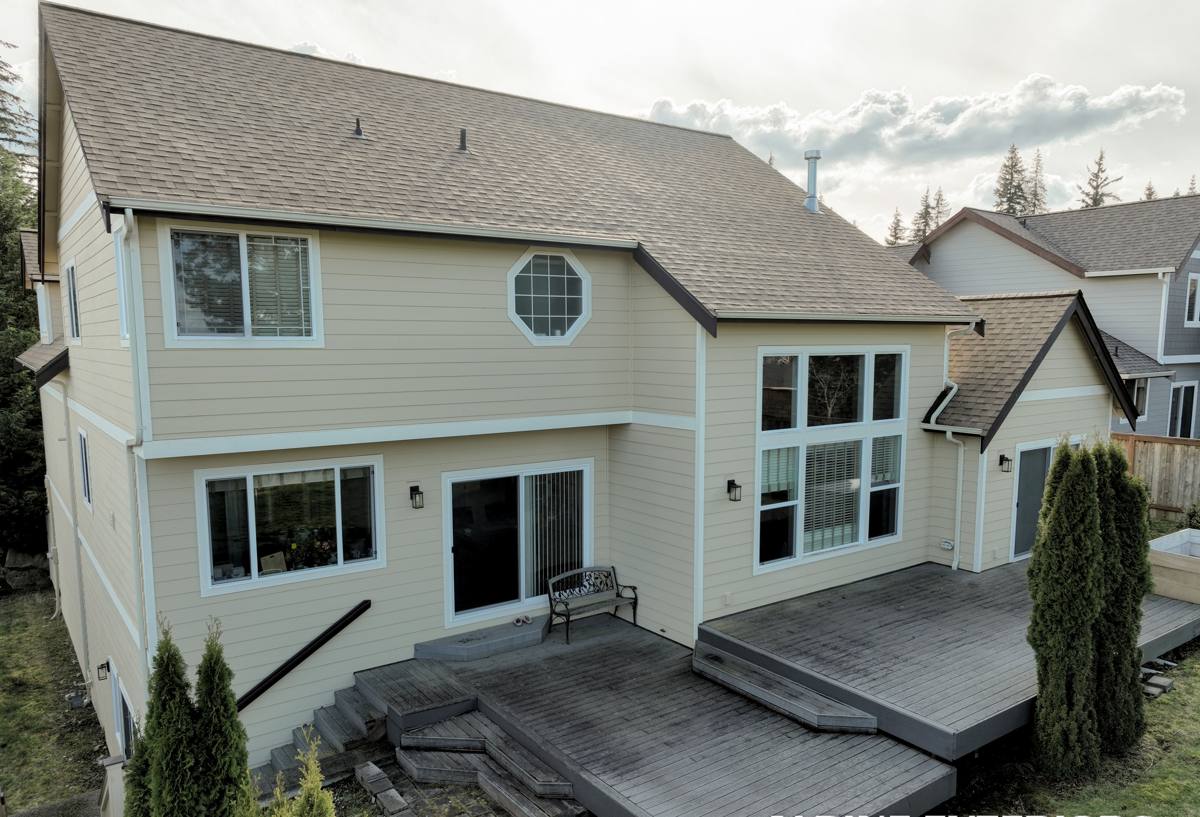
Why Decks Near Bradenton's Coastline Wear Out Faster
Salt Air and Metal Fasteners
Every deck depends on hardware you can't see once the boards go down — joist hangers, structural screws, post bases, ledger bolts. In a coastal-influenced area like Whitfield Estates, standard or under-rated fasteners corrode years ahead of schedule, even under decking that still looks fine on top. By the time rust stains show up on the surface, the connection underneath has often already weakened.
UV Exposure
Manatee County gets strong, direct sun essentially year-round. UV breaks down the lignin in wood fibers, dries out protective finishes, and fades or chalks composite and PVC surfaces that aren't rated for intense southern exposure. A deck that isn't refinished or maintained on a real schedule will show UV damage — graying, splitting, surface checking — well before it's structurally done.
Wind-Driven Rain and Storm Load
Bradenton sits squarely in a hurricane-influenced climate. Wind-driven rain gets pushed sideways and upward into ledger connections, stair stringers, and any gap in flashing that a rebuild skipped. Add in the wind uplift a deck structure has to resist during a tropical system, and it's clear why "just replace the boards" isn't always the right fix — the frame underneath has to be rated for what actually happens here, not for a fair-weather average.
Signs a Deck Needs Replacement, Not Another Repair
Not every aging deck needs a full teardown. But in this climate, certain signs mean patching individual boards is just delaying a bigger problem.
- Soft, spongy, or spring-loaded decking when you walk across it
- Visible rust bleeding from screws, brackets, or joist hangers
- Gaps or separation where the deck ledger meets the house
- Wobble or movement in the railing posts when pushed
- Wood that's gray, splintering, or crumbling at the edges and fastener points
- Any structural member you can push a screwdriver into without resistance
- A deck older than 15-20 years that's never had a full structural inspection
If more than one or two of these show up, the framing — not just the surface — is usually the issue, and that's a replacement conversation, not a repair one.
Choosing the Right Decking Material for This Climate
There's no single "best" decking material for every home — the right choice depends on how much maintenance a homeowner actually wants to do, budget, and how close the property sits to the water. Here's how the common options hold up under Bradenton's sun, humidity, and salt exposure.
| Material | Coastal/UV Performance | Maintenance | Typical Lifespan Here |
|---|---|---|---|
| Pressure-treated pine | Needs sealing regularly; prone to graying and splintering under strong UV | High — reseal every 1-2 years | 10-15 years |
| Tropical hardwood (e.g., ipe) | Naturally dense and rot-resistant, but still needs oiling to hold color | Moderate — periodic oiling | 20-25+ years with upkeep |
| Capped composite | Strong UV and moisture resistance; won't rot or splinter | Low — occasional cleaning | 25-30 years |
| PVC decking | Fully synthetic, excellent moisture and salt resistance | Very low | 25-30+ years |
We don't push one product on every homeowner. Uncapped composite, for example, has come a long way, but it isn't our default recommendation for water-adjacent lots because it can be more sensitive to moisture at the core than capped or PVC systems — that's a maintenance and warranty trade-off worth knowing upfront, not a knock on the category. Real wood still has a place for homeowners who want that look and are willing to keep up a finish schedule. We'll walk through the honest trade-offs for your specific setup before you commit.
What a Correct Deck Replacement Actually Involves
A deck that's going to hold up near Sarasota Bay needs to be built as a system, not just a new surface over old bones. A correct replacement includes:
Structural Framing
Ledger boards properly flashed and through-bolted (never just nailed) to the house structure, joists sized and spaced for the actual load and span, and footings checked or replaced if they've settled, cracked, or weren't sized correctly to begin with.
Fasteners and Hardware
Stainless steel or coated/rated fasteners throughout — not standard hardware that will corrode within a few coastal seasons. This is one of the most common shortcuts we find when we open up an older deck.
Flashing and Water Management
Proper ledger flashing, gapping between boards for drainage, and attention to anywhere water can pool or get trapped against wood. This is the difference between a deck that dries out after a storm and one that stays wet and starts rotting from the inside.
Railing and Stair Code Compliance
Railing height, baluster spacing, and stair geometry all need to meet current Florida Building Code requirements — not just match what was there before, especially on older Whitfield Estates homes where the original deck may predate current code.
Our Deck Replacement Process
- On-site assessment — we inspect the existing deck's framing, footings, and connections to confirm it needs full replacement rather than repair, and check for any moisture or rot damage to the house structure at the ledger point.
- Material walkthrough — we go over decking and railing options suited to your home's exposure, your maintenance preferences, and your budget, with straight talk about trade-offs.
- Permitting — deck replacements in Manatee County typically require a permit; we handle that process rather than leaving it to the homeowner.
- Demolition and disposal — full removal of the old decking, railing, and any compromised framing, hauled off the property.
- Rebuild — new footings as needed, code-compliant framing, corrosion-resistant fasteners, proper flashing, then decking and railing installation.
- Final walkthrough and inspection — we confirm the work passes local inspection and walk the finished deck with you before calling the job done.
Permits and Manatee County Considerations
Deck replacement in Bradenton and unincorporated Manatee County generally isn't a project you can legally do without a permit, particularly when framing, footings, or railings are involved. Skipping that step can create real problems later — at resale, with insurance, or if the work doesn't hold up and there's no inspection record behind it. We pull the necessary permits and build to current Florida Building Code, which in this wind zone means real requirements around fastening, railing, and structural connections, not just a suggestion.
Keeping a New Deck Sound in a Salt-Air Climate
Whatever material you choose, a little regular attention goes a long way toward hitting the top end of its lifespan in this environment.
- Rinse off salt spray and debris periodically, especially after storms
- Keep gaps between boards clear of leaves and organic buildup that trap moisture
- Inspect railing posts and stair connections for movement once or twice a year
- Reseal or refinish wood decking on the schedule the product actually needs — not "when it looks bad"
- Check visible fasteners and hardware annually for early rust or corrosion
- Have the structure looked at after any major storm, not just after visible damage
Why a Crew That Already Works in Whitfield Estates Matters
A deck built to a generic inland spec is not the same as a deck built for a home exposed to Sarasota Bay salt air and Gulf-driven storms. Contractors who regularly work this specific area already know to spec corrosion-resistant hardware without being asked, to flash ledgers for wind-driven rain rather than just vertical rainfall, and to understand what Manatee County's permitting and inspection process actually expects. That local familiarity shows up in fewer surprises during the build and a deck that's actually sized for the conditions it has to survive, not just the conditions on a national average spec sheet.
If your deck in Whitfield Estates is showing its age — or you just want an honest opinion on whether it's a repair or a replacement — we're happy to take a look. Reach out for a free, no-pressure estimate using the form below.