 Bradenton
 Bayshore Gardens sits close to the water on the west side of Manatee County, and that location changes what a good siding job actually needs to accomplish compared to a home further inland. A lot of the housing stock here dates back decades, built before current wind and moisture standards existed, and every one of those homes has been absorbing salt air, sun, and storm exposure the entire time. When siding finally needs to be replaced in this neighborhood, it isn't just a cosmetic project — it's a chance to correct decades of exposure with a product and installation method actually engineered for this environment.
Why Bayshore Gardens Puts Extra Stress on Siding
Manatee County as a whole deals with hurricane-force wind risk, wind-driven rain, and intense year-round UV, but a neighborhood as close to the bay as Bayshore Gardens gets an added layer on top of that: salt air. Salt-laden moisture moves inland off the water and settles on everything it touches, including the siding, trim, and fasteners on your home. That combination — salt, sun, wind, and rain all acting on a home at the same time, year after year — is a tougher environment than what a generic "Florida-rated" siding product was necessarily tested against.
None of this means siding is a losing battle here. It means the product choice and the installation details matter more in Bayshore Gardens than they would in a drier, more sheltered inland market.
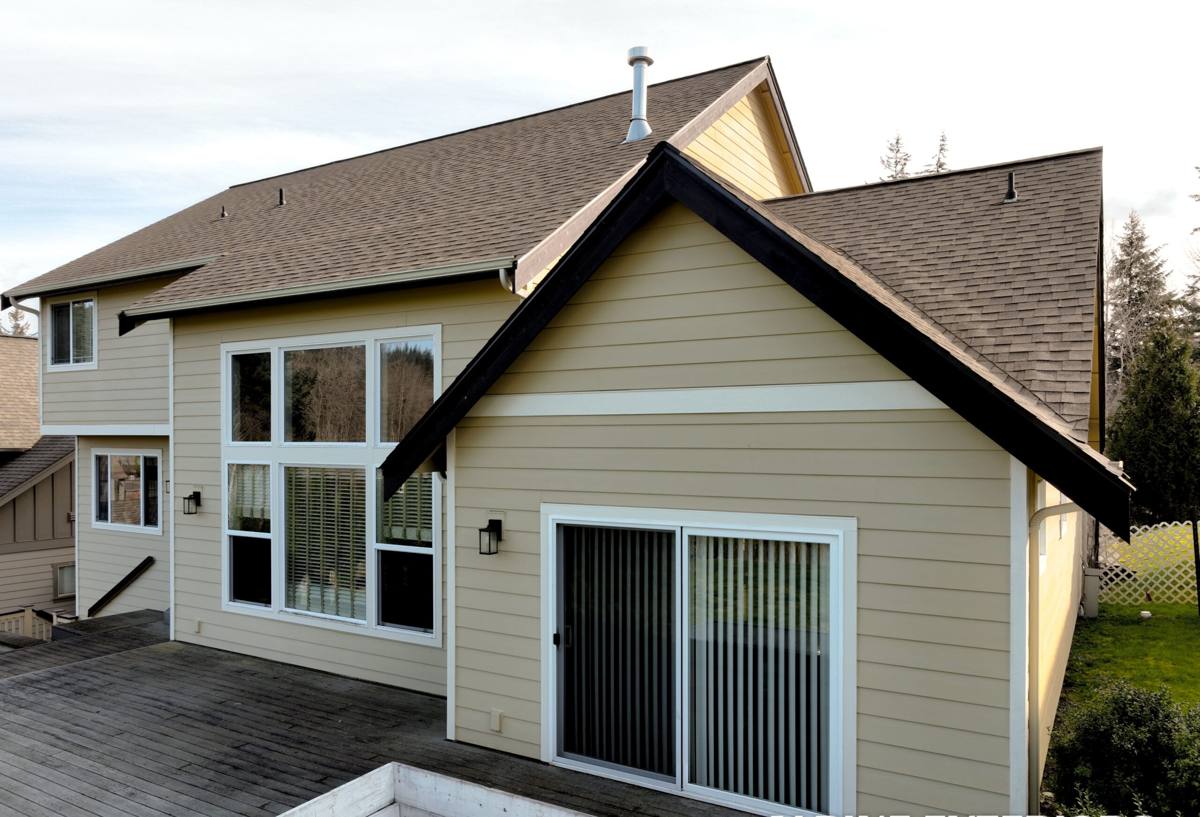
What Salt Air, Wind, and UV Actually Do to Siding Over Time
Salt Air and Moisture
Airborne salt is corrosive and hygroscopic — it draws moisture out of the air and holds it against whatever surface it lands on. On siding, that means fasteners, trim, and exposed edges stay under a constant low-grade moisture load, even on days with no rain at all. Materials that swell, wick water, or depend on a paint film alone for protection tend to show wear years before their expected lifespan is up in an environment like this.
Wind and Wind-Driven Rain
Manatee County carries real hurricane risk, and even a quiet storm season still brings tropical systems that push rain sideways into wall assemblies. Siding that isn't fastened, lapped, and flashed correctly will let water behind it, and once water gets behind siding, the damage is usually happening inside the wall cavity well before it ever shows up on the surface.
UV Exposure
Florida sun is hard on exterior finishes year-round, not just during summer. Paint and factory finishes chalk, fade, and break down faster here than in most of the country, which is why the quality of the finish matters just as much as the material underneath it.
Why We Install Only James Hardie Fiber Cement Siding
We don't offer vinyl, LP SmartSide, or other fiber cement brands. That's a deliberate professional standard, not a limit on what we're capable of installing. Here's the honest comparison of why fiber cement in general, and James Hardie specifically, is the product we're willing to put our labor and warranty behind on a home in Bayshore Gardens.
| Material | How It Handles Salt Air & Moisture | How It Handles Wind & Storms | Long-Term Consideration |
|---|---|---|---|
| Vinyl siding | Doesn't absorb water, but can warp, fade, or become brittle under intense, constant UV | Lower wind ratings; more prone to cracking or blowing off in high gusts | Faded color can't be easily repainted or restored |
| Wood, primed spruce, or cedar | Absorbs moisture; needs consistent repainting and sealing to resist salt air and rot | Can perform adequately if well maintained, but neglect leads to fast decay | Highest ongoing maintenance burden of the common options |
| Other fiber cement (LP SmartSide, Cemplank, Allura) | Similar base material to Hardie, but formulation and moisture engineering vary by manufacturer | Varies by product line and how strictly it's installed to spec | We standardize on one system so our crews, detailing, and warranty stay consistent |
| James Hardie fiber cement | Non-combustible, engineered for humid climates, factory ColorPlus finish resists fading and chalking | Rated for high-wind regions when installed to manufacturer specification | Long track record and a strong transferable warranty when installed correctly |
The short version: fiber cement as a category resists moisture, pests, and fire better than vinyl or untreated wood, and James Hardie's HardieZone system is engineered specifically for climates like ours — hot, humid, and salt-exposed. That's why it's the only product we put on homes.
What a Correct Siding Installation Involves
Tear-Off and Substrate Inspection
Every job starts with removing the old siding and inspecting what's underneath — sheathing, framing, and any existing water damage. Skipping this step is one of the most common shortcuts in the industry, and it's how rot and moisture problems get sealed up behind brand-new siding instead of actually fixed.
Water-Resistive Barrier and Flashing
A correctly installed water-resistive barrier, properly lapped and sealed, along with flashing at every window, door, and penetration, is what actually keeps wind-driven rain out of the wall assembly. The siding itself is the second line of defense, not the first.
James Hardie HZ10 Product Selection
James Hardie's HZ10 line is engineered for the Gulf Coast and other high-humidity, high-UV regions, and it's the specification we work from for homes throughout Bayshore Gardens and the rest of Bradenton.
Fastening, Clearances, and Joints
James Hardie publishes exact fastener spacing, nailing patterns, and minimum clearances from grade, roof lines, and other surfaces. Getting these details right is what separates a siding job that survives a hurricane season from one that doesn't, and it's where under-qualified crews most often cut corners.
Caulking and Finish Work
Joints, corners, and trim need to be sealed and finished correctly so the ColorPlus factory finish, or field-applied paint where it's used, performs the way it's designed to over the long run.
Our Process, From Estimate to Final Walkthrough
- On-site assessment — we look at your home's current siding, the condition of the substrate where it's visible, and problem areas like corners, window trim, and roof lines that tend to take the brunt of coastal wind and rain
- Product and color selection — we walk you through the James Hardie lines and ColorPlus finish options that fit your home and budget, and explain the trade-offs honestly rather than upselling
- Installation — tear-off, substrate repair where needed, water-resistive barrier, flashing, and Hardie installation to manufacturer specification, in that order, with no steps skipped
- Cleanup and final walkthrough — we clean up the site thoroughly and walk the finished job with you before we consider it done
Signs Your Bayshore Gardens Home May Need New Siding
- Visible cracking, warping, or buckling in the current siding
- Soft spots or noticeable give when you press near the bottom of walls or under windows
- Peeling or bubbling paint that keeps coming back after repainting
- Rising utility bills that suggest a compromised building envelope
- Visible gaps or separation at corners, seams, or trim
- Siding that's original to a home built decades ago and has never been replaced
- Musty odors or discoloration on interior walls near exterior siding
Cost Factors for Siding Installation in Bayshore Gardens
| Factor | Why It Matters |
|---|---|
| Home size and wall complexity | More square footage, corners, and trim details mean more material and labor |
| Condition of the substrate | Rot or water damage found during tear-off adds repair scope before new siding goes on |
| James Hardie product line and finish | Panel profile, plank width, and ColorPlus color selection affect material cost |
| Existing siding removal and disposal | Tear-off of old vinyl, wood, or aging fiber cement adds labor and hauling |
| Trim, fascia, and soffit work | Often bundled with a siding project to address the whole building envelope at once |
We give a detailed, itemized estimate after seeing the home in person. Broad ranges without an on-site look aren't especially useful for real budgeting, and we'd rather give you numbers you can actually count on.
Why Hiring a Crew That Already Works in Bayshore Gardens Matters
A crew that regularly works in this part of Manatee County already understands the exposure your home deals with — the salt air off the bay, local wind patterns, and the way older homes in this area were built, along with what tends to be hiding behind their original siding. That familiarity shows up in small decisions on the job: how flashing gets detailed at a corner, where extra attention goes on a wall that faces prevailing wind, and how tear-off is handled when aging substrate turns up underneath the old siding. It's the difference between a crew that installs a product and a crew that installs a product correctly for this specific environment, day after day, not just occasionally.
Homes in this neighborhood don't all age the same way, either. A house closer to the water can show wear that an otherwise similar home a bit further inland won't see for years. A crew with local experience knows to check for that instead of assuming every home on the schedule needs the identical scope of work.
If you're considering new siding for a home in Bayshore Gardens, we're happy to take a look and give you a straightforward, no-pressure estimate — use the form below to get started.