 Bradenton
 Bayshore Gardens Sits Right at the Edge of the Weather
Bayshore Gardens is one of those Manatee County neighborhoods where you feel the water before you see it. Being close to Sarasota Bay means homes here take on a different set of stresses than a house ten miles inland: salt-laden air moves through the siding all year, humidity stays high, and when a storm tracks up from the Gulf, this stretch of coastline is in the direct path of the wind and rain. Ordinary siding materials age faster in this kind of exposure. That's the starting point for every conversation we have with a homeowner here — not "what looks good," but "what will actually hold up."
We install James Hardie fiber cement siding exclusively, and this page is about what that means specifically for a house in Bayshore Gardens — not a generic overview of siding in general.
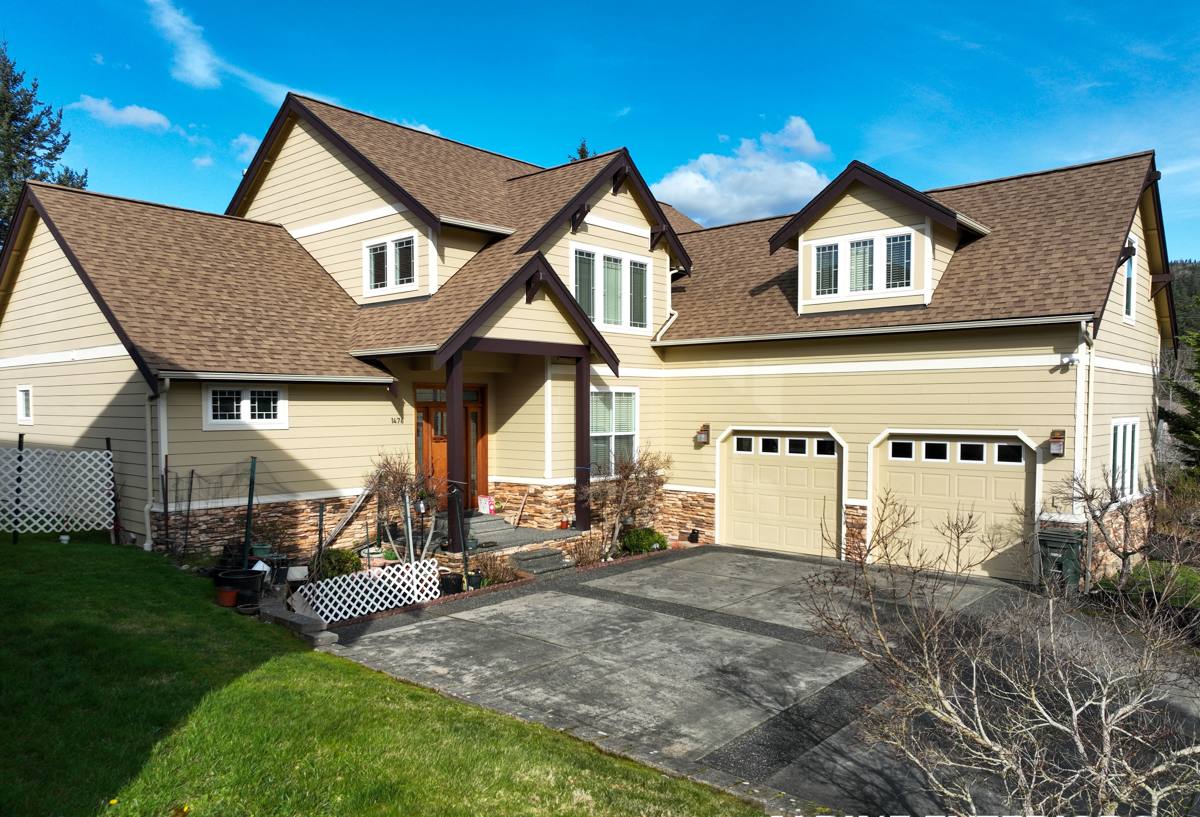
What This Climate Actually Does to a House
Three things wear on exterior siding in this part of Manatee County, and they compound each other:
- Hurricane-force wind: Even a storm that doesn't make direct landfall can push sustained winds and gusts strong enough to peel loose or improperly fastened siding, and to drive rain sideways into any gap in the assembly.
- Year-round UV: Florida sun doesn't take an off-season. Paint film and some composite products chalk, fade, or become brittle faster here than they would in a milder climate.
- Salt air: Being near the bay means airborne salt settles on every exterior surface. It accelerates corrosion of exposed metal fasteners and trim, and it works into any material that isn't built to resist moisture intrusion.
Individually, any siding product can survive one of these. The combination — wind-driven rain forcing water toward the wall, then UV and salt working on whatever gets left behind — is what separates a system engineered for this exposure from one that just happens to be sold here.
Why We Standardized on James Hardie
We used to get asked why we don't also offer vinyl, LP SmartSide, or other fiber cement brands. The honest answer is that we made a decision to install one system well rather than several systems adequately, and James Hardie's engineering matches this climate better than the alternatives.
HZ5 — Built for This Exposure Zone
James Hardie makes region-specific formulations, and the HZ5 line is engineered for hot, humid, high-moisture climates like ours — including resistance to moisture-related damage and cracking that comes with sustained humidity and rain exposure. This isn't a marketing distinction; it's a different product than what gets installed in a dry inland climate.
ColorPlus Technology
Standard field-applied paint is one of the first things to fail under constant UV and salt exposure — you see it as fading, chalking, and peeling. James Hardie's ColorPlus finish is baked on in a factory-controlled process, which gives it stronger resistance to fading and gives you a longer stretch before repainting is even a conversation. For a bayfront-adjacent property, that matters more than it would ten miles inland.
Non-Combustible Core
Fiber cement doesn't burn, warp, or attract termites the way wood-based and some composite products can. That's a year-round advantage, not just a storm-season one.
What a Correct James Hardie Installation Actually Involves
James Hardie's product is only as good as the installation behind it. Most of the siding failures we get called out to inspect on older homes weren't caused by the material — they were caused by shortcuts taken during installation. In a wind and moisture environment like Bayshore Gardens, the details matter more, not less.
The Specifics We Follow on Every Job
- Corrosion-resistant fasteners driven to manufacturer-specified depth and spacing — not overdriven, which cracks the board, and not underdriven, which lets wind work the panel loose.
- Correct clearance between siding and grade, roofline, decks, and other abutting surfaces, so water has somewhere to go instead of wicking into the bottom edge of the board.
- Properly lapped and sealed house wrap and flashing behind the siding — this is the water management layer that does the real work, and it's invisible once the job is done.
- Manufacturer-approved caulking and joint treatment at every seam, window, and penetration, since a gap at a single joint is where wind-driven rain finds its way in.
- Panel and joint layout planned to minimize seams on the elevations that take the brunt of prevailing wind and rain.
James Hardie backs its product with a strong transferable warranty, but that warranty is tied to installation according to their specifications. A job installed off-spec can void coverage even though the material itself was never the problem. We install to spec because it's the only way the warranty — and the wall behind it — actually holds up.
How We Approach a Bayshore Gardens Project
- On-site assessment: We look at your home's current siding condition, the substrate underneath, and how each elevation is exposed to wind and water — the bay-facing side of a house often needs different attention than the street side.
- Detailed proposal: You get a clear scope covering product line, color, trim details, and what's involved in tear-off and prep — no vague allowances.
- Removal and inspection: Once old siding comes off, we inspect the sheathing and framing underneath for any moisture damage that needs to be addressed before new siding goes on. Covering up a problem is worse than finding it.
- Water management first: House wrap, flashing, and sealing go in correctly before a single piece of Hardie board is hung.
- Installation to manufacturer spec: Fastening, clearances, and joint treatment follow James Hardie's published requirements, not shortcuts.
- Final walkthrough: We go over the finished work with you directly, in plain language.
Why Local Experience in This Neighborhood Actually Matters
Siding work isn't identical from one Manatee County neighborhood to the next. A crew that already works in Bayshore Gardens knows the housing stock here tends to mix older construction with newer renovations, knows how the bay-facing exposure differs from a few blocks inland, and knows what permitting and inspection expectations look like for this part of the county. That's not a small thing — it means fewer surprises once tear-off starts, and a scope of work that accounts for what's actually behind your walls instead of a generic assumption.
It also means accountability. A contractor who plans to keep working in this community has every incentive to do the job right the first time, because the work is visible to neighbors and the relationship doesn't end when the invoice is paid.
Comparing Siding Options for a Bay-Adjacent Home
| Factor | Vinyl Siding | LP SmartSide | James Hardie Fiber Cement |
|---|---|---|---|
| Wind performance | Can deform or detach in sustained high wind | Solid if installed correctly; edges vulnerable if moisture gets in | Engineered and tested for high-wind installation when installed to spec |
| Moisture/salt exposure | Doesn't rot, but seams and fasteners can fail over time | Engineered wood core is moisture-sensitive at cut edges and joints | Fiber cement core resists moisture damage; HZ5 formulated for humid climates |
| UV/color retention | Fades and can become brittle in constant sun | Field-applied or factory paint, subject to standard weathering | ColorPlus factory finish resists fading longer than field-applied paint |
| Fire/pest resistance | Can melt or deform under heat | Wood-based core, vulnerable to pests without proper treatment | Non-combustible, not a food source for pests |
| Warranty structure | Varies widely by manufacturer | Manufacturer warranty, moisture-related claims common | Strong transferable warranty backed by correct installation |
What Drives Cost on a Bayshore Gardens Project
Every home is different, but the same variables drive the estimate on most jobs in this area:
| Cost Factor | Why It Matters Here |
|---|---|
| Home size and elevation count | More linear footage and more corners/penetrations mean more material and labor |
| Substrate condition | Moisture-damaged sheathing found during tear-off needs repair before new siding goes on |
| Product line and profile | HZ5 panels, plank width, and ColorPlus color selection affect material cost |
| Trim and detail work | Corners, window/door trim, and fascia detailing add labor time |
| Access and site conditions | Landscaping, fencing, and proximity to neighboring structures affect setup and staging |
We don't quote off broad averages — every proposal is based on the actual assessment of your home, so you know what you're paying for and why.
Living With Hardie Siding in This Environment
Once it's installed correctly, James Hardie siding is genuinely low-maintenance, but "low-maintenance" doesn't mean "no attention." In a bay-adjacent climate, we recommend a simple annual routine:
- Rinse salt residue and grime off the siding with a garden hose or low-pressure wash — avoid high-pressure washing, which can force water behind joints.
- Walk the exterior after major storms and look for any loose trim, gaps at caulked joints, or debris impact damage.
- Keep an eye on caulking at windows, doors, and trim joints — it's the first thing to show wear and the easiest thing to touch up before it becomes a water intrusion point.
- Keep sprinklers and irrigation aimed away from the base of the siding to reduce constant moisture exposure at grade.
- Trim back landscaping that holds moisture against the wall or blocks airflow along the siding.
None of this is difficult, but it's the difference between siding that looks and performs well for decades and siding that quietly takes on damage nobody notices until it's expensive.
Ready to Talk About Your Bayshore Gardens Home?
If you're dealing with aging, storm-damaged, or failing siding in Bayshore Gardens, we're happy to take a look and give you a straight, no-pressure assessment of what your home actually needs. Use the form below to request a free estimate — there's no obligation, and no hard sell.