 Bradenton
 Deck Repair for Bayshore Gardens Homes
Bayshore Gardens sits along the water on the west side of Bradenton, and that location shapes everything about how a deck ages here. Canal-front and near-water lots in this part of Manatee County deal with a combination most inland neighborhoods don't face at the same intensity: salt-laden air, near-constant UV exposure, wind-driven rain that gets pushed sideways under railings and through board gaps, and the real possibility of hurricane-force wind loading a deck structure has to survive intact. A deck repair here isn't just patching what broke — it's addressing why it broke, so the same problem doesn't come back in two years.
We work on decks throughout Bradenton and Manatee County, and Bayshore Gardens jobs tend to look different from a repair we'd do a few miles inland. The framing underneath is often older, the hardware has usually taken more corrosion, and the repair has to account for a home that may sit closer to canal water and salt spray than the county average. We don't treat every deck repair the same, and a Bayshore Gardens deck gets evaluated with that context from the first visit.
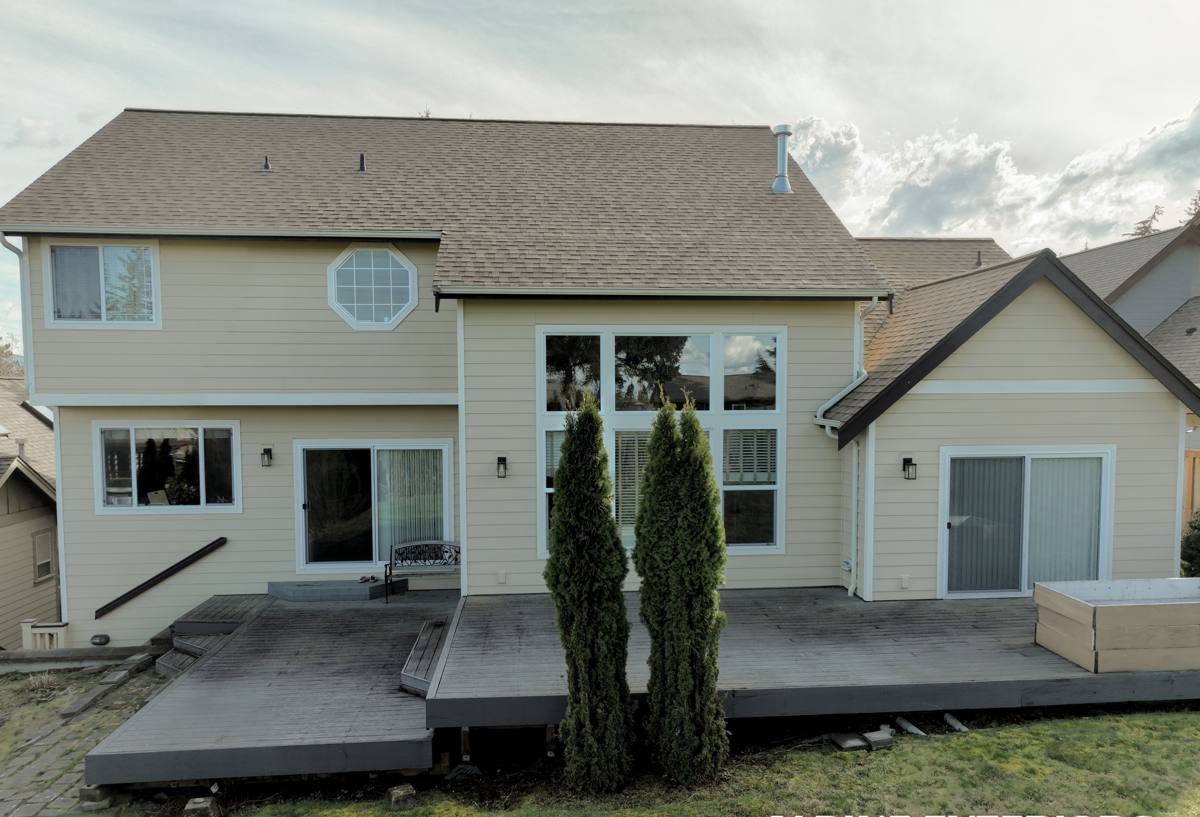
Why Decks in This Area Take Extra Abuse
Salt Air and Corrosion
Even decks that never get splashed by canal or bay water sit in air carrying salt particles that settle on every metal surface. Over time, that salt accelerates corrosion on fasteners, brackets, and hardware far faster than it would inland. A screw or joist hanger rated for general outdoor use can start failing years before its expected lifespan in a spot like this, and once a fastener corrodes, the wood around it loosens, moisture gets in, and the damage spreads.
UV and Wind-Driven Rain
Florida sun is hard on any exterior wood or composite surface year-round, not just in summer, and constant UV breaks down surface fibers, fades finishes, and dries out wood so it cups and checks. Add wind-driven rain — the kind that comes in at an angle during a squall or tropical system and gets underneath railings, into fastener holes, and behind ledger boards — and you get moisture intrusion in places a straightforward downpour wouldn't reach.
Wind Load
Manatee County's building code accounts for hurricane-force wind, and a deck's connections — especially where it attaches to the house and where posts meet footings — have to be built to handle uplift and lateral load, not just the weight of people standing on it. A repair that only replaces surface boards without checking those connections is leaving the part of the deck that matters most in a storm unaddressed.
Common Problems We Find on Bayshore Gardens Decks
- Soft or spongy decking boards, usually from moisture trapped underneath by debris or poor drainage
- Rusted or corroded fasteners and joist hangers, sometimes with the surrounding wood already loosening
- Ledger board separation or rot where the deck attaches to the house — a serious structural issue, not cosmetic
- Wobbly or leaning railings, often from corroded post connections rather than the railing itself
- Cracked, splintering, or graying wood surfaces from sun and weather exposure
- Undersized or deteriorating footings on older decks that were never built to current wind standards
- Gaps or warping between boards from repeated wet-dry cycling
What a Correct Repair Actually Involves
A deck repair that holds up in this environment starts with an inspection that goes past the visible surface. That means checking the ledger board connection at the house, the condition of posts and footings, the state of fasteners and hardware, and the framing underneath — not just the boards people walk on. Surface damage is often a symptom; the cause is usually moisture intrusion, corroded hardware, or a connection that was undersized or under-flashed to begin with.
Once we know what's actually wrong, the repair plan separates structural work from cosmetic work. Structural items — ledger attachment, post-to-footing connections, joist integrity — get fixed first and get fixed to current standards, even if the original deck wasn't built that way. Cosmetic items — board replacement, railing refinishing, sanding — come after, because there's no point finishing a deck's surface over a structural problem that's still there.
Depending on the scope, some repairs in Manatee County require a permit, particularly anything touching structural framing, footings, or the connection to the house. We handle that process rather than skipping it, because unpermitted structural work can create problems at resale and, more importantly, isn't something we're willing to guess our way through when wind load is part of the equation.
Repair vs. Replacement: How We Decide
Not every deck problem calls for tearing the whole thing out, and not every deck is worth repairing piece by piece. Here's the general framework we use to make that call:
| Factor | Repair usually makes sense | Replacement usually makes sense |
|---|---|---|
| Framing condition | Solid, with isolated rot or corrosion | Widespread rot or corrosion in joists, ledger, or posts |
| Age of structure | Newer deck, damage is localized | Older deck built before current wind code standards |
| Ledger/house connection | Sound, properly flashed | Failed, unflashed, or improperly attached |
| Footings | Adequate size and depth for the deck's load | Undersized, shifting, or deteriorated |
| Extent of surface damage | Scattered boards or hardware | Most of the decking and railing failing at once |
| Owner's plans | Keeping current layout and size | Wanting a different footprint, material, or elevation |
Most of the time, if the framing and connections are sound, repair is the honest recommendation — there's no reason to replace a structure that's still doing its job. When the bones are compromised, patching the surface just delays a bigger repair later, and we'll say so plainly.
Our Process
- On-site inspection. We check the deck from the ground up — framing, fasteners, ledger connection, footings, and surface — and explain what we find in plain terms.
- Written scope and estimate. You get a clear breakdown of what's structural, what's cosmetic, and what it costs, with no vague allowances.
- Permitting, if required. For work touching structure or the house connection, we pull the necessary permit through the county rather than working around it.
- Structural repairs first. Ledger, framing, posts, and footings get corrected before anything cosmetic starts.
- Surface and railing work. Board replacement, fastener upgrades, and finish work happen once the structure underneath is confirmed sound.
- Final walkthrough. We go over the completed work with you before we consider the job done.
Materials and Fasteners: Why the Details Matter Here
In a canal-front or near-water setting, the fasteners and hardware often matter more than the decking material itself. Standard galvanized fasteners can start corroding within a few years in this kind of salt air; stainless steel or coated fasteners rated for coastal exposure cost more up front but hold their integrity far longer, and since fasteners are what keep the whole structure connected, that's not a place to cut cost. The same logic applies to joist hangers, post brackets, and any structural connector.
For decking material itself, both pressure-treated wood and composite have a place, and the right choice depends on the homeowner's priorities. Pressure-treated wood costs less initially but needs regular sealing and inspection to hold up against UV and moisture. Composite costs more up front, resists fading and moisture damage better, but still needs a sound, corrosion-resistant frame underneath — composite boards on top of failing hardware just hides the real problem longer. We'll walk through the honest trade-offs for your specific deck rather than pushing one material as universally better.
Maintenance Checklist for Bayshore Gardens Deck Owners
Between repairs, a few habits go a long way toward slowing down the wear this climate causes:
- Sweep debris out from between boards regularly so moisture doesn't sit trapped underneath
- Check railings and stairs periodically for any looseness or wobble, especially after storms
- Look at exposed fasteners once or twice a year for rust staining or corrosion
- Rinse salt residue off surfaces periodically, particularly on decks closest to the water
- Reseal or refinish wood decking on the schedule the product calls for, not just when it looks dry
- Have the deck inspected after any major storm, even if there's no obvious visible damage
Why Local Experience in Bayshore Gardens Matters
A deck repair crew that already works in this part of Bradenton knows what to expect before they climb underneath the structure — how far corrosion typically has advanced on hardware near the water, what Manatee County's permitting process requires for structural deck work, and how the area's wind exposure factors into what a proper repair looks like. That familiarity means fewer surprises mid-job and a repair plan that accounts for the real conditions your deck lives in, not a generic checklist written for a different climate.
If your deck in Bayshore Gardens has soft boards, corroded hardware, a wobbly railing, or you just want an honest opinion on whether it needs repair or replacement, we're happy to take a look. Reach out for a free, no-pressure estimate using the form below.