 Bradenton
 Decks in Bayshore Gardens Take a Beating That Inland Decks Don't
Bayshore Gardens sits close enough to the water that a deck here lives in a different world than a deck fifty miles inland. Between the salt-laden air blowing off the bay, the near-daily UV load of a Manatee County summer, and the wind-driven rain that comes with every named storm, an outdoor structure gets tested constantly. A deck built to a generic national spec — the kind you'd find in a big-box how-to guide written for Ohio or Colorado — will show problems here years before it should: rusted fasteners, cupped boards, soft framing, and railings that loosen at the post base.
We build decks specifically for this environment, and we work in Bayshore Gardens often enough to know what actually fails first and what holds up. This page covers what a correctly built deck looks like for this neighborhood, the material trade-offs, and why the build process matters as much as the materials themselves.
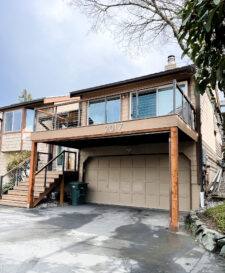
What Coastal Conditions Actually Do to a Deck
It helps to understand the specific failure modes before talking about the fix.
Salt Air and Metal
Salt in the air accelerates corrosion on anything metal — fasteners, joist hangers, railing hardware, post bases. Standard galvanized hardware that's fine in a dry inland climate can start rusting within a couple of years this close to the water, especially on sections of the deck that don't get rinsed by rain because they're under a roof overhang.
UV and Surface Wear
Florida sun is intense and constant, not seasonal. Wood decking without a quality finish will gray and check within a year or two. Composite and PVC boards vary a lot in how well their color and surface hold up under sustained UV — cheaper products fade unevenly and can lose the texture that keeps them from being slick when wet.
Wind-Driven Rain and Moisture
Rain here doesn't just fall straight down — tropical systems and afternoon storms push it sideways, which means it gets into places a "dry climate" deck design never has to deal with: behind ledger boards, into end grain, under railing post bases, and into any gap where flashing was skipped. Combined with our humidity, that moisture doesn't dry out quickly, which is exactly the condition wood rot and hidden fastener corrosion need to take hold.
Hurricane-Force Wind Loads
A deck attached to the house is a structural connection, not just a platform. In a storm, wind can put uplift and lateral loads on that connection that a lot of older or poorly built decks were never designed for. Undersized ledger fasteners, missing hurricane ties, and weak railing post connections are the parts that fail first when wind gets serious.
Choosing Decking Material for a Bayshore Gardens Home
There's no single "best" decking material — there's a best material for your budget, your maintenance appetite, and how close your lot sits to the water. Here's how the common options actually compare in this climate.
| Material | Upfront Cost | Maintenance | Salt Air / UV Performance | Realistic Lifespan |
|---|---|---|---|---|
| Pressure-treated pine | Lowest | Needs sealing every 1-2 years | Fair — prone to graying, checking, and fastener corrosion if hardware isn't upgraded | 10-15 years with upkeep |
| Capped composite | Mid to upper-mid | Occasional wash, no sealing | Good — capped surface resists fading and moisture better than uncapped composite | 20-25 years |
| PVC decking | Highest of the common options | Wash only | Very good — no wood fiber to absorb moisture, holds color well | 25+ years |
| Tropical hardwood | High | Regular oiling to maintain color, or allow natural gray patina | Good structurally, but hardware and fastening require extra care | 20-25 years |
For most Bayshore Gardens homeowners, the decision comes down to budget versus how much upkeep you actually want to do. If the deck is shaded much of the day or tucked under a covered lanai extension, pressure-treated wood with a good finish schedule is a reasonable, honest option. If the deck is in full sun or you want to spend your weekends doing something other than sealing boards, composite or PVC earns back its higher upfront cost in avoided maintenance.
The Structure Underneath Is What Actually Determines Lifespan
Decking boards get all the attention, but the framing, fasteners, and connections underneath are what determine whether the deck is still safe and solid in ten years. This is also where corner-cutting is hardest to see — and easiest for a rushed or unfamiliar crew to get wrong.
Ledger Attachment and Flashing
Where the deck attaches to the house is the single most important connection on the structure, and it's also the most common point of moisture intrusion when it's done wrong. Proper flashing behind and over the ledger board keeps wind-driven rain from working its way into the house's rim joist and wall framing — a failure that can go unnoticed for years until there's rot damage well beyond the deck itself.
Fasteners and Hardware
This close to the bay, standard galvanized screws and connectors are the wrong call. We use stainless steel or high-grade coated fasteners and connectors rated for coastal/salt-air exposure, along with joist tape on framing to keep moisture from wicking into the wood at every screw hole and cut end.
Footings and Sandy Soil
Manatee County soils and lot conditions vary block to block, and footing depth and sizing need to actually match the soil and the load, not just meet a minimum. Undersized or shallow footings are a common shortcut that doesn't show up as a problem until years later, when a post starts to shift or settle unevenly.
Railings and Guards
Wood railings need the same corrosion-resistant hardware as the frame. Aluminum railing systems are a strong option here — they don't rot, don't need refinishing, and hold up well against salt air, though the trade-off is a different look and feel than a traditional wood rail.
Permits, Wind Ratings, and Local Code
Deck construction in Bradenton and unincorporated Manatee County requires a permit, and inspections check things homeowners rarely think about: footing depth, ledger attachment method, joist spacing, and guard/railing height. Skipping the permit might save a little time up front, but it creates real problems later — unpermitted structures can complicate a home sale, and an uninspected ledger connection is exactly the kind of thing that fails first in a storm.
For lots close to the water, including canal-adjacent sections of Bayshore Gardens, there can be additional considerations around setbacks and elevation that don't apply to an inland build. We handle the permit application and coordinate inspections as part of the job, so you're not the one chasing down paperwork or scheduling inspectors.
How We Approach a Bayshore Gardens Deck Project
- On-site assessment — we look at sun exposure, drainage, proximity to water, existing structure (if replacing a deck), and how the house is framed at the attachment point.
- Material and layout discussion — honest trade-offs on wood versus composite versus PVC based on your budget, maintenance preference, and how the space will actually be used.
- Permit filing and engineering — we handle the Manatee County/Bradenton permit application, including any structural details needed for the ledger connection and footing design.
- Build — footings, framing with coastal-rated hardware, flashing at every water-entry point, decking installation, and railing.
- Final walkthrough and inspection — we go over the finished deck with you and make sure it passes final inspection before we call the job done.
Maintenance Checklist for a Bayshore Gardens Deck
Whatever material you choose, a little seasonal attention goes a long way in this climate.
- Rinse salt film and debris off the deck surface periodically, especially areas under overhangs that rain doesn't naturally wash
- Check railing post bases and stair connections once or twice a year for movement or corrosion at the hardware
- Keep gutters and downspouts clear so runoff isn't dumping extra water onto or under the deck
- For wood decking, re-seal on the schedule the product actually needs in this UV load — don't stretch it because it "still looks okay"
- Look underneath the deck once a year for standing moisture, soft spots, or rust streaking at fastener heads
- After any major storm, do a quick visual check of ledger flashing and post connections before assuming everything's fine
Why It Matters That We're a Local Bradenton Crew
A deck built by a crew that doesn't normally work this close to the water tends to default to whatever specs they use everywhere else — because that's what they know. A crew that regularly builds in Bayshore Gardens and the surrounding Bradenton area already knows which hardware grade holds up, what Manatee County inspectors actually check, and how lot conditions in this part of the county tend to run. That local familiarity is the difference between a deck that's built to pass inspection once and a deck that's built to still be solid after a decade of Gulf Coast weather.
We're not a national franchise crew rotating through on a schedule — we're based here, we come back for warranty work if something needs attention, and our reputation in this area depends on the deck still looking and performing well years after we've left the jobsite.
If you're planning a new deck or replacing an aging one in Bayshore Gardens, we're happy to come take a look and give you a straightforward, no-pressure estimate — just fill out the form below and we'll be in touch.