 Bradenton
 Why Decks Fail Faster on Anna Maria Island
A deck on Anna Maria Island lives a harder life than one a few miles inland in Bradenton. The island sits directly on the Gulf, which means salt-laden air moving across every board, fastener, and post around the clock. Add in Manatee County's intense year-round UV exposure, frequent wind-driven rain, and the occasional direct hit or near-miss from a tropical system, and you have a structure that's fighting four different forms of damage at once: corrosion, sun degradation, moisture intrusion, and wind stress.
Most decks don't fail all at once. They fail in stages — a fastener rusts and loosens, a board cups from repeated wetting and drying, a ledger connection starts to separate from the house, and eventually those small failures compound into a structure that's no longer safe to stand on. On a barrier island, that timeline moves faster than it does elsewhere in the region, which is why we treat deck replacement here differently than we would on the mainland.
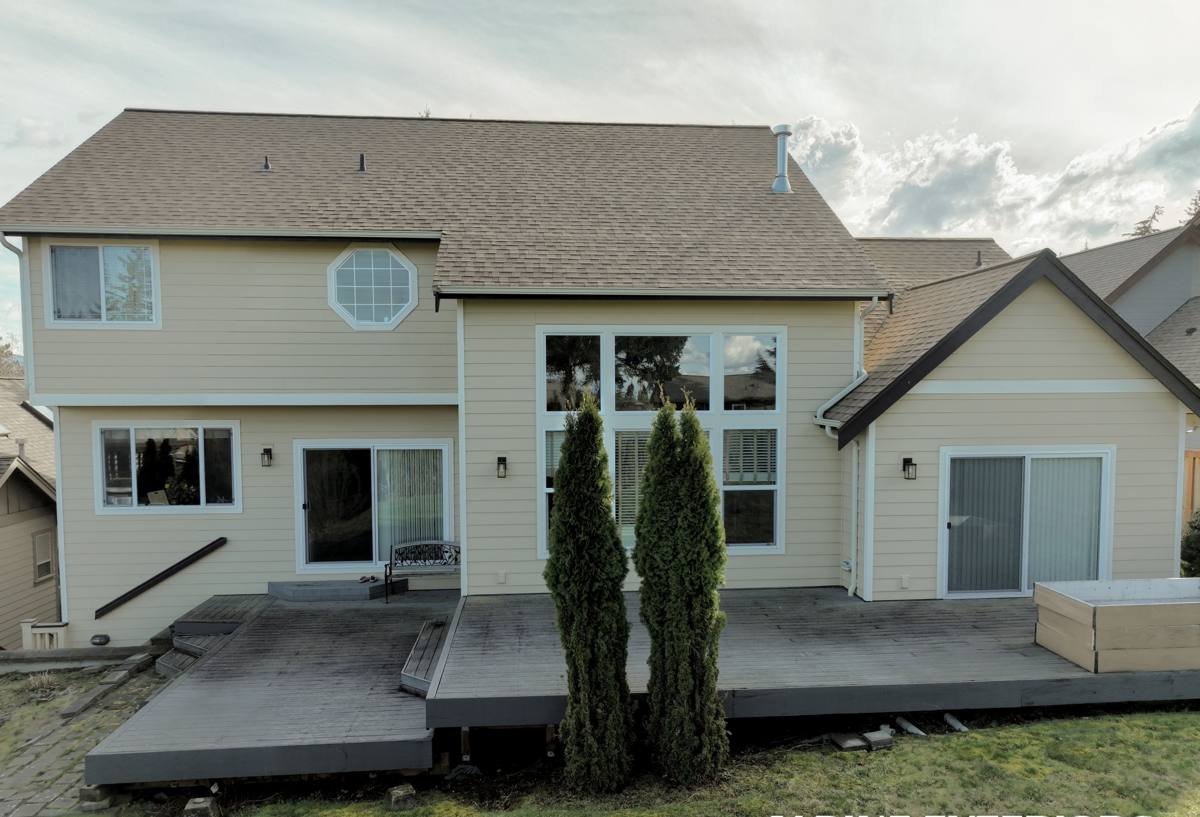
Repair or Replace? Reading the Signs
Homeowners often want to know whether a deck can be patched instead of replaced. Sometimes it can — a few rotten boards or a handful of corroded fasteners don't necessarily mean the whole structure is compromised. But there are signs that point to replacement rather than repair:
- Soft or spongy decking in multiple areas, not just one isolated spot
- Visible rust staining running down posts, joists, or the house siding below the ledger
- Movement or bounce when walking across the deck, especially near the perimeter
- Fasteners that back out on their own or strip out when you try to re-drive them
- A ledger board that shows gaps, staining, or soft wood where it meets the house
- Posts or footings that have shifted, cracked, or show exposed, deteriorating concrete
If two or more of these show up at once, the underlying framing is usually past the point where surface repairs hold up. Replacing the whole structure at that point is often more cost-effective than repeated patch jobs that keep failing in new spots.
Why Salt Air Hides the Real Problem
One thing we see often on the island: decking that looks fine on top while the framing underneath is already compromised. Salt air accelerates corrosion on fasteners and hardware long before it visibly damages the boards resting on top of them. A deck can look presentable and still have joist hangers or ledger bolts that have lost most of their holding strength. That's why any honest inspection on Anna Maria Island includes pulling a few boards to check the framing directly, not just a walk-around visual check.
What a Correct Deck Replacement Involves
A deck replacement is more than swapping old boards for new ones. Done right, it starts from the ground up and addresses every part of the structure that salt air, sun, and storms attack.
Framing and Fasteners
Framing lumber should be pressure-treated for ground or coastal exposure, and every fastener — screws, bolts, joist hangers, post bases — needs to be rated for coastal or salt-air environments. Standard galvanized hardware corrodes noticeably faster this close to the Gulf; stainless steel or heavy-duty coated fasteners cost more up front but are the difference between a deck that lasts and one that needs hardware repairs within a few years.
Ledger Board Attachment
The ledger board — where the deck attaches to the house — is the single most important connection on the structure, and it's also the one most exposed to wind-driven rain working its way behind the siding. A correct installation includes proper flashing to direct water away from the house framing, not just caulk sealing the gap. This is one of the most common points of hidden rot we find on older island decks.
Footings and Posts
Footing depth and post spacing need to account for both the load of the deck and the wind uplift forces that come with coastal storm exposure. On a barrier island, footings that were adequate decades ago may not meet what's needed for current wind design requirements, which is part of why a full replacement — rather than a repair — is often the right call on older structures.
Decking Material
The boards themselves take the brunt of UV exposure and foot traffic, but they're only as good as what's holding them up. We'll walk through material options below, but the short version is that material choice matters less than getting the framing and fasteners right first.
Comparing Decking Materials for Barrier Island Conditions
There's no single "best" decking material for every home — it depends on budget, maintenance tolerance, and how much sun and salt exposure the deck gets. Here's how the common options hold up in this specific environment:
| Material | Sun/UV Resistance | Salt Air Behavior | Maintenance |
|---|---|---|---|
| Pressure-treated wood | Fades and grays without regular sealing | Needs sealed, corrosion-rated fasteners; prone to surface checking | Annual cleaning and resealing recommended |
| Composite decking | Strong UV resistance, minimal fading with quality products | Doesn't absorb salt moisture like wood; resists corrosion issues in the board itself | Occasional washing, no sealing or staining |
| PVC/capped decking | Excellent UV and fade resistance | Fully sealed surface handles salt exposure well | Lowest maintenance of the three; higher upfront cost |
We're upfront about the trade-offs. Wood costs less initially but demands ongoing upkeep that many island homeowners underestimate — skipping a season of sealing here can mean noticeably more weathering than the same lapse would cause inland. Composite and PVC cost more at installation but shift the long-term maintenance burden way down, which matters if the deck won't get attention every few months.
Permitting and Local Code Considerations
Deck replacement on Anna Maria Island typically requires permitting through the appropriate local building department, and structures in coastal zones are often subject to additional wind-load and flood-related requirements beyond what applies further inland in Manatee County. This isn't paperwork for its own sake — it's what ensures the framing, fasteners, and footings are actually sized for the wind and moisture conditions the deck will face. Any contractor proposing to skip permitting on a full deck replacement here is cutting a corner that shows up later, either at resale or in a storm.
Our Process, Start to Finish
- On-site assessment — we inspect the visible decking, pull boards where needed to check framing and fasteners, and check the ledger connection and footings.
- Honest recommendation — repair, partial replacement, or full replacement, explained in plain terms with the reasoning behind it.
- Material and layout discussion — walking through wood, composite, and PVC options against your budget and how much upkeep you want to take on.
- Permitting — we handle the permit application and coordinate inspections so the finished deck is fully compliant.
- Demolition and disposal — removing the old structure, including any hidden rot in framing that wasn't visible from the surface.
- Rebuild — new footings and framing sized to current wind requirements, coastal-rated fasteners throughout, correctly flashed ledger connection, then decking installation.
- Final walkthrough — checking rail height, board spacing, fastener finish, and overall stability with you before we consider the job done.
What Affects the Cost of a Deck Replacement
Every deck is different, but the same handful of factors drive most of the cost variation we see on island projects:
| Factor | Why It Matters |
|---|---|
| Deck size and shape | More square footage and more corners/angles mean more framing and cutting labor |
| Decking material | Wood costs less upfront; composite and PVC cost more but reduce future maintenance spend |
| Height and access | Elevated decks common on the island add framing complexity and safety requirements |
| Railing style | Cable, glass, and custom railings cost more than standard baluster designs |
| Existing damage | Hidden rot in framing or footings found during demolition can add scope once uncovered |
| Permitting requirements | Coastal wind and flood zone requirements can affect footing depth and structural sizing |
We'd rather walk a homeowner through these variables during the estimate than surprise them later, which is why our on-site assessment happens before we quote a final number.
Keeping a New Deck Healthy in This Climate
A properly built deck on Anna Maria Island can last for many years, but it still needs some attention given what it's exposed to. A simple seasonal routine goes a long way:
- Rinse salt residue off the deck surface and railings periodically, especially after storms with onshore wind
- Check fastener heads and hardware visually a couple of times a year for early rust staining
- Reseal or stain wood decking on the manufacturer's recommended schedule — don't wait until it looks faded
- Keep gutters and downspouts near the deck clear so runoff doesn't pool against posts or footings
- Trim back landscaping that traps moisture against the deck's underside or framing
- Address any loose boards or hardware right away rather than waiting for the next inspection
None of this requires major effort, but skipping it is exactly how a well-built deck ends up needing early repairs in a salt-air environment.
Why Local Experience on Anna Maria Island Matters
Deck framing and fastener choices that hold up fine in a lot of Florida don't always hold up the same way a few hundred feet from the Gulf. A crew that's spent time building and replacing decks specifically on Anna Maria Island knows which fastener grades actually last here, how the ledger flashing needs to be handled given the wind-driven rain patterns, and what the local permitting process expects for coastal wind exposure. That's a different level of detail than a general contractor applies when treating every job in Manatee County the same way, regardless of how close it sits to the water.
If your deck is showing signs of wear, or you're just not sure whether it's a repair situation or a full replacement, we're happy to take a look. Reach out for a free, no-pressure estimate using the form below — we'll give you a straight answer either way.