 Bradenton
 Building a Deck in Cortez Means Building for the Water
Cortez sits right up against the water on Florida's Gulf coast in Manatee County, and that proximity changes what a deck has to survive. A deck built the same way you'd build one twenty miles inland won't hold up the same way here. Salt-laden air moves through the neighborhood constantly, humidity stays high most of the year, afternoon sun is intense and nearly year-round, and the storm season brings wind-driven rain and gusts that test every fastener and connection in the structure. None of this means a deck can't last in Cortez — it means the materials, hardware, and construction details have to be chosen with this specific environment in mind, not a generic one.
We've built and repaired decks across Bradenton and the surrounding coastal communities, and the deck failures we get called out to look at almost always trace back to the same handful of shortcuts: the wrong fastener metal, undersized or poorly flashed ledger connections, decking material that wasn't rated for constant moisture cycling, or framing that wasn't given a way to drain and dry. A deck in Cortez needs to shed water fast, resist corrosion, and stay structurally tight through wind loading — that's the standard we build to.
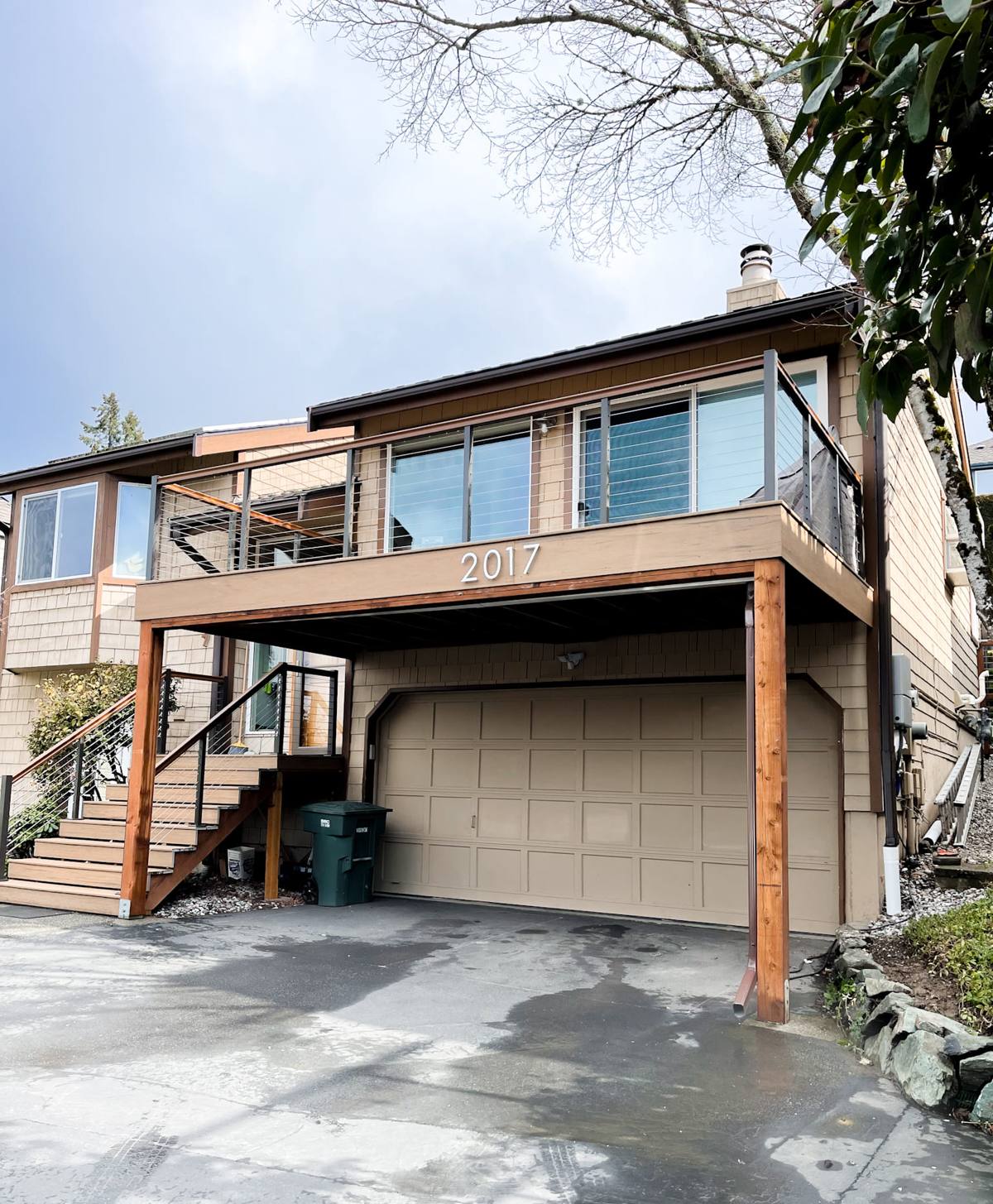
What Cortez's Climate Actually Does to a Deck
Salt Air and Corrosion
Airborne salt doesn't just affect homes directly on the water — it travels on the breeze and settles on everything nearby, including deck hardware, fasteners, and any exposed metal. Standard galvanized screws and joist hangers corrode far faster near the coast than they do inland. Once a fastener starts to rust, it loses holding strength long before the corrosion is visible from the surface, which is part of why we don't cut corners on hardware grade in this area.
UV Exposure
Florida sun is strong nearly every month of the year, and a deck with no shade structure takes the full brunt of it. UV breaks down the surface fibers of wood decking, fades color, and can make some composite products chalky or brittle over time if they weren't engineered for high-UV climates. Fasteners and connectors baking in direct sun also expand and contract more aggressively, which stresses the joints over repeated cycles.
Wind-Driven Rain and Storms
Hurricane-force wind isn't a hypothetical for Manatee County — it's a planning requirement. Wind doesn't just push on a deck's railings and surface; it drives rain sideways and underneath the structure, which means drainage and flashing details at the ledger board and framing matter as much as the visible decking material. A deck that traps water against the house framing is a rot and mold problem waiting to happen, storm or no storm.
Humidity and Moisture Cycling
Between the daily humidity and the seasonal rain, deck framing in this area is almost never fully dry for long. Wood that isn't properly treated, sealed, and ventilated underneath will hold moisture, which accelerates rot and gives insects an easier foothold. This is a bigger long-term threat to deck lifespan in Cortez than any single storm event.
Choosing the Right Decking Material for a Coastal Yard
There's no single "best" decking material for every homeowner — it depends on budget, how close to the water you are, and how much maintenance you're willing to do. Here's how the common options actually compare in a coastal Manatee County setting:
| Material | Salt Air / Moisture Behavior | Maintenance | Typical Lifespan Here |
|---|---|---|---|
| Pressure-treated wood | Needs sealing to resist moisture; end cuts and fastener holes are vulnerable points | Annual cleaning and re-sealing recommended | 10-15 years with upkeep |
| Composite decking | Resists rot and doesn't absorb water like wood; quality varies by product | Periodic washing; no sealing or staining | 20-25+ years |
| PVC / capped polymer decking | Fully sealed surface, strong moisture and salt resistance | Low; occasional washing | 25+ years |
| Tropical hardwoods (e.g., ipe) | Naturally dense and rot-resistant, but expensive and hard to work with | Periodic oiling to maintain color | 20-30 years if maintained |
We'll walk through these trade-offs with you honestly. Wood costs less up front but asks more of you every year. Composite and PVC cost more initially but hand back a lot of that in avoided maintenance over the life of the deck, which matters in an environment that's hard on materials. We don't push one option on every homeowner — we size the recommendation to your budget, how the deck will be used, and how much maintenance you actually want to take on.
Framing, Fasteners, and the Details That Don't Show
Substructure
The framing underneath is what actually carries wind and structural loads, and it's the part most likely to get shortchanged on a lower-cost build. We frame with lumber rated for ground contact and coastal exposure where it's called for, and we build in drainage paths so water moves off and away from the structure instead of pooling against joists.
Fasteners and Hardware
This is one of the most important — and most invisible — decisions on a coastal deck. Standard hot-dip galvanized hardware works for many builds, but for decks closer to the water or with heavy salt exposure, stainless steel fasteners and connectors are the more durable choice, even though they cost more per piece. We match fastener and connector grade to the site, not to whatever is cheapest to buy in bulk.
Ledger and Flashing
Where a deck attaches to the house, proper flashing keeps wind-driven rain from working its way behind the ledger board and into the home's wall framing. This is a detail that's completely hidden once the deck is finished, which is exactly why it's worth asking your contractor how they handle it.
Permits, Wind Load, and Coastal Building Requirements
Manatee County requires permits for new deck construction and most significant deck repairs or replacements, and coastal-area projects are reviewed against Florida's wind load requirements. Depending on your property's location and elevation, flood zone considerations can also factor into how a deck is designed and attached. We handle the permitting process as part of the job — pulling the right permits, building to the load and connection requirements that apply to your property, and scheduling inspections — so you're not left navigating county requirements on your own.
How We Build a Deck in Cortez
1. Site Visit and Design
We look at your yard's exposure — how close you are to open water, how much direct sun and wind the deck location gets, and how the deck will connect to your home — and use that to guide material and hardware recommendations, not just aesthetics.
2. Permitting
We prepare and submit the permit package to Manatee County, sized to your project's scope and location, and coordinate the required inspections through the build.
3. Framing and Construction
We build the substructure first, with attention to drainage, ledger flashing, and fastener grade, before the decking surface and railings go on. Structural connections get the coastal-grade hardware the location calls for.
4. Final Walkthrough
Before we consider the job done, we walk the finished deck with you — checking that railings are solid, surfaces are even, and everything is built the way we discussed at the start.
Keeping a Cortez Deck in Good Shape Year to Year
No deck material is entirely maintenance-free in this climate, but a little routine attention goes a long way toward avoiding costly repairs later:
- Rinse salt residue and debris off the deck surface and railings periodically, especially after storms
- Check fastener heads and connectors for early rust or corrosion, particularly near the coast
- Reseal or re-stain wood decking on a regular schedule rather than waiting until it looks worn
- Keep gutters and drainage paths near the deck clear so water isn't funneled underneath it
- Inspect the ledger board area at the house connection for any signs of moisture staining
- After major storms, check railings and structural connections before heavy use resumes
Why It Matters to Hire a Crew That Already Works This Area
A contractor who mostly builds decks inland, away from salt air and coastal wind exposure, isn't necessarily going to default to the fastener grade, flashing details, and material choices that hold up in Cortez. We work throughout Bradenton and Manatee County's coastal communities regularly, so the decisions that matter here — hardware selection, drainage detailing, material trade-offs for a waterfront property — aren't an afterthought. They're built into how we plan the job from the first site visit.
If you're planning a new deck or need to replace one that's showing its age, we're happy to take a look at your property and talk through honest options for your budget and your yard's exposure. Reach out for a free, no-pressure estimate using the form below.