 Bradenton
 Building Decks for Lakewood Ranch's Climate and Community Standards
Lakewood Ranch homeowners deal with a specific combination of challenges that a lot of deck-building advice online simply doesn't account for. You're not just dealing with regular Florida heat and humidity — you're dealing with a planned community that often has architectural review requirements, newer home construction with specific attachment points, and a climate that swings between intense UV exposure, sudden downpours, and the threat of hurricane-force wind events every season. A deck built for a home in Ohio or even a less coastal part of Florida is not built for what a structure faces here in Manatee County.
We're a Bradenton-based crew, and Lakewood Ranch is part of our regular service area. That matters more than it sounds like it should. We're not driving in from out of state, we're not unfamiliar with local permitting offices, and we're not guessing at what holds up here versus what looks fine for the first two years and then starts failing. This page focuses specifically on custom deck construction for Lakewood Ranch properties — what the climate demands, what a correctly built deck actually involves, and how our process works from first call to final walkthrough.
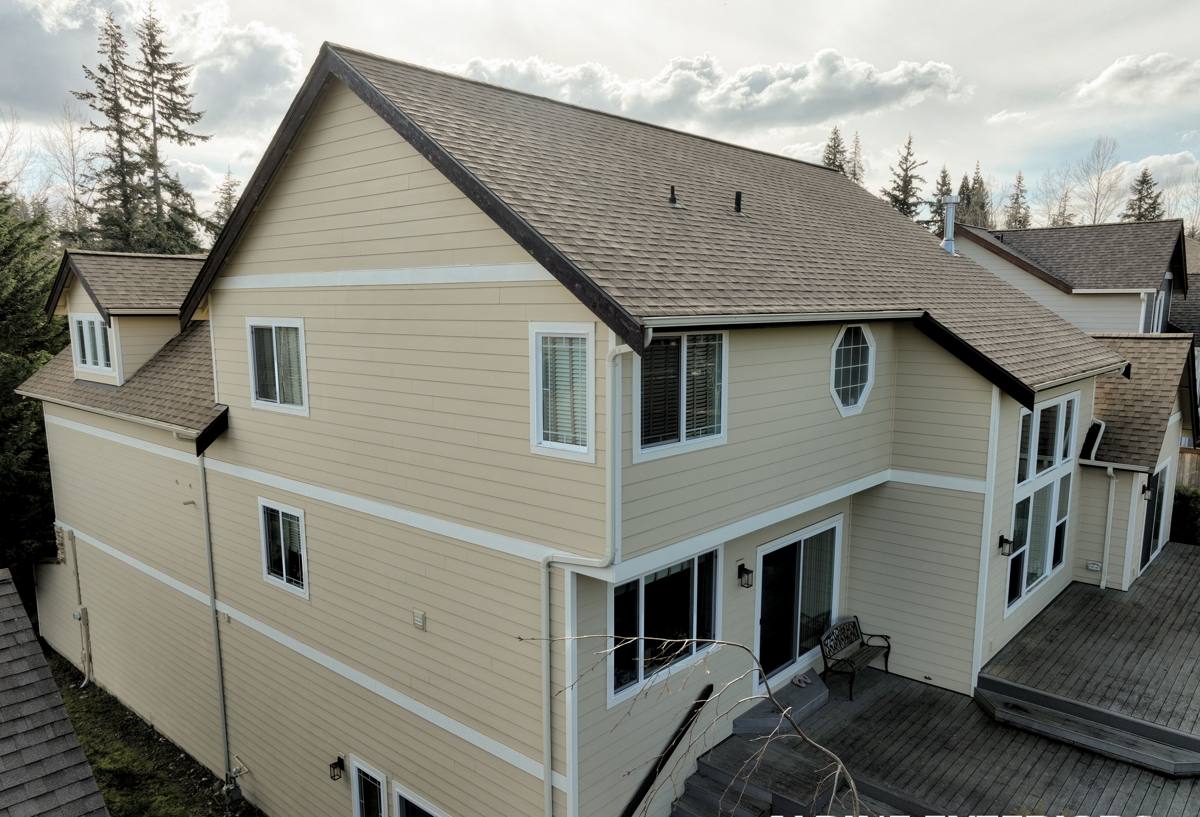
What Lakewood Ranch's Climate Does to a Deck
Manatee County sits in a zone where several stressors stack on top of each other, and a deck has to be engineered to handle all of them at once, not just one.
Sun and UV Exposure
Florida gets some of the most intense year-round UV exposure in the continental United States. On an unshaded deck, that means wood fibers break down faster, finishes fade and chalk out sooner than the label promises, and composite decking that isn't UV-stabilized can discolor unevenly depending on which side faces the afternoon sun. This isn't a cosmetic-only issue — UV degradation is also what makes wood more brittle and prone to splintering and cracking over time.
Wind-Driven Rain and Humidity
Lakewood Ranch doesn't get the ocean spray that beachfront communities deal with, but it still sees plenty of wind-driven rain, high ambient humidity, and the kind of moisture cycling that causes wood to swell and shrink repeatedly. That cycling is what loosens fasteners, opens up joints, and eventually causes boards to cup or crown if the wrong material or spacing was used.
Hurricane-Force Wind Events
Every deck built in this region needs to be designed with storm-force wind loads in mind, not just everyday breezes. That affects footing depth, post sizing, and how the deck ties into the house structurally. A deck that's under-attached or under-anchored is one of the more common causes of storm damage we get called out to assess after a bad season.
Salt Air Influence
While Lakewood Ranch is inland compared to the immediate coast, Manatee County as a whole still sees salt-laden air move through, especially during onshore wind patterns. That accelerates corrosion on any fastener, bracket, or hardware that isn't rated for coastal exposure — something a lot of standard, big-box hardware simply isn't built to handle long term.
What a Correctly Built Deck Looks Like Here
A deck that's going to hold up in this environment isn't just about picking a nice-looking board. Every layer of the build has a job to do.
Footings and Framing
Footings need to be sized and set to the depth local code requires, accounting for soil conditions common to this part of Manatee County. Framing lumber should be properly rated for ground contact or exterior use where applicable, and the ledger connection to the house — where the deck ties into the existing structure — needs correct flashing to prevent water intrusion behind the siding, which is one of the most common sources of hidden rot we find on older decks.
Fasteners and Hardware
This is where a lot of decks quietly fail years down the line. Standard zinc-coated screws and brackets corrode faster in this climate than most homeowners expect. We use stainless steel or coastal-rated hardware on connections that matter structurally, because replacing a board is a lot cheaper than replacing a beam because a corroded bracket let go.
Decking Material Choice
There's no single "best" decking material — there's a best material for your budget, your maintenance appetite, and how much direct sun the deck will get. We walk through the honest tradeoffs with every homeowner rather than pushing one product line.
| Material | Upfront Cost | Maintenance | Heat & UV Behavior |
|---|---|---|---|
| Pressure-treated wood | Lowest | Needs regular sealing/staining; check every 1-2 years | Can gray, splinter, and warp faster in intense sun without upkeep |
| Tropical hardwoods | Higher | Periodic oiling to maintain color and prevent surface checking | Naturally dense and durable, but still needs UV protection |
| Capped composite | Mid to high | Low — occasional washing, no sealing/staining | Modern capped products handle UV well; lighter colors run cooler underfoot |
| PVC decking | Highest | Lowest — very resistant to moisture and staining | Excellent UV stability; some products can run hot in direct full sun |
For most Lakewood Ranch homeowners, the decision comes down to how long you plan to stay in the home, how much direct afternoon sun the deck gets, and how much ongoing maintenance you're realistically willing to do. We'll give you our honest read on your specific site rather than a one-size answer.
HOA and Architectural Review Considerations
Lakewood Ranch is made up of numerous HOA-governed neighborhoods and villages, many with their own architectural review requirements covering things like railing style, decking color, and how visible structural additions can be from the street or adjoining properties. Before we finalize a design, we ask homeowners to check their community's specific guidelines, and we're glad to prepare drawings and material specs in a format that's easy to submit for approval. Skipping this step is one of the most common causes of costly rework we see — a deck built before HOA sign-off can, in some communities, require modification after the fact.
- Confirm your HOA or architectural review board's submission requirements before construction begins
- Check for restrictions on railing materials, height, or color
- Verify setback requirements from property lines and easements
- Confirm whether a permit is required in addition to HOA approval (in Manatee County, it typically is)
- Ask about any restrictions specific to your village or neighborhood within Lakewood Ranch
Design Considerations Specific to Lakewood Ranch Homes
Much of Lakewood Ranch is newer construction, which brings its own set of considerations. Homes here often already have a lanai, pool cage, or covered patio, and a custom deck project frequently means extending or complementing that existing outdoor living space rather than building from scratch on a bare yard. That means matching elevations correctly, coordinating with existing pool equipment or screening structures, and making sure any new footings don't conflict with irrigation lines or utility easements that are common in planned developments.
We also account for shade and orientation. A west-facing deck with no tree cover is going to take a beating from afternoon sun for most of the year, and that should influence both material choice and whether a pergola or shade structure makes sense as part of the project. We'll talk through orientation with you on-site rather than designing from a satellite photo.
Our Process for Lakewood Ranch Deck Projects
- On-site consultation. We walk the property, look at the home's existing structure and grade, and talk through how you actually plan to use the space.
- Design and material selection. We put together a plan and material recommendation based on sun exposure, budget, and maintenance preference, and prepare documentation for HOA submission if needed.
- Permitting. We handle the Manatee County permitting process for the build, including any required inspections.
- Construction. Footings, framing, ledger flashing, decking, and railing installed in sequence, with attention paid to every connection point that has to survive storm season.
- Final walkthrough. We go over the finished deck with you, explain any maintenance the material you chose needs, and answer questions before we consider the job done.
Maintenance That Actually Matters in This Climate
Whatever material you choose, a few maintenance habits make a real difference in how long a Lakewood Ranch deck holds up.
- Rinse off pollen, salt residue, and organic debris regularly — buildup traps moisture against the surface
- Inspect fasteners and hardware annually for early signs of corrosion, especially after storm season
- Reseal or restain wood decking on the schedule appropriate to the product, not just when it looks faded
- Keep gutters and downspouts near the deck clear so water isn't dumping directly onto framing or footings
- Check railing connections and structural attachment points after any major wind event
Why a Local Crew Matters for This Job
A deck contractor who doesn't regularly work in Manatee County can still build a deck — but they're often building to a generic standard rather than what this specific climate and this specific community actually require. Knowing which fastener grades hold up here, how deep footings need to go in local soil conditions, what Lakewood Ranch's various HOAs typically expect, and how Manatee County permitting works isn't something you pick up from a manual. It comes from doing this work here, repeatedly, and dealing with the callbacks when something wasn't done right the first time. That's the standard we build to on every project, whether it's a straightforward platform deck or a more involved multi-level design tied into an existing lanai.
If you're planning a custom deck in Lakewood Ranch, we're happy to come take a look at your property and put together an honest, no-pressure estimate. Fill out the form below and we'll get in touch to schedule a time that works for you.